Toes are scared! Tony Leung Chiu Wai committed "social fear" again and was caught by netizens.

1905 movie network news The well-known "social fear king" was caught by netizens a few days ago, capturing the behavior of "social fear", but this time it did not appear in expression management, but — — Toes.


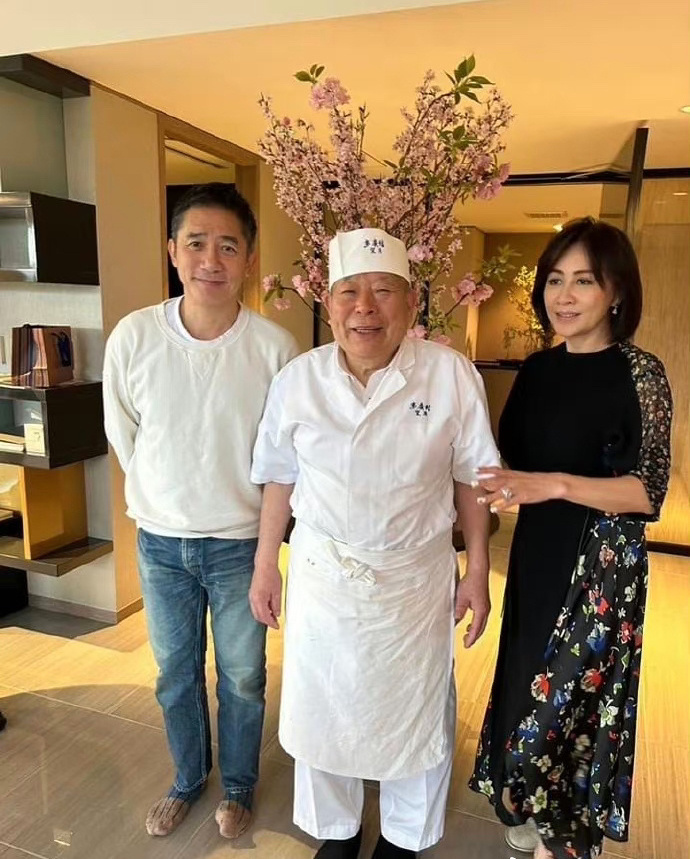
A few days ago, Tony Leung Chiu Wai took a group photo with the chef of the sushi restaurant after eating in a famous Japanese restaurant. In the photo, Tony Leung Chiu Wai is wearing a white shirt with a shy smile on his face; Carina Lau was wearing a black patchwork floral skirt, and the husband and wife stood on both sides of the master and took a group photo. However, eagle-eyed netizens found that Tony Leung Chiu Wai’s toes were strangely bent and dug at the moment of "freezing", and his honest physiological reaction amazed netizens.


After the photo was exposed, netizens left messages about Tony Leung Chiu Wai’s "social terror-style digging", saying: "Cute to death", "I’m about to be laughed to death by the social terror film emperor", "I’m really embarrassed to scratch the ground with my toes" and "inexplicably cute", but some curious netizens made funny guesses: "Is it possible that his toes are better than yeah?"


Hangzhou Bank’s 2023 performance briefing will be focused! About credit supply, stable interest margin, technology and finance, asset quality, etc.

  On the afternoon of May 15th, () Co., Ltd. (hereinafter referred to as "Hangzhou Bank", stock code: 600926.SH) held a performance briefing for the year 2023 and the first quarter of 2024 through live broadcast on the whole network. Song Jianbin, chairman of Hangzhou Bank, Yu Liming, president, Changqing Li, independent director, Chen Lan, Pan Huafu, Zhang Jingke and Zhang Jianfu, vice presidents, attended the meeting.

  At this briefing, Yu Liming said that in 2023, in the face of fierce market competition, Hangzhou Bank took the "2255" strategy as the guide, adhered to customer-centered, striver-oriented, strengthened digital intelligence empowerment, and achieved good business performance, achieving a steady development trend of rising comprehensive strength, remarkable business transformation and strong and solid management foundation.

  In 2024, Hangzhou Bank will closely focus on the "2255" strategy, firmly adhere to the principle of quality and strict governance, adhere to the general tone of "striving for progress while maintaining stability", and strive to build a value-added chain and closed-loop management of customers, products, teams, risk control and operation supervision, so as to accelerate the creation of differentiated competitive advantages in market segments.

  Next, let’s take a look at the key points of this performance briefing of Hangzhou Bank.

  1. Optimize asset allocation and actively respond to the low interest rate environment.

  Song Jianbin, chairman of Hangzhou Bank, said that in the face of low interest rate environment, on the one hand, Hangzhou Bank should focus on developing direct financing, supply chain services and digital services to improve the comprehensive income level of political and credit business. On the other hand, efforts will be made to improve the business model of Hangzhou Bank from three aspects: one is to expand the customer base of market segments, especially technology and finance business; The second is to improve risk control ability and expand sinking customers; The third is to enrich service functions, especially to improve non-credit services. In the future, Hangzhou Bank will focus on light capital and transactional business.

  2. Regional advantages guarantee credit supply, and stable asset quality helps achieve the benefit goal.

  President Yu Liming of Hangzhou Bank analyzed the operating performance of Hangzhou Bank and looked forward to the revenue and profit trend in 2024. He put forward five strategies of "promoting investment, optimizing allocation, reducing costs, expanding income and controlling risks" to ensure that Hangzhou Bank can achieve the growth target of benefit indicators in the new year. President Yu Liming pointed out that despite the double pressures of narrowing net interest margin and rising credit risk, Hangzhou Bank will strive to maintain the growth of operating income, total profit and net profit with a solid foundation and good development prospects.

  In terms of credit supply, President Yu Liming said that Hangzhou Bank will take advantage of its outlets in the Yangtze River Delta, Pearl River Delta and other economically better regions to increase credit supply and strive to achieve the annual target of deposit and loan growth exceeding 100 billion. He also mentioned that Hangzhou Bank will optimize its asset allocation, especially in the fields of science and technology finance, credit micro-credit and universal micro-credit, so as to achieve optimal returns under controllable risks.

  3. There is still downward pressure on interest margin, and the capital adequacy ratio has improved.

  Zhang Jianfu, chief financial officer of Hangzhou Bank, made a comprehensive interpretation of key financial indicators such as credit arrangement, interest spread trend and capital adequacy. Director Zhang Jianfu first introduced three strategies of Hangzhou Bank’s credit lending in 2024: optimizing the lending structure while maintaining the total growth, balancing the quantity, price and risk, and optimizing the pace and regional layout. He pointed out that Hangzhou Bank plans to invest more than 100 billion yuan in credit, focusing on increasing the investment in manufacturing, green finance, science and technology, private enterprises, agriculture-related customers, and at the same time emphasizing the study of sub-sectors of the real economy and the grasp of credit opportunities.

  When talking about the trend of interest margin, Director Zhang Jianfu analyzed the market situation of interest margin decline in 2023 and looked forward to the challenge of net interest margin in 2024. He mentioned that despite the pressure brought by the decline of LPR and changes in market supply and demand, Hangzhou Bank will mitigate the impact of the decline in interest margin by strengthening pricing management and asset allocation, and actively responding to market changes. Director Zhang Jianfu also mentioned that stopping manual interest payment will not only help standardize the market competition order, but also help reduce the interest rate of deposits, thus supporting the stability of net interest margin.

  Regarding capital, Director Zhang Jianfu said that the improvement of capital adequacy ratio and core tier 1 capital adequacy ratio of Hangzhou Bank in the first quarter of 2024 was not only due to the positive impact of the new capital regulations, but also due to the bank’s initiative to adjust its asset structure and improve its capital endogenous capacity. He emphasized that Hangzhou Bank will improve the efficiency of capital use by optimizing the structure of assets and liabilities, promoting the strategy of light capital and deepening capital management.

  4. The mortgage has picked up, and the "paid loan" retail consumer credit products will have new brands.

  Vice President Chen Lan of Hangzhou Bank exchanged strategies and risk control measures in retail business with investors and analysts. She emphasized that in the current market environment, Hangzhou Bank has achieved steady growth in retail business through differentiated competition strategies. Vice President Chen Lan said that Hangzhou Bank has implemented the strategy of deep channel cultivation and branch pilot in mortgage business, and optimized the regional distribution structure. In 2023, the total amount of mortgage loans increased significantly, and its market share was improved. In terms of consumer loans, Hangzhou Bank adopted a steady and meticulous strategy of sinking customers, strengthened post-loan management and risk prevention and control through () integration, and effectively guaranteed asset quality. Facing the challenge of retail business, Vice President Chen Lan mentioned that Hangzhou Bank will adhere to the principle of "no risk for development" and enhance its risk prevention and control capabilities through refined management and big data risk control mode. At the same time, Hangzhou Bank will launch exclusive consumer credit products for different customer groups, such as a new brand of "paid loans" for working-class and new citizens, in order to realize the coordinated development of retail credit growth and risk stability.

  5. Small and micro loans promote the sinking of customer base and create differentiated competitive advantages.

  In the field of small and micro loans, Vice President Chen Lan emphasized the effectiveness of Hangzhou Bank in risk prevention and control, and realized the deep integration of marketing chain, operation chain and risk chain through the support of digital cloud platform. She revealed that by the end of 2023, the non-performing rate of micro-credit remained at a low level, showing the competitive advantage of Hangzhou Bank in the field of micro-credit. In addition, Vice President Chen Lan also mentioned the experience of the Small and Micro Credit Department in the sinking of inclusive finance’s customer base, and emphasized the importance of business planning, industry segmentation and customer base selection. She said that through industry segmentation research and customer visits, Hangzhou Bank can serve the local market more deeply and realize the sustainable development of its business.

  6. Science and Technology Innovation Financial Business Model Iteration

  Zhang Jingke, Vice President of Hangzhou Bank, said that Hangzhou Bank has successfully cultivated more than 300 listed companies, including 95 science and technology innovation board companies, since it established the Science and Technology Sub-branch in 2009. Vice President Zhang Jingke mentioned that although the links of investment and loan linkage in the current financial supervision system have not been fully completed, Hangzhou Bank is still actively exploring the science and technology financial service model, from the initial cooperation with the government to the cooperation with investment institutions, and then to the current "data+professional drive" model, Hangzhou Bank’s science and technology financial business model has been continuously upgraded and iterated. He emphasized that the core logic of Hangzhou Bank’s profit lies in growing together with customers, and achieved a good profit space through low capital cost, low non-performing rate and replicability of business model. Vice President Zhang Jingke explained that Hangzhou Bank not only established deep customer loyalty through early intervention and service for small and micro science and technology enterprises, but also obtained support in low-cost fund settlement, which supported the bank’s profit through lower capital cost when credit pricing could not exceed the market average. In addition, Vice President Zhang Jingke also mentioned that the risk control of Hangzhou Bank in the field of science and technology finance is in place, and the non-performing rate has remained at a low level for 15 years, which has provided a solid support for the bank’s profitability. He also emphasized the importance of team and organization building, pointing out that Hangzhou Bank has a professional team of more than 500 people, which has accumulated 15 years of experience.Become the most powerful competitiveness of Hangzhou Bank in the field of science and technology finance. Finally, Vice President Zhang Jingke said that in the face of changes in the market environment, Hangzhou Bank will stick to long-term, grasp its own pace of development, focus on technological innovation customers, and continue to maintain its leading position in the field of science and technology finance through innovation of products and services and optimization of risk control.

  7. Asset quality is stable and controllable.

  Pan Huafu, vice president of Hangzhou Bank, gave a detailed answer to the risk management problem. He said that the proportion of interest-related loans increased by 0.12 percentage points in the first quarter, mainly because the extension of a real estate project loan led to the downward shift of classification. He stressed that despite the increase in interest-related loans, the overall business structure and the total number of customers remained stable, and the proportion of interest-related loans was still at a low level among listed banks.

  On the issue of the rising NPL ratio of real estate loans, Vice President Pan Huafu mentioned that the NPL ratio was mainly due to a project loan default of a real estate enterprise, but he said that the real estate loan risk of Hangzhou Bank was generally controllable, and put forward the concept of "three opposites" to illustrate the advantages of banks in real estate loans: relatively low proportion of real estate loans, relatively good area of real estate loan projects and relatively stable real estate customers as a whole. In other credit risk areas that investors are concerned about, Vice President Pan Huafu also responded one by one.

How to change from institutional advantage to governance efficiency?

  [Think Tank Q&A]Study and Implement the Spirit of the Fourth Plenary Session of the 19th CPC Central Committee

  Guests in this issue:

  Director, Institute of Political Science, China Academy of Social Sciences Zhang Shuhua

  Researcher, Socialism with Chinese characteristics Institute of Thought, New Era, Supreme Leader of China Renmin University. Chenjiagang

  Distinguished professor, Executive Vice President of School of Government Administration of Peking University and "Changjiang Scholar" of the Ministry of Education. Yan jirong

  Distinguished professor, Dean of School of Public Administration of Zhejiang University and "Changjiang Scholar" of the Ministry of Education. Yu jianxing

  1. Only the system that takes root in domestic soil and absorbs abundant nutrients can work reliably.

  Bright Think Tank: The Fourth Plenary Session of the 19th CPC Central Committee emphasized that the Socialism with Chinese characteristics system is a scientific system formed by the Party and the people through long-term practice and exploration. All work and activities of state governance in China are carried out in accordance with the Socialism with Chinese characteristics system, and China’s state governance system and governance capacity are the concentrated expression of the Socialism with Chinese characteristics system and its implementation capacity. In your opinion, what problems should be paid attention to in designing, developing and perfecting the Socialism with Chinese characteristics system?

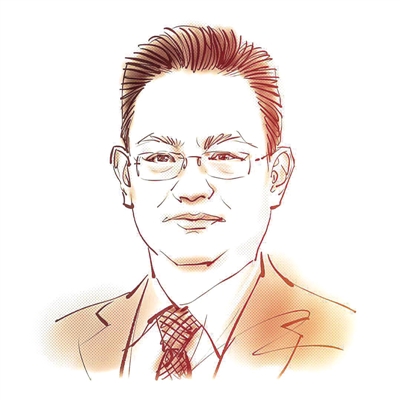
  Zhang Shuhua:Since the founding of New China 70 years ago, it is not only the history of China people’s struggle for national prosperity, national rejuvenation and people’s happiness, but also the history of institutional evolution in which the Communist Party of China (CPC) led the people of all ethnic groups in China to independently explore the road of socialist modernization and gradually establish, improve and develop Socialism with Chinese characteristics.

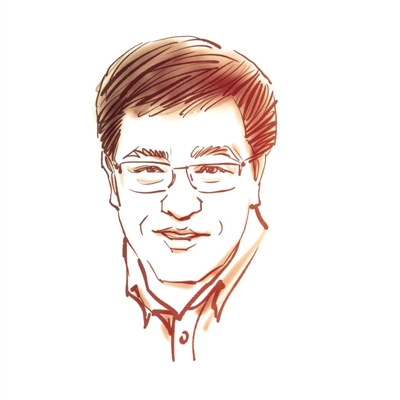
  Zhang Shuhua and Guo Hongsong painted.

  System is a fundamental issue related to the development of the cause of the party and the state. What kind of political system a country implements must be adapted to its national conditions. There is no one-size-fits-all specific development model in the world, and there is no fixed development path. The essence of our governance is to uphold the Communist Party of China (CPC)’s leadership and the socialist system.

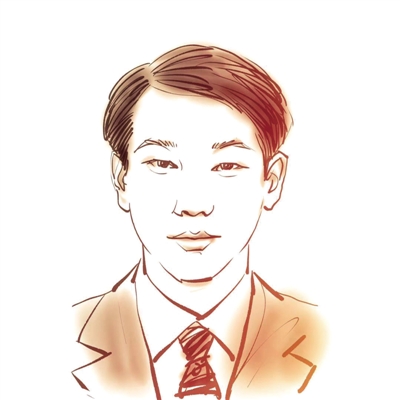
  Chen Jiagang:Our system works because it grew from the social soil of China. The Fourth Plenary Session of the 19th CPC Central Committee emphasized: "Socialism with Chinese characteristics’s system and state governance system are systems and governance systems guided by Marxism, rooted in China, with profound Chinese cultural roots and won the support of the people." To promote the perfection of Socialism with Chinese characteristics’s system, we should proceed from the history and culture of our nation and our own national conditions. We should not only grasp the long-term historical inheritance, development path and accumulated political experience, but also grasp the realistic requirements, solve realistic problems and plan future development.

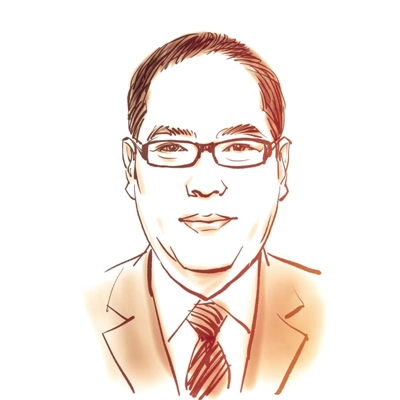
  Chen Jiagang Guo Hongsong painted.

  Yan Jirong:China’s national governance system and governance capacity are the concentrated expression of Socialism with Chinese characteristics’s system and its implementation capacity. The important task of national construction is to seek scientific, reasonable and efficient institutional arrangements to ensure the country’s operation on the track of prosperity and development. Therefore, it is necessary to build a dynamic, pragmatic and efficient governance system. The key to building a governance system lies in institutional supply, that is, setting rules, rules and regulations to provide boundaries for freedom of behavior.

  Yan Jirong and Guo Hongsong painted.

  2. To integrate "control" and "governance", it is necessary to "build up" and "turn up"

  Bright Think Tank: Building a systematic, scientific, standardized and effective institutional system is the premise and foundation for transforming institutional advantages into national governance efficiency. What are the key tasks to be done to realize the transformation from institutional advantages to governance efficiency?

  Zhang Shuhua:To promote the modernization of the national governance system and governance capacity, we must unswervingly strengthen and improve the centralized and unified leadership of the party. The centralized and unified leadership of the Party is Socialism with Chinese characteristics’s political advantage, and it is also the greatest political advantage to realize "the rule of China".

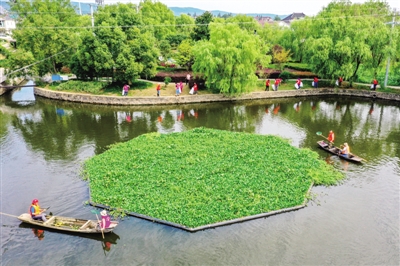
  In Changxing County, Huzhou City, Zhejiang Province, party member volunteers are cleaning up river garbage. Tan Yun Feng photo/bright picture

  The Fourth Plenary Session of the 19th CPC Central Committee focused on improving the system of the Party’s leadership that takes the overall situation into consideration and coordinates all parties, and put forward six requirements. The first is to establish a system of Do not forget your initiative mind and keeping the mission in mind. The second is to improve various systems that firmly safeguard the authority of the CPC Central Committee and centralize and unify leadership. The third is to improve the party’s overall leadership system. The fourth is to improve various systems that govern for the people and rely on the people. The fifth is to improve the system of improving the party’s ruling ability and leadership level. The sixth is to improve the system of comprehensively and strictly administering the party. The above-mentioned system is the basic element of the party’s leadership system, which must be fully built, always adhered to, constantly improved and developed.

  Chen Jiagang:At present, we should make good use of the stock resources of the system and promote the stock reform. We should make full use of the advantages of the existing system, make good use of the "precipitated" and "textual" system norms, and make the "built" system "turn around" in practice through specific institutional mechanisms and program design.

  The key to upholding and perfecting the Socialism with Chinese characteristics system is to increase and expand our advantages and characteristics. We should constantly promote the institutionalization, standardization and proceduralization of socialist democratic politics, give full play to the advantages of Socialism with Chinese characteristics’s political system, and provide a more perfect institutional guarantee for the prosperity and long-term stability of the party and the country.

  Yu Jianxing:To further highlight the institutional advantages, we need to focus on three aspects: consolidating institutional advantages, strengthening institutional implementation, and filling institutional shortcomings.

  Yu Jianxing and Guo Hongsong painted.

  Consolidate and develop the institutional advantages that have been achieved. For example, since the founding of New China 70 years ago, we have adhered to the centralized and unified leadership of the Party, adhered to the Party’s scientific theory, maintained political stability, and ensured that the country has always advanced along the socialist direction. We should constantly consolidate and develop the remarkable advantages of China’s national system and national governance system in many aspects.

  Strengthen system implementation. Supervision and inspection is a way to strengthen the implementation of the system, which also includes the positive guarantee of the rule of law and the guidance of the rule of virtue.

  Fill in the shortcomings of the system. After more than 40 years of reform and opening up, compared with the remarkable achievements we have made in the field of market economy, social construction, social governance and institutional construction in the field of ecological environmental protection are relatively lagging behind. It is urgent to fill in the shortcomings of the system in the field of social governance and do a good job in top-level design.

  3. Stimulate the potential of the system, so that good policies can bear fruit and be implemented.

  Bright Think Tank: Promoting the modernization of the national governance system and governance capacity is a systematic project, and it is necessary to strengthen system governance, legal governance, comprehensive governance and source governance. In your opinion, how should we do a good job in these governance, so that various reforms complement each other and have a "chemical reaction"?

  Chen Jiagang:To realize system governance, it is necessary to systematize and systematize the system construction and form the basis and premise of structural governance such as backbone system, backbone system, supporting system and auxiliary system. Governing by law is to abide by the institutional rules of governance, form a sense of rules in practice, and achieve fair and just governance performance. Comprehensive management is to adhere to the governance path of overall planning and coordinating all parties, comprehensively consider the governance measures in all aspects, fields and levels and their possible impacts in the practice of economic and social development, and coordinate them in time to achieve overall improvement. Source management, the key point is to look at the essence from the phenomenon, find the root cause from the problem, and insist on treating both the symptoms and the root causes.

  Yu Jianxing:At present, in order to make all reforms complement each other, we must establish a global and systematic governance concept, and regard improving the national governance system and enhancing the national governance capacity as an organic whole. System is the key to solving the problem and the foundation of governance; Governance is the effect of operation and the ability of system. We should be alert to the understanding and practice of separating the governance system, governance capacity and governance efficiency. For example, grassroots governance needs to establish a standardized system of "horizontal to the edge and vertical to the end", but this is a means rather than an end. The real purpose is to use these means and tools to achieve orderly governance and make society full of vitality. Governance system mainly refers to the construction of systems and mechanisms, including not only the physical platform, but more importantly, the institutional mechanism of cooperation and co-governance among the government, market, society and individuals.

  Zhang Shuhua:It is not enough to transform institutional advantages into governance efficiency, but also a "chemical reaction". Institutional confidence is the catalyst of "chemical reaction". We should constantly enhance institutional self-confidence, strengthen institutional theoretical research and publicity and education, guide the whole party and society to fully understand the essential characteristics and advantages of Socialism with Chinese characteristics’s system, create a strong atmosphere of wanting, being able and doing things, and make good policies bear fruit and be implemented.

  4. Top-level design and grass-roots innovation must be benign interaction.

  Bright Think Tank: How to improve the governance level and efficiency to promote the system to be further matured, finalized, improved and consolidated?

  Yan Jirong:A country’s institutional system is usually formed in major historical changes. After long-term practice, it is gradually consolidated in constant debugging and reform, and is fixed by constitution, laws, rules and other forms. The system implemented by each country has its own characteristics in name and organization, which are determined by the national conditions of each country. The design, development and perfection of the system pursue effectiveness and adaptability, and promote the modernization of the national governance system and governance capacity. The purpose is to give full play to the advantages of high efficiency, coordination and sustainability of the system, gradually improve the system, fill the shortcomings, and make the existing system mature and stereotyped.

  Yu Jianxing:The key to promoting the further maturity of the system is to promote the implementation of policies at the grassroots level, so as to test and improve the system in practice. Since the reform and opening up, the reform of "crossing the river by feeling the stones" has become an important part of the miracle of China. In the new century, especially since the 18th National Congress of the Communist Party of China, it has always been an important mechanism in the field of local governance and social innovation to take local experiments as samples and upgrade successful experiences to national top-level design and promote them throughout the country. Local innovation is not only the implementation of top-level design, but also an important means to improve the level and efficiency of local governance, and it is also a process of continuous improvement within the framework of top-level design and eventually becoming a new, more mature and perfect national system. To improve the level and efficiency of national governance, it is necessary to achieve a benign interaction between top-level design and grassroots innovation.

  Chen Jiagang:System is a summary of human social knowledge and experience. A mature and stereotyped system must have a widely recognized foundation. It is necessary to promote institutional innovation so that emerging social relations can operate under institutional norms. This requires attention to maintain four balances: first, the balance between system scale and system performance. How many systems are appropriate and how large the system is appropriate should be measured according to the actual situation and system performance; The second is the balance between institutional measures and institutional goals. Measures are to achieve the goal, and the system design that is conducive to promoting the implementation of the goal is reasonable and scientific, and it is necessary to avoid deviating from the goal in the process of system design; The third is the balance between institutional constraints and institutional incentives. The system has both restrictive function and incentive orientation, and comprehensively deepening the reform especially needs the system design to stimulate the power and potential; The fourth is the balance between system formulation and extensive participation. Only by establishing a relationship with the object of the system can the system abide by it, give full play to its effectiveness and maintain its authority and continuity.

  Zhang Shuhua:To open up a new realm of "the rule of China", we must unswervingly adhere to the greatest advantage of the Communist Party of China (CPC)’s leadership. At present, we should adhere to the problem orientation, give more prominence to governance efficiency, and overcome the "idling" of reform under formalism and bureaucracy. Focus on the needs of development, the aspirations of the grassroots, and the aspirations of the people, strengthen the cooperation and linkage of relevant institutions, and make up our minds to get rid of the shortcomings of the institutional mechanisms that restrict reform and development, so as to make the party and state institutions more scientific, more optimized in functions, more coordinated in powers and responsibilities, more powerful in supervision, and more efficient in operation. Only in this way can we give full play to the effectiveness of the system, give people a sense of gain and development, and make our system more consolidated.

  (Project Team: Guangming Daily All-Media Reporter John Zhang, Wang Simin, Jiang Xinjun, Cheng Yaqian, Associate Research Fellow of Guangming Think Tank Jiao Dewu)

  Guangming Daily (November 12, 2019, 07 edition)

Why did the three major airlines purchasing 292 Airbus reach the biggest order in history at present?

  China Southern Airlines purchased 96 aircraft.

  The basic price is about $12.248 billion.

  China Eastern Airlines buys 100 aircraft.

  The total basic price is about $12.796 billion.

  Air China and its holding subsidiary Shenzhen Airlines purchased a total of 96 aircraft.

  The total basic price is about $12.213 billion.

  The aircraft ordered by the three major airlines will be delivered from 2023 to 2027.

  On July 1st, China Southern Airlines, Air China and China Eastern Airlines, the three largest domestic airlines, announced that they had signed a purchase agreement with European aircraft manufacturing giant Airbus — — A total of 292 A320NEO series aircraft were purchased, and the total purchase amount will reach 37.257 billion US dollars (about 249.1 billion yuan). This transaction is the single order with the largest quantity and the highest order amount among the three major airlines in the history of aircraft purchase, and it is also the first large-scale passenger aircraft order announced by China civil aviation industry in recent three years.

  Why did the three major airlines reach the biggest order in history at present? Why did this "group purchase" order select Airbus A320NEO? 249.1 billion yuan is not a small sum. Under the influence of the epidemic, where did this money come from? Does the large-scale purchase of aircraft in the downturn of the aviation industry signal the full recovery of China’s civil aviation industry?

  Why buy it?

  Optimization of fleet structure and long-term capacity supplement are the main reasons

  At present, the aviation market has not fully recovered, so why did the three major airlines sign the largest order in history at this node?

  Qi Qi, an expert of China Civil Aviation High-quality Development Research Center and an associate professor of guangzhou civil aviation Vocational and Technical College, said: "It can be said that it is a compensatory consumption. Because there are many uncertainties during the whole epidemic, it is difficult for airlines to make a large-scale purchase of aircraft. At present, we see that the whole signal of aviation recovery is relatively strong. At this moment, it is actually an important performance of market confidence for airlines to buy related models in a big way. "

  The reporter noticed that in the announcements of the three airlines, the main reason for purchasing the aircraft this time was mentioned, that is, the aircraft transaction was in line with the company’s "14 th Five-Year Plan" development and market demand, and the company needed to plan and reserve the fleet capacity in advance, optimize the fleet structure and supplement the long-term capacity. Air China said that the introduction of new aircraft will be concentrated after 2024, and this transaction will increase the Group’s capacity by about 10.4%. China Eastern Airlines said that after the introduction of this aircraft, it will be mainly put into the domestic trunk network market to encrypt high-yield routes and develop potential markets. China Southern Airlines said that the purchase of 96 A320NEO series aircraft will increase the Group’s capacity by about 13.0%.

  Why buy it now?

  More bargaining power, the purchase price is more favorable

  The consumption potential and confidence of the market are constantly increasing. However, at present, the civil aviation industry in China has not fully recovered to the pre-epidemic level, and the seat capacity that the industry as a whole can provide is still far higher than the current market demand. So is it necessary to order so many new planes now? In this regard, experts said that the replacement of old and new models can promote the metabolism of the industry. In the future, the aviation market will be huge, and China needs to continuously increase new capacity to keep the airline fleet younger.

  Experts said that due to the impact of the epidemic, the speed of aircraft introduction of the three major airlines has greatly slowed down in the past two years. Take Air China China as an example. By the end of 2021, the fleet size was 746, a net increase of 52 compared with the end of 2019. The average annual import rate is between 1% and 3%, which is far from the previous rate of 6%-8%.

  Qi Qi believes that many domestic models are relatively old. In the aviation field, the fuel economy of new aircraft will be much better than that of old models, which also urges airlines to accelerate the iteration of old models. In addition, with the market recovery and business development, the domestic aviation market also needs to continuously increase new capacity.

  The transaction amount of this large passenger plane order is nearly 250 billion yuan. However, the three major airlines all said that Airbus will give a larger discount in the actual transaction, and the actual price of the aircraft will be lower than the above basic price. Therefore, experts also speculate that airlines have more bargaining power to buy new aircraft at this node at a more favorable purchase price, which is also one of the main factors for the three major airlines to concentrate on buying new aircraft.

  Why A320NEO?

  Domestic airlines have a strong demand for narrow-body aircraft.

  Even if the moment is a good opportunity, why did the three major airlines choose Airbus’s narrow-body A320NEO? A320NEO series aircraft is the latest generation of narrow-body aircraft of Airbus, the best-selling New Engine Option of A320 series aircraft, and the fist product of Airbus in the single-aisle narrow-body aircraft market at present.

  Single-channel narrow-body aircraft is the main passenger aircraft on domestic routes and short-haul international routes. By the end of 2021, there were 4,054 registered aircraft in the civil aviation industry, among which 3,178 were narrow-body aircraft, accounting for nearly 80% of the transport fleet.

  Qiao Shanxun, secretary-general of the Expert Committee of Henan Aviation Industry Association and researcher of Henan Collaborative Innovation Center for Aviation Economic Development, told reporters that domestic airlines have a strong demand for narrow-body aircraft, and the three major airlines themselves have a large-scale narrow-body fleet. At present, the proportion of narrow-body aircraft is 70% to 90%, and they have their own needs for renewal of old aircraft.

  Airbus A320 and Boeing 737 are the two most popular single-aisle passenger aircraft in the world, which is also one of the most competitive markets between Airbus and Boeing, an American veteran aircraft manufacturer. In 2021, Airbus delivered a total of 611 passenger planes, while Boeing delivered only 340 in the same year. Airbus has become the world’s largest aircraft manufacturer for three consecutive years. After the successive accidents of Boeing 737MAX, Airbus has taken the lead in the single-aisle passenger aircraft market.

  Where does the money come from?

  Business operation, commercial bank loans and other financing methods

  Buying aircraft is a major capital expenditure for airlines, which will increase the scale of airline debt. At present, affected by the repeated epidemic and the high international crude oil price, the performance of the three major airlines fell further in the first quarter of 2022, with a total loss of over 20 billion yuan. In this case, where does the money for buying a plane come from? Will cash flow be affected? Will it further increase the scale of airline debt?

  Experts said that as a high-value product, aircraft is not a spot transaction. At the same time, the manufacturing cycle is relatively long, so the order is usually signed 3-5 years in advance. The 292 aircraft ordered this time will also be introduced in years and batches. Taking Air China as an example, public information shows that the purchased aircraft is scheduled to be delivered in batches from 2023 to 2027; Shenzhen Airlines, the holding subsidiary, plans to purchase aircraft in batches from 2024 to 2026.

  In the announcement, the three major airlines all said that the money for buying planes does not need to be paid in one lump sum. Because it is annual, the aircraft are delivered in batches every year, so it is customary to pay part of the advance payment in installments, and then pay off the balance on the delivery date of each aircraft. In the announcement, all three airlines said that they would provide funds for the purchase of aircraft through business operations, commercial bank loans or other financing methods. The transaction amount is paid by installment, which is not expected to have a significant impact on the company’s cash flow and business operations.

  Expert opinion

  The deep cooperation model between Airbus and China aviation industry is highly recognized.

  As a supplier, Airbus confirmed the news of this order in official website for the first time. Scheler, chief commercial officer of Airbus and head of Airbus’s international business, said: "We commend the excellent work done by the entire Airbus China team and our customer team. They had a long and extensive discussion during the difficult COVID-19 epidemic." As of May this year, there were more than 2,070 Airbus aircraft operating in China.

  Experts said that the massive purchase of Airbus aircraft by China’s three major airlines also released a positive signal, which once again confirmed that the deep cooperation model between Airbus and China aviation industry was highly recognized. In addition, Airbus has three production assembly lines in Tianjin, which also reflects the good coordinated development of aircraft manufacturers and domestic aviation industry. Comprehensive CCTV News, The Paper

South Korea’s opposition parties and civic groups held a large-scale rally to protest against Fukushima’s nuclear pollution discharge into the sea.

  Xinhua News Agency, Seoul, August 26th (Reporter Lu Rui, Zhou Siyu) A number of opposition parties and civic groups, including the Common Democratic Party, the largest opposition party in South Korea, held a large-scale rally in the center of Seoul on the afternoon of 26th, strongly urging the Japanese government to cancel the decision to discharge Fukushima nuclear polluted water into the sea, and demanding that Yin Xiyue’s government take measures to prevent Fukushima nuclear polluted water from discharging into the sea.

  Thousands of South Koreans attended the rally, holding high slogans such as "Removing Fukushima nuclear polluted water from the sea" and "condemning Yin Xiyue’s regime", and shouting slogans such as "Japan should keep nuclear polluted water in its own country" and "condemning Yin Xiyue’s government, which speaks for Japan".

  Li Zaiming, the leader of the Common Democratic Party, said in a speech at the rally: "Japan has crossed an insurmountable boundary, which is a provocation to mankind and a declaration of war against countries along the Pacific Ocean." "In the past, Japan used to invade and kill with knives and guns for its own interests, and now it is trying to commit crimes that damage the environment in the Pacific again."

  Li Zaiming demanded that the Japanese government immediately stop discharging nuclear polluted water into the sea, which is harmful to the health and safety of all mankind, and apologized to South Korea for discharging nuclear polluted water into the sea. He also urged Yin Xiyue’s government not to be the "spokesman" of Japan, to fully perform its duty of protecting national life and safety, and to prevent Japan’s immoral nuclear pollution from discharging water into the sea.

  Kim Yong-fu, vice president of the National Federation of Fishermen’s Associations of Korea, said that the government should immediately take measures to completely ban the import of Japanese aquatic products so that Korean nationals can safely eat Korean aquatic products.

  On the evening of the same day, a "Busan Citizens’ Meeting to Prevent Fukushima Nuclear Contaminated Water from Discharging into the Sea" was held in front of Busan Railway Station Square in South Korea. Hundreds of Busan citizens attended the rally and asked Yin Xiyue’s government to take measures to prevent Japan from discharging nuclear contaminated water into the sea.

Sanya formulated local laws and regulations.

Standing Committee of Sanya Municipal People’s Congress
Gonggao
(2025) No.3

The Decision of Sanya Municipal People’s Congress on Amending the Local Laws and Regulations of Sanya City, adopted by the Sixth Session of the Eighth Sanya Municipal People’s Congress, was approved by the 17th meeting of the Standing Committee of the Seventh Hainan Provincial People’s Congress on April 1, 2025, and is hereby promulgated and shall come into force as of the date of promulgation.

Standing Committee of Sanya Municipal People’s Congress

April 8, 2025

Decision of Sanya Municipal People’s Congress on Amending the Regulations of Sanya Municipality on Formulating Local Laws and Regulations
(The sixth meeting of the Eighth Sanya Municipal People’s Congress on January 9, 2025 was approved by the seventeenth meeting of the Standing Committee of the Seventh Hainan Provincial People’s Congress on April 1, 2025)

The sixth meeting of the Eighth Sanya Municipal People’s Congress decides to make the following amendments to the Regulations of Sanya Municipality on Formulating Local Laws and Regulations:

1. Article 1 is amended as: "In order to standardize the activities of this Municipality in formulating local laws and regulations, improve the legislative procedures, improve the quality of legislation, give full play to the leading and promoting role of legislation, comprehensively promote the rule of law in the city, and build Sanya under the rule of law, this Regulation is formulated in accordance with the Organic Law of People’s Republic of China (PRC) Local People’s Congresses and Local People’s Governments at All Levels, the Legislative Law of People’s Republic of China (PRC), the Regulations on the Formulation and Approval of Local Laws and Regulations of Hainan Province and other relevant laws and regulations, and combined with the actual situation of this Municipality."

Two articles are added as Articles 3 and 4:

"Article 3
To formulate local laws and regulations, we should adhere to the leadership of the Communist Party of China (CPC), the important thoughts of Marxism–Leninism, Mao Zedong Thought, Deng Xiaoping Theory and Theory of Three Represents, the thoughts of Scientific Outlook on Development and the supreme leader Socialism with Chinese characteristics in the new era, the economic construction as the center, the reform and opening up, and the new development concept, so as to ensure the accelerated construction of Hainan as a benchmark city of free trade port on the track of the rule of law.

"Article 4
The formulation of local laws and regulations shall conform to the provisions, principles and spirit of the Constitution, in accordance with the statutory authority and procedures, and proceed from the overall interests of the country, and safeguard the unity, dignity and authority of the socialist legal system. The provisions of local laws and regulations shall not conflict with the upper law.

"The formulation of local laws and regulations should advocate and carry forward the socialist core values, adhere to the combination of the rule of law and the rule of virtue, build a strong sense of the Chinese nation community, and promote the construction of socialist spiritual civilization.

"The formulation of local laws and regulations should meet the needs of reform, adhere to the unity of promoting reform under the rule of law and improving the rule of law in reform, guide, promote, standardize and guarantee relevant reforms, and give play to the important role of the rule of law in the modernization of the city’s governance system and governance capacity."

Three, third to two, as fifth and sixth, as amended:

"Article 5 The formulation of local regulations shall adhere to and develop people’s democracy in the whole process, respect and safeguard human rights, and safeguard and promote social fairness and justice.

"The formulation of local laws and regulations should reflect the will of the people, carry forward socialist democracy, adhere to the openness of legislation, improve the mechanism for deputies to people’s congresses to participate in legislation, promote legislative consultation, and ensure people’s participation in legislative activities through various channels.

"The Standing Committee of the Municipal People’s Congress shall establish a normalized working mechanism, conduct legislative consultations in written form, meetings, commissions, etc., and give timely feedback on the adoption of opinions and suggestions.

"Article 6
The formulation of local laws and regulations should proceed from reality, meet the requirements of comprehensively deepening reform and opening up and building a benchmark city of Hainan Free Trade Port, scientifically and reasonably stipulate the rights and obligations of citizens, legal persons and other organizations, and the powers and responsibilities of state organs, and reflect local characteristics.

"The formulation of local regulations should enrich the legislative forms, and the contents of the regulations should be clear, specific, targeted and enforceable. The contents that have been clearly defined by laws, administrative regulations, provincial local regulations of this province or other local regulations of this Municipality are generally not repeated, and appropriate legislative styles should be selected according to the contents."

4. One article is added as Article 7: "The Municipal People’s Congress and its Standing Committee shall adhere to scientific legislation, democratic legislation and legislation according to law, and strengthen the systematization, integrity, coordination and timeliness of legislation through various forms such as formulating, amending, abolishing and interpreting regulations, and give play to the implementing, supplementary and exploratory functions of local regulations."

5. Article 4 is renumbered as Article 8 and amended as: "The Municipal People’s Congress and its Standing Committee may formulate local regulations on urban and rural construction and management, ecological civilization construction, historical and cultural protection, grass-roots governance and other matters according to the specific conditions and actual needs of this Municipality, provided that different constitutions, laws, administrative regulations and local regulations at the provincial level of this province are in conflict. If there are other provisions in the law on the formulation of local regulations for cities divided into districts, those provisions shall prevail."

6. Article 5 and Article 50 shall be merged as Article 9 and amended as: "The following matters shall be formulated by the Municipal People’s Congress:

"(a) matters stipulated by law by the Municipal People’s Congress to formulate local regulations;

"(two) the legislative system of the Municipal People’s Congress and its Standing Committee;

"(three) the city’s major issues;

"(four) matters that the Municipal People’s Congress considers that local regulations should be formulated by it.

"The Standing Committee of the Municipal People’s Congress shall formulate other local regulations within the scope of its functions and powers, except those that shall be formulated by the Municipal People’s Congress; When the Municipal People’s Congress is not in session, local regulations formulated by the Municipal People’s Congress may be partially supplemented and revised, but they shall not contravene the basic principles of the local regulations. "

Seven, add two, as tenth, eleventh:

"Article 10
Local regulations should be formulated, but the conditions are not yet ripe. Due to the urgent need of administrative management, local government regulations can be formulated first. Before the establishment of regulations, the Municipal People’s Government shall solicit the opinions of the Standing Committee of the Municipal People’s Congress; After the adoption of the regulations, it shall be specially explained when it is submitted to the Standing Committee of the Municipal People’s Congress for the record.

"If the regulations stipulated in the preceding paragraph need to be implemented for two years, the Municipal People’s Government shall promptly submit them to the Municipal People’s Congress or its Standing Committee for formulating local regulations. Before the implementation of local regulations, the administrative measures can continue to be implemented.

"Article 11
The Municipal People’s Congress and its Standing Committee may, according to the needs of reform and development, decide to authorize the temporary adjustment or temporary suspension of the application of some provisions of the local regulations of this Municipality within the prescribed time limit and scope, and report them to the Standing Committee of the Provincial People’s Congress for approval in accordance with the relevant provisions of this Ordinance, and the Standing Committee of the Municipal People’s Congress will issue an announcement to be published.

"Temporary adjustment or temporary suspension of the application of some of the provisions of the local regulations of this Municipality, which has proved feasible in practice, shall be revised by the Municipal People’s Congress and its Standing Committee in a timely manner; If the conditions for amendment are not yet ripe, the period of authorization may be extended, or the relevant local regulations of this Municipality may be resumed. The extension of the authorization period shall be reported to the Standing Committee of the Provincial People’s Congress for approval. "

Eight, sixth to twelfth.

Two paragraphs are added as the second and third paragraphs: "The Standing Committee of the Municipal People’s Congress and the Municipal People’s Government shall establish a legislative communication and coordination mechanism, strengthen the overall coordination of legislative plans, annual legislative plans, major systems of laws and regulations and the progress of legislative work, and coordinate and solve important issues.

"For local laws and regulations that are included in the annual legislative plan and submitted for deliberation by the Municipal People’s Government, a special class for legislative work can be set up to be responsible for coordinating the drafting, revision, review and deliberation of draft local laws and regulations, so as to improve the quality and efficiency of legislation."

One article is added as Article 13: "The Municipal People’s Congress and its Standing Committee may, according to the needs of coordinated regional development, work with the people’s congresses and their Standing Committees of relevant autonomous counties in Sanya Economic Circle and other cities and autonomous counties with districts concerned to formulate local regulations and separate regulations, which shall be implemented within their respective administrative areas or relevant regions.

"To carry out regional collaborative legislation, we should establish and improve the working mechanism, focus on the key areas and key links of regional high-quality integrated development, and strengthen communication and cooperation in the preparation of legislative plans, annual legislative plans, and the drafting, demonstration, publicity, implementation, revision, cleaning up, law enforcement inspection, and post-legislative evaluation of local laws and regulations."

Ten, the first paragraph of Article 7 and the second paragraph of Article 10 are merged as Article 14, which is amended as: "The Standing Committee of the Municipal People’s Congress strengthens the overall arrangement of legislative work through legislative plans and annual legislative plans.

"The preparation of legislative plans and annual legislative plans shall carefully study the motions and suggestions of deputies to the people’s congresses, solicit opinions extensively, conduct scientific argumentation and evaluation, and determine legislative items according to the specific conditions and actual needs of this Municipality and the requirements of strengthening legislation in key areas, emerging fields and foreign-related fields.

"The preparation of legislative plans and annual legislative plans shall be coordinated with the legislative plans and legislative plans of the Standing Committee of the provincial people’s Congress, and the opinions of the legislative affairs office of the Standing Committee of the provincial people’s Congress shall be solicited.

"The legislative plan and the annual legislative plan shall be announced to the public after being passed by the meeting of directors of the Standing Committee of the Municipal People’s Congress (hereinafter referred to as the meeting of directors), and shall be sent to the legal affairs office of the Standing Committee of the Provincial People’s Congress in a timely manner."

Xi. Paragraph 2 and Paragraph 3 of Article 7 are renumbered as Article 15 and amended as: "Legislative planning projects are divided into deliberation projects and investigation projects. The project under consideration refers to the project that is mature and will be submitted for consideration during the term of office; Research projects refer to projects that need to be worked hard and submitted for consideration when conditions are ripe.

"The annual legislative plan projects are divided into deliberation projects, preparatory deliberation projects and key research projects. When considering the project, the drafting unit, the sponsor and the time for proposing the local regulations shall be clearly defined; The drafting unit shall be clearly defined for the preliminary consideration project, and the draft regulations can be adjusted to the consideration project if they are mature; Key research projects should clarify the responsible units. "

12. Paragraph 1 of Article 10 is changed to Article 18 and amended as: "The legislative affairs office of the Standing Committee of the Municipal People’s Congress shall comprehensively coordinate, study and demonstrate the legislative suggestions and opinions put forward by all parties, and put forward the draft legislative plan and the draft annual legislative plan. Projects included in the legislative plan and the annual legislative plan should be demonstrated. "

XIII. Article 11 is renumbered as Article 19 and amended as: "The relevant special committees of the Municipal People’s Congress, the relevant working bodies of the Standing Committee, the Municipal People’s Government and its relevant departments shall seriously organize the implementation of the legislative plan and the annual legislative plan. The legal affairs office of the Standing Committee of the Municipal People’s Congress shall supervise the implementation of the legislative plan and the annual legislative plan.

"Legislative planning and annual legislative plan in the implementation process need to be partially adjusted, by the legal affairs office of the Standing Committee of the Municipal People’s Congress put forward adjustment opinions, reported to the meeting of directors for decision, and promptly sent to the legal affairs office of the Standing Committee of the provincial people’s Congress.

"If the annual legislative plan deliberation project fails to be submitted for deliberation on time, the sponsor shall report to the meeting of directors and explain the situation."

Fourteen, twelfth to twentieth, amended as: "the relevant departments and units shall, in accordance with the annual legislative plan, do a good job in drafting the draft local regulations.

"The relevant departments and other units of the Municipal People’s Government shall be responsible for drafting the draft local regulations, and the relevant special committees of the Municipal People’s Congress and the relevant working bodies of the Standing Committee shall intervene in the drafting work in advance according to the division of responsibilities, and strengthen the tracking, supervision, guidance and coordination of the drafting work.

"A comprehensive, overall and basic draft of important local regulations may be organized and drafted by the relevant special committees of the Municipal People’s Congress or the relevant working bodies of the Standing Committee.

"Professional draft local laws and regulations, can absorb experts in related fields to participate in the drafting work, or entrust relevant experts, teaching and research units, social organizations to draft.

"Other state organs, social organizations, enterprises, institutions and citizens may submit proposals for draft local regulations to the organs with the right to propose local regulations and the relevant working bodies of the Standing Committee."

Fifteen, thirteenth to twenty-first, the first paragraph is amended as: "the drafting of local regulations should be in-depth research, listen to opinions from all sides. Listening to opinions can take the form of symposiums, argumentation meetings, hearings, written consultations, and online consultations. "

The second paragraph is amended as: "The drafting unit shall consult the opinions of relevant social organizations, enterprises and institutions and public representatives on the draft local laws and regulations that involve the vital interests of the majority of citizens; The drafting unit shall listen to the opinions of relevant scientific research institutions, experts and scholars on the draft local regulations involving special technology or other strong professionalism; The drafting unit shall solicit the opinions of the relevant departments on the draft local regulations involving multiple administrative departments. The situation of soliciting opinions should be given feedback. "

16. Article 16 is renumbered as Article 24 and amended as: "When the Standing Committee decides to submit a case of local regulations to the Municipal People’s Congress for deliberation, it shall send the draft local regulations and their explanations and necessary reference materials to the delegates one month before the meeting is held, and may organize the delegates to study and discuss it in time to solicit their opinions.

"Representatives should listen to the opinions and suggestions of the people, participate in the research, study and discussion organized by the unified organization, study the local regulations, and prepare for deliberation."

17. Article 17 is renumbered as Article 25, and the first paragraph is amended as: "When the Municipal People’s Congress is not in session, a local legislative bill that should be deliberated by the Municipal People’s Congress may be submitted to the Standing Committee first. After deliberation by the meeting of the Standing Committee in accordance with the relevant procedures stipulated in these Regulations, it is decided to submit it to the Municipal People’s Congress for deliberation, and the Standing Committee or the sponsor will explain it to the plenary session of the General Assembly."

18. Article 23 is renumbered as Article 31, and the second paragraph is amended as: "When the delegations are deliberating the local regulations, the sponsors shall send people to listen to opinions and answer inquiries; According to the requirements of the delegation, the relevant organs and organizations should send people to introduce the situation. "

The third paragraph is amended as: "The relevant special committees may deliberate on the local regulations included in the agenda of the General Assembly, put forward deliberation opinions to the presidium, and print and distribute the meeting."

19. Article 24 is renumbered as Article 32 and amended as: "The Legislative Affairs Committee of the Municipal People’s Congress (hereinafter referred to as the Legislative Affairs Committee) conducts a unified deliberation on local legislative proposals according to the deliberation opinions of delegations and relevant special committees, submits a report on the deliberation results and a voting draft to the presidium, and issues it to the presidium after deliberation and adoption. The Legal Affairs Committee should explain the important different opinions in the report of the deliberation results. "

Twenty, article twenty-eighth is changed into article thirty-fifth, and it is amended as: "The voting version of the draft local regulations shall be submitted by the presidium to the plenary session of the General Assembly for voting, and shall be adopted by more than half of all the deputies."

Twenty-one, the first paragraph and the second paragraph of Article 29 are changed into Article 36, which is amended as: "The local regulations that are included in the agenda of the meeting of the Standing Committee are generally considered by two meetings before being put to the vote; Local regulations that are relatively simple, partially revised or abolished, and the opinions of all parties are relatively consistent, or in case of emergency, can also be put to the vote after deliberation at a meeting.

"If there are still major issues that need further study after the deliberation of the two meetings of the Standing Committee, the meeting of directors may decide not to put them to the vote for the time being, and after submitting them to the Legal Affairs Committee for further deliberation and revision, the meeting of directors shall decide to submit them to the meeting of the Standing Committee for reconsideration."

Twenty-two, thirtieth to thirty-seventh in the first and second paragraphs.

The third paragraph of Article 29 is changed to the third paragraph of Article 37, which is amended as: "When the meeting of the Standing Committee deliberates the local regulations, representatives of the relevant municipal people’s congresses shall be invited to attend the meeting as nonvoting delegates."

23. Article 33 is renumbered as Article 40, which is amended as: "The Legislative Affairs Commission shall make a unified deliberation on a local regulation bill included in the agenda of the meeting of the Standing Committee based on the deliberation and review opinions of the members of the Standing Committee, relevant special committees or relevant working bodies of the Standing Committee, and put forward a report on the deliberation result and a revised draft of the local regulation. The important different opinions shall be explained in the report on the deliberation result.

"If the Legal Committee fails to adopt the important deliberation and review opinions of the relevant special committees or relevant working bodies of the Standing Committee, it shall give feedback to the relevant special committees or relevant working bodies of the Standing Committee. If the Legal Affairs Committee disagrees with the relevant special committees or relevant working bodies of the Standing Committee on important issues of local regulations, it shall report to the meeting of directors.

"When the Legislative Affairs Committee deliberates a local regulation bill, it shall convene a plenary meeting for deliberation, and invite members of relevant special committees and relevant working bodies of the Standing Committee to attend the meeting as nonvoting delegates and express their opinions. When necessary, you can ask the heads of relevant organs and organizations to attend the meeting to explain the situation. "

24. Article 41 is renumbered as Article 47, which is amended as: "If the deliberation of a local regulation bill included in the agenda of the meeting of the Standing Committee has been put on hold for two years due to great differences of opinion among the parties on the necessity and feasibility of formulating the local regulation, or if it has not been put on the agenda of the meeting of the Standing Committee again after two years due to non-voting, the meeting of directors may decide to terminate the deliberation and report to the Standing Committee; When necessary, the meeting of directors may also decide to postpone the deliberation. "

Article 42 is renumbered as Article 49 and amended as: "The Standing Committee of the Municipal People’s Congress shall submit the written report, the text of the local regulations, the explanation of the draft and the necessary reference materials submitted to the Standing Committee of the Provincial People’s Congress within 15 days from the date when the local regulations are passed."

One paragraph is added as the second paragraph: "If the Standing Committee of the provincial people’s congress approves the decision to amend local regulations, the Standing Committee of the Municipal People’s Congress shall make amendments in accordance with the approved decision."

Twenty-six, one article is added as Article 50: "Local regulations shall specify the implementation date.

"Unless it must be implemented immediately or requires a clear preparation period for implementation, the date of implementation of local regulations is generally the first day of the month after the expiration of 30 days from the date of approval of the regulations by the Standing Committee of the Provincial People’s Congress."

27. Article 44 is renumbered as Article 51 and amended as: "Local regulations approved by the Standing Committee of the Provincial People’s Congress shall be published by the Standing Committee of the Municipal People’s Congress, and the text of local regulations, explanations of drafts and reports on deliberation results shall be published in the bulletin of the Standing Committee of the Municipal People’s Congress, China People’s Congress Network, Hainan People’s Congress Network, Sanya People’s Congress Network and Sanya Daily in time. The text of local regulations published in the bulletin of the Standing Committee of the Municipal People’s Congress is the standard text.

"The announcement of the promulgation of local regulations shall specify the enacting organ, approving organ and the date of adoption, approval and implementation of local regulations."

Twenty-eight, the first paragraph of Article 45 and Article 48 are merged as Article 52, which is amended as: "The provisions of local regulations formulated by the Municipal People’s Congress and its Standing Committee need to be further clarified, or new situations need to be clearly applied after implementation, and the Standing Committee of the Municipal People’s Congress shall interpret them.

"The interpretation of local regulations of the Standing Committee of the Municipal People’s Congress has the same effect as local regulations."

29. The second paragraph of Article 45 is merged with Articles 46 and 47 as Article 53, which is amended as: "The Municipal People’s Government, the Municipal Supervision Commission, the Municipal Intermediate People’s Court, the Municipal People’s Procuratorate, the Special Committee of the Municipal People’s Congress and the Standing Committee of the District People’s Congress may request the interpretation of local regulations to the Standing Committee of the Municipal People’s Congress.

"The legislative affairs office of the Standing Committee of the Municipal People’s Congress shall study and formulate the draft interpretation of local regulations, and the meeting of directors shall decide to submit it to the meeting of the Standing Committee for deliberation.

"After the meeting of the Standing Committee of the Municipal People’s Congress deliberated on the draft interpretation of local regulations, the Legal Affairs Committee deliberated and revised it according to the opinions of the members of the Standing Committee, and put forward a voting draft of the draft interpretation of local regulations.

"The voting version of the draft interpretation of local laws and regulations shall be submitted to the plenary session of the Standing Committee of the Municipal People’s Congress for voting by the meeting of directors, which shall be passed by more than half of all the members of the Standing Committee, and shall be published by the Standing Committee of the Municipal People’s Congress after being approved by the Standing Committee of the Provincial People’s Congress.

"The interpretation of local laws and regulations shall be submitted for the record in accordance with relevant state regulations."

Article 51 is renumbered as Article 55 and amended as: "The relevant provisions of these Regulations on the procedures for formulating local regulations shall apply to the procedures for amending and abolishing local regulations, and shall be reported to the Standing Committee of the Provincial People’s Congress for approval."

Thirty-one, change Article 52 to Article 56, and amend it to read: "Where a local regulation is amended, a new local regulation text shall be published.

"If a local regulation is abolished, an announcement shall be made to make it public, except that it is abolished by other local regulations of this Municipality."

Thirty-two, one article is added as Article 57: "In any of the following circumstances, the Standing Committee of the Municipal People’s Congress shall organize a clean-up according to the principle of maintaining the unity of the legal system and the needs of reform and development:

"(a) the NPC Standing Committee, the State Council, the Standing Committee of the provincial people’s Congress or laws, administrative regulations, local regulations at the provincial level of the province to clean up;

"(two) due to laws, administrative regulations, local regulations at the provincial level of this province, the need to clean up;

"(three) does not meet the needs of economic and social development;

"(4) Other circumstances that need to be cleaned up."

Thirty-three, Article 53, Article 27 and Article 37 are merged as Article 58, which is amended as: "Before the local legislation bill submitted to the Municipal People’s Congress and its Standing Committee is included in the agenda of the meeting, the sponsor has the right to withdraw it.

"Before the proposal of a local regulation on the agenda of the General Assembly is put to the vote, if the sponsor requests to withdraw it, he shall explain the reasons, and report to the General Assembly with the consent of the presidium, and the deliberation of the local regulation shall be terminated.

"If the sponsor requests to withdraw a local regulation bill that has been put on the agenda of the meeting of the Standing Committee before it is put to the vote, it shall explain the reasons, and report to the Standing Committee with the consent of the meeting of directors, and the deliberation of the local regulation bill shall be terminated."

Thirty-four, change Article 55 into Article 59, which is amended as: "When proposing a local regulation, the draft text of the local regulation and its explanation shall be submitted at the same time, and necessary reference materials shall be provided. Where a local regulation is amended, a control text before and after the amendment shall also be submitted. The explanation of the draft local regulations shall include the necessity, feasibility, drafting process and main contents of formulating or amending local regulations, as well as the coordination and handling of major differences in the drafting process and the risk assessment of the draft; If an administrative license, administrative compulsory measures or supplementary administrative penalties are to be set, it shall also include the necessity of setting, the possible impact and the situation of listening to and adopting opinions. "

One paragraph is added as the second paragraph: "Where a bill of local laws and regulations does not meet the requirements specified in the preceding paragraph, it shall generally not be included in the agenda of the meeting of the current people’s congress or the Standing Committee."

Thirty-five, two articles are added as sixty-second and sixty-third:

"The legal affairs office of the Standing Committee of the sixty-second Municipal People’s Congress shall, within ten days from the date of promulgation of local regulations, send the relevant filing materials to the legal affairs office of the Standing Committee of the provincial people’s Congress.

"Article 63 After the implementation of local regulations, the department or unit in charge of the implementation of the regulations shall, in accordance with the provisions, report the annual implementation of local regulations to the Standing Committee of the Municipal People’s Congress in writing."

Thirty-six, article 57 is changed into article 64, which is amended as: "The relevant special committees of the Municipal People’s Congress and the working offices of the Standing Committee may organize a post-legislative evaluation of the relevant local laws and regulations of this Municipality. The assessment shall be reported to the Standing Committee. "

One paragraph is added as the second paragraph: "The Standing Committee may, according to needs, organize law enforcement inspections on relevant local regulations of this Municipality, understand the implementation of local regulations, and put forward opinions on improving local regulations."

37. One article is added as Article 65: "When the Municipal People’s Congress and its Standing Committee make regulatory decisions, the relevant provisions of these Regulations shall apply."

Thirty-eight, three articles are added as sixty-eighth, sixty-ninth and seventieth:

"Article 68 The special committees and working bodies of the Standing Committee of the Municipal People’s Congress shall strengthen the legislative propaganda work, release legislative information, introduce the legislative situation and respond to social concerns through various forms.

"The Municipal People’s Government and its relevant departments shall strengthen the publicity and training of local regulations and improve the implementation effect of local regulations.

"Article 69
The Standing Committee of the Municipal People’s Congress shall, according to actual needs, set up contact points for grassroots legislation. The formulation of legislative plans, annual legislative plans, the drafting and revision of local laws and regulations, etc., can listen to the opinions of grassroots people and relevant parties through grassroots legislative contact points.

"The Standing Committee of the Municipal People’s Congress shall strengthen the construction of grassroots legislative contact points and provide guidance and support for the work of grassroots legislative contact points.

"The unit where the Standing Committee of the District People’s Congress and the contact point of grass-roots legislation are located shall improve the ability of the contact point of grass-roots legislation to perform their duties and provide necessary guarantee for the operation of the contact point of grass-roots legislation.

"Article 70
The Standing Committee of the Municipal People’s Congress employs legal professionals as legal assistants according to actual needs, and provides legal advice for members of the Standing Committee to consider local laws and regulations and participate in legislative research and demonstration.

"The legal affairs office of the Standing Committee shall strengthen the training, management and assessment of legal assistants and provide guidance and support for legal assistants to carry out their work."

Thirty-nine, make the following amendments to some provisions:

(1) Amend "Chapter II Legislative Planning and Compilation of Legislative Plan" to "Chapter II Legislative Planning and Compilation of Annual Legislative Plan" and "Chapter VII Interpretation, Revision and Abolition of Local Regulations" to "Chapter VII Interpretation, Revision, Abolition and Clearing of Local Regulations".

(2) In Article 2, "interpretation" is added after "repeal", and "and" is changed to "and".

(3) Amend the legal affairs office of the Standing Committee in the first paragraph of Article 8 to the legal affairs office of the Standing Committee of the Municipal People’s Congress, and all state organs, political parties and people’s organizations in the second paragraph to state organs, social organizations, enterprises, institutions and other organizations to enterprises and institutions, and the Standing Committee to the Municipal People’s Representative.

(4) Amend the "organ with the right to propose local regulations" in the first paragraph of Article 9 to "organ with the right to propose local regulations", and the "proposal of local legislative plan" in the second paragraph to "proposal of legislative plan".

(five) in the first paragraph of article fourteenth, before the "presidium", add "when the meeting is held".

(six) the "explanation" in the first paragraph of article fifteenth is changed to "explanation".

(seven) the "review" in the second paragraph of article nineteenth is amended as "review of local regulations".

(eight) the "executive meeting of the Municipal People’s Government" in the twentieth article is amended as the "executive meeting or plenary meeting of the Municipal People’s Government".

(9) After the word "draft" in the first paragraph of Article 22, add the words "and its explanations and necessary reference materials", and modify the words "investigation and study" in the second paragraph as "investigation" and "may request the relevant working bodies of the Standing Committee" as "may request the relevant special committees or the relevant working bodies of the Standing Committee".

(10) In Article 25, "there are differences on major issues in the deliberation of local regulations" is amended as "there are differences on major issues in the deliberation of local regulations", and "there are differences on major specialized issues" is added.

(eleven) twenty-sixth in the "case of local regulations under consideration" is amended as "case of local regulations under consideration".

(twelve) the "shall" in the first paragraph of article thirty-first shall be changed to "may", and the "representatives of the people’s congresses" in the second paragraph shall be changed to "representatives of the Municipal People’s Congress".

(thirteen) in the second paragraph of Article 32, "the relevant special committees of the Municipal People’s Congress or the relevant working bodies of the Standing Committee" is amended as "the relevant special committees or the relevant working bodies of the Standing Committee", and "and" is added before "according to the requirements of the group".

(fourteen) in the fourth paragraph of article thirty-fourth, after the "relevant departments", the "contact point of grassroots legislation" is added.

(fifteen) the "drafting instructions" in article thirty-fifth shall be changed to "instructions", and "the situation of soliciting opinions shall be notified to the society" shall be added at the end of this article.

(sixteen) the "report on the results of deliberation" in article thirty-sixth is amended as "report on the results of deliberation".

(XVII) Amend the phrase "you can decide to submit important clauses with great differences in individual opinions to the Standing Committee for a separate vote" in the second paragraph of Article 38 to read "you can decide to submit important clauses with great differences in individual opinions to the meeting of the Standing Committee for a separate vote".

(eighteen) delete the "submitted for approval" in article forty-third, and add "with reference materials such as legislative basis comparison table" at the end of this article.

(nineteen) the "local regulations" in article forty-ninth shall be amended as "local regulations".

(twenty) in the second paragraph of article fifty-sixth, "the relevant special committees and local regulations related to the work of the organization" is amended as "the relevant special committees and standing committees related to the work of the organization".

(twenty-one) the fifty-eighth "shall explain the situation to the Standing Committee" is amended as "shall explain the situation in writing to the Standing Committee of the Municipal People’s Congress within ten days after the expiration of the time limit".

(twenty-two) the fifty-ninth in the "local regulations" to "local regulations", "Standing Committee" to "the Standing Committee of the Municipal People’s Congress".

(23) Amend "relevant special committees" in the first paragraph of Article 11, the second and third paragraphs of Article 18, Article 19, Article 31 and Article 34 to "relevant special committees" and "relevant working organs of the Standing Committee" to "relevant working organs of the Standing Committee", and amend "relevant special committees" in Article 15 to "relevant special committees".

This decision shall come into force as of the date of promulgation.

The "Regulations of Sanya Municipality on Formulating Local Laws and Regulations" shall be revised according to this decision, and the order of the provisions shall be adjusted accordingly and re-promulgated.

Sanya formulated local laws and regulations.

(The second meeting of the Seventh Sanya Municipal People’s Congress on January 20, 2017 was approved by the 27th meeting of the Standing Committee of the Fifth Hainan Provincial People’s Congress on March 29, 2017.
According to the 17th meeting of the Standing Committee of the Seventh Hainan Provincial People’s Congress on April 1, 2025, the Decision of Sanya Municipal People’s Congress on Amending the Local Regulations of Sanya Municipality was revised)

Catalogue

Chapter I General Principles

Chapter II Legislative Planning and Compilation of Annual Legislative Plan

Chapter III Drafting of Local Regulations

Chapter IV Proposal of Local Regulations

The first section to the Municipal People’s Congress proposed local regulations.

The second section to the Standing Committee of the Municipal People’s Congress proposed local regulations.

Chapter V Deliberation and Voting on Local Regulations

Section 1 The Municipal People’s Congress deliberates and votes on local regulations.

Section 2 The Standing Committee of the Municipal People’s Congress deliberates and votes on local regulations.

Chapter VI Approval and Publication of Local Regulations

Chapter VII Interpretation, Amendment, Abolition and Clearing of Local Regulations

Chapter VIII Other Provisions

Chapter IX Supplementary Provisions

Chapter I General Principles

the first
In order to standardize the city’s activities of formulating local laws and regulations, improve legislative procedures, improve the quality of legislation, give play to the leading and promoting role of legislation, comprehensively promote the rule of law in the city, and build Sanya under the rule of law, these Regulations are formulated in accordance with the Organic Law of People’s Republic of China (PRC) Local People’s Congresses and Local People’s Governments at All Levels, the Legislative Law of People’s Republic of China (PRC), the Regulations on Formulating and Approving Local Laws and Regulations in Hainan Province and other relevant laws and regulations.

the second These Regulations shall apply to the formulation, amendment, repeal and interpretation of local regulations and other related legislative activities by the Municipal People’s Congress and its Standing Committee.

Article
The formulation of local laws and regulations should adhere to the leadership of the Communist Party of China (CPC), adhere to the guidance of Marxism–Leninism, Mao Zedong Thought, Deng Xiaoping Theory, Theory of Three Represents, Scientific Outlook on Development and the supreme leader Socialism with Chinese characteristics Thought in the new era, adhere to economic construction as the center, adhere to reform and opening up, implement the new development concept, and ensure the accelerated construction of Hainan Free Trade Port as a benchmark city on the track of the rule of law.

Article 4
The formulation of local laws and regulations shall conform to the provisions, principles and spirit of the Constitution, in accordance with the statutory authority and procedures, and proceed from the overall interests of the country, and safeguard the unity, dignity and authority of the socialist legal system. The provisions of local laws and regulations shall not conflict with the upper law.

The formulation of local laws and regulations should advocate and carry forward the socialist core values, adhere to the combination of rule of law and rule of virtue, build a solid sense of the Chinese nation community, and promote the construction of socialist spiritual civilization.

The formulation of local laws and regulations should meet the needs of reform, adhere to the unity of promoting reform under the rule of law and improving the rule of law in the reform, guide, promote, standardize and guarantee relevant reforms, and give play to the important role of the rule of law in the modernization of the city’s governance system and governance capacity.

Article 5 The formulation of local laws and regulations should adhere to and develop people’s democracy throughout the process, respect and safeguard human rights, and safeguard and promote social fairness and justice.

The formulation of local laws and regulations should reflect the will of the people, carry forward socialist democracy, adhere to the openness of legislation, improve the mechanism for deputies to the people’s congresses to participate in legislation, promote legislative consultation, and ensure the people to participate in legislative activities through various channels.

The Standing Committee of the Municipal People’s Congress shall establish a normalized working mechanism, carry out legislative consultation in written form, meeting and entrustment, and give timely feedback on the adoption of opinions and suggestions.

Article 6
The formulation of local laws and regulations should proceed from reality, meet the requirements of comprehensively deepening reform and opening up and building a benchmark city of Hainan Free Trade Port, scientifically and reasonably stipulate the rights and obligations of citizens, legal persons and other organizations, and the powers and responsibilities of state organs, and reflect local characteristics.

The formulation of local laws and regulations should enrich the legislative forms, and the prescribed contents should be clear, specific, targeted and enforceable. The contents that have been clearly stipulated in laws, administrative regulations, provincial local regulations of this province or other local regulations of this Municipality are generally not repeated, and appropriate legislative styles should be selected according to the contents.

Article 7
The Municipal People’s Congress and its Standing Committee shall adhere to scientific legislation, democratic legislation and legislation according to law, and enhance the systematicness, integrity, synergy and timeliness of legislation through various forms such as formulating, amending, abolishing and interpreting laws and regulations, and give play to the implementing, supplementary and exploratory role of local laws and regulations.

Article 8
The Municipal People’s Congress and its Standing Committee may formulate local regulations on urban and rural construction and management, ecological civilization construction, historical and cultural protection, grass-roots governance and other matters according to the specific conditions and actual needs of this Municipality, on the premise that different constitutions, laws, administrative regulations and local regulations at the provincial level are in conflict with each other. If there are other provisions in the law on the formulation of local regulations for cities divided into districts, those provisions shall prevail.

Article 9 The following matters shall be formulated by the Municipal People’s Congress:

(a) matters stipulated by law by the Municipal People’s Congress to formulate local regulations;

(two) the legislative system of the Municipal People’s Congress and its Standing Committee;

(3) Particularly important matters in this Municipality;

(four) matters that the Municipal People’s Congress considers that local regulations should be formulated by it.

The Standing Committee of the Municipal People’s Congress shall formulate other local regulations within the scope of its functions and powers except those that shall be formulated by the Municipal People’s Congress; When the Municipal People’s Congress is not in session, local regulations formulated by the Municipal People’s Congress may be partially supplemented and revised, but they shall not contravene the basic principles of the local regulations.

Article 10
Local regulations should be formulated, but the conditions are not yet ripe. Due to the urgent need of administrative management, local government regulations can be formulated first. Before the establishment of regulations, the Municipal People’s Government shall solicit the opinions of the Standing Committee of the Municipal People’s Congress; After the adoption of the regulations, it shall be specially explained when it is submitted to the Standing Committee of the Municipal People’s Congress for the record.

Where the administrative measures stipulated in the preceding paragraph need to be continued after the implementation of the regulations for two years, the Municipal People’s Government shall promptly submit them to the Municipal People’s Congress or its Standing Committee for the formulation of local regulations. Before the implementation of local regulations, the administrative measures can continue to be implemented.

Article 11
The Municipal People’s Congress and its Standing Committee may, according to the needs of reform and development, decide to authorize the temporary adjustment or temporary suspension of the application of some provisions of the local regulations of this Municipality within the prescribed time limit and scope, and report them to the Standing Committee of the Provincial People’s Congress for approval in accordance with the relevant provisions of this Ordinance, and the Standing Committee of the Municipal People’s Congress will issue an announcement to be published.

Temporary adjustment or temporary suspension of the application of some of the provisions of the local regulations of this Municipality, which has been proved feasible by practice, shall be revised by the Municipal People’s Congress and its Standing Committee in a timely manner; If the conditions for amendment are not yet ripe, the period of authorization may be extended, or the relevant local regulations of this Municipality may be resumed. The extension of the authorization period shall be submitted to the Standing Committee of the provincial people’s Congress for approval.

Article 12 The Municipal People’s Congress and its Standing Committee shall strengthen the organization and coordination of legislative work and play a leading role in legislative work.

The Standing Committee of the Municipal People’s Congress and the Municipal People’s Government shall establish a legislative communication and coordination mechanism, strengthen the overall coordination of legislative plans, annual legislative plans, major systems of laws and regulations and the progress of legislative work, and coordinate and solve important problems.

Included in the annual legislative plan and submitted for deliberation by the Municipal People’s government, local regulations can set up a special class for legislative work, which is responsible for coordinating the drafting, revision, review and deliberation of draft local regulations, and improving the quality and efficiency of legislation.

Article 13
The Municipal People’s Congress and its Standing Committee may, according to the needs of coordinated regional development, work together with the people’s congresses and their standing committees of relevant autonomous counties in Sanya Economic Circle and other cities and autonomous counties with districts to formulate local regulations and separate regulations, and implement them within their respective administrative areas or relevant regions.

To carry out regional cooperative legislation, we should establish and improve the working mechanism, focus on the key areas and key links of regional high-quality integrated development, and strengthen communication and cooperation in the preparation of legislative plans, annual legislative plans, drafting, demonstration, publicity, implementation, revision, cleaning, law enforcement inspection and post-legislative evaluation of local laws and regulations.

Chapter II Legislative Planning and Compilation of Annual Legislative Plan

Article 14 The Standing Committee of the Municipal People’s Congress strengthens the overall arrangement of legislative work through legislative plans and annual legislative plans.

When making legislative plans and annual legislative plans, we should carefully study the motions and suggestions of deputies to the people’s congresses, solicit opinions extensively, scientifically demonstrate and evaluate them, and determine legislative items according to the specific conditions and actual needs of this Municipality and the requirements of strengthening legislation in key areas, emerging areas and foreign-related fields.

The preparation of legislative plans and annual legislative plans shall be coordinated with the legislative plans and legislative plans of the Standing Committee of the Provincial People’s Congress, and the opinions of the legal affairs office of the Standing Committee of the Provincial People’s Congress shall be solicited.

The legislative plan and the annual legislative plan shall be announced to the public by the meeting of directors of the Standing Committee of the Municipal People’s Congress (hereinafter referred to as the meeting of directors) and sent to the legal affairs office of the Standing Committee of the Provincial People’s Congress in a timely manner.

Article 15
Legislative planning projects are divided into deliberation projects and research projects. The project under consideration refers to the project that is mature and will be submitted for consideration during the term of office; Research projects refer to projects that need to be worked hard and submitted for consideration when conditions are ripe.

The annual legislative plan projects are divided into deliberation projects, preparatory deliberation projects and key research projects. When considering the project, the drafting unit, the sponsor and the time for proposing the local regulations shall be clearly defined; The drafting unit shall be clearly defined for the preliminary consideration project, and the draft regulations can be adjusted to the consideration project if they are mature; Key research projects should be clear about the responsible units.

Article 16
The legal affairs office of the Standing Committee of the Municipal People’s Congress shall solicit suggestions for legislative projects from the representatives of the Municipal People’s Congress and relevant units, and publicly solicit suggestions for legislative projects from the society through newspapers, internet and other media.

State organs, social organizations, enterprises, institutions and citizens may put forward suggestions to the Standing Committee of the Municipal People’s Congress on formulating, amending or abolishing local regulations. The proposal to formulate, amend or abolish local regulations shall explain the reasons.

Article 17 The organ with the right to propose local laws and regulations shall promptly put forward suggestions on legislative planning projects after the general election of the Municipal People’s Congress, and put forward suggestions on legislative planning projects for the next year in the fourth quarter of each year.

Proposals for legislative projects shall be submitted, including proposals for legislative projects, proposals for draft regulations, and demonstration reports for legislative projects.

Article 18
The legal affairs office of the Standing Committee of the Municipal People’s Congress shall comprehensively coordinate, study and demonstrate the legislative suggestions and opinions put forward by all parties, and put forward the draft legislative plan and the draft annual legislative plan. Projects included in the legislative plan and the annual legislative plan shall be demonstrated.

Article 19
The relevant special committees of the Municipal People’s Congress, the relevant working bodies of the Standing Committee, the Municipal People’s Government and its relevant departments shall seriously organize the implementation of the legislative plan and the annual legislative plan. The legal affairs office of the Standing Committee of the Municipal People’s Congress shall supervise the implementation of the legislative plan and the annual legislative plan.

The legislative plan and the annual legislative plan need to be partially adjusted in the implementation process, and the legal affairs office of the Standing Committee of the Municipal People’s Congress shall put forward adjustment opinions, report them to the meeting of directors for decision, and send them to the legal affairs office of the Standing Committee of the Provincial People’s Congress in time.

If the annual legislative plan is not submitted for deliberation on time, the sponsor shall report to the meeting of directors and explain the situation.

Chapter III Drafting of Local Regulations

Article 20 The relevant departments and units shall, in accordance with the annual legislative plan, do a good job in drafting the draft local regulations.

Where the relevant departments and other units of the Municipal People’s Government are responsible for drafting the draft local regulations, the relevant special committees of the Municipal People’s Congress and the relevant working bodies of the Standing Committee shall intervene in the drafting work in advance according to the division of responsibilities, and strengthen the tracking, supervision, guidance and coordination of the drafting work.

A comprehensive, overall and basic draft of important local regulations may be drafted by the relevant special committees of the Municipal People’s Congress or the relevant working bodies of the Standing Committee.

The draft local regulations with strong professionalism can attract experts from relevant fields to participate in the drafting work, or entrust relevant experts, teaching and scientific research units and social organizations to draft them.

Other state organs, social organizations, enterprises, institutions and citizens may put forward proposals for the draft local regulations to the organs with the right to propose local regulations and the relevant working bodies of the Standing Committee.

Article 21 The drafting of local laws and regulations should be thoroughly investigated and opinions from all sides should be widely listened to. Listening to opinions can take the form of seminars, demonstration meetings, hearings, written consultations and online consultations.

The drafting unit shall consult the opinions of relevant social groups, enterprises, institutions and public representatives on the draft local regulations involving the vital interests of the majority of citizens; The drafting unit shall listen to the opinions of relevant scientific research institutions, experts and scholars on the draft local regulations involving special technology or other strong professionalism; The drafting unit shall solicit the opinions of the relevant departments on the draft local regulations involving multiple administrative departments. The situation of soliciting opinions should be given feedback.

When different departments of the Municipal People’s Government have different opinions on the draft local regulations, the Municipal People’s Government shall coordinate and make a decision.

Chapter IV Proposal of Local Regulations

The first section to the Municipal People’s Congress proposed local regulations.

Article 22 When the Municipal People’s Congress is in session, the Presidium may submit a bill of local regulations to the Municipal People’s Congress for deliberation.

The Standing Committee of the Municipal People’s Congress, the Municipal People’s Government, and the special committees of the Municipal People’s Congress may propose local regulations to the Municipal People’s Congress, which shall be decided by the presidium to be included in the agenda of the meeting of the Municipal People’s Congress (hereinafter referred to as the agenda of the conference).

Article 23
A delegation or a group of ten or more deputies to the Municipal People’s Congress may submit a bill of local regulations to the Municipal People’s Congress, and the presidium shall decide whether to put it on the agenda of the conference, or submit it to the relevant special committee for deliberation and put forward opinions on whether to put it on the agenda of the conference, and then the presidium shall decide whether to put it on the agenda of the conference. If it is included in the agenda, the head of the delegation or a joint representative shall recommend one person to explain it to the plenary meeting of the General Assembly. If it is not included in the agenda, it shall be explained to the sponsor.

The relevant special committees may invite the sponsors to attend the meeting as nonvoting delegates and express their opinions when deliberating local regulations.

Article 24
The Standing Committee decided to submit the local regulations to the meeting of the Municipal People’s Congress for deliberation, and shall send the draft local regulations and their explanations and necessary reference materials to the delegates one month before the meeting, and may organize the delegates to study and discuss them in a timely manner to solicit their opinions.

Representatives shall listen to the opinions and suggestions of the people, participate in the unified organization of research, study and discussion activities, study the local regulations, and prepare for deliberation.

The second section to the Standing Committee of the Municipal People’s Congress proposed local regulations.

Article 25
Local legislation that should be considered by the Municipal People’s Congress may be submitted to the Standing Committee when the Municipal People’s Congress is not in session. After deliberation by the meeting of the Standing Committee in accordance with the relevant procedures stipulated in these Regulations, it is decided to submit it to the Municipal People’s Congress for deliberation, and the Standing Committee or the sponsor will explain it to the plenary meeting of the General Assembly.

The Standing Committee shall, in accordance with the provisions of the preceding paragraph, solicit the opinions of the representatives of the Municipal People’s Congress through various forms and give feedback on the relevant situation; The special committees and the working bodies of the Standing Committee may invite representatives of the relevant Municipal People’s Congress to participate in the legislative investigation.

Article 26 The meeting of directors may put forward local regulations to the Standing Committee for deliberation at the meeting of the Standing Committee.

The Municipal People’s Government may propose a local legislation to the Standing Committee, and the meeting of directors shall decide to put it on the agenda of the meeting of the Standing Committee, or submit it to the relevant special committee for deliberation or the relevant working body of the Standing Committee for review and report, and then decide to put it on the agenda of the meeting of the Standing Committee.

The special committees may put forward local regulations to the Standing Committee, which shall be decided by the meeting of directors to be included in the agenda of the meeting of the Standing Committee, or they shall submit their opinions to the relevant special committees before deciding to be included in the agenda of the meeting of the Standing Committee.

Article 27
Five or more members of the Standing Committee may jointly submit a bill of local regulations to the Standing Committee, and the meeting of directors shall decide whether to put it on the agenda of the meeting of the Standing Committee, or submit it to the relevant special committee for deliberation or the relevant working body of the Standing Committee for review and report, and then decide whether to put it on the agenda of the meeting of the Standing Committee. If it is not included in the agenda of the meeting of the Standing Committee, it shall report to the meeting of the Standing Committee or explain to the sponsor.

When the relevant special committee deliberates or the relevant working bodies of the Standing Committee review the local regulations, it may invite the sponsors to attend the meeting as nonvoting delegates and express their opinions.

Article 28
The local regulations submitted to the Standing Committee for deliberation shall be submitted by the meeting of directors and shall be examined and approved by the meeting of directors; Belong to the Municipal People’s government, it shall be examined and approved by the executive meeting or plenary meeting of the Municipal People’s government; If it is proposed by a special committee, it shall be examined and approved by the special committee; It shall be jointly signed by five or more members of the Standing Committee.

Article 29 If the meeting of directors thinks that there are major problems in the local regulations that need further study and revision, it may suggest that the sponsor revise and improve them before submitting them to the Standing Committee.

Article 30
Included in the agenda of the meeting of the Standing Committee of the local regulations, except in special circumstances, the office of the Standing Committee shall, seven days before the meeting, send the draft local regulations and their explanations and necessary reference materials to the members of the Standing Committee.

The members of the Standing Committee may conduct research and demonstration on important issues related to local laws and regulations jointly by individuals or several people. When necessary, the relevant special committees or relevant working bodies of the Standing Committee may be requested to provide assistance.

Chapter V Deliberation and Voting on Local Regulations

Section 1 The Municipal People’s Congress deliberates and votes on local regulations.

Article 31 The local regulations included in the agenda of the General Assembly shall be considered by the delegations after the plenary session of the General Assembly has heard the explanation of the local regulations.

When the delegations are deliberating the local regulations, the sponsors shall send people to listen to their opinions and answer questions; According to the requirements of the delegation, the relevant organs and organizations should send people to introduce the situation.

The relevant special committees may consider the local laws and regulations included in the agenda of the General Assembly, put forward deliberation opinions to the presidium, and print and distribute the meeting.

Article 32
The Legislative Affairs Committee of the Municipal People’s Congress (hereinafter referred to as the Legislative Affairs Committee) shall, according to the deliberation opinions of the delegations and the relevant special committees, make a unified deliberation on the local regulations, submit a report on the deliberation results and a voting draft to the presidium, and issue it to the presidium for deliberation and adoption. The Legal Committee shall explain the important different opinions in the report of the deliberation results.

Article 33
Where there are different opinions on major issues in the deliberation of local regulations, the executive chairman of the presidium may convene a meeting of heads of delegations to listen to the deliberation opinions of delegations and discuss them, and report the discussion and opinions to the presidium; If there are differences of opinion on major specialized issues, the executive chairman of the presidium may convene representatives elected by delegations to discuss and report the discussion and opinions to the presidium.

Article 34
If there are major issues in the deliberation of local regulations that need further study, upon the proposal of the presidium, it shall be decided by the plenary session of the General Assembly, and the Standing Committee may be authorized to further consider and make a decision according to the opinions of the deputies, and report the decision to the next meeting of the Municipal People’s Congress, or propose a revised plan and submit it to the next meeting of the Municipal People’s Congress for deliberation.

Article 35 The voting version of the draft local regulations shall be submitted by the presidium to the plenary session of the General Assembly for voting, and shall be adopted by more than half of all the deputies.

Section 2 The Standing Committee of the Municipal People’s Congress deliberates and votes on local regulations.

Article 36
Local regulations included in the agenda of the meeting of the Standing Committee are generally considered by two meetings before being put to the vote; Local regulations that are relatively simple, partially revised or abolished, and the opinions of all parties are relatively consistent, or in case of emergency, can also be put to the vote after deliberation at a meeting.

After deliberation at the two meetings of the Standing Committee, if there are still major issues that need further study, the meeting of directors may decide not to put them to the vote for the time being and submit them to the Legal Affairs Committee for further deliberation and revision, and the meeting of directors shall decide to submit them to the meeting of the Standing Committee for reconsideration.

Article 37
When the meeting of the Standing Committee deliberates the local regulations for the first time, the sponsor shall explain it to the plenary session. If the sponsor is a joint name of five or more members of the Standing Committee, one person shall be elected for explanation; Where the relevant working bodies of the Standing Committee draft local laws and regulations, the working bodies shall be entrusted by the meeting of directors to explain to the plenary meeting.

When the meeting of the Standing Committee deliberates the case of local regulations for the second time, the Legal Affairs Committee shall report the deliberation results to the plenary session and put forward the revised draft of local regulations.

When the meeting of the Standing Committee deliberates the local regulations, it shall invite the representatives of the relevant Municipal People’s Congress to attend the meeting as nonvoting delegates.

Article 38 The relevant special committees and the relevant working bodies of the Standing Committee may deliberate or examine the local regulations related to their duties, and put forward opinions on deliberation and examination, which shall be printed and distributed to the meeting of the Standing Committee.

When the relevant special committees and the relevant working bodies of the Standing Committee consider or review local regulations, they may invite members of other special committees or relevant working bodies of the Standing Committee, representatives of the Municipal People’s Congress and experts to attend the meeting as nonvoting delegates and express their opinions.

Article 39
When the meeting of the Standing Committee deliberates a local regulation bill, it may be deliberated in groups, or a joint group meeting or plenary meeting may be convened for deliberation as required. When necessary, the main issues of local regulations can be debated.

When the meeting of the Standing Committee deliberates a local regulation bill in groups, the sponsor, the relevant special committee or the relevant working body of the Standing Committee shall send people to listen to opinions, answer inquiries, and send people to introduce the situation according to the requirements of the group.

Article 40
Included in the agenda of the meeting of the Standing Committee of the local regulations, by the Legal Affairs Committee according to the members of the Standing Committee, the relevant special committees or the relevant working bodies of the Standing Committee of the deliberation, review opinions and opinions put forward by all parties, unified deliberation, put forward a report on the deliberation results and a revised draft of the local regulations, the important different opinions should be explained in the report on the deliberation results.

If the Legal Committee fails to adopt the important deliberation and review opinions of the relevant special committees or relevant working bodies of the Standing Committee, it shall give feedback to the relevant special committees or relevant working bodies of the Standing Committee. If the Legal Affairs Committee disagrees with the relevant special committees or relevant working bodies of the Standing Committee on important issues of local regulations, it shall report to the meeting of directors.

When deliberating a local regulation bill, the Legal Affairs Committee shall convene a plenary meeting for deliberation, and invite members of relevant special committees and relevant working bodies of the Standing Committee to attend the meeting as nonvoting delegates and express their opinions. When necessary, the responsible persons of relevant organs and organizations may be required to attend the meeting to explain the situation.

Article 41
The Legal Affairs Committee, the relevant special committees and the relevant working bodies of the Standing Committee shall listen to the opinions of all parties when deliberating and reviewing local regulations. Listening to opinions can take various forms such as symposiums, hearings and argumentation meetings.

If the relevant issues of local laws and regulations are highly professional and need to be evaluated, a demonstration meeting shall be held to listen to the opinions of relevant experts, departments and representatives of the Municipal People’s Congress. The demonstration shall be reported to the Standing Committee.

Where there are major differences of opinion on issues related to local legislation or major adjustment of interests, and a hearing is needed, a hearing shall be held to listen to the opinions of relevant grassroots and group representatives, departments, people’s organizations, experts, representatives of the Municipal People’s Congress and relevant social parties. The hearing shall be reported to the Standing Committee.

The relevant working bodies of the Standing Committee shall send the draft local regulations to the representatives of the Municipal People’s Congress in related fields, the Standing Committee of the District People’s Congress, relevant departments, grassroots legislative contact points, organizations and experts for comments.

Article 42
Local regulations included in the agenda of the meeting of the Standing Committee shall be announced to the public for comments after the meeting of the Standing Committee, except that it is decided not to be announced by the meeting of directors. The time for soliciting opinions is generally not less than thirty days. The situation of soliciting opinions shall be notified to the society.

Article 43
To be submitted to the meeting of the Standing Committee for deliberation and adoption of local regulations, before the Legal Affairs Committee submits a report on the deliberation results, the legal affairs office of the Standing Committee can evaluate the feasibility of the main system norms in the draft local regulations, the timing of the promulgation of the regulations, the social effects of the implementation of the regulations and possible problems. The assessment shall be explained by the Legal Affairs Committee in the report on the review results.

Article 44
If the revised draft local regulations are considered by the meeting of the Standing Committee and the opinions are basically the same, the Legal Affairs Committee will make amendments according to the deliberation opinions of the members of the Standing Committee, and put forward a voting draft local regulations, which will be submitted to the plenary meeting of the Standing Committee for voting by the meeting of directors and passed by more than half of all the members of the Standing Committee.

Before the voting draft of local regulations is delivered to the plenary session of the Standing Committee for voting, the meeting of directors may decide to submit important clauses with great differences of individual opinions to the meeting of the Standing Committee for separate voting, and according to the situation of separate voting, it may decide to put the voting draft of local regulations to the vote, or it may decide not to vote for a while and submit it to the Legal Affairs Committee for further consideration.

Article 45 To amend the individual provisions of several local laws and regulations involving similar matters, and put forward a case of local laws and regulations together, the meeting of directors may decide to vote together or separately.

Article 46 If the Standing Committee considers that the deliberation of a local regulation case needs to be submitted to the Municipal People’s Congress for deliberation, it shall decide to submit it to the Municipal People’s Congress for deliberation.

Article 47
If a local regulation bill included in the agenda of the meeting of the Standing Committee has been shelved for two years due to great differences of opinion on major issues such as the necessity and feasibility of formulating the local regulation, or if it has not been put on the agenda of the meeting of the Standing Committee again after two years due to temporary non-voting, the meeting of directors may decide to terminate the deliberation and report to the Standing Committee; When necessary, the meeting of directors may also decide to postpone the deliberation.

Chapter VI Approval and Publication of Local Regulations

Article 48
Thirty days before the draft local regulations are submitted to the Municipal People’s Congress or the meeting of the Standing Committee for deliberation and adoption, they shall be sent to the legal affairs office of the Standing Committee of the Provincial People’s Congress for comments, and the legislative basis table and other reference materials shall be attached.

Article 49
Within 15 days from the date of adoption of local regulations, the Standing Committee of the Municipal People’s Congress shall submit a written report on the approval of local regulations, the text of local regulations, the explanation of the draft and necessary reference materials to the Standing Committee of the Provincial People’s Congress.

Where the Standing Committee of the Provincial People’s Congress approves the decision to amend local regulations, the Standing Committee of the Municipal People’s Congress shall make amendments in accordance with the approved decision.

Article 50 Local regulations shall clearly stipulate the date of implementation.

Unless it must be implemented immediately or requires a clear preparation period for implementation, the date of implementation of local regulations is generally the first day of the month after the expiration of 30 days from the date of approval of the regulations by the Standing Committee of the Provincial People’s Congress.

Article 51
The local regulations approved by the Standing Committee of the Provincial People’s Congress shall be published by the Standing Committee of the Municipal People’s Congress, and the text of the local regulations and the explanation of the draft and the report of the deliberation results shall be published in the bulletin of the Standing Committee of the Municipal People’s Congress, China People’s Congress Network, Hainan People’s Congress Network, Sanya People’s Congress Network and Sanya Daily in a timely manner. The text of local regulations published in the bulletin of the Standing Committee of the Municipal People’s Congress is the standard text.

The announcement of the promulgation of local regulations shall specify the enacting organ, approving organ and the date of adoption, approval and implementation of local regulations.

Chapter VII Interpretation, Amendment, Abolition and Clearing of Local Regulations

Article 52
The provisions of local regulations formulated by the Municipal People’s Congress and its Standing Committee need to be further clarified, or if new circumstances need to be clearly applied after implementation, the Standing Committee of the Municipal People’s Congress shall interpret them.

The interpretation of local regulations of the Standing Committee of the Municipal People’s Congress has the same effect as local regulations.

Article 53
The Municipal People’s Government, the Municipal Supervision Commission, the Municipal Intermediate People’s Court, the Municipal People’s Procuratorate, the Special Committee of the Municipal People’s Congress and the Standing Committee of the District People’s Congress may put forward requirements for the interpretation of local regulations to the Standing Committee of the Municipal People’s Congress.

The legal affairs office of the Standing Committee of the Municipal People’s Congress shall study and formulate the draft interpretation of local regulations, and the meeting of directors shall decide to submit it to the meeting of the Standing Committee for deliberation.

After the meeting of the Standing Committee of the Municipal People’s Congress deliberated the draft interpretation of local regulations, the Legal Affairs Committee deliberated and revised it according to the opinions of the members of the Standing Committee, and put forward a voting draft of the draft interpretation of local regulations.

The voting version of the draft interpretation of local regulations shall be submitted by the meeting of directors to the plenary session of the Standing Committee of the Municipal People’s Congress for voting, passed by more than half of all the members of the Standing Committee, and approved by the Standing Committee of the Provincial People’s Congress. The Standing Committee of the Municipal People’s Congress shall issue an announcement for publication.

Interpretation of local laws and regulations shall be submitted for the record in accordance with the relevant provisions of the state.

Article 54 The specific application of local regulations shall be explained by the Municipal People’s Government; Where there are other provisions in local regulations, such provisions shall prevail.

Article 55 The relevant provisions of this Ordinance on the procedures for formulating local regulations shall apply to the procedures for amending and abolishing local regulations, and shall be submitted to the Standing Committee of the provincial people’s Congress for approval.

Article 56 Where a local regulation is amended, a new local regulation text shall be published.

Where a local regulation is abolished, an announcement shall be made to announce it, except that it is abolished by other local regulations of this Municipality.

Article 57 In any of the following circumstances, the Standing Committee of the Municipal People’s Congress shall organize a clean-up according to the principle of maintaining the unity of the legal system and the needs of reform and development:

(a) the NPC Standing Committee, the State Council, the provincial people’s Congress Standing Committee or laws, administrative regulations, local regulations at the provincial level to clean up;

(two) due to laws, administrative regulations, local regulations at the provincial level in this province, it is necessary to clean up;

(three) does not meet the needs of economic and social development;

(four) other circumstances that need to be cleaned.

Chapter VIII Other Provisions

Article 58 The local regulations submitted to the Municipal People’s Congress and its Standing Committee shall have the right to be withdrawn before being included in the agenda of the meeting.

If the sponsor requests to withdraw a local legislative bill that has been put on the agenda of the General Assembly before it is put to the vote, he shall explain the reasons, and report to the General Assembly with the consent of the presidium, and the deliberation of the local legislative bill shall be terminated.

If the sponsor requests to withdraw a local regulation bill that is included in the agenda of the meeting of the Standing Committee before it is put to the vote, it shall explain the reasons, and report to the Standing Committee with the consent of the meeting of directors, and the deliberation of the local regulation bill shall be terminated.

Article 59
When proposing a case of local regulations, the text of the draft local regulations and their explanations shall be submitted at the same time, and necessary reference materials shall be provided. Where a local regulation is amended, a control text before and after the amendment shall also be submitted. The explanation of the draft local regulations shall include the necessity, feasibility, drafting process and main contents of formulating or amending local regulations, as well as the coordination and handling of major differences in the drafting process and the risk assessment of the draft; Where an administrative license, administrative compulsory measures or supplementary administrative punishment is to be set, it shall also include the necessity of setting, the possible impact and the situation of listening to and adopting opinions.

If the proposed local regulations do not meet the requirements specified in the preceding paragraph, they are generally not included in the agenda of the meeting of the current people’s congress or the Standing Committee.

Article 60
If the draft local regulations are inconsistent with the relevant provisions of other local regulations of this Municipality, the sponsor shall explain and put forward the handling opinions, and when necessary, propose a motion to amend or abolish the relevant provisions of other local regulations of this Municipality.

When the Legal Affairs Committee, relevant special committees and relevant working bodies of the Standing Committee consider or review local laws and regulations, if they think it is necessary to amend or abolish the relevant provisions of other local laws and regulations of this Municipality, they shall put forward opinions on handling them.

Article 61
If the sponsor considers it necessary to formulate a local regulation bill that has not been passed by the plenary session of the Municipal People’s Congress and its Standing Committee, it can be resubmitted in accordance with the procedures stipulated in these Regulations, and the presidium and the meeting of directors will decide whether to include it in the agenda of the meeting.

Article 62 The legal affairs office of the Standing Committee of the Municipal People’s Congress shall, within ten days from the date of promulgation of local regulations, send the relevant filing materials to the legal affairs office of the Standing Committee of the Provincial People’s Congress.

Article 63 After the implementation of local regulations, the department or unit in charge of the implementation of local regulations shall, in accordance with the provisions, report the annual implementation of local regulations to the Standing Committee of the Municipal People’s Congress in writing.

Article 64
The relevant special committees of the Municipal People’s Congress and the working offices of the Standing Committee may organize a post-legislative evaluation of the relevant local laws and regulations of this Municipality. The assessment shall be reported to the Standing Committee.

The Standing Committee may, according to needs, organize law enforcement inspections on relevant local regulations of this Municipality, understand the implementation of local regulations, and put forward opinions on improving local regulations.

Article 65 The Municipal People’s Congress and its Standing Committee make regulatory decisions, and the relevant provisions of these Regulations shall apply.

Article 66
Where the local laws and regulations explicitly require the relevant state organs to make supporting specific provisions on special matters, the relevant state organs shall make provisions within one year from the date of implementation of the local laws and regulations, and if there are other provisions in the local laws and regulations on the formulation period of supporting specific provisions, those provisions shall prevail. If the relevant state organs fail to make supporting specific provisions within the time limit, they shall give a written explanation to the Standing Committee of the Municipal People’s Congress within ten days after the expiration of the time limit.

Article 67 The legal affairs office of the Standing Committee of the Municipal People’s Congress may give a reply after studying the specific questions about local regulations of this Municipality, and report to the Standing Committee of the Municipal People’s Congress for the record.

Article 68 The working bodies of the special committees and the Standing Committee of the Municipal People’s Congress shall strengthen the legislative propaganda work, release legislative information, introduce legislation and respond to social concerns through various forms.

The Municipal People’s Government and its relevant departments shall strengthen the publicity and training of local regulations and improve the implementation effect of local regulations.

Article 69
The Standing Committee of the Municipal People’s Congress shall, according to actual needs, set up contact points for grassroots legislation. The formulation of legislative plans, annual legislative plans, the drafting and revision of local laws and regulations, etc., can listen to the opinions of grassroots people and relevant parties through grassroots legislative contact points.

The Standing Committee of the Municipal People’s Congress shall strengthen the construction of grassroots legislative contact points and provide guidance and support for the work of grassroots legislative contact points.

The unit where the Standing Committee of the District People’s Congress and the contact point of grass-roots legislation are located shall improve the ability of the contact point of grass-roots legislation to perform their duties and provide necessary guarantee for the operation of the contact point of grass-roots legislation.

Article 70
The Standing Committee of the Municipal People’s Congress employs legal professionals as legal assistants according to actual needs, and provides legal advice for members of the Standing Committee to consider local laws and regulations and participate in legislative research and demonstration.

The legal affairs office of the Standing Committee shall strengthen the training, management and assessment of legal assistants, and provide guidance and support for legal assistants to carry out their work.

Chapter IX Supplementary Provisions

Article 71 These Regulations shall come into force as of June 1, 2017.
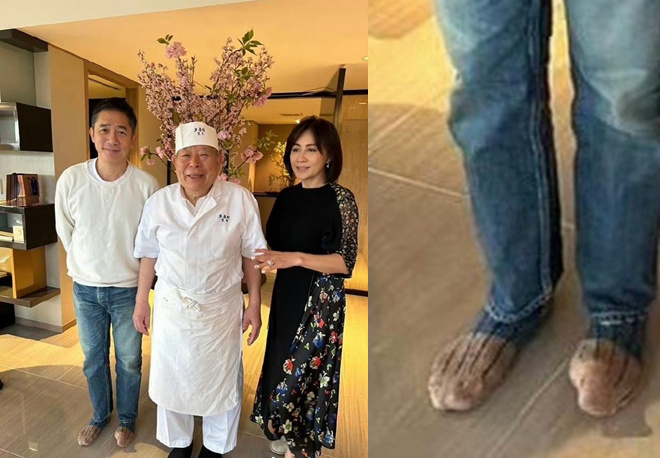
Regulations for the Implementation of the Law on Assembly, Parade and Demonstration in People’s Republic of China (PRC)

(Approved by the State Council on May 12, 1992, promulgated by Order No.8 of the Ministry of Public Security on June 16, 1992, revised according to the Decision of the State Council on Abolishing and Amending Some Administrative Regulations on January 8, 2011)

Chapter I General Provisions

  Article 1 These Regulations are formulated in accordance with the Law of People’s Republic of China (PRC) on Assemblies, Processions and Demonstrations (hereinafter referred to as the Law on Assemblies, Processions and Demonstrations).

  Article 2 People’s governments at all levels shall, in accordance with the law, safeguard citizens’ rights to assembly, procession and demonstration, maintain social stability and public order, and ensure that assemblies, processions and demonstrations held according to law are not disturbed, impacted or destroyed by anyone by violence, coercion or other illegal means.

  Article 3 The term "open-air public places" as mentioned in Article 2 of the Law on Assemblies, Demonstrations and Demonstrations refers to outdoor public places that the public can freely enter or leave with tickets, excluding the internal open-air places managed by organs, groups, enterprises and institutions; Public roads refer to roads and waterways except special roads within organs, organizations, enterprises and institutions.

  Article 4 Recreational and sports activities, normal religious activities and traditional folk customs activities shall be managed by people’s governments at all levels or relevant competent departments in accordance with relevant laws, regulations and other relevant provisions of the state.

  Article 5 The weapons mentioned in Article 5 of the Law on Assemblies, Processions and Demonstrations refer to all kinds of guns, ammunition and other devices that can be used to harm people. Controlled knives refer to daggers, triangular knives, spring knives and other knives controlled according to law; Explosives refer to all explosives with explosive power and destructive performance, which can cause casualties and damage to articles in an instant.

  The weapons, controlled knives and explosives listed in the preceding paragraph shall not be carried in assemblies, processions and demonstrations, nor shall they be transported to the places where assemblies, processions and demonstrations are held.

  Article 6 In accordance with the second paragraph of Article 7 of the Law on Assemblies, Processions and Demonstrations, traffic order and social order shall be maintained when holding activities that do not require application.

  Article 7 Assemblies, processions and demonstrations shall be in charge of the municipal and county public security bureaus and city public security sub-bureaus where they are held.

  Where the route of procession and demonstration passes through two or more districts and counties in the same municipality directly under the central government, a city under the jurisdiction of a province or an autonomous region, or the area where the dispatched offices of the people’s governments of provinces and autonomous regions are located, the municipal public security bureau or the public security department of the dispatched offices of the people’s governments of provinces and autonomous regions shall be in charge; In the administrative area of the same province or autonomous region, if it passes through the area where two or more cities under the jurisdiction of the province or autonomous region or the agencies of the people’s governments of the provinces or autonomous regions are located, it shall be in charge of the public security department of the province or autonomous region where it is located; If it passes through more than two provinces, autonomous regions and municipalities directly under the Central Government, it shall be in charge of the Ministry of Public Security or the public security organs of provinces, autonomous regions and municipalities directly under the Central Government authorized by the Ministry of Public Security.

Chapter II Applications and Permits for Assemblies, Processions and Demonstrations

  Article 8 An assembly, a procession or a demonstration must be held with a responsible person.

  The following persons shall not be responsible for an assembly, a procession or a demonstration:

  (a) a person with no capacity or with limited capacity;

  (two) the sentence has not been completed;

  (3) being reeducated through labor;

  (4) being subjected to criminal compulsory measures or other measures restricting personal freedom as prescribed by law.

  Article 9 To hold an assembly, a procession or a demonstration, the person in charge must personally submit a written application to the competent public security organ as stipulated in Article 7 of these regulations; If the written application is not submitted by the person in charge in person, the competent public security organ will not accept it.

  When submitting a written application, the person in charge of an assembly, a procession or a demonstration shall show his resident identity card or other valid documents, and truthfully fill in the application registration form.

  Article 10 After receiving an application for an assembly, a procession or a demonstration, the competent public security organ shall promptly examine it and make a written decision on whether to approve or disapprove it within the statutory time limit; The written decision shall specify the contents of the license or the reasons for disapproval.

  The written decision shall be delivered to the person in charge 2 days before the date of application for holding an assembly, a procession or a demonstration, and the person in charge shall sign the notice of delivery. If the person in charge refuses to sign for it, the addressee shall invite the representative of the local grass-roots organization or other people to be present as witnesses to explain the situation, specify the reasons and date of the refusal on the notice of service, and leave the written decision at the residence of the person in charge, which shall be deemed as having been served.

  If the specific time and place of service are agreed in advance, and the person in charge of the assembly, procession and demonstration is not waiting at the agreed time and place and cannot be served, the application shall be deemed to have been revoked by himself; If the competent public security organ fails to deliver it at the agreed time and place, it shall be deemed as permission.

  Article 11 Where an application is made for holding an assembly, a procession or a demonstration to solve specific problems, the competent public security organ shall, within 2 days from the date of receiving the application, send the Notice on Solving Specific Problems through Consultation to the person in charge of the assembly, the procession or the demonstration and the relevant organ or unit respectively, and if necessary, send it to the superior competent department of the relevant organ or unit at the same time. The relevant organs or units and the person in charge of applying for an assembly, a procession or a demonstration shall hold consultations within 2 days from the day after receiving the Notice on Solving Specific Problems through Consultation from the public security organ. If an agreement is reached, the agreement shall be sent to the competent public security organ in time by the relevant organ or unit after being signed by the responsible persons of both parties; If no agreement is reached or no consultation is held within 2 days from the day after receiving the Notice on Solving Specific Problems through Consultation, and the applicant insists on holding an assembly, a procession or a demonstration, the relevant organ or unit shall promptly notify the competent public security organ, and the competent public security organ shall promptly make a decision on approval or disapproval in accordance with the procedures specified in Article 10 of these regulations.

  If the competent public security organ informs one or both parties to solve a specific problem through consultation that they are in other places, the notice of solving a specific problem through consultation, the agreement reached by both parties through consultation or the notice that no agreement has been reached, the starting date of delivery and the time on the way will not be counted in the legal period.

  Article 12 According to Article 15 of the Law on Assemblies, Processions and Demonstrations, citizens are not allowed to launch, organize or participate in assemblies, processions and demonstrations of local citizens in cities other than their places of residence. The term "residence" as mentioned in this article refers to the place where a citizen’s permanent residence is located or where he has gone through temporary registration with the temporary residence registration authority and has lived continuously for more than half a year.

  Article 13 After receiving an application for holding an assembly, a procession or a demonstration, the competent public security organ may change the time, place and route of holding an assembly, a procession or a demonstration in any of the following circumstances, and notify its responsible person in time:

  (a) held in the rush hour, which may cause serious traffic jams for a long time;

  (two) the venue or the route is under construction, which is impassable;

  (3) The venue is a ferry, a railway crossing or an adjacent country (border);

  (four) the motor vehicles used do not meet the requirements of road maintenance;

  (five) there are major state activities at the same time and place as the application for holding an assembly, a procession or a demonstration;

  (six) at the same time, place and route as the application for holding an assembly, a procession or a demonstration, others have been allowed to hold an assembly, a procession or a demonstration.

  When deciding the license, the competent public security organ considers it necessary to change the time, place and route of an assembly, a procession or a demonstration, and it shall state it in the license decision.

  If, after the approval is decided, natural disasters or public security accidents occur in the place where the application for holding an assembly, a procession or a demonstration is made, and emergency rescue and disaster relief are still being carried out, and normal order cannot be restored before the holding date, the competent public security organ may change the time, place and route of holding the assembly, procession and demonstration, but the Decision on Change of Events of Assembly, Parade and Demonstration shall be delivered to the person in charge of the assembly, procession and demonstration before the application date.

  Article 14 If the person in charge of an assembly, a procession or a demonstration refuses to accept the decision of the competent public security organ not to grant permission, he may apply to the people’s government at the same level for reconsideration within 3 days from the date of receiving the decision of not granting permission. The people’s government shall, within 3 days from the date of receiving the application for reconsideration, make a reconsideration decision to maintain or revoke the original decision of the competent public security organ, and serve the "Decision on Reconsideration of Assemblies, Processions and Demonstrations" to the person in charge of the assembly, procession and demonstration, and send a copy to the competent public security organ that made the original decision. The reconsideration decision made by the people’s government must be implemented by the competent public security organ and the person in charge of the assembly, procession and demonstration.

  Article 15 If the person in charge of an assembly, a procession or a demonstration withdraws his application after submitting it and before receiving the notice from the competent public security organ, he shall go through the withdrawal formalities at the competent public security organ that accepted the application in time.

  If the person in charge of an assembly, a procession or a demonstration decides not to hold an assembly, a procession or a demonstration after receiving the notice of permission from the competent public security organ or the reconsideration decision approved by the people’s government, he shall return the permission decision or reconsideration decision to the competent public security organ or the people’s government that originally accepted the meeting, procession or demonstration before the scheduled time.

  Article 16 When organizing or participating in an assembly, a procession or a demonstration in the name of a state organ, a social organization, an enterprise or institution, the person-in-charge of the organization must, at the same time, submit a certificate signed and stamped by the person-in-charge of the state organ, a social organization, an enterprise or institution.

Chapter III Holding of Assemblies, Parades and Demonstrations

  Seventeenth of the assembly held according to law, the public security organ shall, according to the actual needs, send people’s police to maintain order and ensure the smooth holding of the assembly.

  For processions and demonstrations held in accordance with the law, the people’s police responsible for maintaining order should divert traffic on the routes or places where the processions and demonstrations are held with the permission of the competent public security organs, so as to prevent others from disturbing or disrupting the order of processions and demonstrations. When necessary, they can also temporarily implement the relevant provisions of traffic rules flexibly to ensure the smooth progress of processions and demonstrations.

  Article 18 The people’s police responsible for maintaining traffic order and social order shall be under the unified command of the person in charge at the scene appointed by the competent public security organ. The person in charge of the people’s police at the scene shall keep in touch with the person in charge of the assembly, procession and demonstration.

  Article 19 When a procession encounters temporary natural disasters, traffic accidents and other public security disasters on the road ahead, or serious conflicts and chaos occur between processions, processions and onlookers, and other unexpected circumstances suddenly occur, so that the procession cannot follow the permitted route, the person in charge of the people’s police at the scene has the right to temporarily decide to change the route of the procession.

  Article 20 The cordon temporarily set up by the competent public security organ shall be clearly marked, and obstacles may be set up when necessary.

  Twenty-first "assembly, procession and demonstration law" listed in Article 23 of the place where no assembly, procession or demonstration is allowed, refers to the distance extending outward from the periphery of the building in the above place; If there is a fence or fence, it shall be counted from the periphery of the fence or fence. The specific peripheral distance of places where assemblies, processions and demonstrations are not allowed shall be stipulated and promulgated by the people’s governments of provinces, autonomous regions and municipalities directly under the Central Government.

  The specific surrounding distance of places where people’s governments of provinces, autonomous regions and municipalities directly under the Central Government stipulate that assemblies, processions and demonstrations are not allowed shall be conducive to protecting the safety and order of the above places and facilitating the holding of legal assemblies, processions and demonstrations.

  Twenty-second the person in charge of an assembly, a procession and a demonstration must be responsible for maintaining the order of the assembly, a procession and a demonstration, and should be discouraged if other people join the assembly, a procession and a demonstration; Those who do not listen to dissuasion shall immediately report to the people’s police who maintain order at the scene. The people’s police shall stop it after receiving the report.

  Signs worn by persons in charge of assemblies, processions and demonstrations designated to assist the people’s police in maintaining order shall be reported to the competent public security organ for the record before the holding.

  Article 23 In accordance with the provisions of Article 27 of the Law on Assemblies, Processions and Demonstrations, the people’s police have the right to immediately stop the illegal holding of assemblies, processions and demonstrations or the occurrence of situations that endanger public security or seriously disrupt social order during the assembly, procession and demonstration. For those who refuse to stop and need to order dissolution, they shall inform the personnel present to leave the scene in a specified way within a limited time by broadcasting, shouting and other clear ways. For those who refuse to leave within a limited time, the person in charge of the people’s police at the scene has the right to order the use of police equipment or use other police means to forcibly disperse them in accordance with relevant state regulations; Those who continue to stay at the scene may be forcibly taken away from the scene or immediately detained.

Chapter IV Legal Liability

  Article 24 Whoever refuses or hinders the people’s police from performing their duties of maintaining traffic order and social order according to law and should be punished for public security administration shall be punished in accordance with the provisions of the Law on Public Security Administration Punishment; If a crime is constituted, criminal responsibility shall be investigated according to law.

  Violation of the provisions of Article 5 of these regulations, which does not constitute a crime, shall be punished in accordance with the provisions of the Public Security Administration Punishment Law.

  Article 25 In accordance with the provisions of Articles 29 and 30 of the Law on Assembly, Parade and Demonstration, if criminal responsibility needs to be investigated according to law, the competent public security organ in the place where the meeting is held shall handle it in accordance with the procedures stipulated in the Criminal Procedure Law.

  Twenty-sixth in accordance with the provisions of Article 33 of the Law on Assembly, Parade and Demonstration, the public security organ shall conduct an interrogation within 24 hours; If forced repatriation is needed, the competent public security organ in the place where the act is committed shall make a Decision on Forced Repatriation and send the people’s police to execute it. The people’s police in charge of execution shall send the deported person back to his place of residence, together with the Decision on Forced Repatriation, to the public security organ of the deported person’s place of residence, which shall handle it according to law.

  Article 27 In accordance with Articles 28 and 30 of the Law on Assemblies, Demonstrations and Demonstrations and Article 24 of these Regulations, if a party is given administrative penalties for public security, it shall be decided and executed by the public security organ in the place where the act is committed in accordance with the procedures stipulated in the Law on Administrative Penalties for Public Security. If the punished person refuses to accept the punishment decision, he may apply for reconsideration; Anyone who refuses to accept the reconsideration decision of the public security organ at the next higher level may bring a lawsuit to the people’s court in accordance with the law.

  Article 28 A public security organ shall interrogate a person who is forcibly taken away from the scene or immediately detained in accordance with the provisions of Article 27 of the Law on Assembly, Parade and Demonstration. Those who do not need to be investigated for legal responsibility may be released after making a statement of repentance; Need to be investigated for legal responsibility, in accordance with the relevant laws and regulations.

  Twenty-ninth in the process of holding an assembly, a procession or a demonstration, anyone who destroys public or private property or infringes on the body of others and causes casualties shall be liable for compensation according to law.

Chapter V Supplementary Provisions

  Article 30 The provisions of these Regulations shall apply to assemblies, processions and demonstrations held by foreigners in China.

  If a foreigner requests to participate in an assembly, procession or demonstration held by a citizen of China in China, the person in charge of the assembly, procession or demonstration shall specify it in the application; Without the approval of the competent public security organ, it is not allowed to participate.

  Article 31 The implementation measures formulated by the standing committees of the people’s congresses of provinces, autonomous regions and municipalities directly under the Central Government in accordance with the Law on Assemblies, Processions and Demonstrations shall apply to their respective administrative areas; In case of conflict with these regulations, these regulations shall prevail.

  Article 32 The Ministry of Public Security shall be responsible for the interpretation of problems in the specific application of these Regulations.

  Article 33 These Regulations shall come into force as of the date of promulgation.

Performers in the United States: China Orchestra should bring good works abroad and don’t engage in hodgepodge.

  During the just-concluded tour of the National Grand Theatre Orchestra in the United States, the Concerto for Pipa and String Orchestra by American composer Lu Harrison, played by pipa player Wu Man in the United States, became a unique work that attracted attention during the tour. Although this work was created 20 years ago, Wu Man and Chicago Symphony Orchestra won the Grammy Award for Best Solo and Band for this work, and they have cooperated with foreign orchestras many times in the past, it is the first time to take this work to tour with China Orchestra. At the end of the tour with the Orchestra of the National Centre for the Performing Arts, Wu Man said in an interview: "There are many overseas performances by the China Orchestra, so it is necessary to bring good works out before they will be affected and concerned. What I am most afraid of is that all the works are left there like a hodgepodge."

  "Introduction to Pipa" written by Americans

  Beiqing Daily: What’s the feeling of playing this work?

  Wu Man: This work is very difficult, and all the pipa parts are monophonic. The most difficult thing is the single tone. How to make the single tone pop up makes people feel interesting. This is a special test. In fact, the score that Lou Harrison gave me when he wrote it was a single tone, and there were no pipa fingering on it. All fingering was designed by myself. This work can also play the flute, guitar and any musical instrument. He said, "This is for you. How can you play it like a pipa?"

  Beiqing Daily: What do Western audiences think of this work?

  Wu Man: From the western audience, I think it is a particularly good model for listening to Chinese musical instruments. Many audiences have never heard of the pipa. After listening to this song, he became interested and found it very interesting. Especially, there are few traditional music from other countries in the central United States performing there. Sometimes I perform with local orchestras, and the audience will say, "It’s very nice." Moreover, there are some beautiful passages with string plucking, so I think it is a very good work to introduce Chinese musical instruments. It’s a very fresh work for the audience in China, which is different from what China composers wrote and what they usually hear. In the past, we guessed that the Pipa Concerto was like that, which is the opposite. It’s actually a very interesting music language and a manifestation of the combination of two cultures.

  Take China’s works carefully.

  Beiqing Daily: What do you think of this tour with so many China works by the National Grand Theatre Orchestra?

  Wu Man: I think it’s particularly good. It’s particularly meaningful to bring the works of China composers, teachers Zhao Jiping and Chen Qigang. This is necessary. I was sitting in the audience, and my foreign friends around me, including the director of the New Jersey Symphony Orchestra, said it was a good work. Everyone has heard it, but this work has never been heard before. The style is very different from that of China’s works heard in the past. It is very different from Beethoven and modern and contemporary composers. There are elements of China in it. Many people ask me what those national percussion music are, and they think the sound is very special, bringing out elements of China opera. This work is particularly successful and mature.

  Beiqing Daily: Do you have any suggestions for China Orchestra to bring China’s works abroad?

  Wu Man: The suggestion is to bring good things out, and never bring bad things, because in the past, some orchestras took too many bad things abroad, which sometimes made people laugh and cry. Therefore, you must bring good things before you can really enter the level of communication. The so-called "good" is actually difficult to define, but you really have to think carefully about what kind of tracks you bring. I think it’s really been considered for a long time this time, and all the works brought out are works with some meaning in them. What I fear most is that all kinds of works are left there, like a hodgepodge. I think what China Orchestra brings abroad must have its own characteristics, whether it’s classical music or traditional folk bands, and it must have traditional and good things. I’m going to take the Shaanxi old tune out in March next year, and I’m going to tour 12 cities in the United States. Many concert halls need it, and if I want to bring it, I’ll bring it with me. In the past, some orchestras didn’t think about going abroad to perform their tracks, but they brought them here at sixes and sevens, and it didn’t matter if they found a place to perform, nor did the audience. It was a pity to find some China audiences to watch and do something for the sake of doing something, which wasted musicians’ talents and opportunities. If you really think about it, bring some good things.

  Text/Reporter Lun Bing Photography/Wang Xiaojing

One death and one injury caused by the explosion of Liuyang Fireworks Factory: unauthorized resumption of work during the period of suspension of production and rectification.

  △ Explosion site

  CCTV News:The reporter learned from the Propaganda Department of Liuyang Municipal Committee that at 7: 35 am on December 26, 2019, Taihe Branch of Liuyang yong he zhen Ruifeng Fireworks Material Manufacturing Co., Ltd. opened the production without the approval of resuming work during the period when the fireworks and firecrackers production enterprises in the city stopped production and rectified. At about 7: 52 a.m., an explosion occurred while discharging from the granulation room, resulting in one death and one injury.

  △ Gate of Taihe Branch of Liuyang yong he zhen Ruifeng Fireworks Material Manufacturing Co., Ltd.

  After the accident, the Hunan Provincial Emergency Management Department and relevant responsible comrades in Changsha and Liuyang immediately rushed to the scene to dispatch emergency, public security, health, fire and other units to carry out rescue and rehabilitation work. At present, the injured have been sent to hospital for treatment, and their vital signs are stable. The factory’s legal representative, safety officer and other relevant responsible persons have been controlled by the public security organs.

  The cause of the accident is under investigation. (CCTV reporter Li Yanjun)

National development and reform: strengthening the protection and management of important lakes in the Yangtze River Economic Belt

  According to the National Development and Reform Commission, a few days ago, the National Development and Reform Commission issued a guiding opinion on strengthening the protection and governance of important lakes in the Yangtze River Economic Belt, proposing that by 2035, the effectiveness of protection and governance of important lakes in the Yangtze River Economic Belt should meet the people’s needs for a beautiful lake ecological environment, and basically reach a level of lake protection and governance that is compatible with the goal of beautiful China, effectively ensuring the high-quality development of the Yangtze River Economic Belt. The full text is as follows:

Guiding Opinions of the National Development and Reform Commission on Strengthening the Protection and Governance of Important Lakes in the Yangtze River Economic Belt

Development and Reform Area [2021] No.1617

  Development and Reform Commission of Shanghai, Jiangsu, Zhejiang, Anhui, Jiangxi, Hubei, Hunan, Chongqing, Sichuan, Guizhou and Yunnan:

  Lakes are important carriers of water resources. There are many lake systems in the Yangtze River Economic Belt, and there are five freshwater lakes in China. As the key elements of river ecosystem, Poyang Lake, Dongting Lake, Taihu Lake, Chaohu Lake, Erhai Lake and Dianchi Lake are rich in water, which plays an irreplaceable role in ensuring the safety of ecology, water resources and flood control in the Yangtze River Economic Belt and promoting the economic and social development of the basin.

  Since the implementation of the strategy of promoting the development of the Yangtze River Economic Belt, the provinces and cities along the Yangtze River have vigorously promoted the protection and management of the main stream and important tributaries of the Yangtze River, while strengthening the protection and restoration of lakes, and achieved remarkable results. However, due to the special laws of lakes, such as vast water area, slow water exchange and easy diffusion of pollutants, it is more difficult to protect and repair them than the main branches and tributaries of the Yangtze River. In addition, industry and agriculture, population and towns along the lake are densely populated, economic development has long competed with lakes for water and land, and urban construction, especially real estate development, has encroached on lake ecological space. Important lakes in the Yangtze River Economic Belt generally face outstanding problems such as damaged ecological functions, insufficient water conservation capacity, deterioration of water environment, shrinking biodiversity and declining flood storage capacity. In order to thoroughly implement the supreme leader’s ecological civilization thought, further strengthen the protection and management of important lakes in the Yangtze River Economic Belt, and continuously improve the ecological environment quality of the Yangtze River Economic Belt, with the consent of the leading group for promoting the development of the Yangtze River Economic Belt, we hereby put forward the following opinions.

  I. General requirements

  (1) Guiding ideology. Guided by the Supreme Leader’s Socialism with Chinese characteristics Thought in the New Era, we will fully implement the spirit of the 19th National Congress of the Communist Party of China and the Second, Third, Fourth, Fifth and Sixth Plenary Sessions of the 19th National Congress, thoroughly implement the Supreme Leader’s ecological civilization thought, completely, accurately and comprehensively implement the new development concept based on the new development stage, integrate and serve the new development pattern, closely follow the development objectives and tasks of the Yangtze River Economic Belt, and pay close attention to the major issues of important lakes. Focusing on Poyang Lake, Dongting Lake, Taihu Lake, Chaohu Lake, Erhai Lake, Dianchi Lake and other important lakes, taking the protection of lake ecological environment as a breakthrough, the rivers and lakes should be treated together, the waterfront should be treated together, and the watershed should be treated together, so as to promote the transformation of important lakes from excessive intervention and overuse to natural restoration and recuperation, build a complete, stable and healthy lake ecosystem, and help the high-quality development of the Yangtze River Economic Belt.

  (2) Basic principles

  Ecological priority and green development. Firmly establish the concept of Lucid waters and lush mountains are invaluable assets, give full play to the self-repairing ability of nature, and effectively protect important lake ecosystems. According to the carrying capacity of the lake ecosystem, we will further adjust and optimize the layout of the industrial structure in the lake area, and carry out water production and quantity to promote regional green and sustainable development.

  Make overall plans to promote and integrate governance. Follow the laws of natural ecosystem succession and evolution of rivers and lakes, respect and conform to nature, grasp that rivers and lakes are an organic whole, and consider the elements of river and lake ecosystems as a whole according to the integrity, systematicness and internal logic of the ecosystem of mountains, rivers and lakes, and promote comprehensive management, systematic management and source management.

  According to local conditions, classified policy. Fully sum up the practical experience of protection and management of important lakes in the Yangtze River Economic Belt, deeply analyze the characteristics of different types of lakes, scientifically distinguish the commonness and individuality of lakes, grasp the main aspects of major contradictions and contradictions in lake protection and management, focus on key areas, fields and key elements, highlight key points, fill shortcomings, strong and weak items, and scientifically manage and accurately protect them.

  Deepen reform and improve the mechanism. Benchmarking the new requirements of major national strategies such as the development of the Yangtze River Economic Belt and the integrated development of the Yangtze River Delta on lake protection and governance, improving the system and mechanism of lake protection and governance, improving the policy of lake protection and governance, promoting scientific and technological innovation, further improving the ability and level of lake governance, establishing and improving the long-term mechanism of lake protection and governance, and improving the system of lake protection and governance.

  (3) Overall objectives. By 2025, there will be no large-scale cyanobacteria bloom in Taihu Lake and Chaohu Lake, which will lead to the black odor of water bodies and ensure the safety of water supply sources. The ecological environment quality of Dongting Lake, Poyang Lake, Erhai Lake and Dianchi Lake has been consolidated and improved, the outstanding ecological problems have been effectively treated, and the water quality has been stable and good. The storage capacity of lakes such as Dongting Lake and Poyang Lake has been continuously improved, and a healthy, stable and complete lake and its surrounding ecosystem have been built in an all-round way. By 2035, the effectiveness of the protection and management of important lakes in the Yangtze River Economic Belt will meet the people’s needs for a beautiful lake ecological environment, and the level of lake protection and management will basically reach the goal of beautiful China, effectively ensuring the high-quality development of the Yangtze River Economic Belt.

  Second, focus on optimizing the spatial layout

  (4) Accelerate the construction of a management and control system. Focusing on the objectives and tasks of the protection and management of important lakes in the Yangtze River Economic Belt, based on the carrying capacity of resources and environment, taking into account the integrity of lake ecosystem, the continuity of physical and geographical units and the sustainability of economic and social development, we will speed up the preparation of land spatial planning for the Yangtze River Basin and establish and improve a unified spatial planning system for the basin. We will evaluate the carrying capacity of resources and environment and the suitability of land space development, identify important ecosystems in the lake area, effectively link up the red line of ecological protection, and rationally arrange all kinds of spaces and elements. Optimize the layout of land space development and protection, and plan the utilization of lake water resources, water pollution prevention, water ecological restoration, aquatic biological protection and other spaces according to local conditions. Strengthen the monitoring, evaluation and early warning of key lake basin protection and governance planning, and strictly implement the control of land and space use.

  (five) to promote the registration of natural resources. Explore and promote the unified registration of natural resources in Poyang Lake, Dongting Lake, Taihu Lake, Chaohu Lake, Erhai Lake, Dianchi Lake and other important lakes, and build a unified registration system of natural resources with the rule of law, standardization, standardization and informationization. Clarify the boundaries of different natural resource types and clearly define the ownership subject of natural resource assets in ecological space such as important lake basins. Actively explore the ways and means of water right registration, improve the property right system of water resources and promote the optimal allocation of water resources.

  Third, actively promote ecological protection

  (six) to strengthen the protection of water coastline. Define the scope of lake management in accordance with the law and the plan, scientifically delimit the lake shoreline protection area, reserved area, controlled utilization area and development and utilization area, clarify the requirements for zoning control and use control, strictly control the project construction and activities that may affect flood control safety, water supply safety and ecological safety, fulfill the permits for river-related construction projects and activities in accordance with the law, and effectively implement the ecological environment impact assessment system. It is forbidden to reclaim land around the lake, and return the land to the lake in an orderly manner. Strengthen the management of sand mining in the lake area and severely crack down on illegal sand mining. We will continue to standardize and promote the "clean-up and chaos" of lakes (indiscriminate occupation, indiscriminate mining, disorderly piling and disorderly construction), carry out plastic waste cleaning in a normal way, and continuously consolidate the effectiveness of cleaning up and rectifying.

  (seven) the implementation of wetland protection and restoration. Adhere to the combination of protection priority, natural restoration and artificial restoration, lay out and implement major ecological protection and restoration projects in key ecological areas of the Yangtze River, and promote the protection and restoration of important wetlands as a whole. Strengthen the construction of wetland protection and management infrastructure, actively promote the restoration of wetland natural habitats and important wildlife habitats, and promote the steady improvement of important wetland ecosystem functions. We will improve the satellite remote sensing monitoring system, strengthen the supervision and inspection of wetlands, resolutely stop reclamation and occupation of wetlands under various pretexts according to law, and speed up the retreat of wetlands that can be restored.

  (8) Improve the level of biodiversity. Focusing on Dongting Lake and Poyang Lake, we will carry out investigation and monitoring of lake biodiversity and evaluation of biological integrity index, implement rescue operations for rare and endangered species such as Chinese sturgeon and Yangtze finless porpoise, promote the combination of ex situ conservation and artificial breeding protection, and strengthen the protection of key habitats and the preservation of genetic resources. We will improve the system of lake recuperation, strictly implement the system of banning fishing in lakes, resolutely crack down on illegal fishing and effectively restore aquatic biodiversity. Strictly manage the introduction of alien species according to law and strengthen the management of invasive species with major hazards. Strengthen the protection of migratory birds and improve the habitat environment of migratory birds in lakes.

  Fourth, in-depth implementation of pollution control

  (9) Strengthen the rectification of outstanding problems in the ecological environment. We will continue to do a good job in the rectification of the ecological environment warning film in the Yangtze River Economic Belt and the problems involving important lakes disclosed by the central ecological environmental protection inspector, establish problem accounts in different categories, clarify the rectification plan, pay close attention to negative examples, and strengthen law enforcement supervision. Explore the establishment of a joint prevention and control mechanism for river basin pollution, organize the investigation of deep-seated problems, and establish a long-term mechanism for rectification of lake ecological and environmental problems, and find them together, rectify them together, and sell them together.

  (10) Intensify the comprehensive prevention and control of pollution. Further promote the implementation of the "4+1" project of urban sewage and garbage treatment, chemical pollution control, agricultural non-point source pollution control, ship pollution control and tailings pollution control in the lake area, and continuously consolidate the achievements of lake environmental pollution control. Ensure the operation of urban and rural domestic sewage treatment facilities in the lake area, standardize the construction of sewage outlets into the lake, and strengthen the investigation and rectification of sewage treatment facilities in industrial parks. Strictly control agricultural non-point source pollution, support the use of organic fertilizers and green pesticides, and improve the comprehensive utilization rate of livestock manure in the lake area.

  Five, to ensure the safety of drinking water sources

  (eleven) to strengthen the environmental protection of water sources. In order to ensure the water quality of the water source of the Middle Route of South-to-North Water Transfer Project as the top priority, we will implement special water source enforcement actions and seriously investigate and deal with illegal acts in drinking water source protection areas. Focusing on Dongting Lake and Taihu Lake, we will investigate and ban sewage outlets and docks that have a great impact on water sources. Regularly investigate and evaluate the environmental conditions of centralized groundwater drinking water source replenishment areas, and carry out pilot projects for the remediation of groundwater contaminated sites. For drinking water sources that do not meet the requirements of Class III water quality, it is necessary to formulate and implement water supply guarantee and water quality compliance schemes.

  (twelve) to improve the safety and security capabilities of water sources. Reasonable layout of drinking water sources and water intakes in the lake area, formulation and publication of drinking water source lists, delineation of drinking water source protection areas, strengthening the construction of emergency standby water sources in important cities in the lake area, and improving the safety and security level of urban and rural drinking water sources. Carry out standardized construction of urban drinking water sources and safety assessment of drinking water sources, and promote the relocation and transformation of heavily polluting enterprises that affect drinking water safety. Strengthen the monitoring of drinking water sources in Taihu Lake, Chaohu Lake and other lakes during the high-incidence period of cyanobacteria, and formulate and improve the emergency plan for sudden water pollution incidents with "one lake and one policy".

  Sixth, accelerate the promotion of green development

  (thirteen) to strengthen the conservation and intensive use of water resources. In-depth implementation of national water-saving actions to promote the transformation of production, living and ecological water use in the lake area to economical and intensive use. Solidly promote water saving and efficiency improvement in industry, agriculture and cities and towns, strictly control the construction of high-water consumption projects, and strengthen the water use plan and quota management of key monitoring water users in the lake area. Strengthen the demonstration of water resources, improve the monitoring and early warning mechanism of water resources carrying capacity, strengthen the monitoring and measurement of water intake, and strictly control the total regional water consumption.

  (14) Adjust and improve the industrial structure. Strictly implement the negative list system for the development of the Yangtze River Economic Belt, accelerate industrial clean production, recycling transformation and comprehensive utilization of resources, and scientifically build the industrial development pattern in the lake area. Strengthen the rectification of "scattered pollution" enterprises, promote the upgrading and transformation of traditional industries such as papermaking, printing and dyeing in Taihu Lake and Chaohu Lake, orderly promote the transfer of related industries to areas with strong resource carrying capacity, and properly do a good job in the follow-up basic livelihood security such as withdrawing from industries and banning fishing in lakes. Explore ways to realize the value of ecological products in Taihu Lake, Erhai Lake and Dongting Lake, and promote the transformation of ecological value.

  (15) Vigorously promote economic transformation. Actively develop strategic emerging industries and cultivate industries such as biotechnology, new energy, new materials and environmental protection according to local conditions. Actively develop modern service industries in qualified lake areas such as Taihu Lake and fully absorb employed people. We will guide the development of various forms of moderate scale operations and vigorously develop efficient ecological agriculture in Dongting Lake and Poyang Lake. We will promote the development of lake tourism in Dianchi Lake and Erhai Lake, create a global tourism demonstration zone, strengthen and improve industries with distinctive advantages such as eco-agriculture, eco-tourism, vacation and recreation, and help promote the industrial transformation and development of the lake area.

  Seven, improve the system and mechanism.

  (sixteen) to strengthen the system of rivers and lakes. In accordance with the principle of unified planning, overall planning of river basins and respective responsibilities, relying on the platform of river length system and lake length system, we will improve the lake management system combining river basin management with administrative area management, improve the organization system of lake length system, and compact the territorial responsibility of lake protection and governance. Explore the establishment of a coordinated linkage mechanism between provincial lakes and lakes, and coordinate and solve major issues of lake protection and governance across regions and basins. Study and establish a joint prevention and control mechanism for trans-regional lakes, and strengthen regional cooperation and departmental linkage. Strict supervision and assessment of lake protection and governance, and improve the inspection and supervision system.

  (seventeen) explore the establishment of ecological compensation mechanism. Encourage the establishment of ecological protection compensation mechanism in the location of important lakes, promote the location of important lakes and rivers entering and leaving lakes to actively explore new ways of compensation for ecological protection in river basins, determine the improvement target of lake water ecological environment through consultation, and accelerate the formation of a pattern of joint protection and governance of lake ecological environment. We will further improve the compensation mechanism for ecological protection and increase the protection of important ecosystems such as forests, grasslands and wetlands. Give full play to the guiding role of central funds and local governments, and improve the channels of compensation funds.

  (eighteen) to improve the level of supervision and law enforcement. Make full use of modern monitoring methods such as unmanned aerial vehicles, vigorously promote the modernization, automation and informatization of lake monitoring, and continuously improve the monitoring ability and monitoring efficiency. Establish and improve the comprehensive evaluation system of lakes, and regularly and objectively evaluate the health and ecological security of lakes. Accelerate the improvement of laws and regulations on lake protection and governance, vigorously promote joint law enforcement, and strive to improve the comprehensive supervision system. Establish and improve the connection between lake protection administrative law enforcement and criminal justice, and intensify the crackdown on water encroachment, illegal drainage, illegal sand mining and illegal fishing.

  Viii. Strengthening safeguard measures

  (nineteen) to strengthen organizational leadership. Adhere to the working principles of overall planning by the central government, overall responsibility by the province and implementation by cities and counties. The Ministry of Natural Resources, the Ministry of Ecology and Environment, the Ministry of Water Resources, the Ministry of Agriculture and Rural Affairs and other departments have studied and formulated major plans and policy recommendations for lake protection and governance, and coordinated and solved major problems across regions and basins, with strong support from relevant departments. At the provincial level, it is necessary to fulfill the main responsibility, strengthen planning, systematically promote implementation, and issue policy documents to complete the protection and management of important lakes in this province within 2021. At the city and county levels, we will put them in place one by one according to the deployment, further strengthen the practice of making rivers and lakes long at the grass-roots level, and ensure new achievements in lake protection and governance.

  (twenty) to deepen the study of the problem. Combined with the natural characteristics and functional attributes of different types of lakes, the background situation of lake protection and management was found out. In view of the common and individual problems, we will carry out in-depth research on major issues such as the evolution of river-lake relations, the causes of environmental pollution, the mechanism of cyanobacteria bloom, the protection measures for plateau lakes, and the protection measures for aquatic organisms. Steadily promote the implementation of major projects such as river-lake connectivity, water conservancy and hydropower, and ecological environment protection projects, promote the harmony between rivers and lakes, and continuously expand the ecological environment capacity.

  (twenty-one) to strengthen financial support. According to the division of financial affairs and expenditure responsibilities, governments at all levels reasonably arrange financial funds for lake protection and governance, and include qualified lake ecological environment protection and restoration projects into the scope of local government special bonds. Actively promote the establishment of a diversified investment and financing mechanism with government guidance, market operation and social participation, and guide state-owned enterprises, various financial institutions and social capital to participate in lake protection and governance according to laws and regulations. Regularly evaluate the effectiveness of lake protection and governance, carry out commendation and awards according to regulations, and further highlight the role of driving demonstration.

  (twenty-two) to increase publicity. Intensify the propaganda of ecological environment protection of important lakes in the Yangtze River Economic Belt, make full use of new media and media to publicize and promote good experiences and practices in lake protection and governance, and learn from each other. Strengthen public participation, vigorously publicize the concept of ecological priority and green development, guide the public to participate in voluntary actions for the protection of important lakes in the Yangtze River Economic Belt, raise public awareness of responsibility and participation in the protection of rivers and lakes, and promote the formation of a good atmosphere for jointly protecting the mother river of the Yangtze River.