"September 18th", what should we remember?
Only by remembering history can we move towards a bright future.
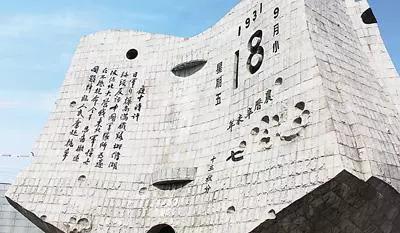
Eighty-seven years ago, the Japanese Kwantung Army brazenly blew up the tracks of the South Manchuria Railway and shelled Peking University Camp, creating the "September 18th Incident" that shocked China and foreign countries, thus opening the curtain for China people’s War of Resistance against Japanese Aggression.
No matter how the years change, no matter how the time passes, a sentence of "don’t forget the national humiliation" will still arouse the unyielding soul in our blood, and a sentence of "rejuvenating China" can still arouse the dignity of our inner nation.
Let the alarm bell ring in your heart, which is the best commemoration of history. Today, two articles, Liberation Army Daily and China National Defense Daily, lead us to relive that period of history.
I often relive the song "On the Songhua River"
Ning Wang
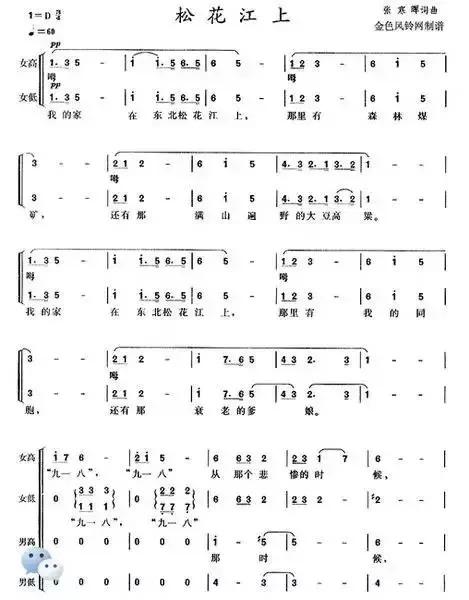
"918, 918! From that tragic time, I left my hometown, abandoned the endless treasure and wandered! Wandering! "
Accompanied by this powerful and sonorous "On the Songhua River", another "September 18th" anniversary is coming to us. A long song, telling the national mourning; History echoes and will never forget. Singing this song, we seem to return to the humiliating history of broken mountains and rivers, feel the bloody pride of countless people with lofty ideals, and draw strength from history to forge ahead.
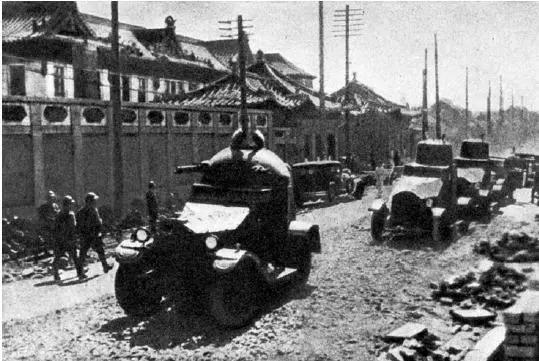
Every Chinese should not forget this historical moment: on the night of September 18th, 87 years ago, a loud noise in the Liutiaohu section of the Nanman Railway started the Japanese invasion of China. In order to carry out Chiang Kai-shek’s "non-resistance" policy, Zhang Xueliang ordered Rong Zhen, then chief of staff of the Northeast Army, to preserve his strength. As a result, the Japanese army with less than 800 troops captured the Northeast Army Peking University Camp with nearly 7,000 troops in just a few hours, and in less than 24 hours, the whole city of Shenyang fell. Just four months later, the beautiful and rich northeast fell, and 30 million compatriots became conquered people.
The pain of the country is remembered by singing. After the "September 18th Incident", the officers and men of the Northeast Army were forced to take their families with them and go into exile in the Shanhaiguan Pass. They were unable to return to their homes and report their enmities, and their hearts were filled with deep bitterness and resentment. In Xi ‘an, Zhang Hanhui, a musician, heard and witnessed such a tragic scene, and wrote a song "On the Songhua River" based on it. It not only sang the tragic experience and indignation of compatriots in Northeast China, but also awakened the sleeping hearts of countless Chinese people and ignited the blazing anti-Japanese bonfire in China.
"It is better to teach Baishan black water to be turned into a red blood area than to stand on the shore of the Yellow Sea with Huaying slaves." Faced with the growing national humiliation, the Chinese sons and daughters who woke up in a deep sleep issued a cry of "unwilling to be conquered people" from the bottom of their hearts, resolutely stood up and bravely resisted. Under the banner of the anti-Japanese national united front advocated by the Communist Party of China (CPC), from Baishan Heishui to the southern jungle, from the foot of the Great Wall to Taihang Mountain, and on the suffering land of China, the rolling torrent of saving the nation from extinction is constantly gathering.
The songs of the battle are shocking, and the cries of the times are alarming. In those war-torn years, whenever the song "On the Songhua River" sounded, people gathered from the edge of farmland, alleys and factories as if they heard the assembly number, uniting as one and going to the national disaster together. On New Year’s Eve in 1937, Comrade Zhou Enlai specifically mentioned in the article "The Nature and Task of the Youth Movement at the Present Stage": "A song named" On the Songhua River "is really heartbreaking." In the 1960s, On the Songhua River was also compiled into a large-scale music and dance epic Dongfanghong, which was widely sung in China.
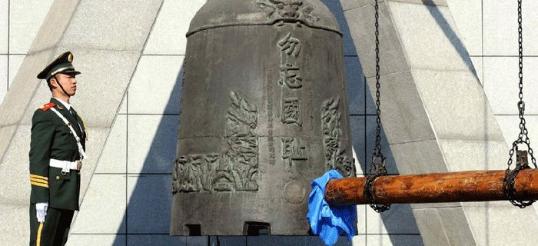
source map
If you forget yesterday, you will be lost in tomorrow. Today, the history of the country being trampled under the enemy’s iron hoof is long gone, and the "lovely hometown" has long been recaptured from the enemy. However, this song "On the Songhua River" still reverberates in our ears, reminding us with deep cries and tragic cries that we should not forget the past history, but cherish today’s motherland and hometown. Standing in today’s era, we should understand the truth that "the past is not forgotten, and the future is a teacher" when we look at the history of the Chinese nation.
Only by remembering history can we accumulate the strength to forge ahead in the cross-flow of the sea. We commemorate "September 18th" and write the concept of "Fourteen-year War of Resistance" into all kinds of teaching materials in order to better restore history, commemorate history and learn from it, and also to better cherish the present and move forward courageously.
"Peace without forgetting danger, survival without forgetting death, and governance without forgetting chaos." Today, bathed in the peaceful sunshine, we might as well sing that song "On the Songhua River" often, feel a kind of feeling, realize a kind of worry and get the spiritual motivation to move forward. As a soldier, we should feel the warning sound of history in the passionate melody, always be in a state of preparing for war, temper our excellent skills to win the battle, stimulate our heroic and tenacious fighting will and revolutionary spirit not afraid of sacrifice, keep the shadow of war behind us, and never let the tragedy repeat itself and humiliation repeat itself. Only this is the best commemoration of history.
(This article was published in the 06 th edition of the People’s Liberation Army Daily on September 17, 2018)
What should we remember about "September 18th"
Yu yongjun
Eighty-seven years ago, the Japanese Kwantung Army brazenly blew up the tracks of the South Manchuria Railway and shelled Peking University Camp, creating the "September 18th Incident" that shocked China and foreign countries, thus opening the curtain for China people’s War of Resistance against Japanese Aggression. Don’t forget the national humiliation, let the alarm bell ring in your heart, which is the best commemoration of history.
source map
"Honesty is brave and martial, and it will be strong and unyielding." In that era of blood shed, the people of China shared the same enemy and went to the national disaster together, and their iron bones clanked and they died, playing a heroic song of triumph. Looking back at history today, we should not only expose the crimes of the aggressors and warn the world not to forget the wounds of war, but also draw strength and wisdom from the sufferings of the past and face the future with a broader vision.
We should bear in mind that we should keep a strong sense of hardship at all times. Take it lightly and be careless, and you must pay a heavy price. In the early 1930s, Japanese militarism had been sharpening its swords and provoking constantly, but at that time, the national government always held unrealistic fantasies and fluky psychology, and many people thought that the war could not be fought. There is no preparation for killing wolves, and they can only be eaten by wolves in the end. After the "September 18th Incident", the National Government insisted that "the foreign countries must be settled first". In the face of just over 10,000 Japanese troops, 200,000 Northeast Army retreated into Shanhaiguan Pass without resistance, and the three northeastern provinces fell for more than four months. The concession of the National Government encouraged the Japanese militarists to expand their ambitions, so that a few years later, most of China was trampled on by the iron hoof. The biggest worry is lack of worry, and the biggest crisis is overstepping the crisis. Never forget danger in times of peace, never forget death in times of peace, and never forget chaos in times of peace. Only by remembering historical lessons, never forgetting sacred duties, and sharpening the iron horse of Jin Ge can we avoid the recurrence of tragedies.
source map
Over the past decades, the Japanese authorities have been secretive about the nature of their militaristic war of aggression and the responsibility for the war, unwilling to give a clear and definite account and sincere apology to the people of the victimized country. We must never relax our high vigilance against the aggressive nature of Japanese militarism under its various cover-ups.
We should bear in mind that loving peace requires establishing a correct view of peace. The world is not peaceful, and peace needs to be defended. Without a strong national defense, praying for peace is just a pipe dream. We long for peace, but we must never be idealists of peace. Peace is fought for, spelled out and fought out, not endured, waited for and endured, let alone given by others. Only by being prepared to fight at all times can we strive for real peace. Without a strong national defense barrier, no matter how much wealth you have, you are still a lamb to be slaughtered.
Our army is the people’s army, and our national defense is the national defense of the whole people. No matter how the war form and the war environment change, winning the future war is always inseparable from the support of the people and the national defense of the whole people. War is still a contest of comprehensive national strength including troops, materials, information, technology and national spirit. It is necessary to adhere to the national defense concept of the whole people, strengthen the cultivation of national defense awareness, and form a good situation in which the whole society cares about and supports national defense. We can’t just think of "the cutest person" in times of crisis, but really make soldiers a respected profession in the whole society. Only a strong national defense can make arrogant aggressors dare not covet it, and can the sunshine of peace shine on the land of China forever.
We should bear in mind that it is a soldier’s bounden duty to win the battle. Soldiers are born to win. The value of soldiers is not only reflected in winning wars, but also in containing wars. At the end of 1938, after the wars in Shanghai, Shanghai and Wuhan, the National Government lost a lot of personnel and equipment, the army personnel were less than half of the original establishment, and the navy and air force were almost exhausted. In the Battle of Zhongtiaoshan, the Japanese army completed the outer encirclement in only 35 hours, and the inner encirclement in only 40 hours, realizing the double encirclement of nearly 200,000 Kuomintang troops. It took only 30 days before and after, and most of the Kuomintang troops were scattered. According to Japanese statistics, its casualties are less than 1/12 of China’s army. Chiang Kai-shek called this campaign "the greatest shame in the history of the Anti-Japanese War". Of course, there are reasons for the backwardness of weapons and equipment, but the lack of combat effectiveness of the army is also an important factor. This shows us that winning requires a teacher of tigers and wolves!
安享和平是人民之福,保卫和平是人民军队之责。今天,我们比历史上任何时期都更接近中华民族伟大复兴的目标,比历史上任何时期都更需要建设一支强大的人民军队。必须坚决克服形式主义、花架子,让“中看不中用”的人走开,从实战出发苦练精兵,锻造既能冲得上更能打得赢的军队。
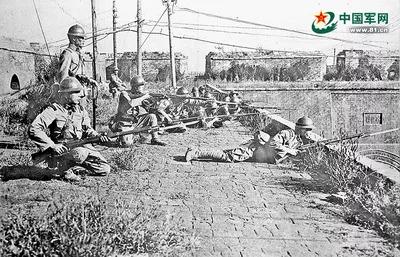
我们应当铭记,必须时刻注重民族血性和尚武精神的培养。在抗日战争的壮阔进程中,形成了伟大的抗战精神:天下兴亡、匹夫有责的爱国情怀,视死如归、宁死不屈的民族气节,不畏强暴、血战到底的英雄气概,百折不挠、坚忍不拔的必胜信念。这是中国人民弥足珍贵的精神财富,永远是激励中国人民克服一切艰难险阻、为实现中华民族伟大复兴而奋斗的强大精神动力。血性胆魄与尚武精神不是与生俱来的,需要后天的精心培育和艰苦培养。习主席指出,革命传统教育要从娃娃抓起,既注重知识灌输,又加强情感培育,使红色基因渗进血液、浸入心扉,引导广大青少年树立正确的世界观、人生观、价值观。在党史军史的学习中、红色文化的熏陶中涵养浩然正气、铮铮骨气,让崇尚英雄、学习英雄的坚毅豪情在青少年心底深深扎根。
Switzerland, a small European country with an area of less than 42,000 square kilometers and a population of just over 8 million, has enjoyed a peaceful and peaceful life for 200 years. In any village in Switzerland, you can see churches, coffee shops and shooting ranges. From state leaders to ordinary citizens, they should receive national defense education and military training. A Swiss diplomat once said: "A Swiss citizen is a citizen when he steps on his right foot, and a soldier when he steps on his left foot. If we want to ask why we haven’t fought for nearly 200 years, the main reason is that we are always ready to fight. " The rise and fall of a country’s martial arts movement is inextricably linked with social atmosphere. Citizen’s concept education is also a position. If patriotic culture and martial spirit are not occupied, traitor culture and "Nianpao" will fill in the blanks. On the one hand, kindergartens, schools, families and society need to work together to vigorously carry forward and cultivate masculinity and martial arts; On the other hand, the mainstream media must have an attitude and responsibility, and give full play to the positive guiding role.
The smoke of history has dispersed, but the threat of reality is ever-present. Yin Jian is not far away, so future generations should guard themselves and accumulate enterprising spirit and high morale for the great rejuvenation of the Chinese nation.