What is the normal blood pressure range of human body? What diseases can hypertension cause? Expert answer
Today is World Hypertension Day. Hypertension is one of the most common chronic diseases, and it is the most important risk factor for the onset and death of heart disease, stroke and kidney disease. What is hypertension? What is the normal blood pressure range of human body?
The medical staff suggested that under the condition of not using antihypertensive drugs,Systolic blood pressure (high pressure) ≥ 140 mmHg (mmhg) or diastolic pressure (low pressure) ≥ Hypertension can be diagnosed when it is 90 mmHg..Family continuous standard blood pressure measurement 5-mdash; 7 days, average blood pressure ≥ 135/85 mmHg can be diagnosed as hypertension.It is recommended to see a doctor.

Zhang Huimin, Chief Physician of Hypertension Center, Fuwai Hospital, China Academy of Medical Sciences:First of all, we will check the patient and do a 24-hour ambulatory blood pressure. At the same time, we will do some corresponding tests, such as an electrocardiogram, a biochemical examination of blood, a urine routine and a blood routine. We will analyze whether he has heart, brain and kidney damage and whether there are some factors of secondary hypertension according to such circumstances.
At what level should the blood pressure of patients of different ages be controlled? According to medical staff, under normal circumstances,For patients younger than 65 years old, the blood pressure should be controlled below 130/80 mmHg, and for patients older than 65 years old, the average blood pressure should be controlled below 140/90 mmHg..

Zhang Weili, a researcher at the State Key Laboratory of Cardiovascular Diseases, Fuwai Hospital, China Academy of Medical Sciences:After a large number of epidemiological investigations, we found that many elderly people with long life have well controlled their blood pressure, and many of them are below 120/80. Therefore, the control of blood pressure must solve a misunderstanding. I can’t talk about the elderly. My systolic blood pressure is 150 or 160 mm Hg, and I don’t feel uncomfortable. In fact, under the guidance of a doctor, my blood pressure should be reduced to below 140/90 mm Hg.
Expert tip: Not actively intervening can lead to many diseases.
Medical staff suggest that hypertension is one of the most important chronic diseases that endanger human health. If it is not actively intervened, it can lead to functional or organic damage of various tissues and organs.
Hypertension is a chronic disease, which will eventually lead to health problems after years of development.The risk factors of hypertension include: diet with high sodium and low potassium, obesity and overweight, mental stress, drug action, smoking and drinking, high-fat diet and so on.

Ding Chunhua, Director of Cardiology Department of Space Center Hospital:Some of the most common symptoms of hypertension are that some patients feel dizzy and bloated, but some patients have no symptoms. He only found that his blood pressure is high during a health check-up, or when his blood pressure is occasionally measured, which should be paid special attention to.
Medical staff reminded: Adults aged 18 and above regularly monitor their blood pressure and measure their blood pressure at least once a year.
People with high risk of hypertension, such as overweight or obesity, high-salt diet, smoking, long-term drinking, long-term mental stress and insufficient physical activity, should regularly measure their blood pressure. Medical institutions should continuously monitor the blood pressure of residents over the age of 35 who have been diagnosed for the first time.
According to medical staff, cardiovascular and cerebrovascular deaths account for more than 40% of the total deaths in China, among which hypertension is the first risk factor.The hazards of hypertension include coronary heart disease, angina pectoris and even myocardial infarction, hypertensive heart disease, hypertensive encephalopathy, cerebral embolism, cerebral infarction, cerebral hemorrhage and renal failure.

Ding Chunhua, Director of Cardiology Department of Space Center Hospital:The heart, including this blood vessel, is equivalent to a power system, that is, a water pump carries blood vessels, and blood circulates in it. If hypertension occurs, the damage to blood vessels will gradually accumulate, and stenosis will occur. After stenosis, it will affect the blood supply of organs, and thus there will be functional failure.
Expert tip: The faster and lower the blood pressure is, the safer it is.
Some patients think that the sooner the blood pressure is lowered, the lower the better. In fact, this is also a misunderstanding in treatment. Medical staff pointed out that because blood pressure drops too fast and too low, it will also cause damage to the human body and cause danger.
According to medical staff, the stability of blood pressure in the human body can ensure a good blood circulation and the normal beating of the heart rate, so both high blood pressure and low blood pressure will have a certain impact on our body. Even cause danger. Therefore, the faster and lower the blood pressure is, the better and safer it is.
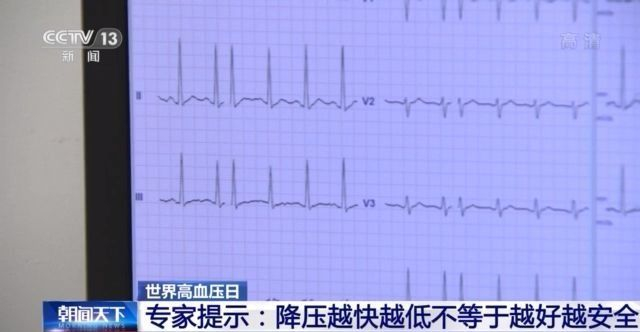
Zhang Huimin, Chief Physician of Hypertension Center, Fuwai Hospital, China Academy of Medical Sciences:If the blood pressure drops too fast, it will make the patient dizzy, and some patients even fall. We often have patients who say that after taking a large amount of medicine, they fall and stumble because of his low blood pressure. So our blood pressure needs to drop slowly, so generally speaking, we can reach the standard around a month.
In addition, it is also dangerous for some patients to take medicine intermittently and not take medicine because of low blood pressure.

Ding Chunhua, Director of Cardiology Department of Space Center Hospital:This will lead to the sharp fluctuation of blood pressure, which is even more unstable. Therefore, we suggest that if hypertension occurs, you should adjust it to an appropriate dosage, and it is best to use this drug for a relatively stable blood pressure reduction, instead of saying that I will take a little when I am high, and then stop when I am low, which will easily lead to some consequences, such as stroke as we said, and some damage to other organs.
Blood pressure is high in winter and normal in summer, and the dosage can be reduced conditionally.
High blood pressure in winter and normal or low blood pressure in summer are problems that plague many patients. So why is this happening? Can low blood pressure reduce dosage in summer? According to medical staff, if blood pressure is low in summer, antihypertensive drugs can be reduced, but there are conditions.
According to medical staff, blood pressure changes seasonally. High in winter and low in summer are related to climate change. Especially for patients with mild hypertension, in summer, their blood pressure will decrease, and they can keep normal without taking antihypertensive drugs, which can reduce the dosage. But there are conditions and some precautions.

Zhang Weili, a researcher at the State Key Laboratory of Cardiovascular Diseases, Fuwai Hospital, China Academy of Medical Sciences:If his blood pressure is below 120/80, it is controlled below 120/80 through lifestyle control, medication, etc., then it is still quite good after we closely monitor it for a few weeks at this time. Then, under the guidance of a doctor, we can reduce the amount or stop taking the medicine, but it does not mean that everything will be fine after stopping taking the medicine. We must also insist on measuring our blood pressure at home. Once it is high, we still have to go to the hospital.