The top ten buzzwords in 2014 have a strong political flavor: top-level design, fighting tigers and catching flies, and cliff style.
Every year, the editorial department of Chewing on Words publishes the top ten buzzwords of the year at the end of the year. This year, the top ten are: top-level design, new normal, fighting tigers and flies, cliff-breaking, you know, breaking up, losing contact, artifacts, being tall and sprouting. Obviously, these top ten buzzwords have a strong political flavor.
First, the top design Originally, it was the concept of systems engineering, which means to plan all levels, elements and aspects of the project from the top level in order to achieve the goal efficiently and quickly. Later, it was widely used in politics, economy, military and other fields. As a political term, "top-level design" refers to the government’s "strategic management". Its core is integrity, comprehensiveness, long-term and the setting of major and overall goals. It is an important way of thinking for the government to coordinate internal and external policies and formulate development strategies. Top-level design is inseparable from designers. Deng Xiaoping is recognized as the chief architect of China’s reform, opening up and modernization; Nowadays, people call the supreme leader the top designer of the Chinese dream to realize the great rejuvenation of the Chinese nation.
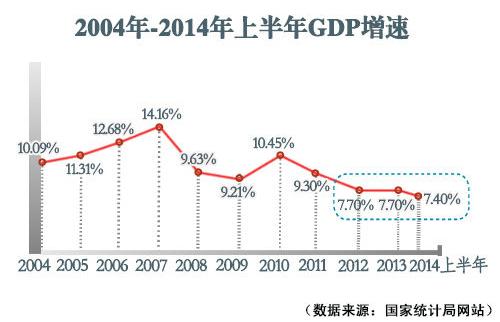
Second, the new normal As the name implies, it is "New Normal", which is translated from "new normal" in English. It originally described the slow and painful process of western economic recovery after the 2008 world financial crisis. Some people summarized it as "one low and two high", that is, "low growth, high unemployment and high debt". China’s economy is in the period of shifting growth rate, painful structural adjustment and digestive period of previous stimulus policies. Some people sum it up as "medium and high speed, excellent structure, new impetus and multiple challenges", which is the "new normal" of China’s economy. Once popular, the "new normal" is no longer confined to the economic field, and it is used in all walks of life. For example, "legislation first becomes the new normal of governing the country", "peace and happiness become the new normal of Tibet", and "migratory bird pension has become the new normal of the life of the elderly in Northeast China".
Third, fight tigers and flies In written language, it is called "beating tigers and catching flies", while in spoken language, it is called "tigers and flies fight together". "Tiger" and "fly" are two metaphors. "Tiger" refers to a corrupt official at the top and "fly" refers to a corrupt official at the grassroots level. "Beating tigers" and "swatting flies" reflect the principled position and policy measures of the CPC Central Committee in punishing corruption, which is both vivid and profound, and has won the hearts of the people from time to time.
Fourth, the cliff type The high and steep cliff fracture will inevitably lead to violent and rapid landslides, and the consequences are unimaginable. Therefore, people use "cliff type" to describe the downward state with large amplitude and fierce momentum, and its application range is very wide. For example, there are "cliff-like demotion" in the anti-corruption field, "cliff-like plunge" in the stock market, "cliff-like price reduction" in the property market, and some people call the sharp drop in temperature "cliff-like cooling", and so on.

Five, you know. This is a network term. On March 2, 2014, a spokesman for Chinese People’s Political Consultative Conference said in response to a question about Zhou Yongkang: "Whoever violates the party discipline and state laws, no matter how high his position, will be severely punished. I can only answer like this, you know. " The spokesman’s wise and humorous answer caused a burst of laughter. So "you know" went out of the network and became popular in the whole society. "You know" is mainly used in two occasions. First, as many people know, the speaker does not need to say more or explain. Second, because it involves sensitive topics, the speaker is unwilling, unable or inconvenient to say. At present, "you know" has become a somewhat mysterious and very useful social response.
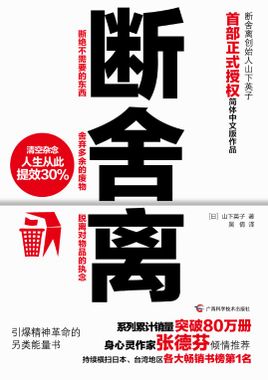
Sixth, break away "Chinese characters" from Japan. Eiko Yamashita, a Japanese domestic consultant, is the author of "Breaking Away", and advocates "doing subtraction" to tidy up the house where you live and let yourself live in a spacious, comfortable and free space, so as to seek relief of stress and release of mind. With the best-selling of books, "breaking up" has become a fashionable new word, which means "cutting off unnecessary things, abandoning redundant waste, and getting rid of the obsession with things". Nowadays, "breaking up" has become a concept of modern life, extending to all aspects of social life. For example, a doctor said that "the treatment of hypertension should be separated", and a teacher said that "a good Chinese class should also be separated", and so on.
Seven, lost contact "Lost contact" means "lost contact". On March 8, a Boeing 777-200 aircraft of Malaysia Airlines with 239 people lost contact with the control center, and its whereabouts are still unknown. There are repeated expressions of "losing contact" and "losing contact" in news reports. For the sake of simplicity, a new abbreviation "lost contact" came into being. Because of its brevity, the word "lost contact" was seen in the media almost every day for a period of time, and now it is a household name.
Eight, artifact In ancient Chinese myths and legends, there are "Top Ten Artifacts". For example, Pangu’s artifact that opened heaven and earth is called "Heaven Axe" and The goddess patching the sky’s artifact is called "Heaven-mending Stone". Ancient humans could not understand and explain many phenomena in the universe, so they had to "owe" to the power of "God". Nowadays, a new artifact or high-tech product is called "artifact" to emphasize its unique "magical" effect. It is reported that in order to facilitate the police to obtain evidence and enforce the law, the Shanghai traffic police department has launched a variety of high-tech "law enforcement artifacts" such as "visual law enforcement recorder" and "new car lock". At present, "artifact" has become a popular Chaozhou language.
Nine, tall The abbreviation of "high-end atmosphere is superior". The TV series Legend of Wulin and the movie Party A and Party B both used the seven-character phrase "high-end atmosphere is superior", which was later condensed into the three-character "Gao Da Shang", which became popular in 2013, but it has not yet reached the point where the public is familiar with it. In 2014, "Gao Da Shang" continued to heat up, and the usage rate and awareness rate were greatly improved, which quickly became a popular buzzword among the whole people. The scope of application is also very wide. People (such as a writer), things (such as a friendly match) and things (such as a mobile phone) can all be described as "tall".
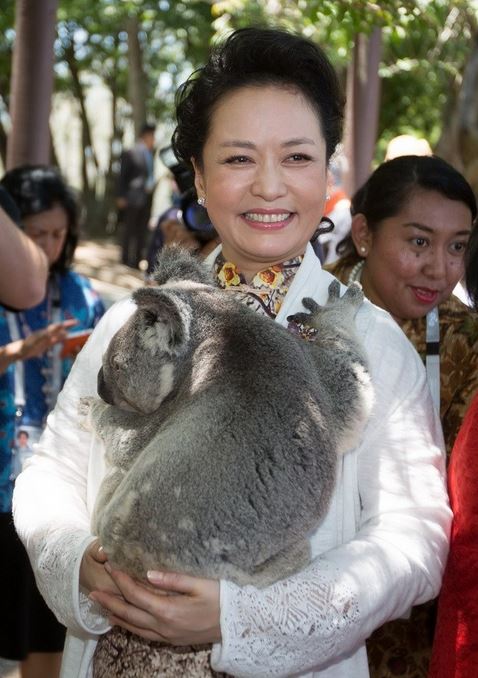
Ten, Meng Meng Da That is, "MengMeng’s", originally a network word, has now evolved into a popular buzzword. "Meng" can be loved; Overlapping as "MengMeng" means very cute. "da" is pronounced da, which is originally a transliteration word, homophonic "De", which is playful, humorous and kind. The word "Meng Meng Da" is used together, which means it is so cute that people, things and things can use it. During the Supreme Leader’s visit to Oceania, Xinhua News Agency released a photo of Peng Liyuan embracing a lovely Australian rare animal koala bear, which was praised by netizens as "cute".
The Paper reporter found that the recently popular words such as "willfulness", "being pretty hard" and "being drunk" were not included. In this regard, Huang Anjing, executive editor of Chewing on Words, said that there are specific principles for the inclusion of buzzwords in Chewing on Words, and it is not entirely based on the popularity of words. "We will give special consideration to three values: the value of the times, the value of language and the value of society."
Huang Anjing said that the selection of buzzwords should first promote "positive energy", consider the characteristics of the times and reflect the spirit of the times; Secondly, words that are ungrammatical and have unclear meanings will not be included, such as: "People are hard to tear apart", "Men are silent about women’s tears", "Do you hate them", "Doing (mourning), floating (sick)," no zuo no die "and other words are obviously ungrammatical. However, words like "willfulness" and "pretty spelling" are not innovative in structure, semantics and usage, and still express literal meaning and will not be included. At the same time, the "Top Ten Catchwords" include all-round popular words, and do not accept words such as "drunk" and "APEC blue" that are only popular on the Internet or popular for a while; In addition, we should also consider social values. If you don’t accept vulgar and indecent terms that don’t conform to social ethics, such as "about", "forcing" and "forcing me to fly", you can only regret going out.
The buzzwords selection at the end of each year is a "special dish at the end of the year" for the public. This year, the State Administration of Radio, Film and Television requested that the use of online buzzwords be prohibited in radio and television programs and advertisements. The CCTV Spring Festival Evening crew collected the most offensive online buzzwords from netizens through official micro-collection, which pushed this unique cultural product to the forefront. Will online buzzwords have an impact on traditional languages? Will it cause language confusion?
In this regard, Hao Mingjian, a linguist and founder of Chewing on Words, also expressed concern. He pointed out that there are many vigorous language explorations and innovations in the society, but there are still many worrying places. "Some online expressions reflect the wisdom of the masses, but others are illogical and offensive."
In addition, people are indifferent to the correct use of language, and mistakes such as misuse of traditional Chinese characters and mixing of similar words are taken for granted by many people, such as misuse of "authorization" and "authorization" and writing "Kyushu Qingyan" as "Jiuzhou Qingyan". Secondly, there is a lack of social criticism, and there are few comments on literary and artistic works such as movies and books from the perspective of language; In addition, the applied research in academic circles is also lagging behind. How to distinguish between "doing" and "doing"? How to use "without thinking" and "without thinking" Is it "the Tao is one foot high and the magic is one foot high" or "the magic is one foot high and the Tao is one foot high"? All these need to be restrained and controlled by all sectors of society, so he called on the social control departments to perform their duties and regulate them.