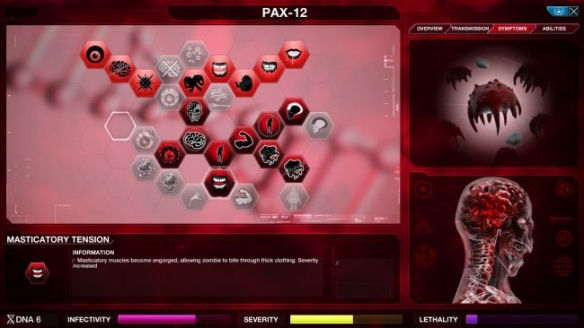
At an extraordinary moment, the number of online users of Plague Company reached a new high. Developer: This is just a game.

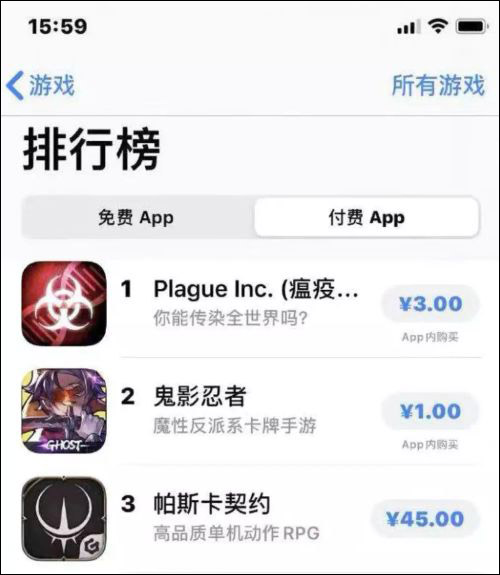
Recently, the pneumonia epidemic in novel coronavirus has attracted a lot of attention, and at the same time, a strategy simulation game named Plague Inc has topped the list of paid games in the App Store in China.

In addition, the game has reached the highest number of simultaneous online players in history-8452, far exceeding the record of 4601 created in April 2018, and created the highest average online number record in the past 30 days.

However, Ndemic Creations, the developer of Plague Company, recently issued a statement to remind players: "Please remember that Plague Company is only a game, not a scientific model. We always recommend players to obtain information about the epidemic directly from local and global health departments."

Game interface


According to public information, the game "Plague Company" was released in 2012. Two years later, the Ebola outbreak broke out in West Africa, and the game became famous unexpectedly. At that time, developers used the game platform to launch fundraising for players and raised $76,000 for charitable organizations to help fight the Ebola epidemic.

It is worth mentioning that "Plague Company" released a new game module (MOD) in 2015, named "Coronavirus", and the game introduction said that "the new coronavirus will appear in the world in 2020, which is similar to SARS".

The following is the original statement:

Statement screenshot

In addition, the game recently released a new DLC, and its name is "Fake News". In this mode launched in cooperation with professional fact-checking institutions, players can try the taste of spreading rumors and rumors, and test how a lie can deceive the world under the promotion of layers.

This article is an exclusive manuscript of Observer. It cannot be reproduced without authorization.

2016 Shandong Science and Technology Award Suggested Awarding Candidates and Project Publicity

  Now, the recommended winners and projects approved by the evaluation committee of the 2016 Shandong Science and Technology Highest Award, Natural Science Award, Technological Invention Award, Science and Technology Progress Award and International Science and Technology Cooperation Award will be publicized to the public.
  The candidates and projects for publicity were also publicized on the websites of Shandong Provincial People’s Government (http://www.shandong.gov.cn), Shandong Provincial Department of Science and Technology (http://www.sdstc.gov.cn) and Science and Technology Information on December 6, 2016.
  According to the relevant regulations, if there is any objection to the proposed award candidates and projects publicized, it shall be submitted in writing within 30 days from the date of publicity to the office of Shandong Science and Technology Awards Committee (located in the Science and Technology Achievements Department of the Provincial Science and Technology Department, address: No.607 Shunhua Road, Jinan High-tech Zone, zip code: 250101).

  Shandong Province Science and Technology Highest Award (1 person)

  Hu Dunxin, male, academician of China Academy of Sciences and researcher of Institute of Oceanography of China Academy of Sciences. Three undercurrents, such as the Mindanao undercurrent (MUC) in the tropical western Pacific Ocean, were discovered, revealing the subsurface circulation opposite to the surface circulation. Breaking through the restricted area of submarine observation, successfully deploying/recovering the deepest submarine in the western boundary current area of the world ocean at the depth of 6100 meters in the western Pacific Ocean, and obtaining valuable scientific data for four consecutive years; The discovery of "East China Sea Cold Vortex" initiated the study of mesoscale vortex on the continental shelf in China; The scientific law of "where there is upwelling on the shelf, the seabed deposit must be soft mud" is discovered, and its mechanism is expounded dynamically. It reveals the non-wind-induced mechanism of upwelling along the coast of Zhejiang Province and corrects the traditional wind-induced mechanism. It is the first to study the continental shelf ocean flux (carbon cycle) in the world, and draws an important conclusion that "the East China Sea is a sink of atmospheric carbon dioxide".
  Organized and launched the international cooperation plan of "Northwest Pacific Ocean Circulation and Climate Experiment (NPOCE)", which was launched in 2010 and participated by 19 units from 8 countries; Invited to lead 17 scientists at home and abroad to publish review articles in Nature: Pacific Western Boundary Currents and Their Roles in Climate; Led the establishment of JGOFS and LOICZ committees in China, and initiated the research on ocean flux and land-sea interaction in China.
  He has presided over 1 major project of National Natural Fund, 4 key national funds, 2 major projects of Chinese Academy of Sciences and 4 973 projects. Won 2 national defense science and technology progress awards and 3 Chinese Academy of Sciences awards.
Shandong Natural Science Award
First prize (2 items)
  1. Basic research and sensing mechanism of paper chip microfluidic based on structural control and photoelectric properties.
  Completed by: Yu Jinghua (Jinan University)
  Ge Shenguang (Jinan University)
  Yan Mei (Jinan University)
  Huang Jiadong (Jinan University)
  2. Surface interface regulation of nano-carbon materials and its physical property enhancement mechanism.
  Completed by: Xue Qingzhong (China Shiyou University (East China))
  Xing Wei (China Shiyou University (East China))
  Shu Shuping (Shandong University of Technology)
  Zheng Qingbin (China Shiyou University (East China))
  Yan Zifeng (China Shiyou University (East China))
Second prize (7 items)
  1. Analysis and regulation of polymer multilayer structure
  Completed by: Zhang Jianming (Qingdao University of Science and Technology)
  Duan Yongxin (Qingdao University of Science and Technology)
  Yan Shouke (beijing university of chemical technology)
  Yuan Yuan (Qingdao University of Science and Technology)
  Zhang Tongping (Qingdao University of Science and Technology)
  2. Rapid identification, accurate identification and biological activity study of halogenated compounds in marine red algae.
  Completed by: Wang Bingui (Institute of Oceanography, China Academy of Sciences)
  Ji Naiyun (Yantai Institute of Coastal Zone, Chinese Academy of Sciences)
  Li Ke (Institute of Oceanography, China Academy of Sciences)
  Li Xiaoming (Institute of Oceanography, China Academy of Sciences)
  Duan Xiaojuan (Institute of Oceanography, China Academy of Sciences)
  3. Study on analytical methods of typical pollutants in complex environmental media.
  Completed by: Chen Lingxin (Yantai Institute of Coastal Zone, Chinese Academy of Sciences)
  Li Jinhua (Yantai Institute of Coastal Zone, Chinese Academy of Sciences)
  Wang Yunqing (Yantai Institute of Coastal Zone, Chinese Academy of Sciences)
  Chen Zhaopeng (Yantai Institute of Coastal Zone, Chinese Academy of Sciences)
  4. Study on ultra-sensitive Qualcomm single molecule detection of disease-related biomarkers.
  Completed by: Zhang Chunyang (Shandong Normal University, Shenzhen Institute of Advanced Technology, Chinese Academy of Sciences)
  Wang Lijuan (Shandong Normal University, Shenzhen Institute of Advanced Technology, Chinese Academy of Sciences)
  Hu Juan (Shandong Normal University, Shenzhen Institute of Advanced Technology, Chinese Academy of Sciences)
  Zhangyan (Shandong Normal University, Shenzhen Institute of Advanced Technology, Chinese Academy of Sciences)
  5. Molecular mechanism of brain iron redistribution in Parkinson’s disease and intervention strategy of dopaminergic neuron injury.
  Completed by: Xie Junxia (Qingdao University)
  Jiang Hong (Qingdao University)
  Shi Limin (Qingdao University)
  Wang Jun (Qingdao University)
  Ma Zegang (Qingdao University)
  6. Stabilization control of nonlinear systems
  Completed by: Zhang Xianfu (Shandong University)
  Ma Shuping (Shandong University)
  Zhu Shuqian (Shandong University)
  7. Molecular mechanism of oyster genome analysis and intertidal adaptation.
  Completed by: Zhang Guofan (Institute of Oceanography, China Academy of Sciences)
  Li Li (Institute of Oceanography, China Academy of Sciences)
  Xu Fei (Institute of Oceanography, China Academy of Sciences)
  Zhang Linlin (Institute of Oceanography, China Academy of Sciences)
  Guo Ximing (Institute of Oceanography, China Academy of Sciences)
Third prize (2 items)
  1. Research on the theory and application of several kinds of differential equation problems.
  Completed by: Xinguang Zhang (Yantai University)
  Liu Lishan (Qufu Normal University)
  Zhang Xiaoyan (Shandong University)
  Jiang Jiqiang (Qufu Normal University)
  2. Nano-materials assembly and analysis of pollutant detection and treatment mechanism.
  Completed by: Ai Shiyun (Shandong Agricultural University)
  Yin Huanshun (Shandong Agricultural University)
  Fan Hai (Shandong Agricultural University)
  Zhu Lusheng (Shandong Agricultural University)
  Su Xiurong (Shandong Agricultural University)
Shandong Technological Invention Award
First prize (5 items)
  1. The establishment of molecular breeding technology and the cultivation of new varieties of scallop.
  Completed by: Bao Zhenmin (China Ocean University)
  Julian Waghann (China Ocean University)
  Hu Xiaoli (China Ocean University)
  Li Hengde (Chinese Academy of Fishery Sciences)
  Liu Guangmou (Weihai Changqing Ocean Technology Co., Ltd.)
  Wang Youting (Yantai Haiyi Miaoye Co., Ltd.)
  2. Development and application of ultrasonic logging tool.
  Completed by: Cao Maoyong (Shandong University of Science and Technology)
  Fandi (Shandong University of Science and Technology)
  Liang Huibin (Shandong University of Science and Technology)
  Wang Yi (Shandong University of Science and Technology)
  Jiang Hao (Shandong University of Science and Technology)
  Sun Nongliang (Shandong University of Science and Technology)
  3. R&D and industrial application of key technologies for trehalose production
  Completed by: Wang Ruiming (Qilu University of Technology)
  Wang Tengfei (Qilu University of Technology)
  Liu Zongli (Baolingbao Biology Co., Ltd.)
  Zhaowei (Shandong Fuyang Biology Science and Technology Co., Ltd.)
  Li Piwu (Qilu University of Technology)
  Ma Chunling (Qilu University of Technology)
  4. Complete sets of technologies and equipment for industrialization of seaweed fiber preparation
  Completed by: Xia Yanzhi (Qingdao University)
  Zhu Ping (Qingdao University)
  Zhang Chuanjie (wuhan textile University)
  Quanfengyu (Qingdao University)
  Wang Bingbing (Qingdao University)
  Sui Shuying (Qingdao University)
  5. Creation and application of nano-seed alloy series products and heat-resistant high-strength light metal materials.
  Completed by: Liu Xiangfa (Shandong University)
  Wu Yuying (Shandong University)
  Nie Jinfeng (Shandong University)
  Bianxiufang (Shandong University)
  Sun Qianqian (Shandong Lvmei Melting Body Technology Co., Ltd.)
  Yao Tao (Rizhao Jingang Piston Co., Ltd.)
Second prize (7 items)
  1. Key technologies of data center operating system for cloud computing.
  Completed by: Zhang Dong (Inspur Electronic Information Industry Co., Ltd.)
  Liu Zhengwei (Inspur Electronic Information Industry Co., Ltd.)
  Yan Bingheng (Inspur Electronic Information Industry Co., Ltd.)
  Qi Kaiyuan (Inspur Electronic Information Industry Co., Ltd.)
  Samuel Kwok (Inspur Electronic Information Industry Co., Ltd.)
  Liu Junpeng (Inspur Electronic Information Industry Co., Ltd.)
  2. The supporting theory and key technology of gob-side entry without coal pillar.
  Completed by: Tan Yunliang (Shandong University of Science and Technology)
  Zhao Tongbin (Shandong University of Science and Technology)
  Liu Student (Shandong University of Science and Technology)
  Yu Fenghai (Shandong University of Science and Technology)
  Ning Jianguo (Shandong University of Science and Technology)
  Gu Shitan (Shandong University of Science and Technology)
  3. Energy-saving rubber continuous mixing technology
  Completed by: Wang Chuansheng (Qingdao University of Science and Technology)
  Bian Huiguang (Qingdao University of Science and Technology)
  Li Li (Qingdao University of Science and Technology)
  Fu Ping (Qingdao University of Science and Technology)
  Shen Bo (Qingdao University of Science and Technology)
  Wang Xiaobo (Qingdao University of Science and Technology)
  4. Photovoltaic crystalline silicon material tailings metallurgical regeneration manufacturing technology and industrialization
  Completed by: Tan Yi (Dagong (Qingdao) New Energy Materials Technology Research Institute Co., Ltd.)
  Jiang Dachuan (Dagong (Qingdao) New Energy Material Technology Research Institute Co., Ltd.)
  Li Pengting (Dalian University of Technology)
  Guo Xiaoliang (Dagong (Qingdao) New Energy Material Technology Research Institute Co., Ltd.)
  Shi Shuang (Dalian University of Technology)
  Hu Zhigang (Qingdao Longsheng Jinggui Technology Co., Ltd.)
  5. Key technology, equipment and application of nano-particle aerosol jet micro-lubrication grinding
  Completed by: Li Changhe (Qingdao University of Technology)
  Zhang Naiqing (Shanghai Jinzhao Energy Saving Technology Co., Ltd.)
  Hou Yali (Qingdao University of Technology)
  Zhang Yanbin (Qingdao University of Technology)
  Mao Cong (Changsha University of Science and Technology)
  Wu Qidong (Shanghai Jinzhao Energy Saving Technology Co., Ltd.)
  6. Sewage and surface water heat pump heating and cooling based on dredging heat exchange.
  Completed by: Wu Ronghua (Qingdao Kechuanglan New Energy Co., Ltd.)
  Chi Fang (Qingdao Kechuanglan New Energy Co., Ltd.)
  Wang Gang (Qingdao Kechuanglan New Energy Co., Ltd.)
  Sun Dexing (Qingdao Kechuanglan New Energy Co., Ltd.)
  Yang Qirong (Qingdao University)
  Xu Long (Qingdao Kechuanglan New Energy Co., Ltd.)
  7. Key technologies and applications of early detection of cardiovascular diseases.
  Completed by: Liu Changchun (Shandong University)
  Wang Xinpei (Shandong University)
  Liu Chengyu (Shandong University)
  Li Peng (Shandong University)
  Yang Lei (Ji ‘nan Hui Yi Rong Gong Technology Co., Ltd.)
  Zhang Ming (Ji ‘nan Huiyi Ronggong Technology Co., Ltd.)
Shandong province science and technology progress award
First prize (17 items)
  1. Cultivation, processing and utilization of new sweet potato varieties for Jishu series.
  Completed by: Crop Research Institute of Shandong Academy of Agricultural Sciences
  Sishui lifeng foods co., ltd
  Jiangsu normal university
  Completed by: Zhang Liming, Wang Qingmei, Zheng Yuanlin, Zhang Haiyan, Hou Fuyun, Li Aixian, Kong Xiankui, Xie Beitao, Wang Baoqing, Dong Shunxu, Song Huadong and Duan Wenxue.
  2. Creation and application of double-balanced slow-release fertilizer for million-ton crops.
  Completed by: Jin Zhengda Ecological Engineering Group Co., Ltd.
  Shandong Agricultural University
  shandong agricultural resource and environmental science research institute
  National Agricultural Technology Extension Service Center
  Completed by: Zhang Min, Chen Hongkun, Yang Li, john young, Zhang Qiang, Zhang Yufeng, Wang Huaili, Chen Haining, Wan Lianbu, Chen Deqing, Liu Zhiguang and Wang Min.
  3. Agricultural multi-source information integration and accurate service technology
  Completed by: Institute of Science and Technology Information, Shandong Academy of Agricultural Sciences
  China Agricultural University
  Beijing Agricultural Information Technology Research Center
  Completed by: Li Daoliang, Ruan Huaijun, Wu Huarui, Fu Zetian, Feng Wenjie, Li Jingling, Chloe Wang, Liu Yanzhong, Zhao Jia, Sun Xiang, Wang Fengyun and Chen Yingyi.
  4. Application support platform for modern service industry
  Completed by Shandong Zhongchuang Software Engineering Co., Ltd.
  Peking University
  Beihang University
  national university of defense technology
  institute of software chinese academy of sciences
  Shandong zhongchuang software commercial middleware co., ltd
  Completed by: Jing Xinhai, Shi Dianxi, Cao Donggang, Wang Wei, Zhao Yongwang, Ding Bo, Gao Longlin, feng han, Liu Min, He Zhongsheng, Wang Huan, Bao Dong.
  5. Development and application of broadband electromagnetic signal receiving, analysis and identification technology and equipment
  Completed by: Shandong University
  China electronics technology group company no.41 institute
  Completed by: Xu Jianhua, Wang Hongjun, Xiang Changbo, Han Min, Wang Feng, Du Huiwen, Sun Weifeng, Juck Zhang, Xiong Hailiang, Du Yitao, Zhang Zhi and Zhao Yongzhi.
  6. New NMR logging technology and industrial application of tight clastic reservoir.
  Completed by: China Shiyou University (East China)
  Exploration and Development Research Institute of China Petroleum and Natural Gas Co., Ltd.
  Suzhou Niumai Analytical Instrument Co., Ltd.
  Completed by: Fan Yiren, Zhou Cancan, Ge Xinmin, Hu Falong, Li Chaoliu, Deng Shaogui, Yang Peiqiang, Wu Fei, Li Changxi, Zhang Yingli, Xing Donghui, Fan Zhuoying.
  7. Comprehensive utilization of engineering technology by chemical decomposition of industrial by-product gypsum
  Completed by: Shandong Lubei Enterprise Group Corporation
  Completed by: Lv Tianbao, Zhai Hongxuan, Yuan Jinliang, Wang Shucai, Bao Shutao, Wu Jianmin, Feng Xiangyi, Wang Detang, Gao Qiang, Wang Tongyong.
  8. Development and industrialization demonstration of green synthesis technology of fine chemicals
  Completed by: Shandong Institute of Chemical Technology
  institute of chemistry chinese academy of sciences
  Completed by: Feng Weichun, Yue Tao, Xing Wenguo, Chen Qi, Liu Li, Wang Hao, Zhou Ti, Yang Xu, Zhang Jian and Wei Feng.
  9. Shot peening technology and equipment for metal surface
  Completed by Shandong Kaitai Group Co., Ltd.
  Jinan university
  Shandong University
  Completed by: Wang Shouren, Wang Ruiguo, Liu Ruwei, Li Cong, Yang Xuefeng, Wang Yanjun, Zhai Yongzhen, Zhang Xiao, Wang Yongjie and Zhang Laibin.
  10. Key technologies for prediction, early warning and risk control of major water inrush disasters in deep and long tunnels.
  Completed by: Shandong University
  Hohai University
  Highway Science Research Institute of Ministry of Transport
  institute of mechanics, chinese academy of sciences
  Shandong province traffic planning and design institute
  China Railway 19th Bureau Group Co., Ltd.
  Anhui Wan Tai Geophysical Technology Co., Ltd.
  Completed by: Li Liping, Yang Weimin, Du Xiaotong, Zhang Ganqing, Chen Xuguang, Shi Shaoshuai, Wan Li, Lu Wei, Bao Zuojun, Feng Chun, Liu Guoqiang and Liu Qiang.
  11. Complete sets of new technologies for building safety detection, appraisal and reinforcement.
  Completed by: Shandong Institute of Building Science.
  China construction science research institute
  qingdao technological university
  Weifang changda construction group co., ltd
  Ji ‘nan Sijian (Group) Co., Ltd.
  Shandong huasen concrete co., ltd
  Completed by: Cui Shiqi, Cheng Bo, Shang Huaishuai, Di Xiaotan, Kong Xuwen, Cui Hongtao, Xie Huidong, Jiang Liping, Xing Qingyi, Zhang Lianyue, Mei Zuoyun and Wang Zifu.
  12. Key technologies of automobile advanced power and on-board energy system and their application in new energy vehicles.
  Completed by: Institute of Automation, Shandong Academy of Sciences
  Tsinghua University
  Zhongtong bus holding co., ltd
  Completed by: Wang Qinpu, Li Liang, Wang Zhixue, Li Lei, Liu Yuanyang, Jerry Lee, Yang Chao, Zhang Yun, Wang Bo, He Dongmei, Song Jinxiang and Wang Li.
  13. Key technologies and clinical application to improve the long-term curative effect of osteosarcoma.
  Completed by: jinan military area command General Hospital of Chinese People’s Liberation Army.
  Completed by: Yu Xiuchun, Xu Ming, Arqie, Bing Wang, Yu Chen, Chang Zhengqi, Song Ruoxian and Xu Songfeng.
  14. The key technology and system construction of prevention and treatment of juvenile low vision with integrated traditional Chinese and western medicine.
  Setting: Institute of Ophthalmology, Shandong University of Traditional Chinese Medicine
  The Second Affiliated Hospital of Shandong University of Traditional Chinese Medicine
  Jiangsu Provincial Hospital of Traditional Chinese Medicine
  Affiliated Hospital of Shandong University of Traditional Chinese Medicine
  Completed by: Bi Hongsheng, Wu Jianfeng, Xie Xiaofeng, Jiang Wenjun, Hu Yuanyuan, Bi Ailing, Wang Xingrong, Chen Rong, Wang Yuliang, Wang Jingbo, Guo Junguo and Guo Dadong.
  15. Construction and application of new preparation system of montelukast sodium and its preparation based on key technologies of industrialization.
  Completed by: Lunanbeite Pharmaceutical Co., Ltd.
  Lunan pharmaceutical group co., ltd
  Shandong new age drug co., ltd
  Completed by: Zhang Guimin, Feng Qiguo, Jiang Qingcheng, Zhang Zicheng, Shi Jianghua, Zhu Yaoliang, Xu Chuanjin, Cui Jian, Feng Xiaoliang, Ma Qingwen, Wang Haixin and Wang Zengxue.
  16. Key technologies for separation and preparation of natural products and development of national standard samples.
  Completed by: Shandong Analysis and Testing Center
  Beijing Physical and Chemical Analysis and Testing Center
  China National Institute of Standardization
  Quantum Hi-Tech (China) Biology Co., Ltd.
  Completed by: Wang Xiao, Duan Wenjuan, Liu Feng, Zhang Jinghua, Wang Daijie, Xi Xingjun, Geng Yanling, Yu Jinqian, Liu Jianhua, Ji Wenhua, Shi Xingang, Wei Yuanan.
  17 intelligent dyeing and finishing technology and equipment technology innovation platform
  Completed by: Shandong Kangpingna Group Co., Ltd.
Second prize (58 items)
  1. Breeding, demonstration and popularization of drought-resistant and salt-tolerant wheat varieties Qingmai 6 and Qingmai 7.
  Completed by: Qingdao Agricultural University
  Completed by: Lin Qi, Mu Ping, Zhang Yumei, Lan Jinhao, Shi Changhai, Zhang Hongsheng, Liu Yiguo, Wang Jianlin, Han Wei.
  2. Creation of excellent peanut mutants and cultivation of new varieties.
  Completed by: Biotechnology Research Center of Shandong Academy of Agricultural Sciences.
  Shandong Weifang Academy of Agricultural Sciences
  Shandong shengfeng seed industry technology co., ltd
  Completed by: Wang Xingjun, Fu Chun, Xia Han, Lu Chengkai, Hou Lei, Zhao Chuanzhi, Zhao Shuzhen, Gao Xiaoyong, Jiang Yansheng.
  3. Creation of stress-resistant pepper rootstock male sterile line, breeding and application of new varieties.
  Completed by: Shandong Agricultural University
  Chinese Academy of Agricultural Sciences Institute of Vegetables and Flowers
  Shandong Agricultural Engineering College
  Beijing agricultural college
  Completed by: Ai Zhenzhen, Wei Youying, Zheng Huamei, Wang Shaohui, He Chaoxing, Duan Xi, Wang Hongtao, Jiang Fei, Li Qingming.
  4. Breeding and efficient cultivation techniques of high-quality watermelon and melon series new varieties in protected facilities
  Completed by: Vegetable and Flower Research Institute of Shandong Academy of Agricultural Sciences.
  Shandong Shouguang Sanmu Seedling Co., Ltd.
  Shandong shangdao biology science and technology co., ltd
  Weifang chuangke seedling co., ltd
  Shenxian county jiefeng vegetables technology service co., ltd
  Completed by: Jiao Zigao, Liu Shusen, Wang Chongqi, Dong Yumei, Sun Lihua, Xiao Shouhua, Li Wendong, Wei Jiapeng and Sun Jianlei.
  5. Integration and demonstration of key technologies for industrialization of new humic acid slow-release fertilizer
  Completed by: Shandong Agricultural University Fertilizer Technology Co., Ltd.
  Completed by: Ma Xuewen, Ding Fangjun, Wu Qinquan, Chen Shigeng, Ge Yuming, Meng Qingyu, Chen Weimin, Gu Duanyin and Chen Dayin.
  6. Key technologies and applications of recycling waste from breeding industry in Huanghuaihai region.
  Completed by: Institute of Agricultural Resources and Environment, Shandong Academy of Agricultural Sciences
  Shandong Agricultural University
  Shandong province agriculture sustainable development institute
  Hebei academy of agriculture and forestry Institute of Genetic Physiology
  Hebei academy of agriculture and forestry Institute of Agricultural Resources and Environment
  Shijiazhuang goldsun biology organic fertilizer co., ltd
  Shandong gufengyuan biotechnology group co., ltd
  Completed by: Guo Honghai, Ning Tangyuan, Han Jiandong, Wang Zhanwu, Li Xinhua, Wang Liying, Sui Xueyan, Dong Xiaoxia, Tian Shensi.
  7. Key technologies and industrialization of preparation of antioxidant and anti-inflammatory active substances in fruits and vegetables.
  Completed by: Institute of Agricultural Products, Shandong Academy of Agricultural Sciences
  Qufu normal university
  Dongying Guangyuan Biotechnology Co., Ltd.
  Shandong yuhuang grain and edible oil foods co., ltd
  Completed by: Cheng Anwei, Wang Wenliang, Sun Jinyue, Li Guoliang, Liu Lina, Liu Chao, Gong Zhiqing, Dai Hualei, Fan Wenjing.
  8. Nutritional needs of meat geese and efficient utilization technology of feed
  Completed by: Qingdao Agricultural University
  Shandong province animal epidemic disease prevention Yu control center
  Qingdao puxing biology science and technology co., ltd
  Shandong zhongke Jiayi biology engineering co., ltd
  Shandong jiurui agriculture group co., ltd
  Shandong tianpu sunshine group co., ltd
  Completed by: Wang Baowei, Li Wenli, Ge Wenhua, Zhang Mingai, Yue Bin, Lian Ailing, Lu Guangzhou, Pan Yulin, Sun Zuowei.
  9. Key technologies of high-quality forage and efficient production and application of precision livestock raising.
  Completed by: Shandong Provincial Animal Husbandry Station
  Shandong Academy of Agricultural Sciences Institute of Agricultural Quality Standards and Detection Technology
  shandong agricultural resource and environmental science research institute
  Shandong Agricultural University
  Shandong Shuang Jia Nong Zhuang technology co., ltd
  Laoling Guoyu agriculture machinery equipment co., ltd
  Completed by: Zhai Guiyu, Jiang Huixin, Wang Yanqin, Zhang Guiguo, liu junhua, Shen Yixin, Liu Dong, Zhang Junqiang and Wang Mingtang.
  10. Physiological and ecological response mechanism and supporting cultivation techniques of cold resistance of tea trees.
  Completed by: Qingdao Agricultural University
  Shandong province guocha technology popularizing station
  Completed by: Ding Zhaotang, Wang Yu, Yusheng Li, Zhang Yunwei, Sun Haiwei, Ding Deen, Ma Dexin, Wang Yi, Bi Caihong.
  11. Obstacle mechanism of poplar plantation continuous cropping and key technologies for long-term productivity maintenance
  Completed by: Shandong Agricultural University
  Shandong province forestry science study institute
  Taian Taishan forestry science study institute
  Ningyang County, Shandong Province State-owned Gao Qiao Forest Farm
  Shandong changnong agriculture technology co., ltd
  Completed by: Wang Huatian, Wang Yanping, Dong Yufeng, Jiang Yuezhong, Kong Linggang, Liu Fude, Zhang Guangcan, Wang Zongqin and Huang Qilun.
  12. Development and industrialization of high quality, efficient and environment-friendly flounder compound feed.
  Completed by: Qingdao Qihao Biotechnology Co., Ltd.
  Chinese Marine University
  Qingdao agricultural university
  Completed by: Chen Jinghua, Zhang Wenbing, Xu Wei, Xiao Lindong and Lu Wei.
  13 aquatic collagen and collagen peptide research, technology development and industrialization
  Completed by: China Ocean University
  Shandong dongfang ocean technology co., ltd
  Completed by: Li Bafang, Hou Hu, Zhao Xue, Liu Yuntao, Lin Lin, Zhuang Yongliang, Yan Mingyan, Liu Zunying and Xue Yong.
  14. Key technologies of water resources regulation of groundwater system and water search in poor water areas
  Completed by: Shandong Institute of Geology and Mineral Engineering.
  Jinan university
  China University of Geosciences,Wuhan
  Shandong province lunan geology engineering survey institute
  Shandong University of Science and Technology
  Completed by: Kang Fengxin, Zhang Zhongxiang, Xu Junxiang, Xing Liting, Bu Hua, Cheng Xiuming, Peng Hao, Feng Jianguo and Li Changsuo.
  15. The upper level integrated measurement and control system
  Completed by: Shandong Institute of Aerospace Electronic Technology
  Beijing Institute of Technology
  Completed by: Yang Zhiqun, Wang Yongqing, Ji Chunguo, Zhang Xinkui, Guo Shiyou, Gong Changhui, Yang Na, Zhang Ju and Wang Qiang.
  16. Key technologies and applications of ultra-high definition liquid crystal display controlled by deep dynamic backlight.
  Completed by Qingdao hisense electric Co., Ltd.
  Completed by: Cao Jianwei, Liu Weidong, Zhang Yuxin, Gao Shang, Xu Aichen, Li Minhua, Song Zhicheng, Zhong Qiang and Li Fulin.
  17. Research and application technology of spatial structure evolution mechanism of overlying strata in coal mine stope
  Completed by: Shandong University of Science and Technology
  Shandong Dongshan Wang Lou Coal Mine Co., Ltd.
  Tengzhou Jixiang (Group) Jisuo Coal Mine
  Tengzhou dongda mining industry co., ltd
  Completed by: Han Zuozhen, Wen Zhijie, Shi Yongkui, Xiao Qinghua, Lu Guozhi, Tang Jianquan, Zhu Huaizhi, Huiyong Yin and Wang Chunguang.
  18. Safe and efficient mining technology for high-magnification filling of underwater broken deposits
  Completed by: Sanshandao Gold Mine of Shandong Gold Mining (Laizhou) Co., Ltd.
  Central South University
  Chongqing University
  Henan Polytechnic University
  Completed by: Zhang Hongxun, Peng Kang, Wang Jianbo, Liu Zhixiang, Cavin Wang, Liu Kewei, Zhang Xiaogang, Yin Tubing and Sun Hongzhou.
  19. Metallogenic regularity of precious and nonferrous metal deposits in Jiaodong and major breakthroughs in prospecting.
  Completed by: Shandong Third Institute of Geology and Mineral Exploration.
  Jilin University
  the institute of geology,chinese academy of geological sciences
  Completed by: Ding Zhengjiang, Sun Fengyue, Liu Jianhui, Liu Fulai, Zhang Junjin, Li Guohua, Zhang Yingchuan, Ji Pan and Zhang Pijian.
  20. Complete sets of high-efficiency oil and gas recovery technologies and their applications
  Completed by: Qingdao Safety Engineering Research Institute of China Petrochemical Company Limited.
  Completed by: Zhang Weihua, Zhang Jianzhong, Tao Bin, Shan Xiaowen, Zhang Hongxing, Zou Bing, Wang Zhenzhong, Guang Xu and Wu Fengbang.
  21. Endogenous microbial flooding technology to improve oil recovery of medium and high temperature reservoirs
  Completed by: Petroleum Engineering Technology Research Institute of Shengli Oilfield Branch of China Petrochemical Co., Ltd.
  Completed by: Li Ximing, Wang Weidong, Song Yongting, Zhang Shaodong, Sun Gangzheng, Cao Yanying, Hu Jing, Li Caifeng, Tamia Liu.
  22. The key technology and application of special modified starch for food.
  Completed by: Qilu University of Technology
  Zhucheng xingmao corn development co., ltd
  Jiangnan University/ Southern Yangtze University
  Completed by: Cui Bo, Qiu Lizhong, Tian Yaoqi, Yu Bin, Bian Xiliang, Sun Chunrui, Tan Yiping, Qiu Hongwei, Hou Zhaohua.
  23. Key technologies and industrialization of green and efficient biological manufacturing of sodium gluconate
  Completed by: Shandong Kaixiang Biochemical Co., Ltd.
  Shandong province food fermentation industry research and design institute
  Completed by: Tian Yanjun, Cui Guangshui, Zhang Jiaxiang, Li Guiling, Han Yanlei, Ji Hongyan, Zhang Lihe, Shiping Li and Hu Zongzhi.
  24. Research and development and industrialization of refining technology for high-value biomass products
  Completed by: Shandong Sun Paper Co., Ltd.
  Qilu university of technology
  Completed by: Ying Guangdong, Yang Guihua, Liu Zehua, Ji Xingxiang, Liu Yanbo, Qiao Jun, Zhang Wei, Lu Qinghui, Zhai Bingyan.
  25. Development and application of new technology for preparation of high charge density resin neutral sizing emulsion.
  Completed by: Qingdao University of Science and Technology
  Qingdao haiwang paper industry co., ltd
  Completed by: Song Xiaoming, Chen Fushan, Leng Yuxi, Liu Danfeng, Wang Songlin, Gao Shanshan, Zhou Jiazhong.
  26. Innovation and application of key technologies for green preparation of special modified starch and special syrup for food.
  Completed by: Qingdao Agricultural University
  Shandong Luzhou Food Group Co., Ltd.
  Shandong University
  Institute of Biology, Shandong Academy of Sciences
  Luzhou Biotechnology (Shandong) Co., Ltd.
  Completed by: Sun Qingjie, Zhao Yubin, Liu Yuchun, Xiong Liu, Liang Quanfeng, Yang Junhui, Chen Haihua, Liang Caifeng and Yang Jie.
  27. Popularization and industrialization of key technologies for low formaldehyde and high quality non-ironing finishing of cotton fiber products
  Completed by Lutai Textile Co., Ltd.
  Wuhan textile university
  Completed by: Xu Weilin, Lu Wenquan, Wang Yunli, Geng Caihua, Shen Xiaolin, Zhang Shougang, Huang Yanhua, Cui Weigang, Tian Lili.
  28. Development and industrialization of key technologies of HT-L large-scale dry pulverized coal pressurized gasification.
  Completed by: Shandong Runyin Biochemical Co., Ltd.
  Aerospace Changzheng Chemical Engineering Co., Ltd.
  Completed by: Zhang Chengsheng, Han Shugang, Zhang Daofu, Li Sihua, Wang Zhiyong, Wang Aiyun, Chen Zhenwei, Jiang Congbin, Xin Wei.
  29. Combined process of hydrogen supply and viscosity reduction-deep pyrolysis for inferior heavy oil
  Completed by: China Shiyou University (East China)
  Jiangshan union chemical industry group co., ltd
  Completed by: Dong Liu, Nathan Wang, Guo Aijun, Yin Changlong, Chen Kun, Wei Yongsheng, Zhang Hongyu, Lv Renqing, Lou Bin.
  30. Coking furnace technology with high severity and low coking rate
  Completed by: China Shiyou University (East China)
  China Petrochemical Company Limited Jinling Branch
  Completed by: Xiao Jiazhi, Yang Junwei, Shen Guoping, Zhang Longli, Wang Lanjuan, Qian Zhongjian and Shan Honghong.
  31. Synthesis technology and industrialization of triazine ring, the key intermediate of ceftriaxone.
  Completed by: Shandong Huihai Pharmaceutical Chemical Co., Ltd.
  Jinan university
  Completed by: Zheng Gengxiu, Mou Yingke, Jiang Fuyuan, Zhang Zhongzheng, Zhang Shifeng, Guo Gang, Hou Xuhui.
  32. A new functional ceramic material for manufacturing TFT-LCD liquid crystal glass substrate of 8.5 generation.
  Completed by Zibo Gongtao Refractory Co., Ltd.
  Completed by: Zhang Ying, Li Zhijun, Zhang Qishan, Li Yuqiang, Jiang Xugui, Wu Guanghui and Sun Wenli.
  33. Development and application of new technologies for green and high-performance light-load commercial vehicle tires.
  Completed by: Shandong Linglong Tire Co., Ltd.
  Completed by: Wang Feng, Li Ming, Sui Haitao and Chen Xuemei.
  34. Synthesis of series modified acrylic emulsion and its application in waterborne environmental protection coatings.
  Completed by: Qingdao University of Science and Technology
  Ocean chemical industry research institute co., ltd
  Shandong Lehua Paint Industry Co., Ltd.
  Qingdao Xuanwei coating material co., ltd
  Completed by: Li Shaoxiang, Wang Huajin, Hou Peimin, Chen Xilei, Wang Zhaoan, Li Guangjun, Zhao Wei, Wang Xiao, Zhang Feng.
  35. Preparation and industrialization of nano-montmorillonite composite polyurethane cathodic electrophoretic resin
  Completed by: Qingdao University of Science and Technology
  Wuhan kelier new material co., ltd
  Completed by: Li Zaifeng, Li Zailiang, Li Jinyan and Li Cuiping.
  36. Preparation technology of high performance magnesium alloy materials and components for locomotive lightweight.
  Completed by Weihai Wan Feng Magnesium Technology Development Co., Ltd.
  Shandong Academy of Sciences Institute of New Materials
  Completed by: Zhu Xunming, Tang Shouqiu, Zhou Jixue, Duan Junpeng, Zhao Dongqing, Xu Guosong, Liu Yunteng, Liu Dan and Li Weihong.
  37. Manufacturing technology and equipment of new aluminum alloy piston with high temperature and pressure resistance.
  Completed by: Shandong Binzhou Bohai Piston Co., Ltd.
  Completed by: Zhang Guohua, Feng Zengjian, Mou Jundong, Zhu Junkui, Gai Shaolei, Yunqing Xun, Gao Xiaobo, Gao Zhanyu and Wang Shili.
  

  38. Key equipment and intelligent high-speed automation system of robot stamping automatic line
  Completed by: Jinan Otto Automation Co., Ltd.
  Qilu university of technology
  Jinan university
  Completed by: Shan Dongri, He Ruilin, Hou Meng, water, Chen Naijian, Wang Zhenyu, Lin Fei, Ma Wenshuai and Zhang Jian.
  39. Research and engineering application of key technologies of high-lift and high-power mine emergency multistage pump
  Completed by: Shandong Xingyuan Mining Equipment Group Co., Ltd.
  Jiangsu university
  Completed by: Pan Bo, Li Wei, Zhou Ling, Shi Weidong, Pan Shuhuai, Huang Jun, Qiao Shoubin, Wang Chuan and Qu Bing.
  40. Development and application of ECO Shuang Yuan dual-mode variable flow control technology in inverter air conditioner.
  Completed by Hisense (Shandong) Air Conditioning Co., Ltd.
  Completed by: Chen Xinghu, Kang Yue, Niu Jianyong, Yin Development, Liu Jintao, Zheng Xueli, Wu Lintao, Zhao Yukai and Dr. Jianbing Chen.
  41. Key technologies and industrialization of high-performance medium-sized and high-speed diesel engines
  Completed by Weichai Power Co., Ltd.
  Completed by: Zhang Jiyuan, Guo Shenggang, Wang Jinbo, Wang Zhijian, Li Jianwen, Sun Jianwei, Wang Yibao, Han Feng and Li Wenguang.
  42. Interconnection technology of charging infrastructure for the popularization of electric vehicles
  Completed by: State Grid Shandong Electric Power Company
  Guodian nanrui technology co., ltd
  Xuji power supply co., ltd
  State Grid Shandong Electric Power Company Electric Power Science Research Institute
  Shandong luneng intelligent technology co., ltd
  Completed by: Jiang Bin, Liu Jidong, Zhang Huadong, Dong Xinsheng, Li Yunting, Li Hongmei, Zhang Jian, Fu Mengchao and Chen Liangliang.
  43. Research and application of key technologies for energy saving and stable operation of large-scale double-suction centrifugal pump
  Completed by Shandong Shuanglun Co., Ltd.
  Jiangsu university
  Completed by: Wang Jiabin, Pei Ji, Yuan Shouqi, Zhang Xuesen, Si Qiaorui, Li Xiupeng, Yu Wenchao, Wang Wenjie and Yao Chunguang.
  44. Thermochemical conversion technology of biomass based on pyrolysis and gasification.
  Completed by: Institute of Energy, Shandong Academy of Sciences
  Ji ‘nan Boiler Group Co., Ltd.
  Completed by: Sun Rongfeng, Liu Zuo, Yan Guihuan, Zhang Weijie, Fan Xiaoxu, Guan Haibin, Jiang Jianguo, Wang Haifeng and Li Xiaoxia.
  45. Road structural performance and material response law, life cycle integrated design and engineering application
  Completed by: Highway Bureau of Shandong Provincial Department of Transportation
  Tongji University
  Shandong province traffic science study institute
  Shandong Province Highway Construction (Group) Co., Ltd.
  Shandong huarui road material technology co., ltd
  Qilu communications development group co., ltd
  Shandong Taihe highway engineering co., ltd
  Completed by: Guo Zhongyin, Li Yingyong, Ma Shijie, Wei Jincheng, Xue Zhichao, Li Shaohui, Xin Xing, Yu Sixin, Chen Baoqiang.
  46. Core technology, equipment development and demonstration project of kitchen waste recycling based on anaerobic digestion
  Completed by: Shandong Shifang Environmental Protection Energy Co., Ltd.
  Tsinghua University
  Completed by: Wang Kaijun, Gan Hainan, Zuo Jiane, Duan Mingxiu, Liu Xiaoji, Zhang Guanglan, Gong Hui, Tang Yutong and Xu Heng.
  47. Key technologies and applications of integrated centralized control platform for urban water supply quality security and optimal dispatching.
  Completed by: Shandong Public Holding Co., Ltd.
  Shandong province analysis test center
  Shandong Province Computing Center (National Supercomputing Ji ‘nan Center)
  Research Center for Eco-Environmental Sciences, Chinese Academy of Sciences
  Jinan university
  Completed by: Chen Qingfeng, Ma Geng, Li Lu, Shan Baoqing, Wang Tieyu, Fu Ying, Zhang Rangyong, Liu Wei and Deng Gang.
  48. Epidemiological investigation and prevention demonstration of rare diseases
  Completed by: Shandong Medical Biotechnology Research Center
  Completed by: Han Jinxiang, Cui Asia, Lu Yanqin, Zhou Xiaoyan, Luan Jing, Zhang Yanjun, Ma Lu Yu, Xu Shuangqing, Liu Xiao.
  49. Clinical application of cardiovascular CT precision technology
  Completed by: Shandong Institute of Medical Imaging
  Completed by: Wang Ximing, Cheng Zhaoping and Duan Yanhua.
  50. Molecular pathological techniques and clinical application in diagnosis and treatment of neuromuscular diseases
  Completed by: Qilu Hospital of Shandong University
  Completed by: Yan Chuanzhu, Lin Pengfei, Li Wei, Wen Bing, Lou Jianwei, Shan Jingli, Ji Kungan.
  51. Individualized targeted therapy for malignant tumors based on molecular biological information.
  Completed by: Shandong Institute of Cancer Prevention and Treatment.
  Completed by: Hu Man, Zhang Yan, Liu Ningbo, Han Anqin, Yang Yanqin, Liu Xijun, Chen Dawei and Fan Bingjie.
  52. Pathogenesis, diagnosis and treatment technology and application of hepatitis B cirrhosis
  Completed by: Shandong Provincial Hospital
  Shenyang military area command General Hospital of Chinese People’s Liberation Army
  Completed by: Zhu Qiang, Qin Chengyong, Li Jie, Qi Xingshun, Zhao Xinya, Ren Wanhua, Shi Yongjun and Liang Tiejun.
  53. Application of DNA methylation biomarkers in molecular diagnosis of hepatitis B related diseases.
  Completed by: Qilu Hospital of Shandong University
  Completed by: Wang Kai, Fan Yuchen, Han Liyan, Fan Xiaopeng, Wang Bing, Zhao Jing, Li Feng, Qi Zhaoxia and Sun Fengkai.
  54. Guided vector of bone marrow mesenchymal stem cells based on the mechanism of proliferation, invasion and migration of lung cancer cells
  Completed by: Qilu Hospital of Shandong University
  Completed by: Tian Hui, Li Lin, Li Shuhai, Lu Ming and Qi Lei.
  55. Reconstruction of cardiac autonomic nerve and clinical application of Guizhi decoction in its intervention and adjustment.
  Setting: Affiliated Hospital of Shandong University of Traditional Chinese Medicine.
  Completed by: Li Xiao, Jiang Ping, Jiang Yuehua, Lin Haiqing, Wei Qin, Ma Dufang, Yang Jinlong, Yan Wang and Wang Yongcheng.
  56. Construction and scale industrialization of preparation system of glipizide based on key technology of industrialization.
  Completed by Disha Pharmaceutical Group Co., Ltd.
  Weihai disen pharmaceutical co., ltd
  Shanghai pharmaceutical industry research institute
  Completed by: Duo Yueying, Zhang Fuli, Liu Bingpeng, Chang Xiujuan, Long Lianqing, Cong Rigang, Wang Guan, Fu Yumai and Feng Meijun.
  57. Construction and scale industrialization of a new preparation system for a new generation of fluoroquinolones broad-spectrum antibacterial drugs.
  Completed by: Shandong Luoxin Pharmaceutical Group Co., Ltd.
  Shandong yuxin drug co., ltd
  Shandong luoxin pharmaceutical group hengxin drug co., ltd
  Completed by: Li Minghua, Sun Song, Liu Wenqi, Zuo Cuiyong, Lu Lili, Cui Campus, Zhang Xianzhen, Li Junguang and Li Xiuzhen.
  58. Standardization of quality standards for Chinese herbal medicines and decoction pieces in Shandong Province
  Completed by: Shandong Institute of Food and Drug Inspection
  Shandong province traditional Chinese medicine research institute
  Linyi food medicines inspection testing center
  Zibo Food & Drug Inspection Testing Center
  Ji’ nan food medicines inspection testing center
  Binzhou food medicines inspection testing center
  Jining food medicines inspection testing center
  Completed by: Xu Lihua, Lin Yongqiang, Hu Defu, Wang Bing, Lin Lin, Li Qiyan, Wang Yutuan, Yin Ningning, Kun Wang.
  
  Third prize (35 items)
  1. Breeding of new maize variety Tiantai 33 and research and application of its supporting cultivation techniques.
  Completed by Shandong Tiantai Seed Industry Co., Ltd.
  Shandong zhongnong Tiantai seed industry co., ltd
  Completed by: Liu Ning, Feng Shangzong, Peng Meixiang, Li Chunxiang, Shi Xuhai and Kong Jinhua.
  2. Creation and application of new apple varieties with high pollination efficiency.
  Completed by: Shandong Agricultural University
  Completed by: Shen Xiang, Yin Chengmiao, Hu Yanli, Wu Shujing, Wang Rong and Chen Xuesen.
  3. Development and application of fruit tree nutrition package technology in Jin Duo.
  Completed by: Shandong Jin Duo Agricultural Science and Technology Co., Ltd.
  Completed by: Yang Jinduo, Wei Chunzhi, Han Jiliang, Li Guangsheng, Guo Yuanxin and Yang Yadong.
  4. Creation of several genetic engineering vaccines for livestock and poultry virus diseases and optimization of production technology.
  Completed by: Qingdao Xinde Pharmaceutical Co., Ltd.
  Harbin Veterinary Institute, Chinese Academy of Agricultural Sciences
  Shandong xinde animal vaccine co., ltd
  Qingdao agricultural university
  Shandong xinde technology co., ltd
  Completed by: Li Mingyi, Tian Guobin, Liu Yang, Li Guimei, Wang Dana, Ge Dong.
  5. Key technologies for prevention and control of foot-and-mouth disease, classical swine fever and highly pathogenic porcine blue ear disease.
  Completed by Shandong Animal Disease Prevention and Control Center.
  China Animal Health and Epidemiology Center
  Lanzhou Veterinary Institute of China Academy of Agricultural Sciences
  Weifang nuoda drug co., ltd
  Qingdao dongbao national engineering technology research center co., ltd
  Completed by: Li Yungang, Li Xiaocheng, Zhang Qiang, Wu Faxing and Zhang Faren, in Qinghai.
  6. Genetic development of main characters of walnut and breeding of anthracnose resistant varieties
  Completed by: Shandong Agricultural University
  Completed by: Yang Keqiang, Liu Huixiang, Liu Xia, Wang Cancan.
  7. Real-time monitoring system for ultra-long-distance intrusion security based on laser Rayleigh interference technology.
  Completed by: Weihai Beiyang Photoelectric Information Technology Co., Ltd.
  Weihai Beiyang electric group co., ltd
  Completed by: Sun Zhongzhou, Ji Shenghua, Wang Jianqiang, Shi Zhenguo, Liang Mingming and Zhang Yongchen.
  8. Highly trusted mobile computing platform system based on domestic key software and hardware.
  Completed by: Shandong Chaoyue CNC Electronics Co., Ltd.
  Completed by: Zhao Ruidong, Feng Lei, Li Changzhi, Zhao Bin, Chai Pingping and Niu Yufeng.
  9. Key technologies and industrialization of high-quality semiconductor silicon carbide substrate
  Completed by: Shandong Tianyue Advanced Materials Technology Co., Ltd.
  Completed by: Gao Yuqiang, Zong Yanmin, Wang Xijie, Liang Qingrui, Yu Guojian, Gao Chao.
  10. Mechanism and prediction technology of gas content in coal and gas outburst.
  Completed by: Shandong University of Science and Technology
  China Mining University
  Completed by: Wang Gang, Yang Yongliang, Li Weimin, Liu Zhen, Li Jianhua and Ni Guanhua.
  11. Dynamic mineralization and multi-information prospecting prediction of typical gold deposits in northwest Jiaodong.
  Completed by: Hedong Gold Mine of Zhaojin Mining Co., Ltd.
  Central South University
  Changsha Wu Wei di ke survey technology co., ltd
  Completed by: Wang Peishou, Yang Bin, Xi Zhenzhu, Shine Wong, Wang Yanlei, Wang Changtao.
  12. Development and application of key technologies for collaborative heat transfer enhancement of high-power frequency conversion controller.
  Completed by Hisense (Shandong) Air Conditioning Co., Ltd.
  Completed by: Zhao Keke, Zhao Xifeng, Wang Zhigang, Li Benwei, Wang Zongliang and Yin Xianxin.
  13. Key technologies and industrialization of ultra-low CO safe, environmentally friendly and comfortable gas water heaters
  Completed by: Qingdao Economic and Technological Development Zone Haier Water Heater Co., Ltd.
  tianjin chengjian university
  Completed by: Li Jian, Sun Jingyan, Liu Fengguo, Zheng Tao, Cao Guanzhong and Feng Qing.
  14. Key technologies and applications of large-scale preparation of biological preservatives.
  Completed by: Shandong Academy of Pharmacy
  Shandong furuida biology science and technology co., ltd
  Shandong furuida medicine group company
  Shandong University
  Shandong Academy of Biomedical Sciences
  Completed by: Ling Peixue, Zhu Xiqiang, Liu Fei, Su Yishan, Li Haijun and Zhang Xiaoyuan.
  15. Development and industrial application of super cotton-like polyester/cotton fiber blended non-ironing fabric
  Completed by Lufeng Weaving and Dyeing Co., Ltd.
  China textile science research institute
  China Petrochemical Yizheng Chemical Fiber Co., Ltd.
  Shandong university of technology
  Completed by: Zhang Zhanqi, Lian Zhijun, Xu Qiusheng, Wang Fangshui, Qi Yuanzhang and Fu Zhongjun.
  16. Creation and industrialization of key technologies of green, low-consumption and high-simulation microfiber artificial leather
  Completed by Shandong Tongda Island New Materials Co., Ltd.
  Shaanxi university of science and technology
  Completed by: Wang Lezhi, Qiang Taotao, Zheng Yonggui, Ma Jinmei, Zhang Fengjie and Wang Xiaolei.
  17. Development of disperse dyes with high alkali resistance
  Completed by: Penglai Jiaxin Dyestuff Chemical Co., Ltd.
  Completed by: Wang Zhe, Zhang Shansheng, Wang Shuxiang, Jing Lili, Kang Hongwei and Geng Ningning.
  18. Development and application of efficient synthesis technology for recycling 2-naphthalene series products
  Completed by: Zaozhuang Tairui Fine Chemical Co., Ltd.
  Completed by: Yang Yudong, Zhou Zhihui, Liu Shuyin, Meng Qingwei and Zhao Mingxia.
  19. High purity industrial zinc sulfide
  Completed by Weifang Dayao New Material Co., Ltd.
  Completed by: Wang Qiang, Li Bo and Li Jun.
  20. Preparation technology and application of high-performance high-frequency microwave and conductive shielding film materials
  Completed by Shandong Jinding Electronic Material Co., Ltd.
  Completed by: Geng Guoling, Zou Wei, Wu Tianxiang, Ouyang Yanhui, Zhuo Feng
  21. Research, development and industrialization of high-precision copper thin soft strip
  Completed by: Zhongse Obote Copper and Aluminum Co., Ltd.
  Completed by: Wang Shijie, Zhang Jianhua, Guo Lili, Xu Bingjun, Liu Chenliang and Jing Yan.
  22. The key technology and application of ultra-heavy CNC moving gantry boring and milling turning center (lathe)
  Completed by: Weihai east china numerical control Co., Ltd.
  Completed by: Qiu Yuliang, Liu Bingwen, Qin Zhixu, Che Zhongwei, Zheng Shuguang and yan wang.
  23. CTL-2.5× 1850 automatic numerical control pendulum cutting line
  Completed by: Jinan No.2 Machine Tool Group Co., Ltd.
  Completed by: Zhao Jinrong, Wen Zhiquan, Wang Yanling, Zhang Faxin, Qu Shihui and Li Shuanqiang.
  24. Mechanism, defense technology and application of disaster magnetic storm affecting the safe operation of power grid
  Completed by: Electric Power Research Institute of State Grid Shandong Electric Power Company
  Nanjing nanrui group company
  North China Electric Power University
  Completed by: Xue Yusheng, Liu Lianguang, Sun Shumin, wei li, Xue Feng and Cui Xiaodan.
  25. Key technologies and applications of super-long and long-span subsea tunnel construction.
  Completed by: Qingdao Guoxin Jiaozhou Bay Transportation Co., Ltd.
  Shandong University
  Central South University
  China Railway Second Bureau 2 nd Engineering Co., Ltd.
  Completed by Qu Liqing, Zhou Shuming, Xue Yiguo, Wang Xinghua, Guo Yongjian, Zhang Jianyang.
  26. R&D and application of key technologies and equipment for 10,000-ton super-large caisson construction
  Completed by: No.2 Engineering Co., Ltd. of China Communications No.1 Navigation Bureau.
  Completed by: Zhang Baochang, Fu Dawei, Zhao Jianming, Feng Haibao, Ma Zongtian and Lu Lianzhou.
  27. Innovation and application of stress myocardial perfusion and coronary vein imaging technology
  Completed by: Yantai Yuhuangding Hospital
  Completed by: Yang Jun, Ma Heng, Jing Liu and Sun Chunjuan.
  28. Four-dimensional images and functional images guide precise radiotherapy for chest tumors.
  Completed by: Shandong Institute of Cancer Prevention and Treatment.
  Completed by: Li Jianbin, Zhang Yingjie, Wang Jinzhi, Shao Qian, Min Xu and Ma Zhifang.
  29. The application of molecular imaging and pathology in the era of precise tumor treatment.
  Completed by: Shandong Institute of Cancer Prevention and Treatment.
  Completed by: Meng Xue, Xu Yaping, Wang Shijiang, Han Shumei, Teng Feifei and Jiang Liyang.
  30. Key technologies for diagnosis, immunization and targeted therapy of endometrial cancer.
  Completed by: Qilu Hospital of Shandong University
  Completed by: Jiang Jie, Kong Beihua, Zhang Guiyu, Cui Baoxia and Qiu Chunping.
  31. The establishment, transformation and application of the characteristic theory and key technology of TCM in treating diabetes.
  Setting: Affiliated Hospital of Shandong University of Traditional Chinese Medicine.
  The Second Affiliated Hospital of Shandong University of Traditional Chinese Medicine
  Completed by: Xu Yunsheng, Peng Wei, Huang Yanqin, Ding Qianqian, Wang Sumei and Zhang Xiujuan.
  32. Basic research and clinical application of "strengthening tendons and binding bones" in the treatment of lumbar instability diseases
  Completed by: Wendeng osteopathy hospital of Shandong province.
  Longhua Hospital Affiliated to Shanghai University of Traditional Chinese Medicine
  Shandong province Wendeng osteopathy technology development co., ltd
  Completed by: Yang Yongjun, Zhou Jiping, Wang Yongjun, Tan Yuanchao, Tang Dezhi and Liang Qianqian.
  33. Development and industrialization of cefminox sodium bulk drug
  Completed by: Qilu Antie (Linyi) Pharmaceutical Co., Ltd.
  Completed by: Fu Ling, Zhao Weiliang, Tang Fei, Xu Hongfei, Zhang Baona.
  34. Efficient biological transformation and industrialization of L-aspartic acid and L-alanine
  Completed by: Yantai Hengyuan Biological Co., Ltd.
  Shandong province food fermentation industry research and design institute
  Completed by: Ma Yuyue, Zhao Xiangying, Jiang Zengyan, Qiao Jun, Jiang Guozheng and Yang li Ping.
  35. Development and application of new ion chromatograph and establishment of quality control system
  Completed by: Shandong Institute of Metrology
  Qingdao shenghan chromatography technology co., ltd
  Completed by: Lin Zhenqiang, Xu Aihua, Guo Bo, Zhang Xizhi, Cui Chenglai and Sui Feng.
  
  Shandong International Science and Technology Cooperation Award (3 persons)
  1. Heinz Rolf Stoke
  Country: Germany
  Cooperation unit: Yantai Hilde New Materials Co., Ltd.
  2. William Mathias Vindis
  Country: Germany
  Partner: Shandong Haizhibao Ocean Technology Co., Ltd.
  3. Shaq alzas Land
  Country: United Kingdom
  Partner: Qingdao Russell Biotechnology Co., Ltd.
The central bank released a statistical report on the loan investment of financial institutions in the third quarter of 2022.

CCTV News:According to the statistics of the People’s Bank of China, at the end of the third quarter of 2022, the balance of RMB loans of financial institutions was 210.76 trillion yuan, up 11.2% year-on-year; In the first three quarters, RMB loans increased by 18.08 trillion yuan, an increase of 1.36 trillion yuan over the same period of last year.

First, the loan growth of enterprises and institutions accelerated, and the growth rate of medium and long-term loans increased more.

At the end of the third quarter of 2022, the loan balance of local and foreign currency enterprises and institutions was 137.08 trillion yuan, up 13.1% year-on-year, and the growth rate was 0.5 percentage points higher than that of the first half of the year and 2.1 percentage points higher than that of the end of last year. In the first three quarters, it increased by 14.5 trillion yuan, an increase of 3.77 trillion yuan.

In terms of term, the balance of short-term loans and bill financing was 49.94 trillion yuan, up 14.5% year-on-year, with the growth rate 0.1 percentage points higher than that of the first half of the year and 8.3 percentage points higher than that of the end of last year. In the first three quarters, it increased by 5.77 trillion yuan, an increase of 3.71 trillion yuan. The balance of medium and long-term loans was 83.86 trillion yuan, up 12.7% year-on-year, with the growth rate 0.7 percentage points higher than that of the first half of the year and 1.3 percentage points lower than that of the end of last year. In the first three quarters, it increased by 8.68 trillion yuan, an increase of 307.6 billion yuan.

In terms of purposes, the balance of fixed assets loans was 57.19 trillion yuan, up 9.6% year-on-year, and the growth rate was 0.5 percentage points lower than that at the end of last year; The balance of operating loans was 55.6 trillion yuan, a year-on-year increase of 12.4%, and the growth rate was 2.6 percentage points higher than that at the end of last year.

Second, the growth rate of medium and long-term industrial loans continued to increase.

At the end of the third quarter of 2022, the balance of medium-and long-term loans in local and foreign currency industries was 16.08 trillion yuan, up 23.3% year-on-year, and the growth rate was 12.6 percentage points higher than that of various loans, 2.1 percentage points higher than that of the first half of the year and 0.7 percentage points higher than that of the end of last year. In the first three quarters, it increased by 2.63 trillion yuan, an increase of 586 billion yuan. Among them, the balance of medium and long-term loans for heavy industry was 13.74 trillion yuan, up 22.4% year-on-year, and the growth rate was 0.9 percentage points higher than that at the end of last year; The balance of medium and long-term loans for light industry was 2.34 trillion yuan, up 28.4% year-on-year, and the growth rate was 0.7 percentage points lower than the end of last year.

At the end of the third quarter of 2022, the balance of medium and long-term loans in local and foreign currency service industries was 54.52 trillion yuan, up 9.6% year-on-year, and the growth rate was 1.4 percentage points lower than that at the end of last year. In the first three quarters, it increased by 4.6 trillion yuan, a year-on-year decrease of 64.2 billion yuan. The balance of medium and long-term loans in the real estate industry increased by 1.1% year-on-year, and the growth rate was 1.6 percentage points higher than that at the end of last year.

At the end of the third quarter of 2022, the balance of medium and long-term loans in local and foreign currency infrastructure was 31.93 trillion yuan, up 12.5% year-on-year, and the growth rate was 2.8 percentage points lower than that at the end of last year. In the first three quarters, it increased by 3.06 trillion yuan, a year-on-year decrease of 235.3 billion yuan.

III. Loans in inclusive finance maintained a relatively fast growth rate.

At the end of the third quarter of 2022, the balance of RMB loans in inclusive finance was 31.39 trillion yuan, a year-on-year increase of 21.6%, 10.4 percentage points higher than various loans and 1.6 percentage points lower than the end of last year; In the first three quarters, it increased by 4.89 trillion yuan, an increase of 575.7 billion yuan.

At the end of the third quarter of 2022, the balance of Pratt & Whitney small and micro loans was 23.16 trillion yuan, a year-on-year increase of 24.6%, and the growth rate was 2.7 percentage points lower than the end of last year; In the first three quarters, it increased by 3.94 trillion yuan, an increase of 444.3 billion yuan. The balance of loans for farmers’ production and operation was 7.76 trillion yuan, a year-on-year increase of 14.2%; The balance of business guarantee loans was 269.4 billion yuan, up 14.8% year-on-year; The balance of student loans was 133.6 billion yuan, a year-on-year increase of 17.7%.

At the end of the third quarter of 2022, the balance of loans for people out of poverty nationwide was 1.01 trillion yuan, up 14.7% year-on-year, and increased by 97.3 billion yuan in the first three quarters.

Fourth, green loans maintained rapid growth.

At the end of the third quarter of 2022, the balance of local and foreign currency green loans was 20.9 trillion yuan, up 41.4% year-on-year, 8.4 percentage points higher than the end of last year, 30.7 percentage points higher than the growth rate of various loans, and increased by 4.88 trillion yuan in the first three quarters. Among them, loans to projects with direct and indirect carbon emission reduction benefits were 8.32 trillion yuan and 5.56 trillion yuan respectively, accounting for 66.4% of the total green loans.

In terms of purposes, the loan balances of infrastructure green upgrading industry, clean energy industry and energy conservation and environmental protection industry were 9.37, 5.33 and 2.91 trillion yuan respectively, up by 34%, 40.9% and 63.2% respectively. In terms of industries, the balance of green loans in power, heat, gas and water production and supply industries was 5.33 trillion yuan, up 30.8% year-on-year, and increased by 857.5 billion yuan in the first three quarters; The balance of green loans in transportation, warehousing and postal services was 4.48 trillion yuan, up 11.5% year-on-year, and increased by 357.7 billion yuan in the first three quarters.

V. The growth rate of agriculture-related loans increased steadily.

At the end of the third quarter of 2022, the balance of agricultural loans in local and foreign currencies was 48.5 trillion yuan, up 13.7% year-on-year, and the growth rate was 2.8 percentage points higher than that at the end of last year. In the first three quarters, it increased by 5.46 trillion yuan, an increase of 1.46 trillion yuan over the same period of last year.

At the end of the third quarter of 2022, the balance of rural (county and below) loans was 40.37 trillion yuan, up 13.4% year-on-year, and the growth rate was 1.3 percentage points higher than that at the end of last year; In the first three quarters, it increased by 4.38 trillion yuan, an increase of 762.2 billion yuan. The balance of farmers’ loans was 14.81 trillion yuan, a year-on-year increase of 12%, and the growth rate was 2 percentage points lower than the end of last year; In the first three quarters, it increased by 1.39 trillion yuan, a year-on-year decrease of 40.7 billion yuan. The balance of agricultural loans was 5.06 trillion yuan, a year-on-year increase of 10.3%, and the growth rate was 3.2 percentage points higher than that at the end of last year; In the first three quarters, it increased by 503.5 billion yuan, an increase of 175.9 billion yuan.

6. The growth rate of real estate loans declined, while the growth rate of real estate development loans increased.
At the end of the third quarter of 2022, the balance of RMB real estate loans was 53.29 trillion yuan, a year-on-year increase of 3.2%, which was 4.7 percentage points lower than the growth rate at the end of last year; In the first three quarters, it increased by 848.8 billion yuan, accounting for 4.7% of the increase in various loans in the same period.
At the end of the third quarter of 2022, the balance of real estate development loans was 12.67 trillion yuan, up 2.2% year-on-year, and the growth rate was 2.4 percentage points higher than that of the first half of the year and 1.3 percentage points higher than that of the end of last year. The balance of individual housing loans was 38.91 trillion yuan, a year-on-year increase of 4.1%, and the growth rate was 7.2 percentage points lower than that at the end of last year.

Seven, the growth rate of household operating loans rebounded, and the growth rate of household consumption loans continued to decline.

At the end of the third quarter of 2022, the balance of household loans in local and foreign currencies was 74.52 trillion yuan, up 7.2% year-on-year, and the growth rate was 1 percentage point lower than that in the first half of the year and 5.3 percentage points lower than that at the end of the previous year. In the first three quarters, it increased by 3.42 trillion yuan, a year-on-year decrease of 2.93 trillion yuan.

At the end of the third quarter of 2022, the balance of domestic and foreign currency household operating loans was 18.53 trillion yuan, up 16.1% year-on-year, 1 percentage point higher than the first half of the year and 3 percentage points lower than the end of the previous year; In the first three quarters, it increased by 2.31 trillion yuan, a year-on-year decrease of 30.3 billion yuan. The balance of household consumer loans (excluding personal housing loans) was 17.08 trillion yuan, up 5.4% year-on-year, and the growth rate was 0.4 percentage points lower than that of the first half of the year and 4.1 percentage points lower than that of the end of last year. In the first three quarters, it increased by 514.1 billion yuan, a year-on-year decrease of 558.7 billion yuan.

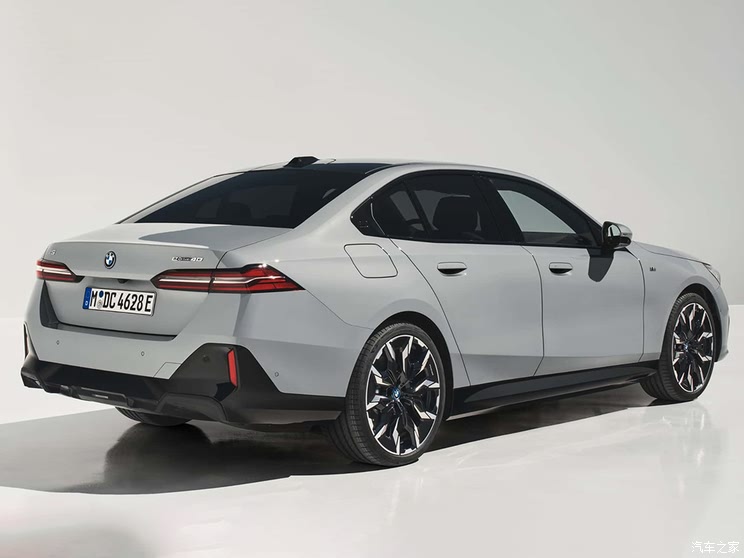
The BMW i5 xDrive40 will be launched in the spring of 2024.

  [car home Information] Recently, we learned from relevant channels that the new BMW pure electric i5 xDrive40 will be launched in the spring of 2024. In May this year, a new generation of BMW 5 Series (G60) and (|) made their debut. Previously, two versions of eDrive 40 and M60 xDrive were launched, and it is expected that xDrive 40 will be positioned between them.

BMW (imported) BMW i5 2023 M60 xDrive

M60 xDrive

BMW (imported) BMW i5 2023 eDrive 40

『eDrive 40

  BMW i5 adopts the upgraded fifth-generation eDrive electric drive system. As an entry-level model, the eDrive 40 version will be equipped with a rear motor, with a maximum power of 340 HP, a peak torque of 430 Nm, an acceleration time of 6.0 seconds at 0-100km/h and a top speed of 193 km/h.. As a version of M Performance, the M60 xDrive is equipped with stronger dual motors, sharing the powertrain with the BMW iX M60, with a maximum power of 601 HP and a peak torque of 820 Nm. It is officially announced that its 0-100km/h acceleration time is 3.8 seconds, and its top speed is limited to 230 km/h.

BMW (imported) BMW i5 2023 eDrive 40

『eDrive 40

   BMW officials did not disclose the details of the xDrive 40 model, but the BMW i5 xDrive40 will undoubtedly be welcomed by BMW electric car enthusiasts. Compared with the rear-drive single motor, the four-wheel drive dual-motor model will be more worth looking forward to. For reference, the recently released BMW i4 xDrive40 will be equipped with front and rear dual motors, which can output a maximum power of 396 HP, while the i5 xDrive40 will probably use the same power system. (Text/car home yaoyu)

Ten Trends of Internet Development in China

On February 3rd, 2015, China Internet Network Information Center (CNNIC) released the 35th Statistical Report on Internet Development in China, in which ten trends and characteristics of Internet development in China were expounded.

First, the growth rate of netizens continued to narrow, and the difficulty of transforming non-netizens continued to expand. In 2014, there were 31.17 million new netizens in China, and the growth rate was significantly narrowed. Non-netizens’ willingness to surf the Internet continues to decline. The main reason for not surfing the Internet is that they don’t know computers or networks. The lack of Internet knowledge and application skills is an important reason for the gap in Internet use between netizens and non-netizens.

Second, there are great differences between Internet regions, and the digital gap between urban and rural areas needs to be further reduced. The inter-provincial difference of Internet penetration rate decreased from 3.37 in 1997 to 0.24 in 2014, but the difference between developed and underdeveloped provinces is still obvious. Although the scale and penetration rate of netizens in rural areas are increasing, the difference of Internet penetration rate between urban and rural areas is still expanding, and the fundamental reason is the unbalanced regional economic development.

Third, tablet entertainment is preferred, and network TV opens a new mode of entertainment. The entertainment and convenience of tablet computers make it an important entertainment device for netizens. At the end of 2014, the utilization rate has reached 34.8%, and it has a higher utilization rate among people with high education and high income. Internet TV has gradually become a new family entertainment mode. As of December 2014, the utilization rate of Internet TV has reached 15.6%.

Fourth, instant messaging has a stable position and evolved into a high value-added business portal. As of December 2014, the utilization rate of mobile instant messaging was 91.2%, up 5.1 percentage points from the end of 2013. Mobile instant messaging has gradually evolved from a single communication tool to a user portal for high value-added services such as payment, games and O2O, and has provided huge potential commercial value for other services with a huge user base.

Five, the mobile phone business application broke out, and the mobile phone travel booking momentum was the fiercest. In 2014, the development of mobile commerce applications among netizens in China exploded, and the annual growth rate of users such as mobile online shopping, mobile payment and mobile banking far exceeded the growth rate of other mobile applications. Mobile phone travel booking, which has been at a low level for a long time, has an annual growth rate of 194.6% in 2014, making it the fastest growing mobile business application.

6. Internet financial management is gradually decreasing, and the scale is stable and the expansion speed is gradually slowing down. By December 2014, the number of netizens who had purchased online wealth management products reached 78.49 million, an increase of 14.65 million compared with June 2014. Due to the diversion caused by the decline in yield and the recovery of China stock market, the explosive growth of users has basically ended, and the growth rate has begun to slow down.

Seven, the popularity of enterprise Internet is high, and there is much room for improvement in practical application. In enterprises that use the Internet for office work, the access rate of fixed broadband has exceeded 95% for many years, but there is still much room for improvement in the actual application level of the Internet. The boundary between traditional enterprises and internet enterprises is becoming more and more blurred, and the internet will become an inseparable part of the daily operation of enterprises.

Eight, the first-tier cities improve the quality of O2O, and medical and housekeeping O2O needs to be released urgently. O2O enterprises take the lead in layout in first-tier cities, and quickly gather a large number of deep users by catering to users’ needs; The business layout of second-and third-tier cities is gradually expanding, and the huge consumption potential will make the market enter the stage of incremental growth. The development of medical and housekeeping O2O has just started, with strong user demand and great development potential.

Nine, mobile phone network video exceeds PC, and network video has entered a period of steady development. In 2014, the overall scale of online video users was still growing, but the usage rate declined slightly; The user scale and usage rate of mobile video still keep increasing, but the growth rate has obviously slowed down, and the network video industry has entered a period of steady development. As of December 2014, 71.9% of video users chose to watch videos on their mobile phones; The usage rate of tablet computer and TV is about 23%, which is an important device for watching online video programs.

Ten, PC online games are still the backbone, and mobile online games and TV games are the highlights. PC online games attract the most valuable in-depth users and remain the backbone of the game market. The explosive growth of mobile games reached its peak in the first half of 2014, and gradually entered the reshuffle period in the second half of the year, showing a steady and declining trend. It is expected that the share will be further expanded in 2015. In 2014, the policy of lifting the ban on game consoles made video games a new market focus. However, judging from the current development trend of the TV game market, it is not the game console, but the Internet TV or "box" that will quickly occupy the market in the next year.

Subscribe to these newspapers and watch the world with Xinhua News Agency at any time!

Golmud released

Welcome your contribution! Submission email: geermufabu@126.com

I hope I can master the latest information at home and abroad at the first time.

And expect authority

So these five newspapers sponsored by Xinhua News Agency

Is your first choice.

Click on the lower left corner

"Read the original"

Get subscription method

Xinhua daily telegraph

Founded in 1993, Xinhua Daily Telegraph is a daily newspaper published by Xinhua News Agency. This daily newspaper selects and compiles the excellent manuscripts of new media in various newspapers and periodicals of Xinhua News Agency, gathers the excellent manuscripts of other national media, and publishes original comments and supplements, covering domestic news, international news, in-depth reporting, economy, science and technology, culture and other fields.

Reference News

Sponsored by Xinhua News Agency and edited and published by Reference News Newspaper, Reference News was founded in Ruijin, Jiangxi Province on November 7, 1931. It is the newspaper with the largest circulation in China and the fifth in the world, with an average daily circulation of 3.4 million copies. In 1956, Reference News was revised and its header was redesigned, and it was decided to collect these four words from Lu Xun’s handwriting, which has been used ever since.

Reference News is the only newspaper in Chinese mainland that can legally and directly publish foreign news. It selects the latest news and comments from all over the world every day and reports international and domestic news from all directions and perspectives, which opens a window for readers to see the world and broadens their horizons.

look far into the distance (usu from a height)

Outlook News Weekly is a large-scale current affairs political and economic news weekly sponsored by Xinhua News Agency, and it is the earliest news weekly in People’s Republic of China (PRC).

At the beginning of 1981, Xinhua News Agency decided to set up a monthly magazine, Outlook, which was approved by Deng Xiaoping. In January 1984, Outlook was officially published as a weekly magazine.

The main columns of Outlook News Weekly are sometimes vertical and horizontal, special reports, first-line reports, monographs, economic columns, ethnic families, international columns, supplements and so on. [1] According to China Knowledge Network on June 6, 2018, Outlook News Weekly published 50,635 articles, which were downloaded 1,666,626 times and cited 29,716 times.

Economic Information Daily

Economic Information Daily is a newspaper sponsored by Xinhua News Agency. It was founded on July 1, 1981 (Xin Younian) and was inscribed by Comrade Deng Xiaoping. It is the earliest national economic newspaper in China.

Guided by "economic reference", Economic Information Daily emphasizes foresight, exploration and supervision, and strengthens in-depth reporting, viewpoint reporting and international reporting.

Half-monthly talk

Semimonthly Talk is a party magazine sponsored by Xinhua News Agency for grassroots readers according to the needs of strengthening grassroots ideological and political work in the new period. It has been designated as the current political reference reading for the national higher education self-study exam by the Self-taught Examination Office of the Ministry of Education of People’s Republic of China (PRC), and is known as "the first magazine in China". According to VIP. com on July 18, 2018, the number of works of "Half Moon Talk" was 8,897.

-END

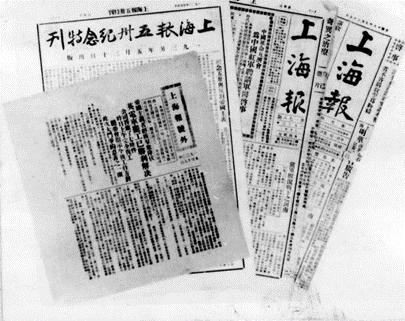
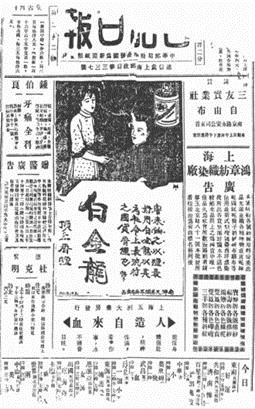
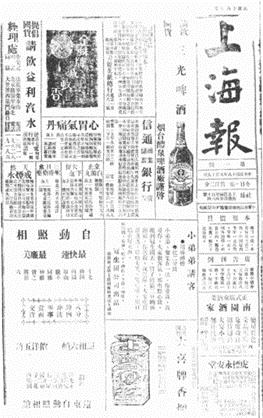
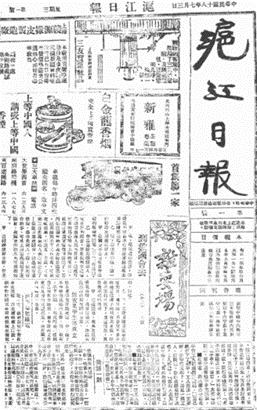
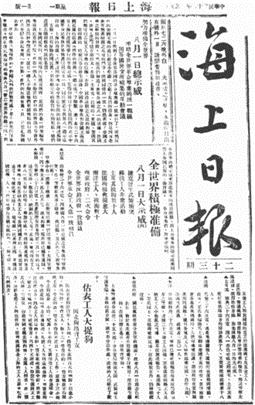
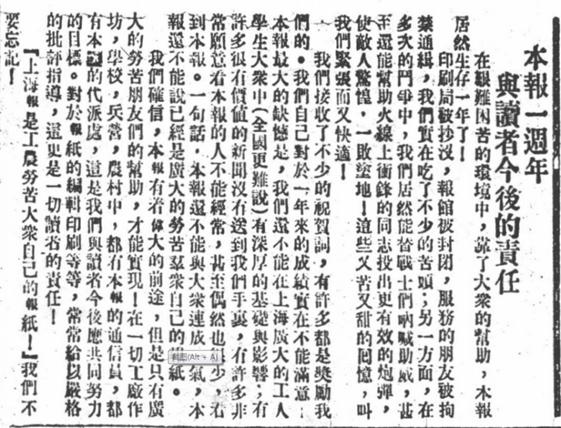
Shanghai Daily, a red periodical that studies the world, is a newspaper engaged in guerrilla warfare.

In April 1927, after the failure of the First Great Revolution, the Kuomintang gradually established a news network serving the counter-revolutionary cause, represented by the Central News Agency, the Central Daily and the China National Radio, and monopolized the press and publication in the Kuomintang-controlled areas, and successively promulgated a series of restrictions on freedom of speech and publication, such as the Regulations on Censorship of Publications, the Provisional Counter-revolutionary Criminal Law, the Principles of Publication Regulations, the Regulations on Censorship of Publicity Materials and the Order on Banning Various Anonymous Publications. As a result, the Communist Party of China (CPC)’s journalism was greatly destroyed, and the revolutionary newspaper system established during the Great Revolution was completely destroyed.

△ "Shanghai Daily"

In order to counter the cultural autocracy of the Kuomintang and meet the needs of the development of mass struggle, the Central Committee of the Communist Party of China at that time, considering that the weekly Red Flag, which was founded in 1928, could not meet the needs of the unpredictable revolutionary situation, decided to set up a daily newspaper, with Li Qiushi, then propaganda minister of the Central Committee of the Communist Youth League, as the editor-in-chief and Xie Juezai, Li Bingzhong and other comrades as co-editors. On April 17th, 1929, Shanghai Daily was founded as Vernacular Daily, with workers as the main readers. It was a newspaper guiding the workers’ movement in jiangsu provincial party committee, the Communist Party of China (CPC). Shortly after its publication, Vernacular Daily had a great influence on some workers and aroused the suspicion of the Kuomintang, so it had to be published elsewhere. On May 19th of the same year, Vernacular Daily was renamed as Shanghai Daily, and the editorial department published Please read the minimum goods under the pseudonym of Laoyuan, pointing out that "unlike other newspapers designed for adults, Shanghai Daily is intended for friends in the society at least. They are long works, but we are short sayings. They are very expensive, at least one yuan and a few cents a month, and I only need twenty cents a month. They only say what Mr. Adult has to say. I want to say what friends in society have to say at least. In short, they are just the mouthpiece of Mr. Adult. I want to be friends of friends in society at least! " However, two weeks after its publication, Shanghai Daily was banned, the printing bureau was blocked and its boss was arrested. In such a harsh environment, Shanghai Daily was renamed Tiansheng (published for two days), Chenguang (published for three days), Hujiang Daily (published for more than two months) and Maritime Daily (published for more than four months).After a tenacious struggle under the white terror, the original name of Shanghai Daily was restored on November 12, 1929.

△ Vernacular Daily No.22

△ Shanghai Daily No.1 on May 19, 1929

The newspaper was founded less than a year ago. Under the severe persecution of imperialism and the Kuomintang, it changed its name and publishing address many times. During this period, the chief writer, the newspaper delivery person and the special correspondent were all devastated, but everyone always tried their best to expand the influence and distribution scope of the newspaper, which can be said to be a "guerrilla war" newspaper. Although it is a tabloid daily, it publicizes many contents, such as the struggle of the working class in Shanghai, the development of revolutionary base areas, the news of the Red Army movement, the revolutionary movements in various countries, etc., so that readers living in the white terror can clearly and affectionately feel that they are not alone, thus gaining great encouragement and strength, and also making Shanghai Daily gain higher and higher prestige among the workers. As pointed out in the 17th issue of Red Flag on March 26th, 1930, "Our Shanghai Newspaper has become the only reading material for the working class in Shanghai, and has become an authority among the Shanghai masses, which has made the ruling class in Shanghai tremble with fear for a long time. Although it has suffered the hardest oppression in terms of distribution, it can’t stop the development of our Shanghai Daily. "

△ On July 3, 1929, Hujiang Daily No.1

△ Maritime Daily No.24, July 29, 1929

△ On April 17th, 1930, Shanghai Daily published The First Anniversary of this newspaper and the readers’ future responsibilities.

Photo courtesy of Huang Qiuyu, Research Office

Editor of Media Work Department

Laboratory audit

WeChat official account | Longhua Hero

Sina Weibo | @ Longhua Yinglie

Original title: Shanghai Daily, a red periodical studying the world: a newspaper engaged in guerrilla warfare.

Read the original text

Jin Yong, a famous martial arts novel writer, welcomes Qi Heshou, the 92nd birthday star.

  Today, Mr. Jin Yong, a famous martial arts novel writer, has celebrated his 92nd birthday. In Weibo, Huang Xiaoming, Wallace Huo, Liu Yifei and other stars and fans of Jin Yong have already celebrated Jin Yong’s birthday in their own way.

  Huang Xiaoming said that he played Jin Yong’s drama "Three Life is Lucky" and Wallace Huo’s video birthday regretted not playing Yang Guo.

  Don’t look at the fact that nowadays everyone is talking about TV series and movies adapted from an online novel to IP. As early as the 1980s and 1990s, the martial arts TV series such as "The Dragon Slayer", "The Condor Heroes" and The Duke Of Mount Deer, which we can see, were the products with Jin Yong’s novels as IP.

  On the Weibo, the topic of "Jin Yong who is not old" for Jin Yong’s birthday was launched, and it was forwarded and commented by many stars. Huang Xiaoming once played Yang Guo in the 2006 edition of The Condor Heroes and Wei Xiaobao in the 2008 edition of The Duke Of Mount Deer. He said: "It is really a privilege to play Mr. Jin Yong’s works. Let’s send our best wishes to Mr. Jin Yong." Cherrie Ying also forwarded: "Xiaobao from Jordan chan and Ake from Zhang Jizhong sent blessings." In addition, Tamia Liu, Liu Yifei, Ann, Li Yapeng and other stars who appeared in TV series adapted from Jin Yong’s novels also sent congratulations with Weibo.

  Wallace Huo, known by netizens as an "old cadre", once played Ling Huchong in the legendary swordsman. Recently, Wallace Huo wished Jin Yong a happy birthday by video. He said that he liked Yang Guo in "The Condor Heroes" in Jin Yong’s works best. After that, he did not forget to be black: "When I am old, I may not have a chance to play again." Talking about the influence of Jin Yong’s works on himself, Wallace Huo said: "I can feel the pleasure, grievances and enmities that I can’t feel in real life." In addition, Laure Shang thought that the way of singing the theme song in Zhang Jizhong’s new "Chivalrous Man" was Jin Yong’s birthday celebration.

  Fans sending blessings is also enough.

  Mainly by literary talent and wit.

  On the other hand, in order to express their love for Jin Yong’s works, fans also secretly showed off their wit and literary talent. Netizen "Red Fire Trance 168" connected Jin Yong’s 14 martial arts works into a poem: "Flying snow shoots white deer in the sky, laughing at the book god Xia leaning on Bi Yuan." The netizen "Sister Goose of Galaxy Railway? Little Bear" specially sent a picture to show that he was Jin Yong’s "twelve-year brain powder" and fell at Jin Yong’s door. He also quoted the auspicious words of Jin Yong’s The Duke Of Mount Deer Middle Dragon Sect when he called on the founder Hong Antong to celebrate his birthday. Netizen "Xiaohai Ah" said that he was the same Amanome as Jin Yong. "His martial arts is to hoe the strong and help the weak, to gain the world’s latitude and longitude, and to cherish the world. The martial arts that belong to me is to travel around the world and do my best to help those in need. "

  Chongqing Evening News reporter Zhong Zhouyu comprehensive

  These big names are Jin Yong’s super fans.

  According to incomplete statistics, there are hundreds of millions of readers of Jin Yong’s martial arts novels, spanning different ages, occupations and cultural levels, including many scholars and masters in various professional fields.

  Feng Qiyong (Redology)

  Feng Qiyong, a redologist, is an out-and-out fan of Jin Yong. In a preface to a book, he once praised him: "I have read Jin Yong’s novels for more than ten years, although I have repeated them three or four times, but I am still as enthusiastic as when I first read them. While studying the Story of the Stone, I love Jin Yong’s martial arts novels, which I once called ‘ Jinshi Marriage ’ 。” Well-deserved for the veteran "Jin Yong fan."

  Hou Hsiao-hsien (Director)

  Hou Hsiao-hsien decided to be a director after graduating from college, thinking that he would try to make a martial arts work one day. He once said: "I have read martial arts novels since I was a child, especially Jin Yong’s works." When conceiving Nie Yinniang the Assassin, Hou Xiaoxian spent decades carefully preparing, reading a lot of historical materials, studying the political background at that time, and delving into tiny details, and finally built the Jianghu in his own way.

  Kai-fu Lee (entrepreneur)

  Kai-fu Lee’s love for Jin Yong’s novels is manifested in his understanding of the mobile Internet. He calls himself "Hong Qigong". In his autobiography, he writes that he has been reading Jin Yong’s novels during his study in the United States. "I have not forgotten Chinese, but I also owe it to the complete sets of Jin Yong’s novels and Qiong Yao’s novels from my eldest brother’s sister-in-law’s house. At that time, I lived in my brother’s sister-in-law’s house for six years. I actually read every book of Jin Yong and Qiong Yao’s, and Jin Yong’s novels have been read for five times."

  Ma Yun (entrepreneur)

  Ma Yun was obsessed with two things since he was a child: English and martial arts. Ma Yun has been familiar with Jin Yong’s martial arts novels, and his obsession can be seen from the names of many rooms in his company — — They are all named after the Wulin shrines in Jin Yong’s novels: for example, his office is called "Peach Blossom Island", the conference room is called "Guangmingding" and the bathroom is called "Tingyuxuan".

  In 2000, Ma Yun met his idol Jin Yong in Hong Kong. He recalled himself at that time and said, "I was excited for a few days and went to the street to buy his book. I was eagerly looking forward to meeting and signing it." After three hours of talking, the two became friends. Finally, Jin Yong presented Ma Yun with the words "Meet each other late, feel at home" on a napkin. Xiao Mingshu

Interpreting the First Quarterly Report of Foreign Trade from the Perspective of Quantity, Quality and Potential

Xinhua News Agency, Beijing, April 12thTitle: Interpreting the First Quarterly Report of Foreign Trade from the Perspective of Quantity, Quality and Potential

Xinhua News Agency reporters Zou Duowei, Tang Ningning and Huang Yaoteng

The first quarterly report of foreign trade was released on the 12th. According to customs statistics, in the first quarter of 2024, the import and export scale of China’s goods trade exceeded 10 trillion yuan for the first time in the same period, and the growth rate of import and export reached a new high in six quarters. Among them, exports and imports increased by 4.9% and 5%, which were 4.1 and 2.3 percentage points higher than those in the fourth quarter of last year, respectively, which showed that China’s foreign trade started strongly and started well.

The momentum of "stable quantity" was effectively consolidated.

Data show that in the first quarter of this year, the total import and export value of China’s goods trade was 10.17 trillion yuan, a year-on-year increase of 5%. Especially in the case of data fluctuation in March, in the first quarter, China’s exports rose by 4.9% year-on-year, and imports increased by 5% year-on-year, exceeding market expectations.

Wang Lingxun, deputy director of the General Administration of Customs, said at the press conference held by the State Council Office on the same day that such achievements were made against the background that China’s economic fundamentals continued to improve and the vast number of foreign traders made great efforts to forge ahead and innovate. The high-quality development of China’s foreign trade has continuously taken new steps to push the import and export scale to a new level in the first quarter of this year.

As the world’s largest trader of goods, export is one of the main driving forces of China’s economic growth. From the double-digit growth in the first two months to the year-on-year decline in March, the slowdown in export growth has become the focus of attention.

Chen Hongna, an associate researcher in the Foreign Economic Research Department of the State Council Development Research Center, believes that understanding the export growth rate can’t be based solely on figures, but on the basis of a high base and still low external demand, China’s exports have not only achieved a reasonable growth in quantity, but also maintained the overall stability of the international market share, all of which benefited from China’s continuous adjustment and optimization in terms of growth momentum and product structure in combination with its own comparative advantages.

At the same time, since the beginning of this year, the accelerated growth of industrial production and the steady growth of household consumption have also driven the import of raw materials, key components and consumer goods. In the first quarter, the growth rate of China’s imports of integrated circuits, textiles and clothing, dried and fresh fruits and competitive bicycles all exceeded double digits. High-quality products from all over the world have entered China, giving consumers more and better choices and giving enterprises from all over the world more opportunities.

Wang Lingxun said that at present, global trade is showing signs of stabilization and improvement. The World Trade Organization (WTO) predicts that the global trade in goods will increase by 2.6% in 2024; According to the survey results of China Customs’ trade prosperity, the proportion of enterprises that reported the increase of export and import orders in March was significantly higher than that in the previous month. It is expected that China’s import and export will continue to improve in the second quarter, and it will basically remain in the growth channel in the first half of the year.

The characteristics of "quality improvement" continue to appear.

Positioning, assembly, testing … Entering Beihai Jixun Technology Co., Ltd., a brand-new ink cartridge product research and development line, technicians are carefully recording ink test data such as surface tension and conductivity. This enterprise, which mainly manufactures printing consumables, sells its products to the United States, Italy, France and other European and American regions, and its export value in the first quarter reached 130 million yuan, a year-on-year increase of over 30%.

As the main force of foreign trade, private enterprises that dare to fight and venture are the epitome of the vitality of generate, the main body of foreign trade in China.

"From the perspective of the number of business entities, almost 9 out of every 10 foreign trade enterprises with import and export records are private enterprises." Lv Daliang, director of the Statistics and Analysis Department of the General Administration of Customs, said that in the first quarter, the import and export scale of private enterprises accounted for 54.3% of China’s total foreign trade value, and the growth rate of exports and imports was 4.8 and 7.8 percentage points faster than the whole, and the status of stable foreign trade continued to consolidate.

Thanks to the complete industrial system and strong production capacity, high-tech and high value-added products are popular overseas, which is also a portrayal of China’s foreign trade development upgrading.

In the first quarter, the export of mechanical and electrical products including computers, automobiles and ships totaled 3.39 trillion yuan, up 6.8% year-on-year, accounting for 59.2% of the total export value, and the export of high-end equipment in the central region increased by 42.6%, indicating that the competitive advantage of "Made in China" continued to be consolidated.

The "excellent" foreign trade structure is also reflected in the "wide" market expansion. In the first quarter, China’s import and export to countries that jointly built the "Belt and Road" increased by 5.5%, 0.5 percentage points higher than the overall; Both imports and exports to Latin America and Central Asia achieved double-digit growth.

New kinetic energy stores potential cohesion

The import and export of foreign trade involves both domestic and international markets. The more complex, severe and uncertain the external environment is, the more it needs new policies, new formats and new platforms.

This year’s government work report clearly puts forward "consolidating the basic disk of foreign trade and foreign investment"

According to the relevant arrangements, the State Administration of Foreign Exchange launched new measures to optimize the foreign exchange business process of goods trade, 14 departments including the General Administration of Customs launched a special campaign to promote cross-border trade facilitation in 2024 in 20 cities, and Brunei wild aquatic products, Austrian pork, Sri Lankan pineapple, etc. were successively allowed to enter the China market … With the effective implementation of various policies, dividends continued to be released, and foreign trade growth was promising.

"In the first quarter, our sales on cross-border e-commerce platforms such as shrimp skin and Lazada increased by about 50% year-on-year, and most of our customers were concentrated in the ASEAN market." Xia Liangsheng, head of Guangxi Haobu E-Commerce Co., Ltd., told reporters that developing cross-border e-commerce business in border port cities can effectively reduce the time and cost of customs clearance of goods and further help enterprises "go out to sea" to expand international business opportunities.

At present, with the development of Internet technology, new formats and new modes, such as cross-border e-commerce, bonded maintenance and market procurement, have helped consumers and producers in various countries to "buy and sell the world" and become an important starting point for stabilizing foreign trade. In the first quarter, the import and export of intermediate goods in China increased by 4.4%, and the import and export of cross-border e-commerce increased by 9.6%, among which the export of cross-border e-commerce overseas warehouses increased by 11.8%.

The new platform expands new space. Whether it is the Consumer Expo, Canton Fair, China International Import Expo(CIIE) and other key exhibitions, or the release of trade promotion information and national trade guides, China and the world are "two-way" platforms and "treasure books" to further help enterprises explore the international market and expand trade channels, and to strengthen domestic and international exchanges and cooperation and promote the high-quality development of foreign trade.

"Overall, China’s foreign trade started strongly in the first quarter, which laid a solid foundation for achieving the goal of’ stable quality and quantity increase’ throughout the year." Wang Lingxun said.

Fortress Besieged in Kowloon Castle: Martial Arts in Jianghu Life in the City


Special feature of 1905 film network Kowloon walled city, also known as Kowloon walled city, is located in a besieged city in Kowloon City, which belongs to the historical city of Hong Kong and was demolished in 1993.


On May 1st, the film was released, which was directed by,,, raymond lam,,,, and so on. It is a Hong Kong-style action movie from boxing to meat. With a gripping picture of the times, the Fortress Besieged of Kowloon Walled City vividly reproduces the chaotic zone of Kowloon Walled City in Hong Kong in the 1980s, which was called "three cares". The film shows the turbulent waves in the notorious walled city and reveals the living conditions of the people at the bottom of society at that time.


The film tells the story of Chen Luojun, a warm-blooded young man, who was framed and issued a chase order by the big boss of the legion. After being seriously injured, Luo Jun was rescued by Weishui and fled to a place where there is no competition — — Kowloon walled city and walled city are all masters of hiding. The only thing that can restrain the big boss is the tornado. The story of the brothers in walled city uniting with the big boss to fight for life and death and defend their homeland.


After the film was released on May 1st, the box office continued to decline, showing an upward performance. After the film was released, its word-of-mouth rose, which triggered a lot of competitions about the value of role force in bilibili. In this programme, starring raymond lam and Professor Suo Yabin from Communication University of China interpret the Fortress Besieged in Kowloon Castle for you.


Who is the first choice for the force value PK of Kowloon walled city?


Raymond lam chose himself. He added that Cheng Luojun, who is played by him, has a very high fighting ability, so more than 90% of the actions are all done by the actors themselves, and all the pain is extremely real.


Liu Junqian, an actor, thinks that Wang Jiu has the highest force value, because in the play, Wang Jiu can fight four times, and he can compete for many rounds regardless of the outcome. Zitong Hu, an actor, chose Tornado played by Louis Koo. In the original work, he was the figure with the highest force value, and his image was handsome and he could fight.


In this regard,forestFengEmphasis: "It seems that there has never been such an action design and such a style in action movies in Hong Kong. It seems that we have found a new language to interpret action movies."


The film critic sharply graded the film.


As a veteran fan of action movies, Suo Yabin, a professor at Communication University of China, scored 7.5 points for Fortress Besieged in Kowloon Castle, and stressed: "If the action scenes of it are taken out separately, I can score 9 points. If those two words are used to describe it, it is the rivers and lakes in the city and the martial arts in life. " Such a high evaluation shows how attractive the action drama of this film is.


Looking back at the development of Hong Kong-style action movies since this century, we can say that there has been great progress in technology. For example, in recent series, Hong Kong-style action movies will focus on the explosion of nuclear bombs; In those days, it was the first time to shoot a martial arts 3D film, and later he filmed underwater martial arts 3D in it.


However, director Zheng Baorui is just taking a different approach. His martial arts film returns to the original intention of Hong Kong action movies, and explores the performance potential of basic physical fighting actions that belong to people themselves. Therefore, Zheng Baorui borrowed a lot of old Hong Kong action movies’ sub-types. For example, the two protagonists in the film are friends but have to fight for life and death because of different positions. In the end, each of them ties a cloth and covers his eyes, which is especially like a scene in Fang Shiyu 2: Ten Thousand Enemies.


For another example, a cook who cooks barbecued pork in the film suddenly becomes a martial arts expert by dancing with two knives. This scene can also find a similar plot in the movie.


Another example is Wang Jiu, who has a magical power to protect his body. He is invulnerable and always reminds people of the films directed by him.


For those who are familiar with Hong Kong films, it is not difficult to find that the source of the Hong Kong film "Fortress Besieged in Kowloon Castle" can be traced back to director Tsui Hark’s filming more than 20 years ago. First of all, "Fortress Besieged by Kowloon Castle" and "Upstream" come down in one continuous line is the vertical design of action. The unique terrain of Kowloon Castle determines that the action design will be extended from the usual horizontal angle to the vertical action design.


Whether walking in the corridor, jumping on the stairs, or even climbing the eaves outside the building, the audience can see that this film is inheriting and innovating at the same time.


However, in the process of watching movies, there are also many viewers who think that the last four young people exaggerated their drama when they finally confronted Wang Jiu. The reason is that Hong Kong, China’s action films especially like to pursue a tension between realism and freehand brushwork. The way to deal with the action in Fortress Besieged by Heroes in Kowloon Castle is to construct the illusion of action through audio-visual language.


For example, in a narrow corridor, when the enemy is after him, he can jump over this person by jumping in the air and fall across the other side. This is a setting beyond the real physical logic, but at the climax of the film, this setting is becoming more and more obvious.


In action design, the villain was forced to swallow a truncated sword, and the enemy was defeated by using the destructiveness of the truncated sword in the body. With the action design method with fantastic and fantastic supernatural flavor, only when the audience knows how to appreciate the action scenes can they really love and appreciate this movie.


Questioning the plot and characterization?


In addition, in the plot and characterization, "Fortress Besieged by Heroes in Kowloon Castle" has also been questioned by some viewers. For example, the audience thinks that "the characters and the plot are very popular because of the opposition between good and evil" and "the protagonist Chen Luojun became attached to the tornado after entering the city village, and quickly merged into it. This plot is too coincidental and too simple".


Indeed, according to director Zheng Baorui’s previous works, the storyline and characterization in the film "Fortress Besieged by Heroes in Kowloon Walled City" are indeed substandard. For example, Chen Luojun’s growth arc is not reflected in the gradual fullness of his personality and values, but in the gradual improvement of his combat effectiveness, so it will appear that the ideological and psychological depth of the characters is not enough and relatively flat.


In addition, why does the director spend a lot of time to create a plot that the audience thinks is more coincidental and simple? Perhaps the fireworks in Kowloon Castle gave this story a particularly strong realistic color. It can be understood that the literary drama in this part of the film is actually paving the way for martial arts drama. When the realistic color is combined with the action scene behind the film review, it will produce a wonderful tension.


"Hit" Hong Kong-style action "Xintiandi"?


You know, the film’s scenery is as realistic as possible to restore the Kowloon walled city in the 1980s. According to Zheng Baorui, the director, his greatest personal feelings about the castle in this play are "inseparable" and "not staying low (staying)". These two words have profound meanings.


Historically, Kowloon Walled Park used to be a no-holds-barred zone between the Hong Kong government, Britain and the mainland. When the cession treaty was signed that year, it was declared that this piece of land in Hong Kong still belonged to China, but the Central People’s Government did not want to go deep into this area to disturb or be regarded as a provocative act, and it gradually became an anarchic den of thieves.


As a geographical space, the Kowloon walled city was demolished in 1993. In the physical sense, this walled city can’t stay, but it can’t be separated from the spirit and concept it carries. This "three-no-cares" zone, because the current civilized order and legal norms in this space are ineffective, everyone relies on the morality of the rivers and lakes, which also carries the martial arts dream and river lake dream of Hong Kong film directors. Like it or not, it actually has such a layer of charm.


At the end of this "Fortress Besieged in Kowloon City", there is a plane flying above the kite. No matter how high the kite flies, there will be a huge plane hanging over it, forming a particularly distinctive visual oppression. This scene implies that the process of modern life is crushed on the Kowloon walled city like an airplane, and the traditional way of life will be slowly dissolved and eventually passed away under the constant impact of the civilized order of modern social life.


However, is it true that modern civilization will eventually abandon such "wild" and "barbaric" things as Kowloon Castle? I remember saying, "Without humanity, people will lose a lot, but without animality, people will lose everything.".


The vitality of "wildness" is actually the core driving force to ensure that people can continue to go on. Perhaps it is also the case. When many people think that Hong Kong-style martial arts films are beginning to decline, there will be people who are willing to make such great efforts and invest so much to shoot an action film.


The greatest significance of Fortress Besieged by Kowloon Castle is that it provides a new development possibility, that is, an action that has been ignored and abandoned by us — — Fighting originated from human limbs. It still has a lot of room to explore, which may be the next starting point for Hong Kong-style action movies and Chinese-language action movies.