Zheng Shanjie published a signed article in People’s Daily, insisting on promoting Anhui’s high-quality development with high-quality party building.

  General Secretary of the Supreme Leader pointed out that the key to building a socialist modern country in an all-round way and promoting the great rejuvenation of the Chinese nation lies in the party. High-quality Party building is the guide and guarantee of high-quality development. Only by doing a good job in Party building with high quality can we give full play to the strong political and organizational advantages of the Party and unite and lead the broad masses of cadres and people in party member to strive to create a new situation in various undertakings of economic and social development. We should conscientiously implement the spirit of the important speeches and instructions of the Supreme Leader General Secretary, deeply understand the decisive significance of "two establishment", regard "two maintenance" as the highest political principle and fundamental political rule, persist in grasping party building around development, do a good job in party building to promote development, and promote high-quality economic and social development in Anhui with high-quality party building.

  Accurately grasp the new major strategic opportunities, and promote the important speech of the Supreme Leader General Secretary, the spirit of important instructions and the decision-making arrangements of the CPC Central Committee to take root in Anhui with high-quality party building.

  The General Secretary of the Supreme Leader stressed that whether the economy and society can maintain sustained and healthy development fundamentally depends on whether the party plays a leading role in economic and social development well. Report to the 20th CPC National Congress, the Party, has made comprehensive arrangements for promoting the overall layout of the "Five in One" and the "Four Comprehensive" strategic layout in a coordinated manner, which has pointed out the direction for us and established a guide for action. For Anhui, we have once again ushered in a rare opportunity for development. The CPC Central Committee has thoroughly implemented the strategy of rejuvenating the country through science and education, strengthening the country through talents and innovation-driven development, which provides a rare opportunity for Anhui to give full play to its strong advantages in scientific and technological innovation and accelerate the construction of a world-class innovative highland. The deployment and construction of a modern industrial system by the CPC Central Committee provides a rare opportunity for Anhui to give full play to its good advantages in manufacturing industry and accelerate the coordinated development of the three industries with high quality. The CPC Central Committee promotes the strategy of accelerating the rise of the central region, promoting the development of the Yangtze River Economic Belt, promoting the integrated development of the Yangtze River Delta, and promoting the high-quality development of the "Belt and Road", which provides a rare opportunity for Anhui to give full play to the overlapping advantages of national strategies, accelerate its integration into the big cycle, and better link the double cycle. The CPC Central Committee has implemented the strategy of expanding domestic demand in depth, which provides a rare opportunity for Anhui to give full play to its regional transportation advantages and integrate into a strong domestic market. The Party Central Committee promotes the construction of a socialist cultural power, which provides a rare opportunity for Anhui to give full play to its profound advantages in history and humanities and accelerate the transformation of cultural soft power into hard power.The CPC Central Committee plans development from the height of harmonious coexistence between man and nature, which provides a rare opportunity for Anhui to give full play to the advantages of beautiful ecological environment and accelerate the comprehensive green transformation of economic and social development. We should strengthen the sense of urgency of "slow progress is retreat, and even retreat if we don’t advance", seize the time window, speed up the promotion of Excellence, make efforts to make full use of various policies, and turn rare opportunities into practical results in Anhui’s development.

  Accurately grasp the primary task of Chinese modernization, promote modernization and beautiful Anhui construction with high-quality party building, and make new progress

  General Secretary of the Supreme Leader pointed out that "Chinese modernization is socialist modernization led by the Communist Party of China (CPC)" and emphasized that "high-quality development is the primary task of building a socialist modern country in an all-round way". This is a major judgment made on the basis of in-depth analysis of the new historical conditions and stages of China’s development and a comprehensive grasp of China’s modernization practice. We should comprehensively benchmark the decision-making arrangements of the 20th National Congress of the Communist Party of China, find out the combination point and focus point of promoting high-quality development in accurately grasping the interrelation between Party building and economic and social development, implement the new development concept completely, accurately and comprehensively, and ensure that the construction of a modern and beautiful Anhui is stable and far-reaching under the correct leadership of the Party.

  Adhere to the implementation of the strategy of rejuvenating Anhui through science and education, and accelerate new breakthroughs in innovative Anhui construction. Education, science and technology and talents are the basic and strategic supports for building a socialist modern country in an all-round way. In the face of increasingly fierce regional competition, we should deeply understand that education is the foundation, science and technology is the key, and talents are the foundation, and we must make overall plans, complement each other and make concerted efforts. In recent years, Anhui’s education has made great progress. The regional innovation capability has been ranked first in the country for 11 consecutive years, and jumped to the seventh place in the country for the first time in 2022. The total amount of human resources has doubled and exceeded 11 million in ten years. We should persist in the education that the people are satisfied with, carry out the "tree planting project" of scientific and technological innovation in depth, speed up the construction of the transformation and application system of scientific and technological achievements, improve the mechanism of "laying eggs along the way" in cutting-edge scientific and technological research and development, make overall plans to promote the construction of talent teams in various fields, and make every effort to build a strong education province, a strong science and technology province and a strong talent province, so as to promote "strengthening agriculture through science and technology, strengthening agriculture through machinery, increasing farmers’ income" in the secondary industry, "improving quality and increasing efficiency" in the tertiary

  Persist in promoting regional coordinated development and accelerate new breakthroughs in building Anhui together. Building a regional economic layout and land space system with complementary advantages and high-quality development is an important strategic measure to solve the problem of insufficient development imbalance and accelerate the construction of a new development pattern. With the continuous improvement of the integration level of the Yangtze River Delta, in 2021, the funds actually put in place for projects invested by Shanghai, Jiangsu and Zhejiang in Anhui with more than 100 million yuan are close to 1 trillion yuan, and the total economic output of Hefei metropolitan area accounts for more than 60% of the province. In the past decade, more than 8 million agricultural migrants have become new citizens. We should deeply understand that coordination is both a development means and a development goal, adjust measures to local conditions, guide by classification, make efforts to narrow the gap between regions, urban and rural areas and income, accelerate the construction of a close and complementary cooperative relationship with Shanghai, Jiangsu and Zhejiang in promoting the integration of the Yangtze River Delta, give play to the leading role of Hefei metropolitan area in radiation, and make overall plans for the coordinated development of northern Anhui, Wanjiang City Belt, Dabie Mountain Revolutionary Old Area in western Anhui and southern Anhui to ensure the relative balance in development.

  Persist in promoting the harmonious coexistence between man and nature and accelerate new breakthroughs in the construction of beautiful Anhui. Respecting nature, conforming to nature and protecting nature are the inherent requirements of building a socialist modern country in an all-round way. Chinese modernization should not only create more material wealth and spiritual wealth to meet the people’s growing needs for a better life, but also provide more high-quality ecological products to meet the people’s growing needs for a beautiful ecological environment. 1-mdash in 2022; In November, the average concentration of PM2.5 in Anhui was 32.6 μ g/m3, the proportion of excellent days was 82.8%, and the proportion of excellent water quality in 194 national examination sections was 84.5%, all of which were better than the annual target. We should continue to do a good job in the rectification of feedback problems such as the central ecological and environmental protection inspector, strictly implement the "ten-year fishing ban" of the Yangtze River, implement the strictest farmland protection and water resources management system, implement the peak carbon dioxide emissions Action step by step in a planned way, and accelerate the construction of beautiful Anhui.

  Insist on deepening reform and opening up and accelerate new breakthroughs in opening Anhui. Reform and opening up is a key measure to determine the future and destiny of contemporary China. Anhui connects the east with the west, connects the south with the north, and dares to venture and try is the spiritual gene deeply rooted in Anhui’s reform and opening up. In recent years, Anhui has vigorously promoted the spirit of Xiaogang, and the reform experience of "Party building+letters and visits" and grassroots discipline inspection and supervision cooperation zones has been promoted to the whole country, so as to keep the number of provincial administrative power matters at the minimum in the country. We should give full play to the advantages of location and market, actively integrate into the big cycle, actively link the two cycles, promote the cooperation and docking of all regions and fields in the province with Shanghai, Jiangsu and Zhejiang, do a good job in the construction of pilot free trade zones and linkage innovation zones, take the initiative to undertake spillover effects such as China International Import Expo(CIIE), Canton Fair and service trade fair, enhance the influence of the World Manufacturing Congress, promote the total foreign trade volume to continue to increase on the basis of exceeding 100 billion US dollars, and continuously improve the level of open economy.

  Adhere to the people-centered development thought and accelerate new breakthroughs in the construction of a happy Anhui. Realizing people’s yearning for a better life is the starting point and the end result of modernization, and improving people’s livelihood and well-being is the fundamental purpose of development. Since 2022, Anhui has fully deployed the work of "improving work style, doing practical things for the people and optimizing the environment for enterprises", and spent 15 billion yuan to implement the action of "warming people’s hearts". In the survey of "Ten thousand private enterprises evaluating the business environment" conducted by the All-China Federation of Industry and Commerce, Anhui has advanced from the 16th place in 2021 to the eighth place in 2022. We should adhere to the policy of giving priority to employment, pay close attention to the greatest livelihood, carry out the action of "warming people’s hearts" in depth, pay close attention to benefiting people’s livelihood, improve the social assistance system, pay close attention to people’s livelihood, and exchange cadres’ "responsibility index" for the people’s "happiness index"

  Accurately grasp the general requirements of party building in the new era, and promote the new great project of party building in the new era with high-quality party building.

  General Secretary of the Supreme Leader stressed that it is necessary to persistently promote the comprehensive and strict administration of the Party. We must carry forward the great spirit of party building, comprehensively promote the party’s political construction, ideological construction, organizational construction, work style construction and discipline construction, run through the system construction, deepen the anti-corruption struggle, and strive to build the party stronger and provide a strong guarantee for economic and social development.

  Keep in mind that "the country is the biggest" and resolutely be loyal to the party. General Secretary of the Supreme Leader stressed that we should be mindful of "the country’s greatest power" and think about problems and do things from a global and strategic perspective. It is necessary to take a clear-cut stand on politics, take the important instructions of the General Secretary of the Supreme Leader as the first political requirement, and ensure that the decrees of the CPC Central Committee are smooth and prohibited. We must firmly establish the overall situation, consciously put our own work in the overall situation of the party and the state, and plan our own development in the overall situation of the country and the integration of the Yangtze River Delta. We should enhance our work creativity, carry forward the innovative spirit of being the first, use our brains and refrain from mechanical execution, be down-to-earth and refrain from empty slogans, take the initiative and refrain from passive response, and implement the decision-making and deployment of the CPC Central Committee to the letter.

  Temper your hard work style and resolutely do your job. Achieving the goals and tasks of the new era and new journey has put forward new and higher requirements for the mental state, ability and quality, and style image of leading cadres at all levels. Since 2022, Anhui has paid attention to the examination of cadres in the front line of major struggles such as epidemic prevention and control, flood control and disaster relief, and vigorously promoted the public visits of 10,000 cadres in provinces, cities and counties, with a total of more than 49,000 visits to the masses and more than 125,000 letters from the masses, which further strengthened the relationship between the party and the masses. We should strengthen our ability to serve the people, with people in our hearts, mud under our feet, and responsibility on our shoulders, and devote all our energy to making the people live a good life. We should strengthen the spirit of struggle, dare to face and be good at solving new problems encountered in practice, deep-seated problems existing in reform, development and stability, people’s urgent difficulties and worries, and outstanding problems faced by party building. It is necessary to strengthen the ability to prevent and resolve risks, always maintain a sense of responsibility that is always uneasy, stand up and actively respond to risk challenges, and fight the initiative to turn crises into opportunities and turn them into dangers.

  Keep clean and honest, and resolutely be strict with yourself. Cheap, focusing on self-awareness, lasting, and thorough. Since 2022, Anhui has comprehensively strengthened anti-corruption work in key areas such as state-owned enterprises, finance, politics and law, grain purchase and sale, engineering construction, development zones, etc. In November, 16,000 cases were filed in the province, 14,000 people were given disciplinary and administrative sanctions, and 55,000 people were handled by using the "four forms". It is necessary to lead a clean and honest life, always be alert to "hunting" from all sides, and be an official, clean and honest. We should be fair and upright, establish a correct view of power, achievements and career, and resolutely put an end to the behavior of "hiding in the cold and being rude". We must stick to the bottom line, strictly implement the spirit of the eight central regulations and their implementation rules, be strict with ourselves, be strict with our responsibilities, and strictly manage our jurisdiction, and effectively create a good political ecology with a clean atmosphere.

  (The author is secretary of the Anhui Provincial Committee of the Communist Party of China)

Third-party input method market: users’ needs are upgraded, and the input experience is more personalized and intelligent.

Analysis on the Current Market Situation of Third-party Input Method

The growth rate of users’ market has slowed down, and user experience has become the core of competition for third-party input methods.

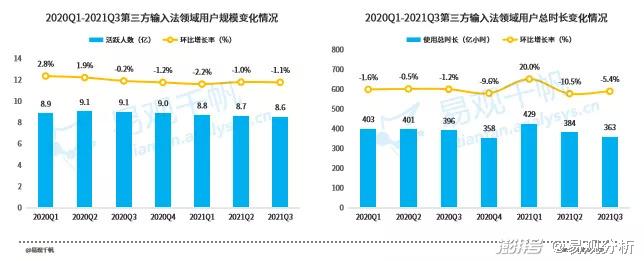
According to the data of Analysys Qian Fan, in November, 2021, the overall monthly user scale of third-party input method in China reached 714 million, and the penetration rate of active users reached 68.5%. Since 2020, the growth rate of overall user scale has remained basically stable, with the quarterly average active users remaining above 860 million, and the quarterly user usage time exceeded 35 billion hours. The growth trend of the third-party input method market in China has slowed down, and it has entered the stage of stock competition. High-quality user experience has become the core of competition for users to compete and enhance their stickiness.

The TOP3 pattern is stable, and the iFLYTEK input method continues to optimize the user experience scale and leads the growth.

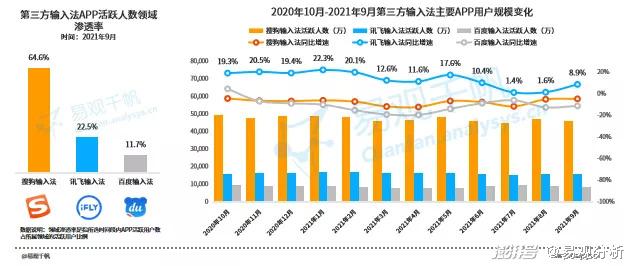
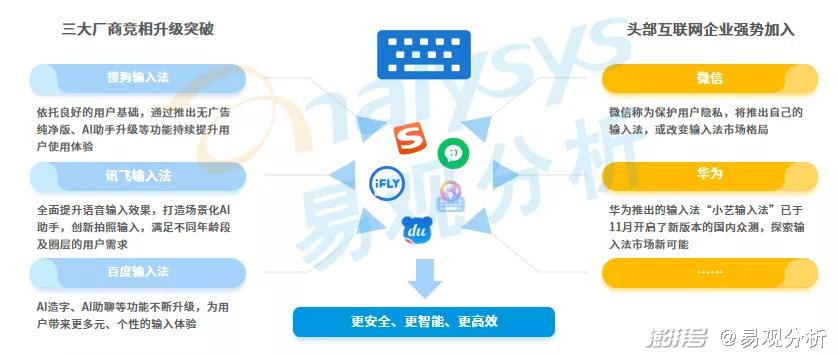
The Matthew effect of the third-party input method market in China is remarkable. The three input methods, sogou input method, iFLYTEK input method and Baidu input method, occupy more than 95% of the market share, and the three-legged pattern is stable. From the perspective of user scale, at present, sogou input method still maintains the first-Mover advantage, and iFLYTEK input method ranks second; However, the iFLYTEK input method has greatly improved the user experience with many upgrades, such as caring for elders mode, intelligent photo input, off-line input mode, AI voice input recognition framework update and so on, and achieved the highest user growth rate in the industry.

Focus on user experience optimization: AI technology is improved and the intelligent voice input experience is further upgraded.

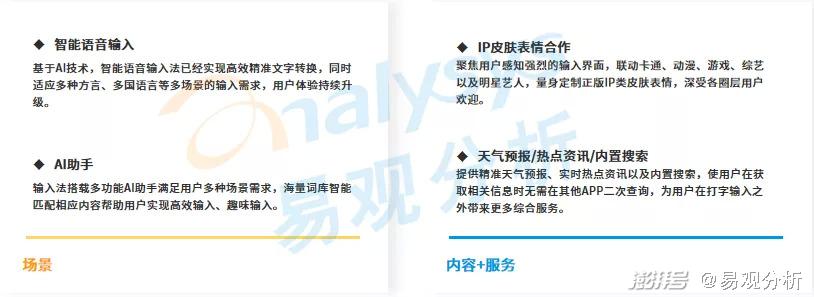
With the continuous upgrading of AI technology, people’s requirements for input methods have already been upgraded from basic input to intelligent service ecology, and intelligent voice input has gradually occupied a wider market. The application of third-party input method not only strengthens the technical application, improves the accuracy and input efficiency of speech recognition, but also continuously optimizes the user experience and meets the personalized needs in multiple scenarios, which has become the key for head manufacturers to win users and develop continuously.

1. Multi-scene improves recognition accuracy.

Thanks to the improvement of AI technology, the speech recognition accuracy of input method has been significantly improved in various scenarios. At present, the latest iFLYTEK input method adopts a new generation of speech recognition framework, which realizes the speech input without dead ends in the whole scene. Users can accurately write long paragraphs by moving their mouths, and the input efficiency is greatly improved.

2. Multilingual switching meets different needs

The major input methods have completed the construction of multilingual functions such as multi-dialect input and foreign language conversion, meeting the voice input needs of different groups of people such as nonstandard Mandarin and mixed Chinese and English. For example, the number of language keyboards supported by sogou input method has jumped to 90+, and more users of small language keyboards can enjoy a smooth and efficient input experience in daily communication and foreign language learning.

3. Integrate creative functions to enrich the application experience

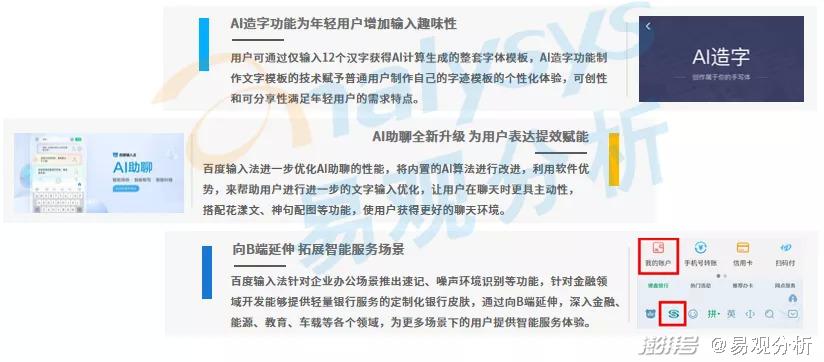
The third-party input method explores more diversified functions such as taking photos and AI assistants, which enhances the input experience and promotes the change of input methods; Among them, the iFLYTEK input method also upgrades the OCR in an all-round way, covering the functions of photo-to-text conversion, photo translation, efficient text archiving, and mathematical formula input, bringing more intelligent experience to users.

Key points of user experience optimization: expanding multiple intelligence scenarios and improving input efficiency experience.

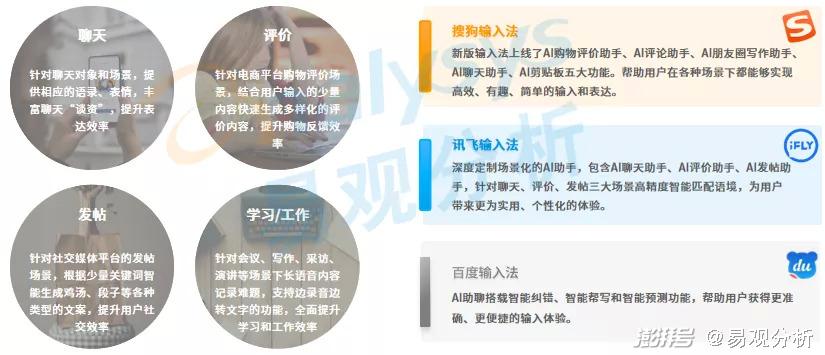
Third-party input methods are equipped with AI assistants, which actively provide corresponding intelligent input functions for different groups and different scenarios, making users’ input in daily chat, shopping evaluation, online posting and other scenarios more convenient and efficient. Many scenario solutions are specially proposed for the needs of Z-generation users, and young users are still the main source of power for the future input method market.

Focus on user experience optimization: accelerate the integration of content and services based on scenarios and user perspectives, and create a new input ecology.

On the basis of deepening intelligent voice input and AI assistant, the third-party input method continuously expands the service boundary. IP skin cooperation and emoticon bag doodle realize cross-border joint name breaking, firmly grasp the "hi point" of Z generation users, in addition, there are functions such as weather forecast, hot information and built-in search that are beyond the attributes of input method tools, bringing convenience to users and fully embodying the "humanistic care" of input method, making input method more "human", further enhancing users’ emotional experience and creating an input method service ecology.

Usage of third-party input method users

User behavior: the third-party input method is sticky in the forefront of the whole network

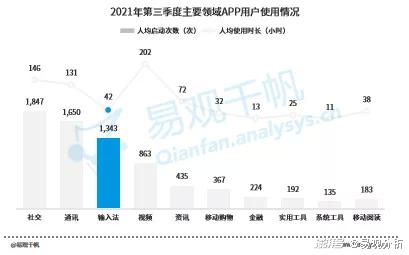
Compared with the system’s own input application, the third-party input method has obvious advantages in technology, function and experience, so the overall third-party input method users are highly sticky, and nearly 70% of users have developed the habit of using the third-party input method. According to the data of Analysys Qian Fan, the user penetration rate and usage stickiness of the third-party input method are in the forefront of the whole network, and the average number of launches in the third quarter of 2021 reached 1,343 times, second only to social and communication applications, and much higher than other installed essential apps.

Portrait of users: Young users under the age of 35 and users with medium consumption power or above are the main body.

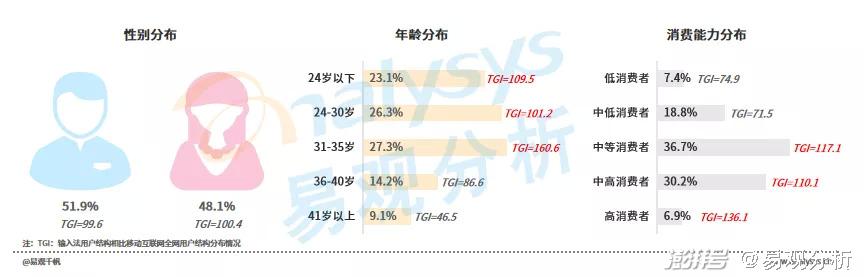
According to the data of Analysys Qian Fan, the proportion of male active users in the input method field is slightly higher than that of female users, but the proportion of female users in other fields of the whole network is slightly higher.

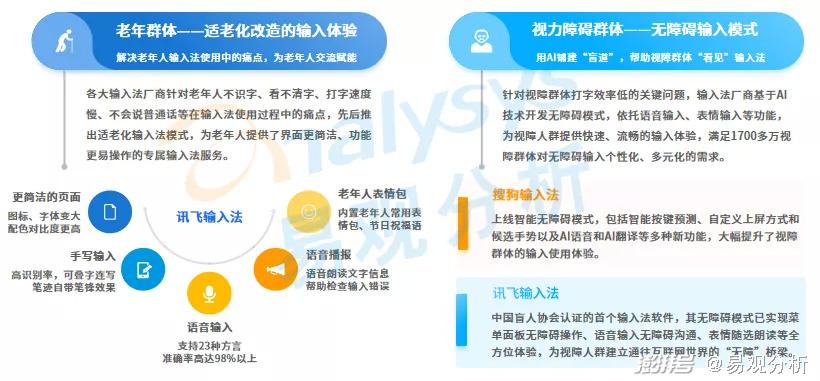
Most of the active users are young people under the age of 35, accounting for more than 75%. Young users are still the core users of input method, and meeting the personalized and diversified needs of young people headed by generation Z is still the direction of input method. At the same time, the proportion of middle-aged and elderly users over 41 years old is less than 10%. In the future, input method manufacturers will meet the input demands of the elderly group through effective aging transformation, and cater to the aging trend to continuously expand the scale of elderly users.

According to the data of Analysys Qian Fan, the consumption power of users in the input method field is mainly middle consumption and high consumption, accounting for nearly 70%.

User experience insight of third-party input method

Input method users need to upgrade and pursue more personalized and intelligent input experience.

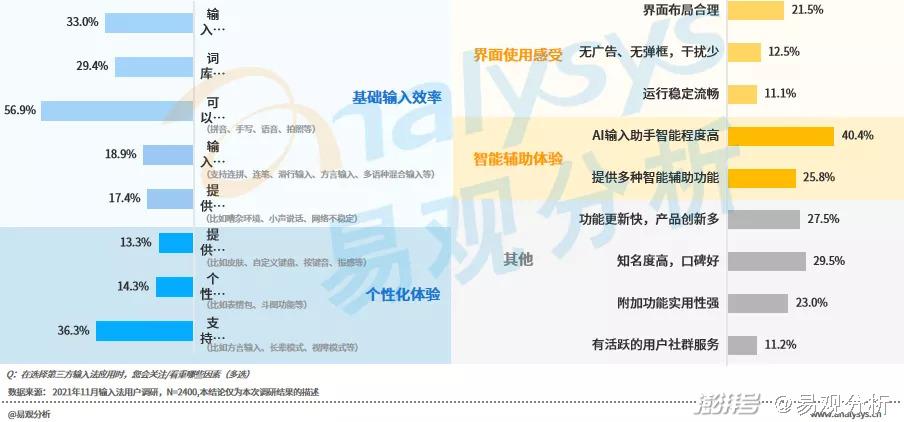
Among the factors that users pay attention to the input method, voice input ability becomes the core concern in the basic input function. At the same time, users’ requirements for input methods are no longer satisfied with the basic input function, and they begin to pursue a variety of input methods, personalized experience brought by typical crowd mode and intelligent experience brought by AI assistants to meet the diverse needs of different people and different scenes.

A variety of input methods and other factors positively affect the evaluation of user experience.

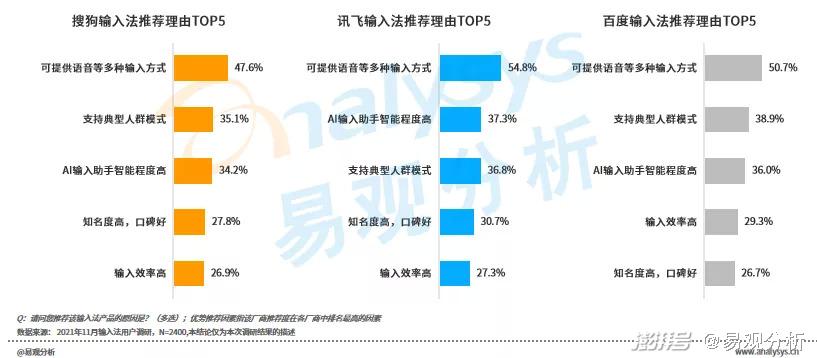
In the process of using input method, multiple input methods are the most likely factors that affect the user experience and thus affect the user’s evaluation of input method, followed by the intelligence of AI input assistants and typical crowd patterns. For example, the main reason why users recommend iFLYTEK input method is that it can provide various input methods such as voice, and its strong intelligent input and typical crowd mode can bring good input experience and effectively improve input efficiency.

Voice input: users’ habits are gradually formed, and intelligent functions are used frequently.

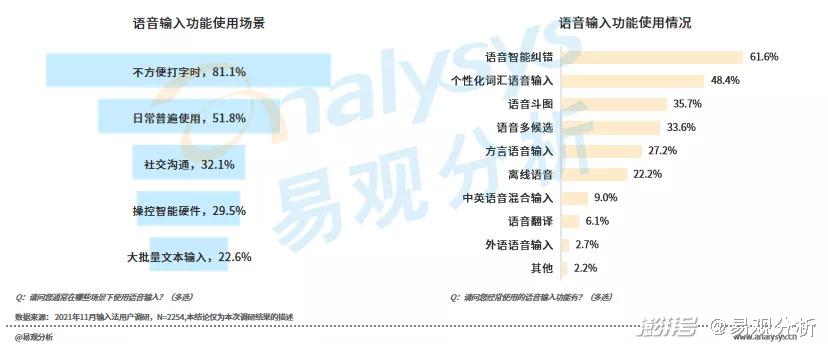
At present, voice input has become the most mainstream input mode for users together with traditional pinyin input. More than half of users have used voice input as their daily input mode, and more than 80% of users think that voice input has greatly improved the input experience when it is inconvenient to type.

Among the common voice input functions of users, its intelligent functions such as intelligent error correction and personalized vocabulary are used at the highest frequency. The intelligent function of voice input can effectively improve the efficiency of voice input and optimize the user input experience, so it is favored by users.

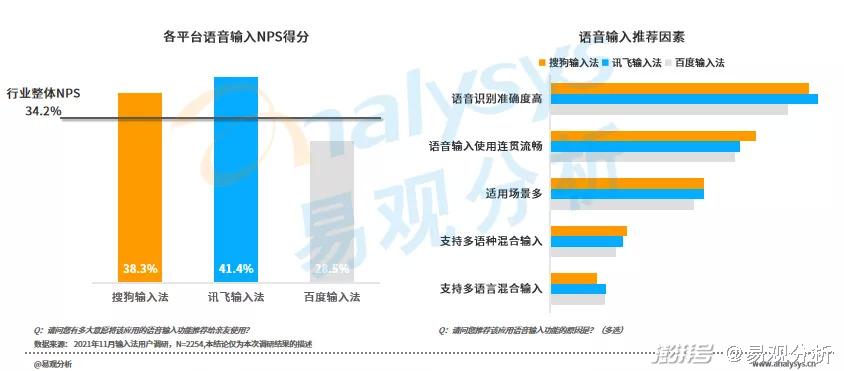
Voice input: iFLYTEK input method leads by word of mouth, and users evaluate the efficiency of focusing input.

In the application of voice input, iFLYTEK input method has obtained the highest net recommendation value from users, which is obviously higher than other input method manufacturers, especially among middle-and high-income users. Users represented by the working population are highly satisfied with the voice input of iFLYTEK input method.

Users’ attention to voice input mainly focuses on recognition accuracy and fluency. In recognition accuracy, iFLYTEK input method’s user recommendation is obviously ahead of other input methods, and voice input efficiency is still the core requirement for users to use voice input.

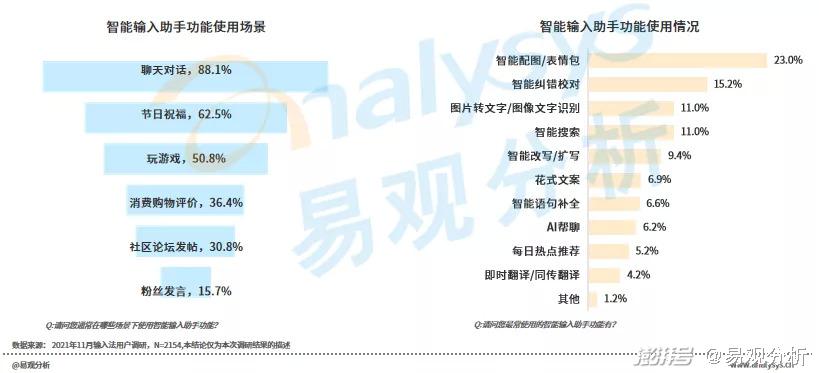
Intelligent input: Intelligent assistants penetrate into daily use scenes to add interest to input.

Third-party input methods have been equipped with mature intelligent input assistants to help users cope with various usage scenarios, among which the daily chat conversation scenes have been deeply infiltrated. Users can effectively improve the input efficiency by using the functions of intelligent assistant’s picture matching/emoticon package and intelligent error correction in chat conversations, and at the same time increase the input interest, so as to obtain a more efficient and interesting input experience.

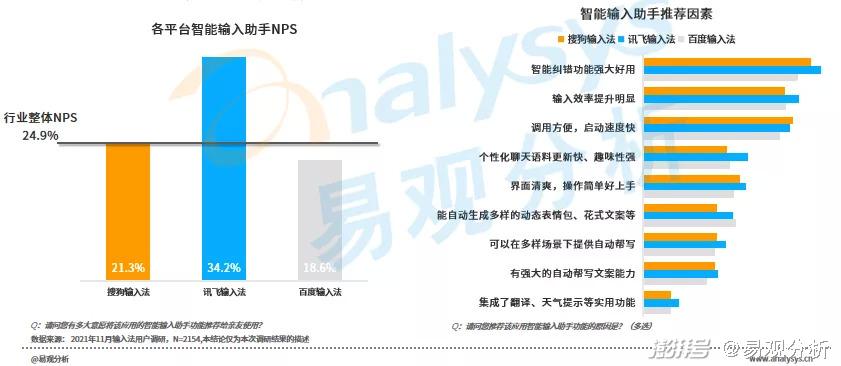
Intelligent input: iFLYTEK input method is highly recognized by users, and the intelligent error correction function affects word of mouth.

In the application of intelligent input, iFLYTEK input method has obtained the highest net recommendation value of users, which is much higher than the industry average and has high user satisfaction.

Users’ attention to intelligent input mainly focuses on intelligent error correction function, input efficiency and call convenience. Among them, iFLYTEK input method is higher than other input methods in intelligent error correction function, personalization and interest, and its input efficiency evaluation ranks first in the industry.

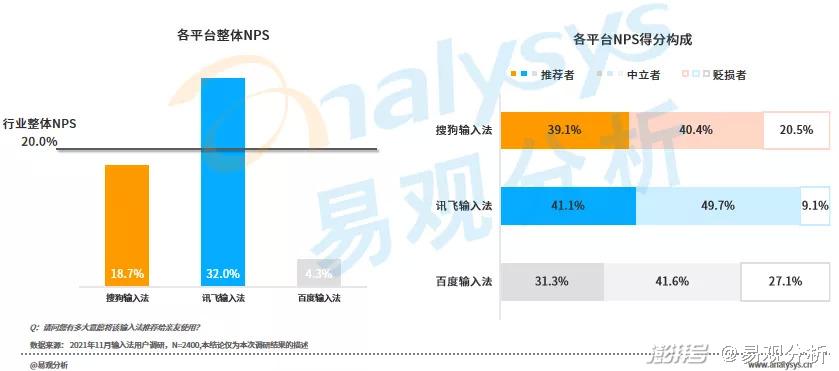
Overall evaluation: the overall reputation of iFLYTEK input method users is higher than the industry level, and the proportion of recommenders is obvious.

The net recommendation value of input method users in iFLYTEK reached 32%, which was significantly higher than the industry average. The recommenders accounted for more than 40%, and the user satisfaction was high.

The future direction of Z generation and silver-haired users or input method manufacturers

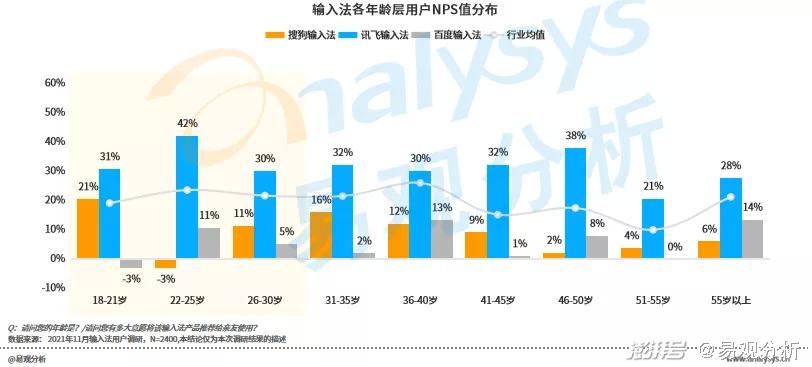
In the evaluation of input methods by different age groups, people under the age of 25 and people over the age of 55 show higher recommendation. As a whole, the Z generation is the main user group of input method, and the silver-haired group may be the blue ocean to be developed.

Sogou input method: expanding user usage scenarios through AI technology and hardware cooperation.

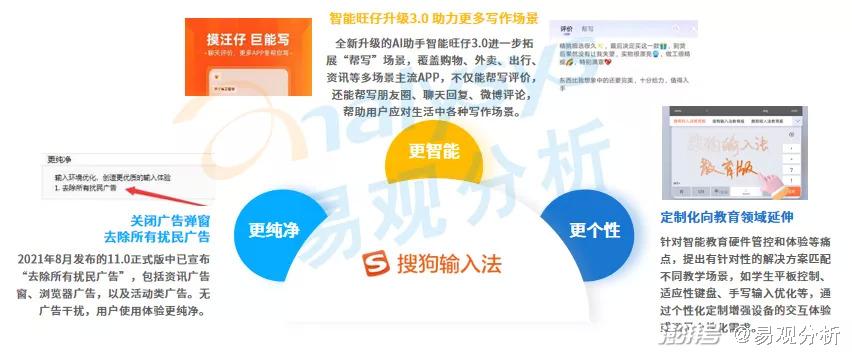
After sogou Input Method was formally incorporated into Tencent in 2021, the advertising revenue model was weakened, aiming at providing users with a purer input experience. In addition, the measures for user experience are mainly to expand and upgrade the original basic functions, expand the application scenarios of input method by using AI assistant upgrade and hardware combination, and integrate input method into more aspects of user life.

IFLYTEK input method: AI empowers the whole scene, and the voice, AI assistant and camera functions bloom more.

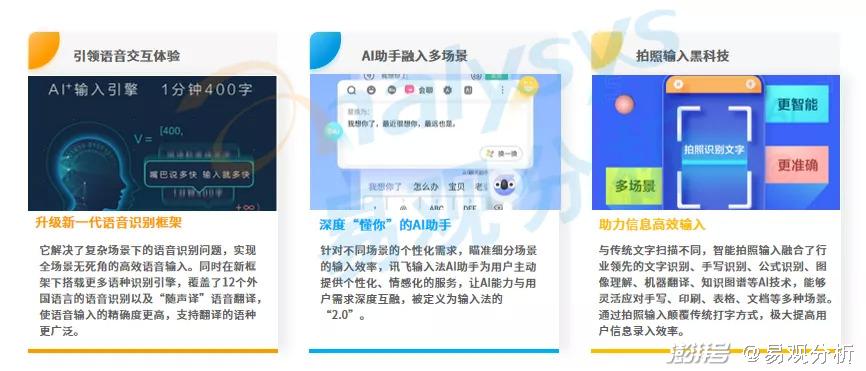
IFLYTEK input method keeps improving in input efficiency, and optimizes the user experience in all directions. In addition, based on the insight of scenes and crowds, frontier AI will be empowered with voice input, AI assistant, photo input and other product functions, which will continue to provide users with a smarter, more dynamic and personalized input experience and promote the development of the third-party input method industry.

Baidu input method: B-end and C-end exert their strength in both directions to upgrade the user’s intelligent experience.

Baidu input method focuses on the use needs of young users, and comprehensively enhances the intelligent experience from the aspects of customization, personalization and interest. At the same time, it cooperates with enterprises to expand the use scenarios of input methods in different fields and continuously expand the connotation and boundaries of input.

Future user experience trend of input method

Pay attention to the experience of minority users, and manufacturers promote barrier-free input.

The third-party input method industry in China is now in a mature stage, and it is particularly important to pay attention to the use experience of minority groups and vulnerable groups. Through measures such as aging adaptation and barrier-free input research and development, input method manufacturers let the elderly, visually impaired groups and others share the intelligent experience and scientific and technological innovations brought by AI technology.

The application of internal input has entered the battle, and healthy competition has driven the industry to develop positively.

China’s third-party input method market is divided into three parts, and the three major manufacturers continue to upgrade the user intelligence experience based on AI technology to obtain better development space; At the same time, Internet giants such as WeChat and Huawei have gradually introduced self-developed input methods around the issue of user privacy and security, or have a certain impact on the current stable pattern of the input method industry, driving the industry to pay attention to user safety and continuously provide a better and more efficient user input experience.

Notice: The third-party data and other information cited by Analysys in this article are all from public sources, and Analysys assumes no responsibility for it. In any case, this article is only for reference, not as any basis. The copyright of this article belongs to the publisher, and it is forbidden to reprint, quote or use any content published by Analysys in any way without the authorization of Analysys. Any authorized media, website or individual shall quote the original text and indicate the source when using it, and the analysis viewpoint shall be based on the official content released by Analysys, and no deletion, addition, splicing, deduction, distortion, etc. shall be made in any form. For disputes caused by improper use, Analysys does not assume any responsibilities arising therefrom, and reserves the right to investigate the responsibilities of relevant responsible subjects.

Portrait of Youth Thinking Times | From Pan Xiao’s narrow life path to Wei Xiang’s enough belief

age

The vast number of young people should shoulder the historical mission, strengthen their confidence in advancing, be ambitious, be wise and virtuous, become great talents, and shoulder great responsibilities, and strive to become new people of the times who can shoulder the heavy responsibility of national rejuvenation, so that youth can bloom brilliantly in the unremitting struggle for the motherland, the nation, the people and mankind. -On April 19, 2021, the Supreme Leader’s speech during his inspection tour in Tsinghua University.

Young people all over the country should keep in mind the Party’s teachings, aspire to national rejuvenation, live up to their youth, the times and the people, and strive to run hard on the track of youth and strive to run out of the best achievements of contemporary youth! -On April 25, 2022, the Supreme Leader’s speech at the discussion between teachers and students of China Renmin University.

The vast number of young people should strive to be new people of the times who can shoulder the heavy responsibility of national rejuvenation, and forge ahead bravely in the torrent of the times to realize the great rejuvenation of the Chinese nation. -On April 25, 2022, the Supreme Leader’s speech at the discussion between teachers and students of China Renmin University.

From Pan Xiao’s narrow life path to Wei Xiang’s enough belief

A red boat, coming in the long river of history; A single spark condenses into a light beam that illuminates the darkness. The Communist Youth League founded by the Communist Party of China (CPC) has gone through a 100-year journey. These 100 years are the 100 years in which China’s young people continue to struggle and triumph, and the 100 years in which China’s young people use their youthful self to create a youthful China and a youthful nation. From the footsteps of a hundred years, we heard the magnificent stage of the new-democratic revolution and the cry of the May 4th Movement. We saw the socialist revolution and construction stage in full swing, and the first youth commando team in China sweated profusely. We feel the "rush and try" bred by young students in the "Challenge Cup" in the tide of reform and opening up; We have been brought to the new era by the innovative mechanisms of "creating Beijing" and "unveiling the list" …

How can a youthful boat avoid drifting like a boat without a rudder? At the conference commemorating the 100th anniversary of the May 4th Movement, the answer given by the Supreme Leader General Secretary seemed to illuminate the road: that is, young people should "aim high, and then they can stimulate their potential to forge ahead". A word "ambition" tells the story of young people’s thinking about their ideals and interpretation of their responsibilities. If we use the former as the warp and the latter as the weft, please allow us to focus the historical coordinates on two young people who are separated by 37 years. Although they are in different historical conditions, they are all struggling to find a new starting point in their life journey; Although they have different experiences, they have all experienced great hardships and even hardships of life, and finally gained a completely different understanding of life. From their life, we can touch the interactive cases between youth and the times, and feel the deep affection between youth and home country.

The ideological collision across the times

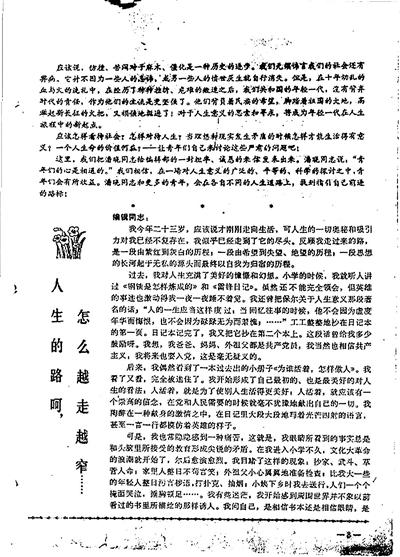
In May 1980, a long letter signed "Pan Xiao" was published in China Youth magazine. The letter described the pain and trauma of life with heavy, bitterness, depression, sincerity and anger. As soon as it was published, it triggered a nationwide discussion on the outlook on life.

The letter tells the story of Pan Xiao, the author who was full of beautiful hopes for life (it was later proved that "Pan Xiao" was made up of the names of two young people at that time), who was hit by "the ugly and ferocious face of life", but still persisted in "seeking the answer to the meaning of life" and all kinds of puzzles in the process of seeking. For the first time, the letter put forward the ethical proposition of "subjectively for yourself and objectively for others" and sighed that "the road of life is getting narrower and narrower".

The fifth issue of China Youth in 1980 published a screenshot of a letter signed "Pan Xiao"

This discussion has aroused unprecedented enthusiasm. China Youth was released on May 1, and began to receive letters from readers participating in the discussion on the 14th. On the 17th, it rose to 100, and on the 27th, it broke through 1,000. By June 9th, it had received more than 20,000 discussion papers in less than one month. This discussion marks young people’s independent thinking about life. The People’s Daily published a commentator’s article praising the discussion as "touching to bring out what is deep in the minds of young people and have a truly gay talk", and Xinhua also affirmed that "only by understanding young people can we help them, and only by seeking truth from facts can we solve problems". Of course, there are also a lot of voices that raise Pan Xiao’s letter to "a new trend of class struggle", and some even write letters to abuse the editorial department as an "arsonist".

Let’s push the lens of history to the cross-century year of 2017-Wei Xiang, an 18-year-old from Dingxi, Gansu Province, who suffered from both lower limbs disability and lost his father since childhood, is about to knock on the gate of Tsinghua University with an excellent score of 648 in the college entrance examination. However, when communicating with the Tsinghua Gansu Admissions Team, Wei Xiang took the initiative to send a letter to the Tsinghua Admissions Office, telling his experience of struggling to study for more than ten years and being blessed by a mother’s love. He also "sincerely hoped that Tsinghua University could help my mother and son solve a humble abode, which was only for my mother and son to take care of". Tsinghua’s Admissions Office immediately wrote back to him publicly, saying that he would properly solve his worries, and encouraged at the end of the letter: "We want to say to the thorny students on the way to school: life is really bitter, but please believe it enough!" This true inspirational story, once reported by Beijing Youth Daily and its public number "Education Roundtable", immediately made thousands of netizens cry, and the number of hits reached more than 8.7 million in less than two days. The discussion of more than 20,000 netizens in the comment area was touching-some praised Tsinghua’s professional ethics as "tearful" and at the same time was even more moved by "the perseverance of this student and his mother"; Some people can’t help crying after reading this article, paying tribute to Wei Xiang, a classmate who is constantly striving for self-improvement! Pay tribute to Wei Xiang’s mother! " ; Some said, "I’m crying, I believe there are many enterprises that can fund Wei Xiang to complete his studies"; Some say, "After reading two lines of tears, it gives people a kind of spiritual strength that comes from the inner generate" …

If thinking about ideals is the spiritual nirvana of young people, then open-minded discussion is always an effective way for young people to educate themselves-whether it is the discussion that "practice is the only criterion for testing truth" and "how to contribute youth to a bright China" or the discussion triggered by inspirational young people like Wei Xiang in the new era, although the carrier is different because of crossing the times, they are all "immersive", and the nature and communication of them are.

Pan Xiao’s "Three Bitterness" and Wei Xiang’s "Three Blessings"

If we look at "Pan Xiao" and "Wei Xiang" again today, standing on the historical coordinate system, we can see the different characteristics of the times brought by two young people who love thinking, that is, "Pan Xiao’s three sufferings" and Wei Xiang’s "three blessings".

Pan Xiao’s first pain is "the pain of hitting a wall." In order to seek the meaning of life, he reads books, but always from concept to concept, and can’t find the realistic response outside books; He asked for advice from others, but he always felt empty and irrelevant, and felt that his colleagues around him covered everything up with real interests.

Pan Xiao’s second pain is "the pain of retreat". He often thinks but can’t, so he "hides in a small building and becomes unified", uses concepts to solve concepts, and uses books to solve reality, so he sends out the soul torture of "whether to believe in books or eyes".

Pan Xiao’s third pain is "the pain of direction". After the psychological trauma in a special historical period, on the eve of the era when ideological imprisonment has not been completely broken and seeking truth and being pragmatic has not become a common practice, the life confusion that Pan Xiao pondered hard is essentially the projection of the depression of an era on a young individual. His "pain in direction" bears a deep brand of the times.

On August 23, 2017, Wei Xiang reported to Tsinghua University.

Wei Xiang in the new era has "three blessings" correspondingly. The first is "the blessing of integration". A disabled person seems unable to participate in the sports meeting, but Wei Xiang has become a "queue commander" waving flags in a wheelchair. "We don’t want him to feel that he is different from others." Wei Yajun, the head teacher, vividly explained the connotation of "equality" in the sense of pedagogy in an interview with Beiqing Daily-that is, the integration of disabled and healthy people, love like water and the melting of barriers.

The second is "real blessing". There seems to be no earth-shattering "event" in Wei Xiang’s youth-his face is stuck on his mother’s back and he goes to class in the rain; He solved a physics problem and shared it with his classmates. He repeatedly pressed the button at the bedside to feel the song "Grateful Heart" … These things are more "real" only because they are "small". "The one who gets the most can have the least." Wei Xiang never retreats. On the way to study and forge ahead, what he grasps every day is real love, real endeavor and real accumulation.

The third is "the blessing of gratitude". It is a kind of "nurturing grace" for a single mother to send her son Wei Xiang to school for 12 years. It is a kind of "kindness to know when you meet him" for students to silently replace Wei Xiang’s bench with an armchair; The head teacher who is good at discovering and exerting Wei Xiang’s specialty is a kind of "Bole Grace" … When the seeds of gratitude gradually sprout in his heart, upward goodness is the direction of his growth.

What does the two young people’s thinking about the times show?

Looking back at Pan Xiao and Wei Xiang on the historical time axis, they walked alone in their respective times, and their portraits of the times outlined through their own thinking and practice were very different.

The trajectory of life can’t go beyond the conditions of the times. Pan Xiao didn’t go to college, but he longed for the moistening of knowledge. She has no experience, but she especially wants to have a mature life. Wei Xiang, though born in a miserable land, knocked on the door of Tsinghua through his unremitting efforts; He is not good at words, but in the educational atmosphere of "making people believe enough", "he has lived in a way that makes people respect and worship". Historical materialism tells us that everyone must plan life and create history under the conditions of his own times. Youth is the most sensitive barometer to mark the times. This "sensitivity" is manifested in Pan Xiao, that is, his doubt is essentially that young people get rid of rigid superstitions and make their own independent thinking about life. As the Central Committee of the Communist Party of China emphasized in its congratulatory message to the 11th National Congress of the Communist Youth League in 1982, "under the new historical conditions … our party and country need the youth’s consciousness and struggle more than ever before". On Wei Xiang, however, he demonstrated the exemplary strength of the new era with hardship and tenacity, and with great love and ordinary life practice.

The trajectory of life can’t go beyond the stage of the development of the times. Pan Xiao’s discussion on outlook on life was once compared to the "spiritual first love" of a whole generation of China youth. The first love may be sincere, but it is often immature; The first love may be urgent, but it is often short-lived. At that special stage of the times, Pan Xiao was trapped in the cross-examination of "narrow" and "wide" life paths. In the new era, what Wei Xiang has done is to "grope in the struggle, observe the changes in the world, people’s worries, and realistic contradictions, and find the true meaning of life, life value, and career direction" (Supreme Leader: Speech at the 100th anniversary of the May 4th Movement).

The trajectory of life can’t surpass the guidance of the times to young people. Pan Xiao’s confusion is essentially the confusion of the times. On the eve of the fog of ideological imprisonment, the young people who are longer than thinking inevitably have a "vacuum" of thought; However, for Wei Xiang today, the times have provided him with a broad stage for struggle, and he has also realized himself on this stage. General Secretary of the Supreme Leader has dialectically discussed the relationship between "big" and "small" many times when explaining young people’s ideological cultivation: the so-called "big" refers to the overall situation when planning, and the so-called "small" refers to the spirit in doing every little thing well, completing every task and performing every duty. There is a saying that small things should be done as big things, "the one who gets the most can have the least." Looking back on the process of disabled youth Wei Xiangqin’s dream interpretation of Tsinghua, it vividly shows that all the young people in the new era who dare to "dream" and "pursue dreams" are all accomplished in the logic of the times of "big" and "small".

It is the torrent of the times, creating unique opportunities and opportunities for each generation of young people; Let the portrait of the times always bear witness to the youth of each of us!

review

Actively engaged in the magnificent new-democratic revolution, the socialist revolution and construction with enthusiasm and unremitting exploration, extensively participated in the vigorous reform, opening up and socialist modernization, and made great efforts to make achievements in the new era of Socialism with Chinese characteristics. Under the leadership of the Party, groups of outstanding youth representatives have emerged at every stage in the past 100 years. They are all vanguard forces for the great rejuvenation of the Chinese nation. This paper collects some representative cases from various historical stages to provide dinner for readers.

The first stage: actively participate in the magnificent new-democratic revolution.

Gao Junyu, the first secretary of the Beijing Socialist Youth League

After the May 4th Movement broke out in 1919, Beijing became one of the important birthplaces of China youth movement, which opened the curtain of China’s new-democratic revolution and opened the glory of Beijing youth movement for a hundred years. Groups of aspiring young people stand at the forefront of the times. In November 1920, the Beijing Socialist Youth League was established, and Gao Junyu, the head of the Student Union of Peking University, was elected as the first secretary.

"I am a sword, I am a spark. I would like to live like lightning, and I would like to die like a comet. " This is a poem written by Gao Junyu, and it is also a true portrayal of his short and magnificent life. As a teenager, Gao Junyu cared about society and had a strong interest in political issues. Gao Junyu was later admitted to the English Department of Peking University. On May 4th, 1919, Gao Junyu took an active part in the students’ patriotic demonstration.

In October, 1920, Li Dazhao established a communist group in Beijing, in which Gao Junyu participated. In January, 1925, Gao Junyu attended the Fourth Congress of the Communist Party of China, which opened in Shanghai. In March of the same year, he died at the age of 29 because of the ineffective excision of sudden acute appendicitis. In his short life, he wrote magnificent poems of responsible and ambitious young people to promote the progress of the country and the times.

The second stage: the socialist revolution and construction with enthusiasm and unremitting exploration.

Hu Yaolin, captain of the first youth commando team in China

After the founding of New China, everything needs to be done. If you want to catch up, you should "work harder" in economic construction. As a new force, young people actively participate in construction and help all ambitious plans become a reality.

In 1953, China’s first five-year plan was implemented, and Beijing youth devoted themselves to large-scale economic construction with great enthusiasm. On October 15th, the Soviet Union Exhibition Hall (now Beijing Exhibition Hall) started construction and will be completed within one year. The construction period is tight and the task is heavy. According to the principle of voluntary participation, the Youth League Committee of the work area selected 18 young members to form a woodworking youth commando team, with Hu Yaolin as the captain. This is the first youth commando team in China.

The establishment of the commando team greatly inspired the young people’s sense of responsibility and glory. Hu Yaolin’s youth commando team increased the production efficiency by 146%, and under their leadership, other woodworking groups also increased the production efficiency by more than twice on average.

The youth commando team has created a working method for the youth league to work around the center of economic construction, which has formed a vigorous upsurge of production assault competition among the youth in the capital and the whole country, highlighting the responsibility and responsibility of young people at this historical stage.

The third stage: extensive participation in the vigorous reform, opening up and socialist modernization.

Youth Civilization actively serves the economic construction and social development of the capital.

After entering the development stage centered on economic construction, young people make their own contributions with their unique enthusiasm.

In the Beijing subway station in 1980s, only Fuxingmen Station was full of young people, who were enthusiastic in service and conscientious in work. In order to give full play to the exemplary role of youth in the service work in the capital, Fuxingmen Station was jointly named "Communist Youth League Station" by the Communist Youth League Committee and the subway company on May 4th Youth Day in 1985. Fuxingmen Station has successfully established a municipal and national youth civilization number, which has trained a large number of young talents for the subway industry.

The leading role of the "Communist Youth League Station" provides ideas and examples for other fields. In the 1990s, the Youth Civilization Campaign was launched by the Beijing Communist Youth League Committee, and all kinds of youth civilization collectives at all levels played an important role in engineering construction, window service, urban operation, material supply, public security and fire fighting, medical and health care, scientific research and production, service guarantee and other industries. For example, the No.682 train set of No.1 Road of Kesi Branch of Beijing Public Transport Group, Beijing Hall of Beijing Hotel Catering Department of BTG Group, Dujiakan Toll Station of Jingkai Expressway Management Branch of Shoufa Group, Team A 1 of Beijing West Railway Station ticketing workshop of Beijing Railway Bureau (bilingual), Beijing International Conference Center of Beichen Group, and special maintenance team of Tiananmen Square of Jindu Company of Beijing Urban Construction Garden Group, etc. All kinds of youth civilization groups in Beijing have become a youth banner for the Communist Youth League to serve the capital construction, promote the development of the industry, promote the growth of young people and carry forward the civilized fashion.

The fourth stage: Socialism with Chinese characteristics’s new era of making great efforts and high spirits.

Emerging youth, a new force in the development of the capital in the new era

With the continuous development of China’s economy and society, the emergence of new economic formats has spawned a large number of emerging youth groups with flexibility and flexible employment, and they are becoming a new force in the process of profound changes in the economic and social structure. Beijing has also become an important gathering place for emerging youth groups.

In their respective posts, emerging young people have made great contributions to building Beijing into a world-class harmonious and livable capital. Chang Kai is a delivery clerk at the Meituan take-out Wangjing Station, and also the first batch of "alley stewards" of "Beautiful Morning Knight of Meituan". In addition to completing his own food delivery work, he also reports the problems in urban governance to the competent authorities at any time in combination with what he saw and heard while walking around the streets. Like him, there are thousands of people who have registered as "alley butlers" as a courier takeaway brother, helping the urban governance level in the jurisdiction to a new level. Dong Jianyong, Deputy Secretary-General of the Street Dance Committee of the Chinese Dancers Association, combined street dance with Chinese excellent traditional culture, and also stepped onto the stage to celebrate the "great journey" of the 100th anniversary of the founding of the Communist Party of China (CPC).

In the first half of 2021, the Communist Youth League Committee conducted a survey on the situation of emerging youth groups in Beijing, and connected with relevant departments to promote the issuance of "Several Measures on Strengthening the Work of Emerging Youth Groups in Beijing" in the name of the Office of the Leading Group for Party Building Work of the Municipal Party Committee. At present, 25 units are steadily promoting the implementation of various measures.

Text/Beijing Youth Daily reporter Lei Jia

Photography/Beijing Youth Daily reporter Hao Wei

Editor/Peng Xiaofei

Reporting/feedback

The meteorological department has developed a number of forecast products, and the weather forecast of the competition has reached the level of 100 meters and minutes.

  China Meteorological Bureau held a press conference in February 2022 yesterday. Beijing Youth Daily reporter learned from the scene that the meteorological department has strengthened scientific and technological research, observation, forecasting and service capacity building, studied refined event forecasting and early warning technology, developed a number of forecasting products, and achieved a number of zero breakthroughs in meteorological science and technology, providing meteorological support for the success of the Beijing Winter Olympics. Among them, the meteorological department has realized the "100-meter-level and minute-level" operational weather forecasting capability for the first time, and established a forecasting service system.

  Meteorological service guarantee of winter Olympics

  Facing the test of climatic conditions

  According to Qu Xiaobo, chief meteorological officer of Winter Olympics and deputy director of Beijing Meteorological Bureau, as far as meteorological conditions are concerned, the Beijing Winter Olympics is the first winter Olympics held under the continental winter monsoon climate. The characteristics of continental winter monsoon climate such as cold, strong wind, dryness, less precipitation and great temperature change pose a severe test for the meteorological service guarantee of the Beijing Winter Olympics. Looking at the meteorological service guarantee of previous Winter Olympics, there is no mature and completely applicable portable technical scheme for Beijing Winter Olympics in the world. Therefore, the Beijing Winter Olympics meteorological service guarantee is a big challenge, and it is difficult to tackle key scientific and technological problems. Many technologies can be said to start from scratch.

  It is understood that compared with the Summer Olympic Games, the Winter Olympics is more dependent on meteorological conditions, mainly reflected in the fact that the outdoor environment is often more complicated, and it is more difficult to predict the meteorological factors that affect the event, and the event development requires high precision in forecasting time. Take the alpine skiing track as an example, the horizontal distance of the venue environment is short and the vertical drop is large. In reality, the meteorological environment may be very different for every 100 meters of altitude drop; Over a mountain ridge, there may be another scene.

  Therefore, for weather forecast, faced with many tests such as "changing from one day to four seasons" and "different days in ten miles" under complex terrain in mountainous areas, site forecast and conventional grid difference forecast are difficult to meet the requirements of event support. Different events have different requirements on the threshold of meteorological conditions, so it is necessary to monitor and forecast the wind, temperature, visibility, rain and snow phases and other factors. In particular, the wind field on the track of snow events is very abrupt. If the sun shines for a while or a cloud floats over, the wind will change. In the process of high-speed decline, athletes are easily affected by the sudden change of longitudinal wind and crosswind on the track.

  Haituo Mountain Area in Yanqing, Beijing

  The first meteorological observation system was built

  Qu Xiaobo introduced that with the Winter Olympics as the core, the meteorological department organized and implemented the winter multi-dimensional meteorological comprehensive observation experiment under complex terrain for the first time in China’s mid-latitude mountainous areas, and built 441 sets of modern three-dimensional detection facilities in Beijing urban area, Yanqing and Chongli and its surrounding areas, realizing the integrated, three-dimensional, second-level, multi-factor winter Olympics meteorological comprehensive monitoring of ultra-precision complex mountainous areas and megacities. Among them, the meteorological observation system in Haituo mountain area of Yanqing achieved a breakthrough from scratch.

  In order to improve the ability of winter Olympics meteorological forecast, the meteorological department has set up a core team of mountain meteorological forecast. According to the service requirements of "one game, one policy" and "one project, one policy", the meteorological departments of Beijing and Hebei Province are the main bodies, and 52 key personnel are drawn from national units such as the Central Meteorological Observatory and meteorological departments of Inner Mongolia, Shanxi, Heilongjiang, Jilin and other provinces to form service athletes, coaches and event organizations in Beijing, Yanqing, Zhangjiakou and the dispatching center of the Operation Command of the Winter Olympics Organizing Committee. At the same time, field forecasting training was conducted in the competition area for five consecutive years, and people were sent to observe the PyeongChang Winter Olympics in 2018, and the team’s business level was continuously improved.

  The weather forecast was first realized.

  "100-meter class and minute class"

  Small-scale mountain meteorological forecast is one of the core technologies of winter Olympics meteorological forecast. After several rounds of technical research, the meteorological department has realized the "100-meter-level and minute-level" business weather forecast capability for the first time, and built a numerical weather forecast model system with a resolution of 500 meters in Beijing-Tianjin-Hebei region and 100 meters in the core area of the Winter Olympics Mountain Stadium, which is updated rapidly every 10 minutes. Based on this, a forecast service system has been established to provide seamless fine grid forecast products from short-term approach (0-1 hour) to extended period (30 days).

  Qu Xiaobo introduced that the 100-meter level is a spatial distance. After dividing the atmosphere into several grids, 100 meters is equivalent to a 100-meter grid, which means that no matter where you are in the future, you can find a suitable forecast point not far from the surrounding area. In the past, the resolution was one kilometer in Beijing and even the Beijing-Tianjin-Hebei region, and 500 meters in the urban area. This time, through the technical personnel’s research, the spatial resolution has been improved to 100 meters, which is a relatively big breakthrough. Minute level is equivalent to updating the latest forecast every 10 minutes. The daily forecast includes half a day, one day or one hour. Now according to the service demand, the meteorological department can provide a new forecast every 10 minutes.

  In addition, the meteorological department has also built an information network to support the meteorological services in Beijing, Yanqing and Zhangjiakou, providing winter Olympic meteorological data services with interconnection, data sharing and mutual backup, and realizing multi-point flexible on-site video consultation. Build the Winter Olympics meteorological service website to meet the meteorological service needs of the public for watching games and traveling. During the Winter Olympics, the meteorological department will provide high-quality meteorological services according to the different needs of "competition", "protection" and "watching".

  Meteorological scientific and technological achievements

  Continue to serve after the game

  Qu Xiaobo introduced that the opening of the Beijing Winter Olympics is just around the corner. At present, all preparations have been fully prepared. The meteorological department will go all out to invest in the winter Olympics meteorological service guarantee, and strive to give meteorological connotation to the "simple but not simple" winter Olympics with precise monitoring, accurate forecasting and fine service, take meteorological responsibility for the "safe and blind area-free" winter Olympics, and make meteorological contributions to the "wonderful and uncompromising" winter Olympics.

  After the end of the Winter Olympics, these hard-won achievements in winter Olympics meteorological science and technology will continue to play a role in five aspects: First, the "eye" of winter Olympics meteorology — — Build a three-dimensional observation system for mountain meteorology; The second is the "teacher" of winter Olympics meteorology — — Training the technical team of mountain meteorological forecast; Third, the "Taiwan" of the Winter Olympics meteorology — — Establish a supporting platform for mountain meteorological services; Fourth, the "skills" of winter Olympics meteorology — — Study the mechanism of occurrence and development of mountain meteorology; Fifth, the "fruit" of winter Olympics meteorology — — Expand the application of mountain meteorological service achievements, and provide solid support for the development of ice and snow economy and more people to participate in ice and snow sports.

  Text/reporter Zhao Tingting

Why did the three major airlines purchasing 292 Airbus reach the biggest order in history at present?

  China Southern Airlines purchased 96 aircraft.

  The basic price is about $12.248 billion.

  China Eastern Airlines buys 100 aircraft.

  The total basic price is about $12.796 billion.

  Air China and its holding subsidiary Shenzhen Airlines purchased a total of 96 aircraft.

  The total basic price is about $12.213 billion.

  The aircraft ordered by the three major airlines will be delivered from 2023 to 2027.

  On July 1st, China Southern Airlines, Air China and China Eastern Airlines, the three largest domestic airlines, announced that they had signed a purchase agreement with European aircraft manufacturing giant Airbus — — A total of 292 A320NEO series aircraft were purchased, and the total purchase amount will reach 37.257 billion US dollars (about 249.1 billion yuan). This transaction is the single order with the largest quantity and the highest order amount among the three major airlines in the history of aircraft purchase, and it is also the first large-scale passenger aircraft order announced by China civil aviation industry in recent three years.

  Why did the three major airlines reach the biggest order in history at present? Why did this "group purchase" order select Airbus A320NEO? 249.1 billion yuan is not a small sum. Under the influence of the epidemic, where did this money come from? Does the large-scale purchase of aircraft in the downturn of the aviation industry signal the full recovery of China’s civil aviation industry?

  Why buy it?

  Optimization of fleet structure and long-term capacity supplement are the main reasons

  At present, the aviation market has not fully recovered, so why did the three major airlines sign the largest order in history at this node?

  Qi Qi, an expert of China Civil Aviation High-quality Development Research Center and an associate professor of guangzhou civil aviation Vocational and Technical College, said: "It can be said that it is a compensatory consumption. Because there are many uncertainties during the whole epidemic, it is difficult for airlines to make a large-scale purchase of aircraft. At present, we see that the whole signal of aviation recovery is relatively strong. At this moment, it is actually an important performance of market confidence for airlines to buy related models in a big way. "

  The reporter noticed that in the announcements of the three airlines, the main reason for purchasing the aircraft this time was mentioned, that is, the aircraft transaction was in line with the company’s "14 th Five-Year Plan" development and market demand, and the company needed to plan and reserve the fleet capacity in advance, optimize the fleet structure and supplement the long-term capacity. Air China said that the introduction of new aircraft will be concentrated after 2024, and this transaction will increase the Group’s capacity by about 10.4%. China Eastern Airlines said that after the introduction of this aircraft, it will be mainly put into the domestic trunk network market to encrypt high-yield routes and develop potential markets. China Southern Airlines said that the purchase of 96 A320NEO series aircraft will increase the Group’s capacity by about 13.0%.

  Why buy it now?

  More bargaining power, the purchase price is more favorable

  The consumption potential and confidence of the market are constantly increasing. However, at present, the civil aviation industry in China has not fully recovered to the pre-epidemic level, and the seat capacity that the industry as a whole can provide is still far higher than the current market demand. So is it necessary to order so many new planes now? In this regard, experts said that the replacement of old and new models can promote the metabolism of the industry. In the future, the aviation market will be huge, and China needs to continuously increase new capacity to keep the airline fleet younger.

  Experts said that due to the impact of the epidemic, the speed of aircraft introduction of the three major airlines has greatly slowed down in the past two years. Take Air China China as an example. By the end of 2021, the fleet size was 746, a net increase of 52 compared with the end of 2019. The average annual import rate is between 1% and 3%, which is far from the previous rate of 6%-8%.

  Qi Qi believes that many domestic models are relatively old. In the aviation field, the fuel economy of new aircraft will be much better than that of old models, which also urges airlines to accelerate the iteration of old models. In addition, with the market recovery and business development, the domestic aviation market also needs to continuously increase new capacity.

  The transaction amount of this large passenger plane order is nearly 250 billion yuan. However, the three major airlines all said that Airbus will give a larger discount in the actual transaction, and the actual price of the aircraft will be lower than the above basic price. Therefore, experts also speculate that airlines have more bargaining power to buy new aircraft at this node at a more favorable purchase price, which is also one of the main factors for the three major airlines to concentrate on buying new aircraft.

  Why A320NEO?

  Domestic airlines have a strong demand for narrow-body aircraft.

  Even if the moment is a good opportunity, why did the three major airlines choose Airbus’s narrow-body A320NEO? A320NEO series aircraft is the latest generation of narrow-body aircraft of Airbus, the best-selling New Engine Option of A320 series aircraft, and the fist product of Airbus in the single-aisle narrow-body aircraft market at present.

  Single-channel narrow-body aircraft is the main passenger aircraft on domestic routes and short-haul international routes. By the end of 2021, there were 4,054 registered aircraft in the civil aviation industry, among which 3,178 were narrow-body aircraft, accounting for nearly 80% of the transport fleet.

  Qiao Shanxun, secretary-general of the Expert Committee of Henan Aviation Industry Association and researcher of Henan Collaborative Innovation Center for Aviation Economic Development, told reporters that domestic airlines have a strong demand for narrow-body aircraft, and the three major airlines themselves have a large-scale narrow-body fleet. At present, the proportion of narrow-body aircraft is 70% to 90%, and they have their own needs for renewal of old aircraft.

  Airbus A320 and Boeing 737 are the two most popular single-aisle passenger aircraft in the world, which is also one of the most competitive markets between Airbus and Boeing, an American veteran aircraft manufacturer. In 2021, Airbus delivered a total of 611 passenger planes, while Boeing delivered only 340 in the same year. Airbus has become the world’s largest aircraft manufacturer for three consecutive years. After the successive accidents of Boeing 737MAX, Airbus has taken the lead in the single-aisle passenger aircraft market.

  Where does the money come from?

  Business operation, commercial bank loans and other financing methods

  Buying aircraft is a major capital expenditure for airlines, which will increase the scale of airline debt. At present, affected by the repeated epidemic and the high international crude oil price, the performance of the three major airlines fell further in the first quarter of 2022, with a total loss of over 20 billion yuan. In this case, where does the money for buying a plane come from? Will cash flow be affected? Will it further increase the scale of airline debt?

  Experts said that as a high-value product, aircraft is not a spot transaction. At the same time, the manufacturing cycle is relatively long, so the order is usually signed 3-5 years in advance. The 292 aircraft ordered this time will also be introduced in years and batches. Taking Air China as an example, public information shows that the purchased aircraft is scheduled to be delivered in batches from 2023 to 2027; Shenzhen Airlines, the holding subsidiary, plans to purchase aircraft in batches from 2024 to 2026.

  In the announcement, the three major airlines all said that the money for buying planes does not need to be paid in one lump sum. Because it is annual, the aircraft are delivered in batches every year, so it is customary to pay part of the advance payment in installments, and then pay off the balance on the delivery date of each aircraft. In the announcement, all three airlines said that they would provide funds for the purchase of aircraft through business operations, commercial bank loans or other financing methods. The transaction amount is paid by installment, which is not expected to have a significant impact on the company’s cash flow and business operations.

  Expert opinion

  The deep cooperation model between Airbus and China aviation industry is highly recognized.

  As a supplier, Airbus confirmed the news of this order in official website for the first time. Scheler, chief commercial officer of Airbus and head of Airbus’s international business, said: "We commend the excellent work done by the entire Airbus China team and our customer team. They had a long and extensive discussion during the difficult COVID-19 epidemic." As of May this year, there were more than 2,070 Airbus aircraft operating in China.

  Experts said that the massive purchase of Airbus aircraft by China’s three major airlines also released a positive signal, which once again confirmed that the deep cooperation model between Airbus and China aviation industry was highly recognized. In addition, Airbus has three production assembly lines in Tianjin, which also reflects the good coordinated development of aircraft manufacturers and domestic aviation industry. Comprehensive CCTV News, The Paper

The 2-year-old girl was suspected of being poisoned by her relatives at the wedding banquet. Attending doctor: The recovery progress may be calculated on an annual basis.

Cctv news(Reporter Xu Yeqing and Dou Ruihua): On December 9, 2021, Xiaoman (a pseudonym), a 2-and-a-half-year-old girl from Liaocheng, Shandong Province, attended the wedding banquet in the village with her uncle, but she was suspected of being poisoned by her uncle. "I never imagined that he had poisoned the child on such a day." Xiaoman’s father said.

be poisoned

Xiaoman’s father told CCTV reporters that on the day of the wedding banquet, a 70-year-old man gave Xiaoman a candy. Shortly after Xiaoman ate, she developed symptoms of physical discomfort, and then the uncle took her home. After returning home, Xiaoman began to have symptoms such as convulsions and blue face, and then his family called 120 for medical treatment.

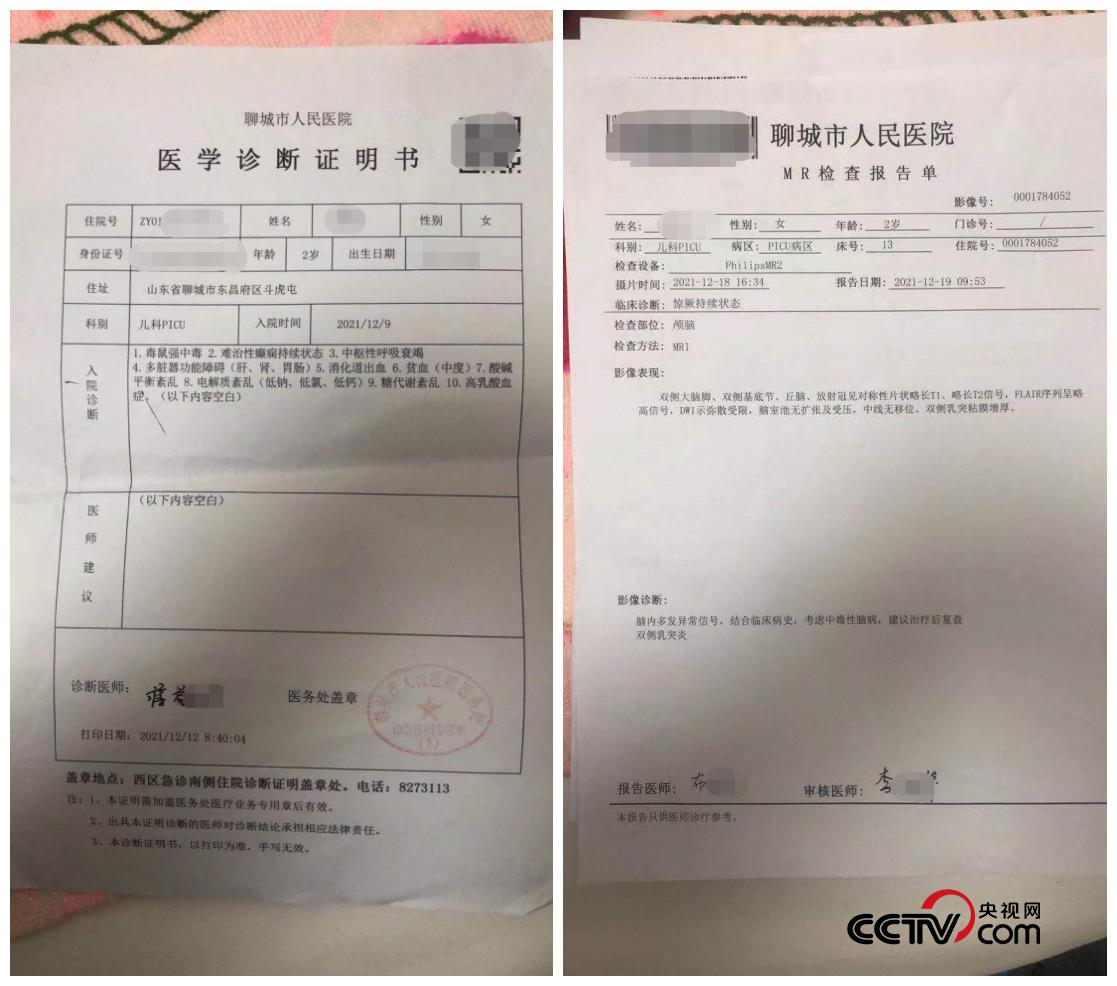
"We took a blood sample to Jinan for testing, and the results showed that the blood contained a lot ofTetramineComponents, the concentration reached 876ng/ml, the doctor said that this belongs to moderate and severe poisoning, and the situation is more critical. "Xiaoman’s father thinks that the child is only over two years old and it is impossible to find this kind of thing by himself. "We called the police when we didn’t feel normal."

Hospital diagnosis certificate (provided by the interviewee)

report to the police

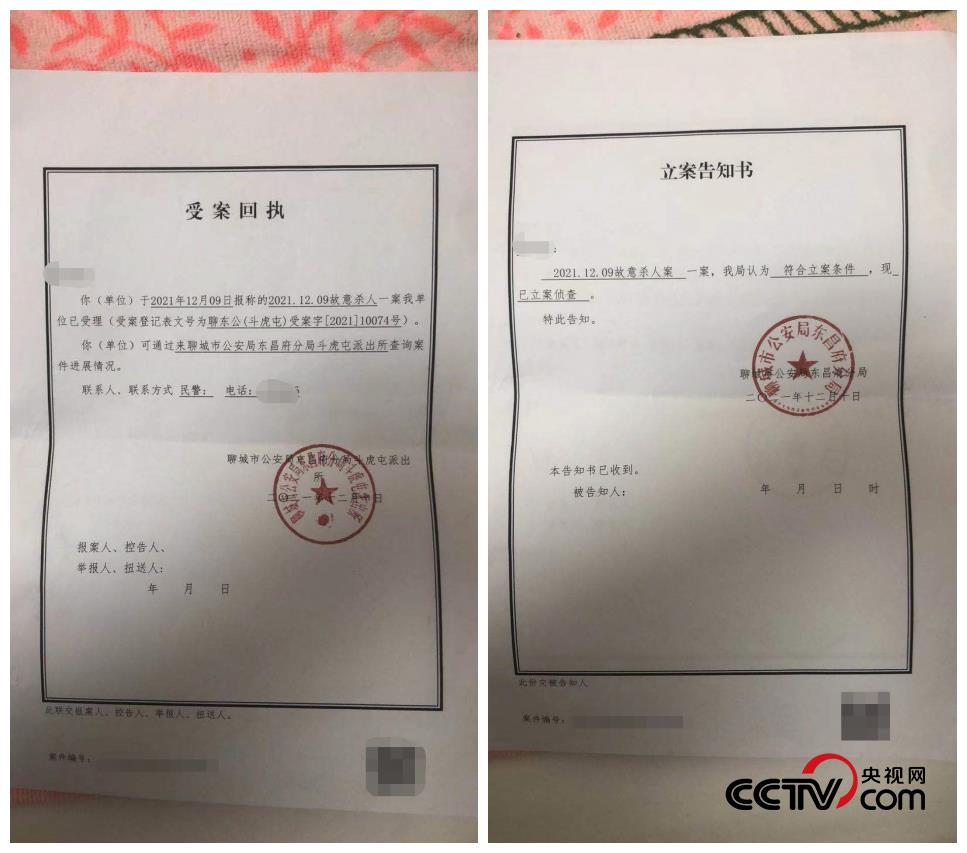
After the alarm, the police accepted it, and Xiaoman’s father also got a notice of filing a case. He said that according to the police’s surveillance, an old man’s whereabouts were suspicious. After confirmation, the suspect was his own uncle, that is, Xiaoman’s uncle.

Receipt of acceptance of the case and notice of filing the case (provided by the respondent)

"It was characterized as intentional homicide. Now the suspect has been under the control of the police and has been detained. His family has also been seized." But Xiaoman’s father couldn’t figure out why people with relatives did this to his daughter.

Xiaoman’s father recalled that some time ago, because there was a water pipe installation project in the village that had to pass by the suspect’s door, he did not agree and unreasonably obstructed it. Then the child’s grandmother quarreled with the suspect. "In fact, it’s nothing more than a trivial matter. It doesn’t matter if you quarrel a few words. If adults have any problems, they can solve them face to face, but they can’t. We can go through legal procedures. But you have to attack a two-year-old child for no reason. This kind of thing is really unacceptable to us. "

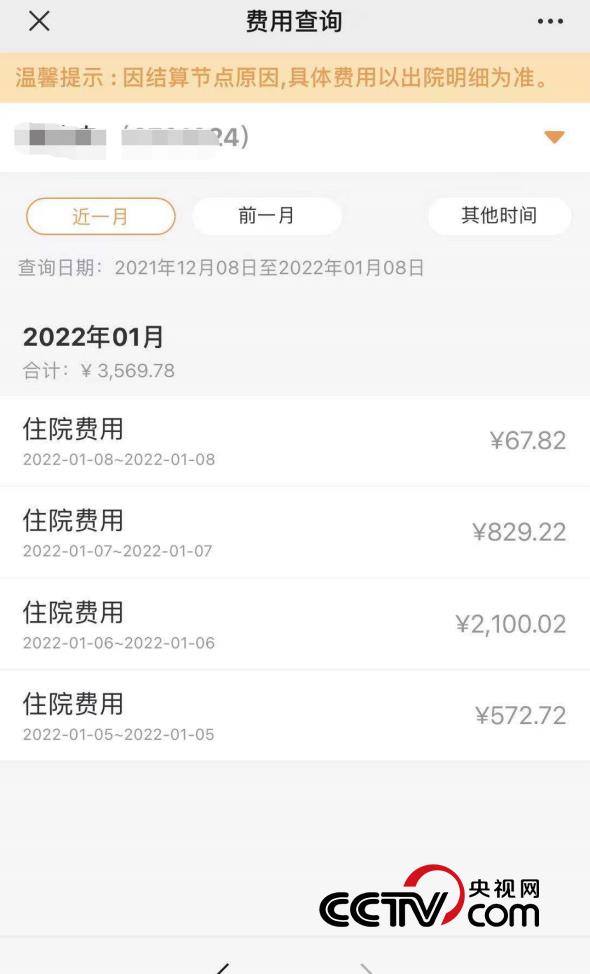
It is understood that at present, the suspect has a negative attitude and has not actively contacted Xiaoman’s family. "In order to save the child, we should have spent almost 150,000 or 60,000, and he (the suspect) has never paid a penny." Xiaoman’s father said that this undoubtedly caused heavy losses to his family.

Daily hospitalization expenses (provided by respondents)

treat

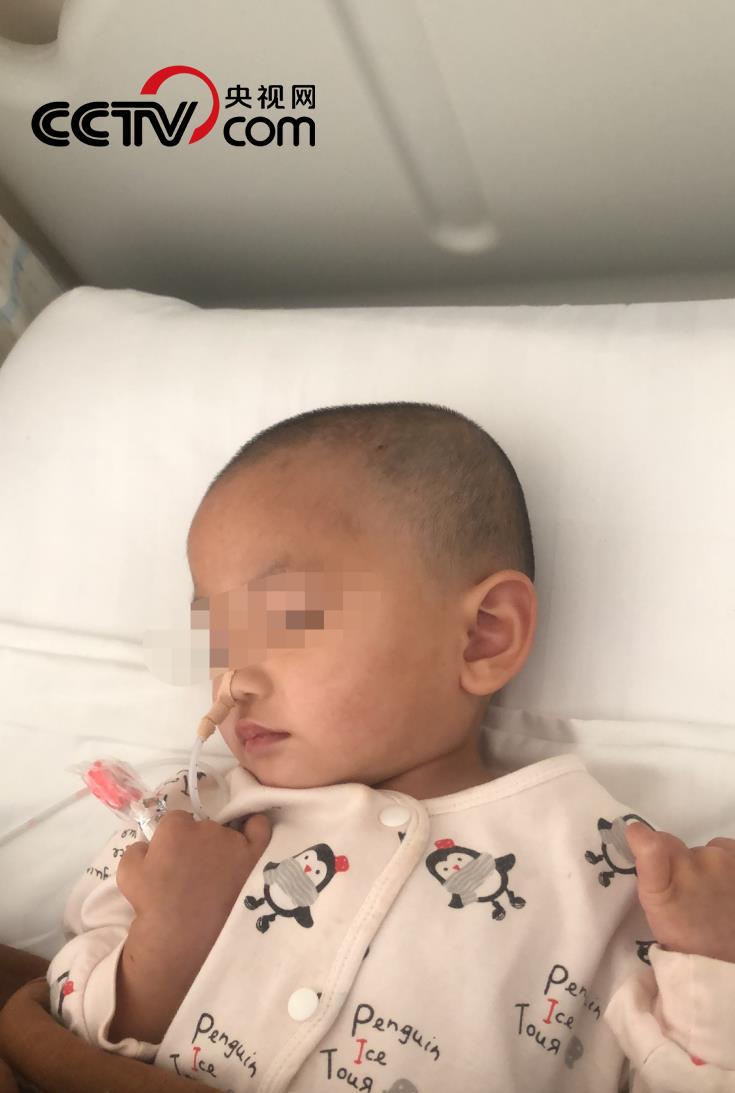
Subsequently, the CCTV reporter got in touch with the attending doctor of Xiaoman’s current hospital. "I’m still in a coma, but my consciousness is better than before." Director Zhou of the Department of Rehabilitation Medicine of Shandong Provincial Hospital said that Xiaoman was transferred to the hospital only after New Year’s Day. At present, he is unconscious, his motor function of limbs has basically lost, and his swallowing function and speech function have not recovered yet.

Xiaoman is receiving treatment (provided by the interviewee)

"Even young people who eat a small dose of tetramine by mistake will cause great damage. Because the younger you are, the worse your tolerance to this drug will be, and the more serious the disease damage will be. " Director Zhou said that the follow-up treatment should first carry out wake-up treatment so that patients can wake up as soon as possible. "After waking up, restore her other functions, including speech and body movements."

Director Zhou suggested that if you eat drugs similar to tetramine by mistake, you should have gastric lavage at the first time, and then treat it symptomatically according to the specific condition, and then give the patient hyperbaric oxygen treatment, because tetramine mainly causes brain damage and causes ischemia and hypoxia in the brain. "So hyperbaric oxygen treatment is generally carried out to see if the brain function can be restored as much as possible."

recover

Xiaoman’s father said that when he first came to the provincial hospital for rehabilitation, Xiaoman’s hands and eyes could not move. Now his eyes can be opened gradually and his hands and feet can move. "The voice of crying was very small at first, and now the voice of crying is relatively loud."

Director Zhou said that although there is some progress in Xiaoman’s treatment, the progress of recovery is uncertain. "It may be a year, maybe a year, three years, five years or even longer."

Super typhoon level, how strong is it?

Original Fengyun Mengyuan Guoke

Recently, the typhoon Xuanlannuo, which came from the depths of the sea, trudged to the offshore area of China, and its strong intensity and changeable path attracted a lot of attention.

The Central Meteorological Observatory issued a typhoon blue warning for Xuanlannuo, and many places also launched emergency response against Taiwan.

As the first super typhoon this year, "Xuanlannuo" was so powerful that it even swallowed another "typhoon embryo" on the way.

Xuanlannuo swallowed the tropical depression below @ Central Meteorological Observatory/Weibo.

It may just be the moment when the vast Yun Qi wind falls, and it goes north alone during the abrupt change of circulation in summer and autumn, carrying the endless long summer behind it, and creating a thousand autumn winds in front of it.

This paper will briefly explain the current and future influence of "Xuanlannuo".

Too long to read the version

"Xuanlannuo" belongs to the stronger level in the super typhoon level;

This year’s typhoon came not too late, but so far the number is small;

There is a high probability that Xuanlannuo will not land in China, but it will have an impact on coastal areas, especially in the eastern coastal areas of Zhejiang Province.

The surging "Xuanlannuo" instant webpage of Sunflower No.8

Super typhoon level, how strong is it?

"Xuanlannuo" was generated on the afternoon of August 28th, upgraded to super typhoon in the early morning of the 30th, and weakened from super typhoon level to strong typhoon level at 5 o’clock on the 2nd. According to the latest forecast, it moved into the East China Sea on the 3rd, and its intensity will be enhanced to super typhoon level again.

According to China’s typhoon classification method, the super typhoon level is the highest level. "Xuanlannuo" even belongs to the stronger level in the super typhoon level.

The classification of typhoon in China is based on the maximum wind speed near the typhoon center (specifically, the 2-minute average continuous maximum wind speed). When the maximum wind speed near the center exceeds 51m/s (equivalent to 16 or above), it is the highest level of super typhoon level.

At 14: 00 on September 1, the maximum wind speed near the center of Xuanlannuo reached 65 m/s, which exceeded the upper limit of the extended Beaufort scale of 17, which was a strong level in the super typhoon scale. As can be seen from the following figure, although there are about six typhoons reaching the super typhoon level every year in the northwest Pacific, there are only one or two typhoons reaching the current intensity of Xuanlannuo on average every year, which is also the strongest typhoon in the northwest Pacific so far this year.

Typhoon intensity classification table in China and typhoon classification in 1949-2019, Central Meteorological Observatory

This year’s typhoon

Are you really late?

The first typhoon that landed in China this year was Typhoon Siam, which landed in Maoming on July 2, and it was not obviously late. However, the number of typhoons generated and landed in China this year is obviously less, and the landing sites are concentrated in the western part of Guangdong and Hainan, which has no obvious impact on the eastern and northern coasts of Guangdong, and further aggravates the impression that "typhoons come late".

So far this year, there have been 11 typhoons in the northwest Pacific, compared with an average of 14.1 from 1951 to 2010. There are three typhoons (tropical storms or stronger) landing in China, compared with about 4-5 in the same period from 1949 to 2019. It can be seen that the total number and level of typhoons are less.

The reason is the same as the biggest driver of the high temperature heat wave in the early summer in southern China, which is a significantly strong subtropical high.

As a system prevailing in a large area of downward flow, subtropical high not only caused a large range of blazing sunny and hot temperatures on land, but also shrouded the blue waves in the northwest Pacific Ocean. Under its control, it is difficult to have large-scale updraft and convective cloud activities in tropical waters, so it is difficult to have significant and sustained latent heat release of water vapor condensation and the development of near-surface low pressure, which seriously hinders the development mechanism of typhoons.

The geopotential height (isoline, unit gpm) in the middle troposphere (500hPa) and the anomaly value (color filling, unit gpm) from August 1 to 20. The red line 5880 surrounds the subtropical high range, and the accompanying positive anomaly represents the strong subtropical high.

Why is the subtropical high so strong this year? There are many specific reasons, but the most important one is related to the abnormal development of La Nina in spring and summer this year. Most La Nina events in history developed in the northern hemisphere in summer and autumn in the first year, peaked in winter, and then gradually declined in the spring of the second year. However, after the development of La Nina last autumn, it did not decay this spring, but further strengthened slightly, and reached its peak in May-June.

Monthly sea surface temperature anomalies in the monitoring area reflecting El Ni? o/La Ni? a events. It can be seen that the negative anomaly is still increasing this spring, which represents the abnormal development of La Nina event. What about the National Oceanic and Atmospheric Administration?

In general, the SST in the tropical Pacific is warm in the west and cold in the east. When La Ni? a event intensifies, the SST in the equatorial Middle East Pacific becomes lower, which causes the upper atmosphere to cool, contract and sink to form the ground high pressure. This enhanced pressure gradient in the east-west direction leads to the obvious enhancement of the trade winds crossing the tropical Pacific to the west. Strong trade winds induce an abnormal anticyclone to form on its north side, which is superimposed with the subtropical high, which is also an anticyclone in the middle and lower troposphere, so that the subtropical high is significantly enhanced.

Same as above, but it is the anomaly of sea surface temperature (coloring) and wind field in the lower troposphere (850hPA). It can be seen that the equatorial Pacific trade wind is obviously stronger (along the black arrow) and the subtropical high is stronger (marked by the blue circle).

"Xuan Lan Nuo" wants great bend?

Where is the typhoon going?

Judging from the current forecast, "Xuanlannuo" presents a V-shaped position. The sharp change of typhoon track is related to the sharp change of subtropical high intensity and other tropical cyclones around it. To answer this question more specifically, we must first understand some basic attributes of typhoons.

Typhoon is essentially a deep cyclone that develops in tropical and subtropical sea areas. In the weather system, some weather systems wider than it will provide airflow to guide it to move, which is the main driving force of typhoon movement. The subtropical high, which has the largest overlap with the typhoon activity area, has become the most important system.

Year after year, the subtropical high moves obviously with the seasonal changes, following the sun to the north in spring and summer, and returning to the south in autumn and winter to avoid the cold wind. Therefore, typhoons generally follow this rule-the path is southward in winter and spring, which may affect the Philippines, Vietnam and other places; The north in summer and autumn affects China, Japan, South Korea and other places.

Because the position and intensity of subtropical high also change obviously in the short term, the specific typhoon path will be different. In addition, there are other factors that affect the typhoon path, one of which is the mutual rotation effect when two typhoons coexist and are close together. At this time, two typhoons will move around their center of mass, and the smaller typhoon will be more affected.

An example of mutual rotation effect between Typhoon Sang Mei and Typhoon Baoxia in 2000. What wikimommons

The sharp turn of the current "Xuanlannuo" path is the result of the rapid change of subtropical high intensity and the mutual rotation effect. Previously, the subtropical high was strong, just like a wall across the north side of Xuanlannuo, which also provided a strong steering flow to the west, allowing the typhoon to move rapidly to the southwest and west. At present, the subtropical high is significantly weakened by the influence of the westerly trough system on the north side, and just "disconnected" into two single systems on the north side of Xuanlannuo, in which the steering flow provided by the east unit is northward, while the west unit is southward. Two kinds of steering flow saws make the typhoon obviously slow down and stay, just like being stuck in a quagmire.

500hPa weather map at 8: 00 Beijing time on September 1st. It can be seen that with the influence of the westerly trough (black circle) on the north side, the subtropical high is about to break into the west side monomer (red circle) and the east side monomer (blue circle), which makes Xuanlannuo (green circle) suddenly confused.

While wandering, a new tropical depression formed beside the southeast side of Xuanlannuo. Due to the great strength gap between the two sides, this tropical depression has been swallowed up by Xuanlannuo, but its residual cloud system still has obvious mutual rotation effect with Xuanlannuo, which provides Xuanlannuo with a steering flow that goes east first and then north. With the further weakening of the west subtropical high monomer in the next day or two, "Xuanlannuo" will eventually move to the north under the joint action of the east subtropical high monomer and the mutual rotation effect, and enter the East China Sea. Because the specific intensity of subtropical high and the degree of mutual rotation effect caused by tropical low residual circulation still have variability, it is still possible to adjust the path of Xuanlannuo in the future.

How will the typhoon affect our country?

To sum up, although there are still a few variables, there is a high probability that "Xuanlannuo" will not land in China, but will go north in the eastern coastal areas of China and eventually tend to the southern coastal areas of South Korea. And in the process of going northward, China’s coastal area is located in the relative "safety semicircle" on its west side, and the wind and rain intensity will be relatively small, and the overall impact on land will not be serious.

The superposition relationship between typhoon’s dangerous semicircle/safe semicircle and its own wind speed and moving speed. The author’s soul hand-painted

Even so, due to the significant expansion of the circulation scale of Xuanlannuo after the annexation of tropical depression, and the relatively slow weakening in the northward process, the strong typhoon will still be maintained to the super typhoon level, so the coastal areas such as eastern Taiwan Province, northeastern Fujian, Zhejiang coastal areas and Shanghai still need to pay attention to prevent the impact of wind and rain, among which Zhoushan Islands will be the most significantly affected; The offshore waters will be directly affected by typhoons and there will be violent storms. Offshore operators must return to Hong Kong to take shelter from the wind according to the early warning information.

I hope all the people affected by "Xuanlannuo" will be safe!

Author: Fengyun Mengyuan

Editor: Owl, Luna

Title source: Sunflower No.8 instant webpage

Read the original text

South Korea’s opposition parties and civic groups held a large-scale rally to protest against Fukushima’s nuclear pollution discharge into the sea.

  Xinhua News Agency, Seoul, August 26th (Reporter Lu Rui, Zhou Siyu) A number of opposition parties and civic groups, including the Common Democratic Party, the largest opposition party in South Korea, held a large-scale rally in the center of Seoul on the afternoon of 26th, strongly urging the Japanese government to cancel the decision to discharge Fukushima nuclear polluted water into the sea, and demanding that Yin Xiyue’s government take measures to prevent Fukushima nuclear polluted water from discharging into the sea.

  Thousands of South Koreans attended the rally, holding high slogans such as "Removing Fukushima nuclear polluted water from the sea" and "condemning Yin Xiyue’s regime", and shouting slogans such as "Japan should keep nuclear polluted water in its own country" and "condemning Yin Xiyue’s government, which speaks for Japan".

  Li Zaiming, the leader of the Common Democratic Party, said in a speech at the rally: "Japan has crossed an insurmountable boundary, which is a provocation to mankind and a declaration of war against countries along the Pacific Ocean." "In the past, Japan used to invade and kill with knives and guns for its own interests, and now it is trying to commit crimes that damage the environment in the Pacific again."

  Li Zaiming demanded that the Japanese government immediately stop discharging nuclear polluted water into the sea, which is harmful to the health and safety of all mankind, and apologized to South Korea for discharging nuclear polluted water into the sea. He also urged Yin Xiyue’s government not to be the "spokesman" of Japan, to fully perform its duty of protecting national life and safety, and to prevent Japan’s immoral nuclear pollution from discharging water into the sea.

  Kim Yong-fu, vice president of the National Federation of Fishermen’s Associations of Korea, said that the government should immediately take measures to completely ban the import of Japanese aquatic products so that Korean nationals can safely eat Korean aquatic products.

  On the evening of the same day, a "Busan Citizens’ Meeting to Prevent Fukushima Nuclear Contaminated Water from Discharging into the Sea" was held in front of Busan Railway Station Square in South Korea. Hundreds of Busan citizens attended the rally and asked Yin Xiyue’s government to take measures to prevent Japan from discharging nuclear contaminated water into the sea.

Shijiazhuang Customs seized about 4 kilograms of smuggled wild animal products.

Shijiazhuang Customs seized about 4 kilograms of smuggled wild animal products.

Suspected wildlife products seized by Shijiazhuang Customs Photo by Yang Zhengxuan

  BEIJING, Shijiazhuang, March 20 (Li Xi Kuangye) Shijiazhuang Customs revealed on the 20th that it recently seized about 4 kilograms of wild animal products such as rhinoceros horn, tiger bone, antelope horn, dried seahorse and bear gall suspected of being smuggled into the country. It is reported that this is the first smuggling crime case of endangered animal products cracked by Shijiazhuang Customs in this year’s special campaign against smuggling of wild animals and their products.

  On March 17th, Shijiazhuang Customs cracked a case of smuggling wild animal products into China, arrested one suspect and seized about 4 kilograms of wild animal products suspected of smuggling into China.

  According to the Anti-smuggling Bureau of Shijiazhuang Customs, since the outbreak of pneumonia in novel coronavirus, Shijiazhuang Customs has organized a special campaign to crack down on the smuggling of wild animals and their products in the whole customs area. In the next step, the customs will continue to maintain the high-pressure situation of smuggling, carry out special rectification with relevant departments, highlight key points and strike hard, cut off the smuggling chain of wild animals and their products, and earnestly safeguard the national ecological security and people’s lives, health and safety.

Sanya formulated local laws and regulations.

Standing Committee of Sanya Municipal People’s Congress
Gonggao
(2025) No.3

The Decision of Sanya Municipal People’s Congress on Amending the Local Laws and Regulations of Sanya City, adopted by the Sixth Session of the Eighth Sanya Municipal People’s Congress, was approved by the 17th meeting of the Standing Committee of the Seventh Hainan Provincial People’s Congress on April 1, 2025, and is hereby promulgated and shall come into force as of the date of promulgation.

Standing Committee of Sanya Municipal People’s Congress

April 8, 2025

Decision of Sanya Municipal People’s Congress on Amending the Regulations of Sanya Municipality on Formulating Local Laws and Regulations
(The sixth meeting of the Eighth Sanya Municipal People’s Congress on January 9, 2025 was approved by the seventeenth meeting of the Standing Committee of the Seventh Hainan Provincial People’s Congress on April 1, 2025)

The sixth meeting of the Eighth Sanya Municipal People’s Congress decides to make the following amendments to the Regulations of Sanya Municipality on Formulating Local Laws and Regulations:

1. Article 1 is amended as: "In order to standardize the activities of this Municipality in formulating local laws and regulations, improve the legislative procedures, improve the quality of legislation, give full play to the leading and promoting role of legislation, comprehensively promote the rule of law in the city, and build Sanya under the rule of law, this Regulation is formulated in accordance with the Organic Law of People’s Republic of China (PRC) Local People’s Congresses and Local People’s Governments at All Levels, the Legislative Law of People’s Republic of China (PRC), the Regulations on the Formulation and Approval of Local Laws and Regulations of Hainan Province and other relevant laws and regulations, and combined with the actual situation of this Municipality."

Two articles are added as Articles 3 and 4:

"Article 3
To formulate local laws and regulations, we should adhere to the leadership of the Communist Party of China (CPC), the important thoughts of Marxism–Leninism, Mao Zedong Thought, Deng Xiaoping Theory and Theory of Three Represents, the thoughts of Scientific Outlook on Development and the supreme leader Socialism with Chinese characteristics in the new era, the economic construction as the center, the reform and opening up, and the new development concept, so as to ensure the accelerated construction of Hainan as a benchmark city of free trade port on the track of the rule of law.

"Article 4
The formulation of local laws and regulations shall conform to the provisions, principles and spirit of the Constitution, in accordance with the statutory authority and procedures, and proceed from the overall interests of the country, and safeguard the unity, dignity and authority of the socialist legal system. The provisions of local laws and regulations shall not conflict with the upper law.

"The formulation of local laws and regulations should advocate and carry forward the socialist core values, adhere to the combination of the rule of law and the rule of virtue, build a strong sense of the Chinese nation community, and promote the construction of socialist spiritual civilization.

"The formulation of local laws and regulations should meet the needs of reform, adhere to the unity of promoting reform under the rule of law and improving the rule of law in reform, guide, promote, standardize and guarantee relevant reforms, and give play to the important role of the rule of law in the modernization of the city’s governance system and governance capacity."

Three, third to two, as fifth and sixth, as amended:

"Article 5 The formulation of local regulations shall adhere to and develop people’s democracy in the whole process, respect and safeguard human rights, and safeguard and promote social fairness and justice.

"The formulation of local laws and regulations should reflect the will of the people, carry forward socialist democracy, adhere to the openness of legislation, improve the mechanism for deputies to people’s congresses to participate in legislation, promote legislative consultation, and ensure people’s participation in legislative activities through various channels.

"The Standing Committee of the Municipal People’s Congress shall establish a normalized working mechanism, conduct legislative consultations in written form, meetings, commissions, etc., and give timely feedback on the adoption of opinions and suggestions.

"Article 6
The formulation of local laws and regulations should proceed from reality, meet the requirements of comprehensively deepening reform and opening up and building a benchmark city of Hainan Free Trade Port, scientifically and reasonably stipulate the rights and obligations of citizens, legal persons and other organizations, and the powers and responsibilities of state organs, and reflect local characteristics.

"The formulation of local regulations should enrich the legislative forms, and the contents of the regulations should be clear, specific, targeted and enforceable. The contents that have been clearly defined by laws, administrative regulations, provincial local regulations of this province or other local regulations of this Municipality are generally not repeated, and appropriate legislative styles should be selected according to the contents."

4. One article is added as Article 7: "The Municipal People’s Congress and its Standing Committee shall adhere to scientific legislation, democratic legislation and legislation according to law, and strengthen the systematization, integrity, coordination and timeliness of legislation through various forms such as formulating, amending, abolishing and interpreting regulations, and give play to the implementing, supplementary and exploratory functions of local regulations."

5. Article 4 is renumbered as Article 8 and amended as: "The Municipal People’s Congress and its Standing Committee may formulate local regulations on urban and rural construction and management, ecological civilization construction, historical and cultural protection, grass-roots governance and other matters according to the specific conditions and actual needs of this Municipality, provided that different constitutions, laws, administrative regulations and local regulations at the provincial level of this province are in conflict. If there are other provisions in the law on the formulation of local regulations for cities divided into districts, those provisions shall prevail."

6. Article 5 and Article 50 shall be merged as Article 9 and amended as: "The following matters shall be formulated by the Municipal People’s Congress:

"(a) matters stipulated by law by the Municipal People’s Congress to formulate local regulations;

"(two) the legislative system of the Municipal People’s Congress and its Standing Committee;

"(three) the city’s major issues;

"(four) matters that the Municipal People’s Congress considers that local regulations should be formulated by it.

"The Standing Committee of the Municipal People’s Congress shall formulate other local regulations within the scope of its functions and powers, except those that shall be formulated by the Municipal People’s Congress; When the Municipal People’s Congress is not in session, local regulations formulated by the Municipal People’s Congress may be partially supplemented and revised, but they shall not contravene the basic principles of the local regulations. "

Seven, add two, as tenth, eleventh:

"Article 10
Local regulations should be formulated, but the conditions are not yet ripe. Due to the urgent need of administrative management, local government regulations can be formulated first. Before the establishment of regulations, the Municipal People’s Government shall solicit the opinions of the Standing Committee of the Municipal People’s Congress; After the adoption of the regulations, it shall be specially explained when it is submitted to the Standing Committee of the Municipal People’s Congress for the record.

"If the regulations stipulated in the preceding paragraph need to be implemented for two years, the Municipal People’s Government shall promptly submit them to the Municipal People’s Congress or its Standing Committee for formulating local regulations. Before the implementation of local regulations, the administrative measures can continue to be implemented.

"Article 11
The Municipal People’s Congress and its Standing Committee may, according to the needs of reform and development, decide to authorize the temporary adjustment or temporary suspension of the application of some provisions of the local regulations of this Municipality within the prescribed time limit and scope, and report them to the Standing Committee of the Provincial People’s Congress for approval in accordance with the relevant provisions of this Ordinance, and the Standing Committee of the Municipal People’s Congress will issue an announcement to be published.

"Temporary adjustment or temporary suspension of the application of some of the provisions of the local regulations of this Municipality, which has proved feasible in practice, shall be revised by the Municipal People’s Congress and its Standing Committee in a timely manner; If the conditions for amendment are not yet ripe, the period of authorization may be extended, or the relevant local regulations of this Municipality may be resumed. The extension of the authorization period shall be reported to the Standing Committee of the Provincial People’s Congress for approval. "

Eight, sixth to twelfth.

Two paragraphs are added as the second and third paragraphs: "The Standing Committee of the Municipal People’s Congress and the Municipal People’s Government shall establish a legislative communication and coordination mechanism, strengthen the overall coordination of legislative plans, annual legislative plans, major systems of laws and regulations and the progress of legislative work, and coordinate and solve important issues.

"For local laws and regulations that are included in the annual legislative plan and submitted for deliberation by the Municipal People’s Government, a special class for legislative work can be set up to be responsible for coordinating the drafting, revision, review and deliberation of draft local laws and regulations, so as to improve the quality and efficiency of legislation."

One article is added as Article 13: "The Municipal People’s Congress and its Standing Committee may, according to the needs of coordinated regional development, work with the people’s congresses and their Standing Committees of relevant autonomous counties in Sanya Economic Circle and other cities and autonomous counties with districts concerned to formulate local regulations and separate regulations, which shall be implemented within their respective administrative areas or relevant regions.

"To carry out regional collaborative legislation, we should establish and improve the working mechanism, focus on the key areas and key links of regional high-quality integrated development, and strengthen communication and cooperation in the preparation of legislative plans, annual legislative plans, and the drafting, demonstration, publicity, implementation, revision, cleaning up, law enforcement inspection, and post-legislative evaluation of local laws and regulations."

Ten, the first paragraph of Article 7 and the second paragraph of Article 10 are merged as Article 14, which is amended as: "The Standing Committee of the Municipal People’s Congress strengthens the overall arrangement of legislative work through legislative plans and annual legislative plans.

"The preparation of legislative plans and annual legislative plans shall carefully study the motions and suggestions of deputies to the people’s congresses, solicit opinions extensively, conduct scientific argumentation and evaluation, and determine legislative items according to the specific conditions and actual needs of this Municipality and the requirements of strengthening legislation in key areas, emerging fields and foreign-related fields.

"The preparation of legislative plans and annual legislative plans shall be coordinated with the legislative plans and legislative plans of the Standing Committee of the provincial people’s Congress, and the opinions of the legislative affairs office of the Standing Committee of the provincial people’s Congress shall be solicited.

"The legislative plan and the annual legislative plan shall be announced to the public after being passed by the meeting of directors of the Standing Committee of the Municipal People’s Congress (hereinafter referred to as the meeting of directors), and shall be sent to the legal affairs office of the Standing Committee of the Provincial People’s Congress in a timely manner."

Xi. Paragraph 2 and Paragraph 3 of Article 7 are renumbered as Article 15 and amended as: "Legislative planning projects are divided into deliberation projects and investigation projects. The project under consideration refers to the project that is mature and will be submitted for consideration during the term of office; Research projects refer to projects that need to be worked hard and submitted for consideration when conditions are ripe.

"The annual legislative plan projects are divided into deliberation projects, preparatory deliberation projects and key research projects. When considering the project, the drafting unit, the sponsor and the time for proposing the local regulations shall be clearly defined; The drafting unit shall be clearly defined for the preliminary consideration project, and the draft regulations can be adjusted to the consideration project if they are mature; Key research projects should clarify the responsible units. "

12. Paragraph 1 of Article 10 is changed to Article 18 and amended as: "The legislative affairs office of the Standing Committee of the Municipal People’s Congress shall comprehensively coordinate, study and demonstrate the legislative suggestions and opinions put forward by all parties, and put forward the draft legislative plan and the draft annual legislative plan. Projects included in the legislative plan and the annual legislative plan should be demonstrated. "

XIII. Article 11 is renumbered as Article 19 and amended as: "The relevant special committees of the Municipal People’s Congress, the relevant working bodies of the Standing Committee, the Municipal People’s Government and its relevant departments shall seriously organize the implementation of the legislative plan and the annual legislative plan. The legal affairs office of the Standing Committee of the Municipal People’s Congress shall supervise the implementation of the legislative plan and the annual legislative plan.

"Legislative planning and annual legislative plan in the implementation process need to be partially adjusted, by the legal affairs office of the Standing Committee of the Municipal People’s Congress put forward adjustment opinions, reported to the meeting of directors for decision, and promptly sent to the legal affairs office of the Standing Committee of the provincial people’s Congress.

"If the annual legislative plan deliberation project fails to be submitted for deliberation on time, the sponsor shall report to the meeting of directors and explain the situation."

Fourteen, twelfth to twentieth, amended as: "the relevant departments and units shall, in accordance with the annual legislative plan, do a good job in drafting the draft local regulations.

"The relevant departments and other units of the Municipal People’s Government shall be responsible for drafting the draft local regulations, and the relevant special committees of the Municipal People’s Congress and the relevant working bodies of the Standing Committee shall intervene in the drafting work in advance according to the division of responsibilities, and strengthen the tracking, supervision, guidance and coordination of the drafting work.

"A comprehensive, overall and basic draft of important local regulations may be organized and drafted by the relevant special committees of the Municipal People’s Congress or the relevant working bodies of the Standing Committee.

"Professional draft local laws and regulations, can absorb experts in related fields to participate in the drafting work, or entrust relevant experts, teaching and research units, social organizations to draft.

"Other state organs, social organizations, enterprises, institutions and citizens may submit proposals for draft local regulations to the organs with the right to propose local regulations and the relevant working bodies of the Standing Committee."

Fifteen, thirteenth to twenty-first, the first paragraph is amended as: "the drafting of local regulations should be in-depth research, listen to opinions from all sides. Listening to opinions can take the form of symposiums, argumentation meetings, hearings, written consultations, and online consultations. "

The second paragraph is amended as: "The drafting unit shall consult the opinions of relevant social organizations, enterprises and institutions and public representatives on the draft local laws and regulations that involve the vital interests of the majority of citizens; The drafting unit shall listen to the opinions of relevant scientific research institutions, experts and scholars on the draft local regulations involving special technology or other strong professionalism; The drafting unit shall solicit the opinions of the relevant departments on the draft local regulations involving multiple administrative departments. The situation of soliciting opinions should be given feedback. "

16. Article 16 is renumbered as Article 24 and amended as: "When the Standing Committee decides to submit a case of local regulations to the Municipal People’s Congress for deliberation, it shall send the draft local regulations and their explanations and necessary reference materials to the delegates one month before the meeting is held, and may organize the delegates to study and discuss it in time to solicit their opinions.

"Representatives should listen to the opinions and suggestions of the people, participate in the research, study and discussion organized by the unified organization, study the local regulations, and prepare for deliberation."

17. Article 17 is renumbered as Article 25, and the first paragraph is amended as: "When the Municipal People’s Congress is not in session, a local legislative bill that should be deliberated by the Municipal People’s Congress may be submitted to the Standing Committee first. After deliberation by the meeting of the Standing Committee in accordance with the relevant procedures stipulated in these Regulations, it is decided to submit it to the Municipal People’s Congress for deliberation, and the Standing Committee or the sponsor will explain it to the plenary session of the General Assembly."

18. Article 23 is renumbered as Article 31, and the second paragraph is amended as: "When the delegations are deliberating the local regulations, the sponsors shall send people to listen to opinions and answer inquiries; According to the requirements of the delegation, the relevant organs and organizations should send people to introduce the situation. "

The third paragraph is amended as: "The relevant special committees may deliberate on the local regulations included in the agenda of the General Assembly, put forward deliberation opinions to the presidium, and print and distribute the meeting."

19. Article 24 is renumbered as Article 32 and amended as: "The Legislative Affairs Committee of the Municipal People’s Congress (hereinafter referred to as the Legislative Affairs Committee) conducts a unified deliberation on local legislative proposals according to the deliberation opinions of delegations and relevant special committees, submits a report on the deliberation results and a voting draft to the presidium, and issues it to the presidium after deliberation and adoption. The Legal Affairs Committee should explain the important different opinions in the report of the deliberation results. "

Twenty, article twenty-eighth is changed into article thirty-fifth, and it is amended as: "The voting version of the draft local regulations shall be submitted by the presidium to the plenary session of the General Assembly for voting, and shall be adopted by more than half of all the deputies."

Twenty-one, the first paragraph and the second paragraph of Article 29 are changed into Article 36, which is amended as: "The local regulations that are included in the agenda of the meeting of the Standing Committee are generally considered by two meetings before being put to the vote; Local regulations that are relatively simple, partially revised or abolished, and the opinions of all parties are relatively consistent, or in case of emergency, can also be put to the vote after deliberation at a meeting.

"If there are still major issues that need further study after the deliberation of the two meetings of the Standing Committee, the meeting of directors may decide not to put them to the vote for the time being, and after submitting them to the Legal Affairs Committee for further deliberation and revision, the meeting of directors shall decide to submit them to the meeting of the Standing Committee for reconsideration."

Twenty-two, thirtieth to thirty-seventh in the first and second paragraphs.

The third paragraph of Article 29 is changed to the third paragraph of Article 37, which is amended as: "When the meeting of the Standing Committee deliberates the local regulations, representatives of the relevant municipal people’s congresses shall be invited to attend the meeting as nonvoting delegates."

23. Article 33 is renumbered as Article 40, which is amended as: "The Legislative Affairs Commission shall make a unified deliberation on a local regulation bill included in the agenda of the meeting of the Standing Committee based on the deliberation and review opinions of the members of the Standing Committee, relevant special committees or relevant working bodies of the Standing Committee, and put forward a report on the deliberation result and a revised draft of the local regulation. The important different opinions shall be explained in the report on the deliberation result.

"If the Legal Committee fails to adopt the important deliberation and review opinions of the relevant special committees or relevant working bodies of the Standing Committee, it shall give feedback to the relevant special committees or relevant working bodies of the Standing Committee. If the Legal Affairs Committee disagrees with the relevant special committees or relevant working bodies of the Standing Committee on important issues of local regulations, it shall report to the meeting of directors.

"When the Legislative Affairs Committee deliberates a local regulation bill, it shall convene a plenary meeting for deliberation, and invite members of relevant special committees and relevant working bodies of the Standing Committee to attend the meeting as nonvoting delegates and express their opinions. When necessary, you can ask the heads of relevant organs and organizations to attend the meeting to explain the situation. "

24. Article 41 is renumbered as Article 47, which is amended as: "If the deliberation of a local regulation bill included in the agenda of the meeting of the Standing Committee has been put on hold for two years due to great differences of opinion among the parties on the necessity and feasibility of formulating the local regulation, or if it has not been put on the agenda of the meeting of the Standing Committee again after two years due to non-voting, the meeting of directors may decide to terminate the deliberation and report to the Standing Committee; When necessary, the meeting of directors may also decide to postpone the deliberation. "

Article 42 is renumbered as Article 49 and amended as: "The Standing Committee of the Municipal People’s Congress shall submit the written report, the text of the local regulations, the explanation of the draft and the necessary reference materials submitted to the Standing Committee of the Provincial People’s Congress within 15 days from the date when the local regulations are passed."

One paragraph is added as the second paragraph: "If the Standing Committee of the provincial people’s congress approves the decision to amend local regulations, the Standing Committee of the Municipal People’s Congress shall make amendments in accordance with the approved decision."

Twenty-six, one article is added as Article 50: "Local regulations shall specify the implementation date.

"Unless it must be implemented immediately or requires a clear preparation period for implementation, the date of implementation of local regulations is generally the first day of the month after the expiration of 30 days from the date of approval of the regulations by the Standing Committee of the Provincial People’s Congress."

27. Article 44 is renumbered as Article 51 and amended as: "Local regulations approved by the Standing Committee of the Provincial People’s Congress shall be published by the Standing Committee of the Municipal People’s Congress, and the text of local regulations, explanations of drafts and reports on deliberation results shall be published in the bulletin of the Standing Committee of the Municipal People’s Congress, China People’s Congress Network, Hainan People’s Congress Network, Sanya People’s Congress Network and Sanya Daily in time. The text of local regulations published in the bulletin of the Standing Committee of the Municipal People’s Congress is the standard text.

"The announcement of the promulgation of local regulations shall specify the enacting organ, approving organ and the date of adoption, approval and implementation of local regulations."

Twenty-eight, the first paragraph of Article 45 and Article 48 are merged as Article 52, which is amended as: "The provisions of local regulations formulated by the Municipal People’s Congress and its Standing Committee need to be further clarified, or new situations need to be clearly applied after implementation, and the Standing Committee of the Municipal People’s Congress shall interpret them.

"The interpretation of local regulations of the Standing Committee of the Municipal People’s Congress has the same effect as local regulations."

29. The second paragraph of Article 45 is merged with Articles 46 and 47 as Article 53, which is amended as: "The Municipal People’s Government, the Municipal Supervision Commission, the Municipal Intermediate People’s Court, the Municipal People’s Procuratorate, the Special Committee of the Municipal People’s Congress and the Standing Committee of the District People’s Congress may request the interpretation of local regulations to the Standing Committee of the Municipal People’s Congress.

"The legislative affairs office of the Standing Committee of the Municipal People’s Congress shall study and formulate the draft interpretation of local regulations, and the meeting of directors shall decide to submit it to the meeting of the Standing Committee for deliberation.

"After the meeting of the Standing Committee of the Municipal People’s Congress deliberated on the draft interpretation of local regulations, the Legal Affairs Committee deliberated and revised it according to the opinions of the members of the Standing Committee, and put forward a voting draft of the draft interpretation of local regulations.

"The voting version of the draft interpretation of local laws and regulations shall be submitted to the plenary session of the Standing Committee of the Municipal People’s Congress for voting by the meeting of directors, which shall be passed by more than half of all the members of the Standing Committee, and shall be published by the Standing Committee of the Municipal People’s Congress after being approved by the Standing Committee of the Provincial People’s Congress.

"The interpretation of local laws and regulations shall be submitted for the record in accordance with relevant state regulations."

Article 51 is renumbered as Article 55 and amended as: "The relevant provisions of these Regulations on the procedures for formulating local regulations shall apply to the procedures for amending and abolishing local regulations, and shall be reported to the Standing Committee of the Provincial People’s Congress for approval."

Thirty-one, change Article 52 to Article 56, and amend it to read: "Where a local regulation is amended, a new local regulation text shall be published.

"If a local regulation is abolished, an announcement shall be made to make it public, except that it is abolished by other local regulations of this Municipality."

Thirty-two, one article is added as Article 57: "In any of the following circumstances, the Standing Committee of the Municipal People’s Congress shall organize a clean-up according to the principle of maintaining the unity of the legal system and the needs of reform and development:

"(a) the NPC Standing Committee, the State Council, the Standing Committee of the provincial people’s Congress or laws, administrative regulations, local regulations at the provincial level of the province to clean up;

"(two) due to laws, administrative regulations, local regulations at the provincial level of this province, the need to clean up;

"(three) does not meet the needs of economic and social development;

"(4) Other circumstances that need to be cleaned up."

Thirty-three, Article 53, Article 27 and Article 37 are merged as Article 58, which is amended as: "Before the local legislation bill submitted to the Municipal People’s Congress and its Standing Committee is included in the agenda of the meeting, the sponsor has the right to withdraw it.

"Before the proposal of a local regulation on the agenda of the General Assembly is put to the vote, if the sponsor requests to withdraw it, he shall explain the reasons, and report to the General Assembly with the consent of the presidium, and the deliberation of the local regulation shall be terminated.

"If the sponsor requests to withdraw a local regulation bill that has been put on the agenda of the meeting of the Standing Committee before it is put to the vote, it shall explain the reasons, and report to the Standing Committee with the consent of the meeting of directors, and the deliberation of the local regulation bill shall be terminated."

Thirty-four, change Article 55 into Article 59, which is amended as: "When proposing a local regulation, the draft text of the local regulation and its explanation shall be submitted at the same time, and necessary reference materials shall be provided. Where a local regulation is amended, a control text before and after the amendment shall also be submitted. The explanation of the draft local regulations shall include the necessity, feasibility, drafting process and main contents of formulating or amending local regulations, as well as the coordination and handling of major differences in the drafting process and the risk assessment of the draft; If an administrative license, administrative compulsory measures or supplementary administrative penalties are to be set, it shall also include the necessity of setting, the possible impact and the situation of listening to and adopting opinions. "

One paragraph is added as the second paragraph: "Where a bill of local laws and regulations does not meet the requirements specified in the preceding paragraph, it shall generally not be included in the agenda of the meeting of the current people’s congress or the Standing Committee."

Thirty-five, two articles are added as sixty-second and sixty-third:

"The legal affairs office of the Standing Committee of the sixty-second Municipal People’s Congress shall, within ten days from the date of promulgation of local regulations, send the relevant filing materials to the legal affairs office of the Standing Committee of the provincial people’s Congress.

"Article 63 After the implementation of local regulations, the department or unit in charge of the implementation of the regulations shall, in accordance with the provisions, report the annual implementation of local regulations to the Standing Committee of the Municipal People’s Congress in writing."

Thirty-six, article 57 is changed into article 64, which is amended as: "The relevant special committees of the Municipal People’s Congress and the working offices of the Standing Committee may organize a post-legislative evaluation of the relevant local laws and regulations of this Municipality. The assessment shall be reported to the Standing Committee. "

One paragraph is added as the second paragraph: "The Standing Committee may, according to needs, organize law enforcement inspections on relevant local regulations of this Municipality, understand the implementation of local regulations, and put forward opinions on improving local regulations."

37. One article is added as Article 65: "When the Municipal People’s Congress and its Standing Committee make regulatory decisions, the relevant provisions of these Regulations shall apply."

Thirty-eight, three articles are added as sixty-eighth, sixty-ninth and seventieth:

"Article 68 The special committees and working bodies of the Standing Committee of the Municipal People’s Congress shall strengthen the legislative propaganda work, release legislative information, introduce the legislative situation and respond to social concerns through various forms.

"The Municipal People’s Government and its relevant departments shall strengthen the publicity and training of local regulations and improve the implementation effect of local regulations.

"Article 69
The Standing Committee of the Municipal People’s Congress shall, according to actual needs, set up contact points for grassroots legislation. The formulation of legislative plans, annual legislative plans, the drafting and revision of local laws and regulations, etc., can listen to the opinions of grassroots people and relevant parties through grassroots legislative contact points.

"The Standing Committee of the Municipal People’s Congress shall strengthen the construction of grassroots legislative contact points and provide guidance and support for the work of grassroots legislative contact points.

"The unit where the Standing Committee of the District People’s Congress and the contact point of grass-roots legislation are located shall improve the ability of the contact point of grass-roots legislation to perform their duties and provide necessary guarantee for the operation of the contact point of grass-roots legislation.

"Article 70
The Standing Committee of the Municipal People’s Congress employs legal professionals as legal assistants according to actual needs, and provides legal advice for members of the Standing Committee to consider local laws and regulations and participate in legislative research and demonstration.

"The legal affairs office of the Standing Committee shall strengthen the training, management and assessment of legal assistants and provide guidance and support for legal assistants to carry out their work."

Thirty-nine, make the following amendments to some provisions:

(1) Amend "Chapter II Legislative Planning and Compilation of Legislative Plan" to "Chapter II Legislative Planning and Compilation of Annual Legislative Plan" and "Chapter VII Interpretation, Revision and Abolition of Local Regulations" to "Chapter VII Interpretation, Revision, Abolition and Clearing of Local Regulations".

(2) In Article 2, "interpretation" is added after "repeal", and "and" is changed to "and".

(3) Amend the legal affairs office of the Standing Committee in the first paragraph of Article 8 to the legal affairs office of the Standing Committee of the Municipal People’s Congress, and all state organs, political parties and people’s organizations in the second paragraph to state organs, social organizations, enterprises, institutions and other organizations to enterprises and institutions, and the Standing Committee to the Municipal People’s Representative.

(4) Amend the "organ with the right to propose local regulations" in the first paragraph of Article 9 to "organ with the right to propose local regulations", and the "proposal of local legislative plan" in the second paragraph to "proposal of legislative plan".

(five) in the first paragraph of article fourteenth, before the "presidium", add "when the meeting is held".

(six) the "explanation" in the first paragraph of article fifteenth is changed to "explanation".

(seven) the "review" in the second paragraph of article nineteenth is amended as "review of local regulations".

(eight) the "executive meeting of the Municipal People’s Government" in the twentieth article is amended as the "executive meeting or plenary meeting of the Municipal People’s Government".

(9) After the word "draft" in the first paragraph of Article 22, add the words "and its explanations and necessary reference materials", and modify the words "investigation and study" in the second paragraph as "investigation" and "may request the relevant working bodies of the Standing Committee" as "may request the relevant special committees or the relevant working bodies of the Standing Committee".

(10) In Article 25, "there are differences on major issues in the deliberation of local regulations" is amended as "there are differences on major issues in the deliberation of local regulations", and "there are differences on major specialized issues" is added.

(eleven) twenty-sixth in the "case of local regulations under consideration" is amended as "case of local regulations under consideration".

(twelve) the "shall" in the first paragraph of article thirty-first shall be changed to "may", and the "representatives of the people’s congresses" in the second paragraph shall be changed to "representatives of the Municipal People’s Congress".

(thirteen) in the second paragraph of Article 32, "the relevant special committees of the Municipal People’s Congress or the relevant working bodies of the Standing Committee" is amended as "the relevant special committees or the relevant working bodies of the Standing Committee", and "and" is added before "according to the requirements of the group".

(fourteen) in the fourth paragraph of article thirty-fourth, after the "relevant departments", the "contact point of grassroots legislation" is added.

(fifteen) the "drafting instructions" in article thirty-fifth shall be changed to "instructions", and "the situation of soliciting opinions shall be notified to the society" shall be added at the end of this article.

(sixteen) the "report on the results of deliberation" in article thirty-sixth is amended as "report on the results of deliberation".

(XVII) Amend the phrase "you can decide to submit important clauses with great differences in individual opinions to the Standing Committee for a separate vote" in the second paragraph of Article 38 to read "you can decide to submit important clauses with great differences in individual opinions to the meeting of the Standing Committee for a separate vote".

(eighteen) delete the "submitted for approval" in article forty-third, and add "with reference materials such as legislative basis comparison table" at the end of this article.

(nineteen) the "local regulations" in article forty-ninth shall be amended as "local regulations".

(twenty) in the second paragraph of article fifty-sixth, "the relevant special committees and local regulations related to the work of the organization" is amended as "the relevant special committees and standing committees related to the work of the organization".

(twenty-one) the fifty-eighth "shall explain the situation to the Standing Committee" is amended as "shall explain the situation in writing to the Standing Committee of the Municipal People’s Congress within ten days after the expiration of the time limit".

(twenty-two) the fifty-ninth in the "local regulations" to "local regulations", "Standing Committee" to "the Standing Committee of the Municipal People’s Congress".

(23) Amend "relevant special committees" in the first paragraph of Article 11, the second and third paragraphs of Article 18, Article 19, Article 31 and Article 34 to "relevant special committees" and "relevant working organs of the Standing Committee" to "relevant working organs of the Standing Committee", and amend "relevant special committees" in Article 15 to "relevant special committees".

This decision shall come into force as of the date of promulgation.

The "Regulations of Sanya Municipality on Formulating Local Laws and Regulations" shall be revised according to this decision, and the order of the provisions shall be adjusted accordingly and re-promulgated.

Sanya formulated local laws and regulations.

(The second meeting of the Seventh Sanya Municipal People’s Congress on January 20, 2017 was approved by the 27th meeting of the Standing Committee of the Fifth Hainan Provincial People’s Congress on March 29, 2017.
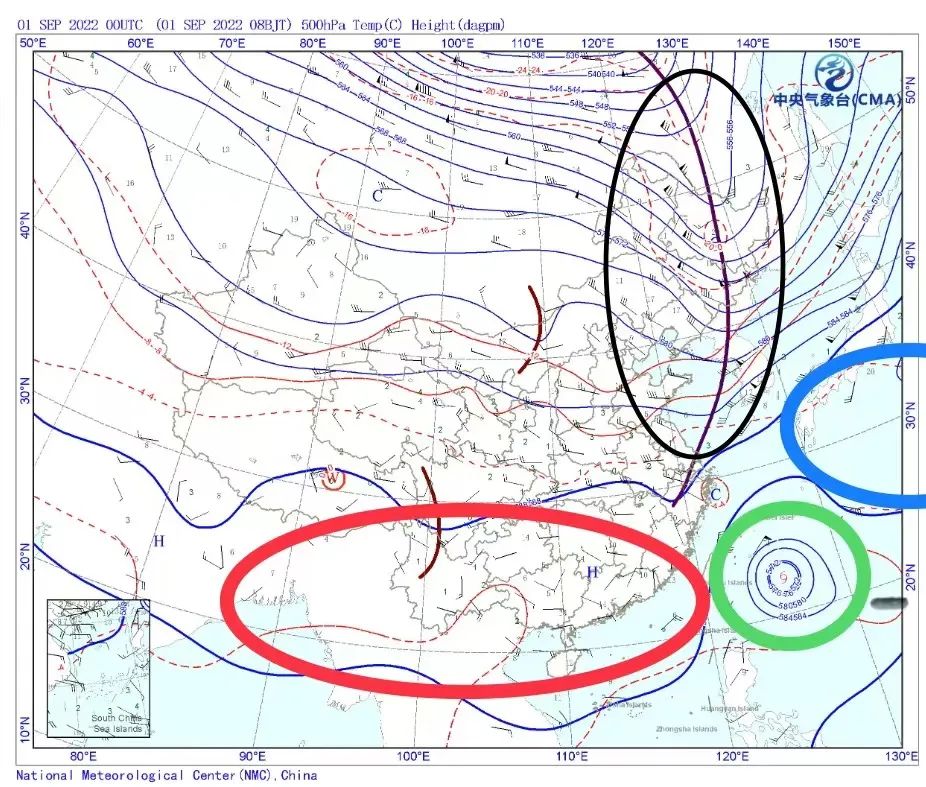
According to the 17th meeting of the Standing Committee of the Seventh Hainan Provincial People’s Congress on April 1, 2025, the Decision of Sanya Municipal People’s Congress on Amending the Local Regulations of Sanya Municipality was revised)

Catalogue

Chapter I General Principles

Chapter II Legislative Planning and Compilation of Annual Legislative Plan

Chapter III Drafting of Local Regulations

Chapter IV Proposal of Local Regulations

The first section to the Municipal People’s Congress proposed local regulations.

The second section to the Standing Committee of the Municipal People’s Congress proposed local regulations.

Chapter V Deliberation and Voting on Local Regulations

Section 1 The Municipal People’s Congress deliberates and votes on local regulations.

Section 2 The Standing Committee of the Municipal People’s Congress deliberates and votes on local regulations.

Chapter VI Approval and Publication of Local Regulations

Chapter VII Interpretation, Amendment, Abolition and Clearing of Local Regulations

Chapter VIII Other Provisions

Chapter IX Supplementary Provisions

Chapter I General Principles

the first
In order to standardize the city’s activities of formulating local laws and regulations, improve legislative procedures, improve the quality of legislation, give play to the leading and promoting role of legislation, comprehensively promote the rule of law in the city, and build Sanya under the rule of law, these Regulations are formulated in accordance with the Organic Law of People’s Republic of China (PRC) Local People’s Congresses and Local People’s Governments at All Levels, the Legislative Law of People’s Republic of China (PRC), the Regulations on Formulating and Approving Local Laws and Regulations in Hainan Province and other relevant laws and regulations.

the second These Regulations shall apply to the formulation, amendment, repeal and interpretation of local regulations and other related legislative activities by the Municipal People’s Congress and its Standing Committee.

Article
The formulation of local laws and regulations should adhere to the leadership of the Communist Party of China (CPC), adhere to the guidance of Marxism–Leninism, Mao Zedong Thought, Deng Xiaoping Theory, Theory of Three Represents, Scientific Outlook on Development and the supreme leader Socialism with Chinese characteristics Thought in the new era, adhere to economic construction as the center, adhere to reform and opening up, implement the new development concept, and ensure the accelerated construction of Hainan Free Trade Port as a benchmark city on the track of the rule of law.

Article 4
The formulation of local laws and regulations shall conform to the provisions, principles and spirit of the Constitution, in accordance with the statutory authority and procedures, and proceed from the overall interests of the country, and safeguard the unity, dignity and authority of the socialist legal system. The provisions of local laws and regulations shall not conflict with the upper law.

The formulation of local laws and regulations should advocate and carry forward the socialist core values, adhere to the combination of rule of law and rule of virtue, build a solid sense of the Chinese nation community, and promote the construction of socialist spiritual civilization.

The formulation of local laws and regulations should meet the needs of reform, adhere to the unity of promoting reform under the rule of law and improving the rule of law in the reform, guide, promote, standardize and guarantee relevant reforms, and give play to the important role of the rule of law in the modernization of the city’s governance system and governance capacity.

Article 5 The formulation of local laws and regulations should adhere to and develop people’s democracy throughout the process, respect and safeguard human rights, and safeguard and promote social fairness and justice.

The formulation of local laws and regulations should reflect the will of the people, carry forward socialist democracy, adhere to the openness of legislation, improve the mechanism for deputies to the people’s congresses to participate in legislation, promote legislative consultation, and ensure the people to participate in legislative activities through various channels.

The Standing Committee of the Municipal People’s Congress shall establish a normalized working mechanism, carry out legislative consultation in written form, meeting and entrustment, and give timely feedback on the adoption of opinions and suggestions.

Article 6
The formulation of local laws and regulations should proceed from reality, meet the requirements of comprehensively deepening reform and opening up and building a benchmark city of Hainan Free Trade Port, scientifically and reasonably stipulate the rights and obligations of citizens, legal persons and other organizations, and the powers and responsibilities of state organs, and reflect local characteristics.

The formulation of local laws and regulations should enrich the legislative forms, and the prescribed contents should be clear, specific, targeted and enforceable. The contents that have been clearly stipulated in laws, administrative regulations, provincial local regulations of this province or other local regulations of this Municipality are generally not repeated, and appropriate legislative styles should be selected according to the contents.

Article 7
The Municipal People’s Congress and its Standing Committee shall adhere to scientific legislation, democratic legislation and legislation according to law, and enhance the systematicness, integrity, synergy and timeliness of legislation through various forms such as formulating, amending, abolishing and interpreting laws and regulations, and give play to the implementing, supplementary and exploratory role of local laws and regulations.

Article 8
The Municipal People’s Congress and its Standing Committee may formulate local regulations on urban and rural construction and management, ecological civilization construction, historical and cultural protection, grass-roots governance and other matters according to the specific conditions and actual needs of this Municipality, on the premise that different constitutions, laws, administrative regulations and local regulations at the provincial level are in conflict with each other. If there are other provisions in the law on the formulation of local regulations for cities divided into districts, those provisions shall prevail.

Article 9 The following matters shall be formulated by the Municipal People’s Congress:

(a) matters stipulated by law by the Municipal People’s Congress to formulate local regulations;

(two) the legislative system of the Municipal People’s Congress and its Standing Committee;

(3) Particularly important matters in this Municipality;

(four) matters that the Municipal People’s Congress considers that local regulations should be formulated by it.

The Standing Committee of the Municipal People’s Congress shall formulate other local regulations within the scope of its functions and powers except those that shall be formulated by the Municipal People’s Congress; When the Municipal People’s Congress is not in session, local regulations formulated by the Municipal People’s Congress may be partially supplemented and revised, but they shall not contravene the basic principles of the local regulations.

Article 10
Local regulations should be formulated, but the conditions are not yet ripe. Due to the urgent need of administrative management, local government regulations can be formulated first. Before the establishment of regulations, the Municipal People’s Government shall solicit the opinions of the Standing Committee of the Municipal People’s Congress; After the adoption of the regulations, it shall be specially explained when it is submitted to the Standing Committee of the Municipal People’s Congress for the record.

Where the administrative measures stipulated in the preceding paragraph need to be continued after the implementation of the regulations for two years, the Municipal People’s Government shall promptly submit them to the Municipal People’s Congress or its Standing Committee for the formulation of local regulations. Before the implementation of local regulations, the administrative measures can continue to be implemented.

Article 11
The Municipal People’s Congress and its Standing Committee may, according to the needs of reform and development, decide to authorize the temporary adjustment or temporary suspension of the application of some provisions of the local regulations of this Municipality within the prescribed time limit and scope, and report them to the Standing Committee of the Provincial People’s Congress for approval in accordance with the relevant provisions of this Ordinance, and the Standing Committee of the Municipal People’s Congress will issue an announcement to be published.

Temporary adjustment or temporary suspension of the application of some of the provisions of the local regulations of this Municipality, which has been proved feasible by practice, shall be revised by the Municipal People’s Congress and its Standing Committee in a timely manner; If the conditions for amendment are not yet ripe, the period of authorization may be extended, or the relevant local regulations of this Municipality may be resumed. The extension of the authorization period shall be submitted to the Standing Committee of the provincial people’s Congress for approval.

Article 12 The Municipal People’s Congress and its Standing Committee shall strengthen the organization and coordination of legislative work and play a leading role in legislative work.

The Standing Committee of the Municipal People’s Congress and the Municipal People’s Government shall establish a legislative communication and coordination mechanism, strengthen the overall coordination of legislative plans, annual legislative plans, major systems of laws and regulations and the progress of legislative work, and coordinate and solve important problems.

Included in the annual legislative plan and submitted for deliberation by the Municipal People’s government, local regulations can set up a special class for legislative work, which is responsible for coordinating the drafting, revision, review and deliberation of draft local regulations, and improving the quality and efficiency of legislation.

Article 13
The Municipal People’s Congress and its Standing Committee may, according to the needs of coordinated regional development, work together with the people’s congresses and their standing committees of relevant autonomous counties in Sanya Economic Circle and other cities and autonomous counties with districts to formulate local regulations and separate regulations, and implement them within their respective administrative areas or relevant regions.

To carry out regional cooperative legislation, we should establish and improve the working mechanism, focus on the key areas and key links of regional high-quality integrated development, and strengthen communication and cooperation in the preparation of legislative plans, annual legislative plans, drafting, demonstration, publicity, implementation, revision, cleaning, law enforcement inspection and post-legislative evaluation of local laws and regulations.

Chapter II Legislative Planning and Compilation of Annual Legislative Plan

Article 14 The Standing Committee of the Municipal People’s Congress strengthens the overall arrangement of legislative work through legislative plans and annual legislative plans.

When making legislative plans and annual legislative plans, we should carefully study the motions and suggestions of deputies to the people’s congresses, solicit opinions extensively, scientifically demonstrate and evaluate them, and determine legislative items according to the specific conditions and actual needs of this Municipality and the requirements of strengthening legislation in key areas, emerging areas and foreign-related fields.

The preparation of legislative plans and annual legislative plans shall be coordinated with the legislative plans and legislative plans of the Standing Committee of the Provincial People’s Congress, and the opinions of the legal affairs office of the Standing Committee of the Provincial People’s Congress shall be solicited.

The legislative plan and the annual legislative plan shall be announced to the public by the meeting of directors of the Standing Committee of the Municipal People’s Congress (hereinafter referred to as the meeting of directors) and sent to the legal affairs office of the Standing Committee of the Provincial People’s Congress in a timely manner.

Article 15
Legislative planning projects are divided into deliberation projects and research projects. The project under consideration refers to the project that is mature and will be submitted for consideration during the term of office; Research projects refer to projects that need to be worked hard and submitted for consideration when conditions are ripe.

The annual legislative plan projects are divided into deliberation projects, preparatory deliberation projects and key research projects. When considering the project, the drafting unit, the sponsor and the time for proposing the local regulations shall be clearly defined; The drafting unit shall be clearly defined for the preliminary consideration project, and the draft regulations can be adjusted to the consideration project if they are mature; Key research projects should be clear about the responsible units.

Article 16
The legal affairs office of the Standing Committee of the Municipal People’s Congress shall solicit suggestions for legislative projects from the representatives of the Municipal People’s Congress and relevant units, and publicly solicit suggestions for legislative projects from the society through newspapers, internet and other media.

State organs, social organizations, enterprises, institutions and citizens may put forward suggestions to the Standing Committee of the Municipal People’s Congress on formulating, amending or abolishing local regulations. The proposal to formulate, amend or abolish local regulations shall explain the reasons.

Article 17 The organ with the right to propose local laws and regulations shall promptly put forward suggestions on legislative planning projects after the general election of the Municipal People’s Congress, and put forward suggestions on legislative planning projects for the next year in the fourth quarter of each year.

Proposals for legislative projects shall be submitted, including proposals for legislative projects, proposals for draft regulations, and demonstration reports for legislative projects.

Article 18
The legal affairs office of the Standing Committee of the Municipal People’s Congress shall comprehensively coordinate, study and demonstrate the legislative suggestions and opinions put forward by all parties, and put forward the draft legislative plan and the draft annual legislative plan. Projects included in the legislative plan and the annual legislative plan shall be demonstrated.

Article 19
The relevant special committees of the Municipal People’s Congress, the relevant working bodies of the Standing Committee, the Municipal People’s Government and its relevant departments shall seriously organize the implementation of the legislative plan and the annual legislative plan. The legal affairs office of the Standing Committee of the Municipal People’s Congress shall supervise the implementation of the legislative plan and the annual legislative plan.

The legislative plan and the annual legislative plan need to be partially adjusted in the implementation process, and the legal affairs office of the Standing Committee of the Municipal People’s Congress shall put forward adjustment opinions, report them to the meeting of directors for decision, and send them to the legal affairs office of the Standing Committee of the Provincial People’s Congress in time.

If the annual legislative plan is not submitted for deliberation on time, the sponsor shall report to the meeting of directors and explain the situation.

Chapter III Drafting of Local Regulations

Article 20 The relevant departments and units shall, in accordance with the annual legislative plan, do a good job in drafting the draft local regulations.

Where the relevant departments and other units of the Municipal People’s Government are responsible for drafting the draft local regulations, the relevant special committees of the Municipal People’s Congress and the relevant working bodies of the Standing Committee shall intervene in the drafting work in advance according to the division of responsibilities, and strengthen the tracking, supervision, guidance and coordination of the drafting work.

A comprehensive, overall and basic draft of important local regulations may be drafted by the relevant special committees of the Municipal People’s Congress or the relevant working bodies of the Standing Committee.

The draft local regulations with strong professionalism can attract experts from relevant fields to participate in the drafting work, or entrust relevant experts, teaching and scientific research units and social organizations to draft them.

Other state organs, social organizations, enterprises, institutions and citizens may put forward proposals for the draft local regulations to the organs with the right to propose local regulations and the relevant working bodies of the Standing Committee.

Article 21 The drafting of local laws and regulations should be thoroughly investigated and opinions from all sides should be widely listened to. Listening to opinions can take the form of seminars, demonstration meetings, hearings, written consultations and online consultations.

The drafting unit shall consult the opinions of relevant social groups, enterprises, institutions and public representatives on the draft local regulations involving the vital interests of the majority of citizens; The drafting unit shall listen to the opinions of relevant scientific research institutions, experts and scholars on the draft local regulations involving special technology or other strong professionalism; The drafting unit shall solicit the opinions of the relevant departments on the draft local regulations involving multiple administrative departments. The situation of soliciting opinions should be given feedback.

When different departments of the Municipal People’s Government have different opinions on the draft local regulations, the Municipal People’s Government shall coordinate and make a decision.

Chapter IV Proposal of Local Regulations

The first section to the Municipal People’s Congress proposed local regulations.

Article 22 When the Municipal People’s Congress is in session, the Presidium may submit a bill of local regulations to the Municipal People’s Congress for deliberation.

The Standing Committee of the Municipal People’s Congress, the Municipal People’s Government, and the special committees of the Municipal People’s Congress may propose local regulations to the Municipal People’s Congress, which shall be decided by the presidium to be included in the agenda of the meeting of the Municipal People’s Congress (hereinafter referred to as the agenda of the conference).

Article 23
A delegation or a group of ten or more deputies to the Municipal People’s Congress may submit a bill of local regulations to the Municipal People’s Congress, and the presidium shall decide whether to put it on the agenda of the conference, or submit it to the relevant special committee for deliberation and put forward opinions on whether to put it on the agenda of the conference, and then the presidium shall decide whether to put it on the agenda of the conference. If it is included in the agenda, the head of the delegation or a joint representative shall recommend one person to explain it to the plenary meeting of the General Assembly. If it is not included in the agenda, it shall be explained to the sponsor.

The relevant special committees may invite the sponsors to attend the meeting as nonvoting delegates and express their opinions when deliberating local regulations.

Article 24
The Standing Committee decided to submit the local regulations to the meeting of the Municipal People’s Congress for deliberation, and shall send the draft local regulations and their explanations and necessary reference materials to the delegates one month before the meeting, and may organize the delegates to study and discuss them in a timely manner to solicit their opinions.

Representatives shall listen to the opinions and suggestions of the people, participate in the unified organization of research, study and discussion activities, study the local regulations, and prepare for deliberation.

The second section to the Standing Committee of the Municipal People’s Congress proposed local regulations.

Article 25
Local legislation that should be considered by the Municipal People’s Congress may be submitted to the Standing Committee when the Municipal People’s Congress is not in session. After deliberation by the meeting of the Standing Committee in accordance with the relevant procedures stipulated in these Regulations, it is decided to submit it to the Municipal People’s Congress for deliberation, and the Standing Committee or the sponsor will explain it to the plenary meeting of the General Assembly.

The Standing Committee shall, in accordance with the provisions of the preceding paragraph, solicit the opinions of the representatives of the Municipal People’s Congress through various forms and give feedback on the relevant situation; The special committees and the working bodies of the Standing Committee may invite representatives of the relevant Municipal People’s Congress to participate in the legislative investigation.

Article 26 The meeting of directors may put forward local regulations to the Standing Committee for deliberation at the meeting of the Standing Committee.

The Municipal People’s Government may propose a local legislation to the Standing Committee, and the meeting of directors shall decide to put it on the agenda of the meeting of the Standing Committee, or submit it to the relevant special committee for deliberation or the relevant working body of the Standing Committee for review and report, and then decide to put it on the agenda of the meeting of the Standing Committee.

The special committees may put forward local regulations to the Standing Committee, which shall be decided by the meeting of directors to be included in the agenda of the meeting of the Standing Committee, or they shall submit their opinions to the relevant special committees before deciding to be included in the agenda of the meeting of the Standing Committee.

Article 27
Five or more members of the Standing Committee may jointly submit a bill of local regulations to the Standing Committee, and the meeting of directors shall decide whether to put it on the agenda of the meeting of the Standing Committee, or submit it to the relevant special committee for deliberation or the relevant working body of the Standing Committee for review and report, and then decide whether to put it on the agenda of the meeting of the Standing Committee. If it is not included in the agenda of the meeting of the Standing Committee, it shall report to the meeting of the Standing Committee or explain to the sponsor.

When the relevant special committee deliberates or the relevant working bodies of the Standing Committee review the local regulations, it may invite the sponsors to attend the meeting as nonvoting delegates and express their opinions.

Article 28
The local regulations submitted to the Standing Committee for deliberation shall be submitted by the meeting of directors and shall be examined and approved by the meeting of directors; Belong to the Municipal People’s government, it shall be examined and approved by the executive meeting or plenary meeting of the Municipal People’s government; If it is proposed by a special committee, it shall be examined and approved by the special committee; It shall be jointly signed by five or more members of the Standing Committee.

Article 29 If the meeting of directors thinks that there are major problems in the local regulations that need further study and revision, it may suggest that the sponsor revise and improve them before submitting them to the Standing Committee.

Article 30
Included in the agenda of the meeting of the Standing Committee of the local regulations, except in special circumstances, the office of the Standing Committee shall, seven days before the meeting, send the draft local regulations and their explanations and necessary reference materials to the members of the Standing Committee.

The members of the Standing Committee may conduct research and demonstration on important issues related to local laws and regulations jointly by individuals or several people. When necessary, the relevant special committees or relevant working bodies of the Standing Committee may be requested to provide assistance.

Chapter V Deliberation and Voting on Local Regulations

Section 1 The Municipal People’s Congress deliberates and votes on local regulations.

Article 31 The local regulations included in the agenda of the General Assembly shall be considered by the delegations after the plenary session of the General Assembly has heard the explanation of the local regulations.

When the delegations are deliberating the local regulations, the sponsors shall send people to listen to their opinions and answer questions; According to the requirements of the delegation, the relevant organs and organizations should send people to introduce the situation.

The relevant special committees may consider the local laws and regulations included in the agenda of the General Assembly, put forward deliberation opinions to the presidium, and print and distribute the meeting.

Article 32
The Legislative Affairs Committee of the Municipal People’s Congress (hereinafter referred to as the Legislative Affairs Committee) shall, according to the deliberation opinions of the delegations and the relevant special committees, make a unified deliberation on the local regulations, submit a report on the deliberation results and a voting draft to the presidium, and issue it to the presidium for deliberation and adoption. The Legal Committee shall explain the important different opinions in the report of the deliberation results.

Article 33
Where there are different opinions on major issues in the deliberation of local regulations, the executive chairman of the presidium may convene a meeting of heads of delegations to listen to the deliberation opinions of delegations and discuss them, and report the discussion and opinions to the presidium; If there are differences of opinion on major specialized issues, the executive chairman of the presidium may convene representatives elected by delegations to discuss and report the discussion and opinions to the presidium.

Article 34
If there are major issues in the deliberation of local regulations that need further study, upon the proposal of the presidium, it shall be decided by the plenary session of the General Assembly, and the Standing Committee may be authorized to further consider and make a decision according to the opinions of the deputies, and report the decision to the next meeting of the Municipal People’s Congress, or propose a revised plan and submit it to the next meeting of the Municipal People’s Congress for deliberation.

Article 35 The voting version of the draft local regulations shall be submitted by the presidium to the plenary session of the General Assembly for voting, and shall be adopted by more than half of all the deputies.

Section 2 The Standing Committee of the Municipal People’s Congress deliberates and votes on local regulations.

Article 36
Local regulations included in the agenda of the meeting of the Standing Committee are generally considered by two meetings before being put to the vote; Local regulations that are relatively simple, partially revised or abolished, and the opinions of all parties are relatively consistent, or in case of emergency, can also be put to the vote after deliberation at a meeting.

After deliberation at the two meetings of the Standing Committee, if there are still major issues that need further study, the meeting of directors may decide not to put them to the vote for the time being and submit them to the Legal Affairs Committee for further deliberation and revision, and the meeting of directors shall decide to submit them to the meeting of the Standing Committee for reconsideration.

Article 37
When the meeting of the Standing Committee deliberates the local regulations for the first time, the sponsor shall explain it to the plenary session. If the sponsor is a joint name of five or more members of the Standing Committee, one person shall be elected for explanation; Where the relevant working bodies of the Standing Committee draft local laws and regulations, the working bodies shall be entrusted by the meeting of directors to explain to the plenary meeting.

When the meeting of the Standing Committee deliberates the case of local regulations for the second time, the Legal Affairs Committee shall report the deliberation results to the plenary session and put forward the revised draft of local regulations.

When the meeting of the Standing Committee deliberates the local regulations, it shall invite the representatives of the relevant Municipal People’s Congress to attend the meeting as nonvoting delegates.

Article 38 The relevant special committees and the relevant working bodies of the Standing Committee may deliberate or examine the local regulations related to their duties, and put forward opinions on deliberation and examination, which shall be printed and distributed to the meeting of the Standing Committee.

When the relevant special committees and the relevant working bodies of the Standing Committee consider or review local regulations, they may invite members of other special committees or relevant working bodies of the Standing Committee, representatives of the Municipal People’s Congress and experts to attend the meeting as nonvoting delegates and express their opinions.

Article 39
When the meeting of the Standing Committee deliberates a local regulation bill, it may be deliberated in groups, or a joint group meeting or plenary meeting may be convened for deliberation as required. When necessary, the main issues of local regulations can be debated.

When the meeting of the Standing Committee deliberates a local regulation bill in groups, the sponsor, the relevant special committee or the relevant working body of the Standing Committee shall send people to listen to opinions, answer inquiries, and send people to introduce the situation according to the requirements of the group.

Article 40
Included in the agenda of the meeting of the Standing Committee of the local regulations, by the Legal Affairs Committee according to the members of the Standing Committee, the relevant special committees or the relevant working bodies of the Standing Committee of the deliberation, review opinions and opinions put forward by all parties, unified deliberation, put forward a report on the deliberation results and a revised draft of the local regulations, the important different opinions should be explained in the report on the deliberation results.

If the Legal Committee fails to adopt the important deliberation and review opinions of the relevant special committees or relevant working bodies of the Standing Committee, it shall give feedback to the relevant special committees or relevant working bodies of the Standing Committee. If the Legal Affairs Committee disagrees with the relevant special committees or relevant working bodies of the Standing Committee on important issues of local regulations, it shall report to the meeting of directors.

When deliberating a local regulation bill, the Legal Affairs Committee shall convene a plenary meeting for deliberation, and invite members of relevant special committees and relevant working bodies of the Standing Committee to attend the meeting as nonvoting delegates and express their opinions. When necessary, the responsible persons of relevant organs and organizations may be required to attend the meeting to explain the situation.

Article 41
The Legal Affairs Committee, the relevant special committees and the relevant working bodies of the Standing Committee shall listen to the opinions of all parties when deliberating and reviewing local regulations. Listening to opinions can take various forms such as symposiums, hearings and argumentation meetings.

If the relevant issues of local laws and regulations are highly professional and need to be evaluated, a demonstration meeting shall be held to listen to the opinions of relevant experts, departments and representatives of the Municipal People’s Congress. The demonstration shall be reported to the Standing Committee.

Where there are major differences of opinion on issues related to local legislation or major adjustment of interests, and a hearing is needed, a hearing shall be held to listen to the opinions of relevant grassroots and group representatives, departments, people’s organizations, experts, representatives of the Municipal People’s Congress and relevant social parties. The hearing shall be reported to the Standing Committee.

The relevant working bodies of the Standing Committee shall send the draft local regulations to the representatives of the Municipal People’s Congress in related fields, the Standing Committee of the District People’s Congress, relevant departments, grassroots legislative contact points, organizations and experts for comments.

Article 42
Local regulations included in the agenda of the meeting of the Standing Committee shall be announced to the public for comments after the meeting of the Standing Committee, except that it is decided not to be announced by the meeting of directors. The time for soliciting opinions is generally not less than thirty days. The situation of soliciting opinions shall be notified to the society.

Article 43
To be submitted to the meeting of the Standing Committee for deliberation and adoption of local regulations, before the Legal Affairs Committee submits a report on the deliberation results, the legal affairs office of the Standing Committee can evaluate the feasibility of the main system norms in the draft local regulations, the timing of the promulgation of the regulations, the social effects of the implementation of the regulations and possible problems. The assessment shall be explained by the Legal Affairs Committee in the report on the review results.

Article 44
If the revised draft local regulations are considered by the meeting of the Standing Committee and the opinions are basically the same, the Legal Affairs Committee will make amendments according to the deliberation opinions of the members of the Standing Committee, and put forward a voting draft local regulations, which will be submitted to the plenary meeting of the Standing Committee for voting by the meeting of directors and passed by more than half of all the members of the Standing Committee.

Before the voting draft of local regulations is delivered to the plenary session of the Standing Committee for voting, the meeting of directors may decide to submit important clauses with great differences of individual opinions to the meeting of the Standing Committee for separate voting, and according to the situation of separate voting, it may decide to put the voting draft of local regulations to the vote, or it may decide not to vote for a while and submit it to the Legal Affairs Committee for further consideration.

Article 45 To amend the individual provisions of several local laws and regulations involving similar matters, and put forward a case of local laws and regulations together, the meeting of directors may decide to vote together or separately.

Article 46 If the Standing Committee considers that the deliberation of a local regulation case needs to be submitted to the Municipal People’s Congress for deliberation, it shall decide to submit it to the Municipal People’s Congress for deliberation.

Article 47
If a local regulation bill included in the agenda of the meeting of the Standing Committee has been shelved for two years due to great differences of opinion on major issues such as the necessity and feasibility of formulating the local regulation, or if it has not been put on the agenda of the meeting of the Standing Committee again after two years due to temporary non-voting, the meeting of directors may decide to terminate the deliberation and report to the Standing Committee; When necessary, the meeting of directors may also decide to postpone the deliberation.

Chapter VI Approval and Publication of Local Regulations

Article 48
Thirty days before the draft local regulations are submitted to the Municipal People’s Congress or the meeting of the Standing Committee for deliberation and adoption, they shall be sent to the legal affairs office of the Standing Committee of the Provincial People’s Congress for comments, and the legislative basis table and other reference materials shall be attached.

Article 49
Within 15 days from the date of adoption of local regulations, the Standing Committee of the Municipal People’s Congress shall submit a written report on the approval of local regulations, the text of local regulations, the explanation of the draft and necessary reference materials to the Standing Committee of the Provincial People’s Congress.

Where the Standing Committee of the Provincial People’s Congress approves the decision to amend local regulations, the Standing Committee of the Municipal People’s Congress shall make amendments in accordance with the approved decision.

Article 50 Local regulations shall clearly stipulate the date of implementation.

Unless it must be implemented immediately or requires a clear preparation period for implementation, the date of implementation of local regulations is generally the first day of the month after the expiration of 30 days from the date of approval of the regulations by the Standing Committee of the Provincial People’s Congress.

Article 51
The local regulations approved by the Standing Committee of the Provincial People’s Congress shall be published by the Standing Committee of the Municipal People’s Congress, and the text of the local regulations and the explanation of the draft and the report of the deliberation results shall be published in the bulletin of the Standing Committee of the Municipal People’s Congress, China People’s Congress Network, Hainan People’s Congress Network, Sanya People’s Congress Network and Sanya Daily in a timely manner. The text of local regulations published in the bulletin of the Standing Committee of the Municipal People’s Congress is the standard text.

The announcement of the promulgation of local regulations shall specify the enacting organ, approving organ and the date of adoption, approval and implementation of local regulations.

Chapter VII Interpretation, Amendment, Abolition and Clearing of Local Regulations

Article 52
The provisions of local regulations formulated by the Municipal People’s Congress and its Standing Committee need to be further clarified, or if new circumstances need to be clearly applied after implementation, the Standing Committee of the Municipal People’s Congress shall interpret them.

The interpretation of local regulations of the Standing Committee of the Municipal People’s Congress has the same effect as local regulations.

Article 53
The Municipal People’s Government, the Municipal Supervision Commission, the Municipal Intermediate People’s Court, the Municipal People’s Procuratorate, the Special Committee of the Municipal People’s Congress and the Standing Committee of the District People’s Congress may put forward requirements for the interpretation of local regulations to the Standing Committee of the Municipal People’s Congress.

The legal affairs office of the Standing Committee of the Municipal People’s Congress shall study and formulate the draft interpretation of local regulations, and the meeting of directors shall decide to submit it to the meeting of the Standing Committee for deliberation.

After the meeting of the Standing Committee of the Municipal People’s Congress deliberated the draft interpretation of local regulations, the Legal Affairs Committee deliberated and revised it according to the opinions of the members of the Standing Committee, and put forward a voting draft of the draft interpretation of local regulations.

The voting version of the draft interpretation of local regulations shall be submitted by the meeting of directors to the plenary session of the Standing Committee of the Municipal People’s Congress for voting, passed by more than half of all the members of the Standing Committee, and approved by the Standing Committee of the Provincial People’s Congress. The Standing Committee of the Municipal People’s Congress shall issue an announcement for publication.

Interpretation of local laws and regulations shall be submitted for the record in accordance with the relevant provisions of the state.

Article 54 The specific application of local regulations shall be explained by the Municipal People’s Government; Where there are other provisions in local regulations, such provisions shall prevail.

Article 55 The relevant provisions of this Ordinance on the procedures for formulating local regulations shall apply to the procedures for amending and abolishing local regulations, and shall be submitted to the Standing Committee of the provincial people’s Congress for approval.

Article 56 Where a local regulation is amended, a new local regulation text shall be published.

Where a local regulation is abolished, an announcement shall be made to announce it, except that it is abolished by other local regulations of this Municipality.

Article 57 In any of the following circumstances, the Standing Committee of the Municipal People’s Congress shall organize a clean-up according to the principle of maintaining the unity of the legal system and the needs of reform and development:

(a) the NPC Standing Committee, the State Council, the provincial people’s Congress Standing Committee or laws, administrative regulations, local regulations at the provincial level to clean up;

(two) due to laws, administrative regulations, local regulations at the provincial level in this province, it is necessary to clean up;

(three) does not meet the needs of economic and social development;

(four) other circumstances that need to be cleaned.

Chapter VIII Other Provisions

Article 58 The local regulations submitted to the Municipal People’s Congress and its Standing Committee shall have the right to be withdrawn before being included in the agenda of the meeting.

If the sponsor requests to withdraw a local legislative bill that has been put on the agenda of the General Assembly before it is put to the vote, he shall explain the reasons, and report to the General Assembly with the consent of the presidium, and the deliberation of the local legislative bill shall be terminated.

If the sponsor requests to withdraw a local regulation bill that is included in the agenda of the meeting of the Standing Committee before it is put to the vote, it shall explain the reasons, and report to the Standing Committee with the consent of the meeting of directors, and the deliberation of the local regulation bill shall be terminated.

Article 59
When proposing a case of local regulations, the text of the draft local regulations and their explanations shall be submitted at the same time, and necessary reference materials shall be provided. Where a local regulation is amended, a control text before and after the amendment shall also be submitted. The explanation of the draft local regulations shall include the necessity, feasibility, drafting process and main contents of formulating or amending local regulations, as well as the coordination and handling of major differences in the drafting process and the risk assessment of the draft; Where an administrative license, administrative compulsory measures or supplementary administrative punishment is to be set, it shall also include the necessity of setting, the possible impact and the situation of listening to and adopting opinions.

If the proposed local regulations do not meet the requirements specified in the preceding paragraph, they are generally not included in the agenda of the meeting of the current people’s congress or the Standing Committee.

Article 60
If the draft local regulations are inconsistent with the relevant provisions of other local regulations of this Municipality, the sponsor shall explain and put forward the handling opinions, and when necessary, propose a motion to amend or abolish the relevant provisions of other local regulations of this Municipality.

When the Legal Affairs Committee, relevant special committees and relevant working bodies of the Standing Committee consider or review local laws and regulations, if they think it is necessary to amend or abolish the relevant provisions of other local laws and regulations of this Municipality, they shall put forward opinions on handling them.

Article 61
If the sponsor considers it necessary to formulate a local regulation bill that has not been passed by the plenary session of the Municipal People’s Congress and its Standing Committee, it can be resubmitted in accordance with the procedures stipulated in these Regulations, and the presidium and the meeting of directors will decide whether to include it in the agenda of the meeting.

Article 62 The legal affairs office of the Standing Committee of the Municipal People’s Congress shall, within ten days from the date of promulgation of local regulations, send the relevant filing materials to the legal affairs office of the Standing Committee of the Provincial People’s Congress.

Article 63 After the implementation of local regulations, the department or unit in charge of the implementation of local regulations shall, in accordance with the provisions, report the annual implementation of local regulations to the Standing Committee of the Municipal People’s Congress in writing.

Article 64
The relevant special committees of the Municipal People’s Congress and the working offices of the Standing Committee may organize a post-legislative evaluation of the relevant local laws and regulations of this Municipality. The assessment shall be reported to the Standing Committee.

The Standing Committee may, according to needs, organize law enforcement inspections on relevant local regulations of this Municipality, understand the implementation of local regulations, and put forward opinions on improving local regulations.

Article 65 The Municipal People’s Congress and its Standing Committee make regulatory decisions, and the relevant provisions of these Regulations shall apply.

Article 66
Where the local laws and regulations explicitly require the relevant state organs to make supporting specific provisions on special matters, the relevant state organs shall make provisions within one year from the date of implementation of the local laws and regulations, and if there are other provisions in the local laws and regulations on the formulation period of supporting specific provisions, those provisions shall prevail. If the relevant state organs fail to make supporting specific provisions within the time limit, they shall give a written explanation to the Standing Committee of the Municipal People’s Congress within ten days after the expiration of the time limit.

Article 67 The legal affairs office of the Standing Committee of the Municipal People’s Congress may give a reply after studying the specific questions about local regulations of this Municipality, and report to the Standing Committee of the Municipal People’s Congress for the record.

Article 68 The working bodies of the special committees and the Standing Committee of the Municipal People’s Congress shall strengthen the legislative propaganda work, release legislative information, introduce legislation and respond to social concerns through various forms.

The Municipal People’s Government and its relevant departments shall strengthen the publicity and training of local regulations and improve the implementation effect of local regulations.

Article 69
The Standing Committee of the Municipal People’s Congress shall, according to actual needs, set up contact points for grassroots legislation. The formulation of legislative plans, annual legislative plans, the drafting and revision of local laws and regulations, etc., can listen to the opinions of grassroots people and relevant parties through grassroots legislative contact points.

The Standing Committee of the Municipal People’s Congress shall strengthen the construction of grassroots legislative contact points and provide guidance and support for the work of grassroots legislative contact points.

The unit where the Standing Committee of the District People’s Congress and the contact point of grass-roots legislation are located shall improve the ability of the contact point of grass-roots legislation to perform their duties and provide necessary guarantee for the operation of the contact point of grass-roots legislation.

Article 70
The Standing Committee of the Municipal People’s Congress employs legal professionals as legal assistants according to actual needs, and provides legal advice for members of the Standing Committee to consider local laws and regulations and participate in legislative research and demonstration.

The legal affairs office of the Standing Committee shall strengthen the training, management and assessment of legal assistants, and provide guidance and support for legal assistants to carry out their work.

Chapter IX Supplementary Provisions

Article 71 These Regulations shall come into force as of June 1, 2017.