Lack of system or lack of funds. What is the difficulty for scientific researchers to do popular science?

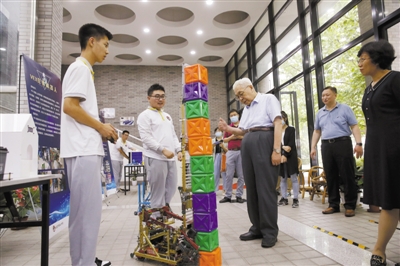
  Ouyang Ziyuan, an academician of China Academy of Sciences and the first chief scientist of China lunar exploration project, walked into Beijing No.2 Middle School Education Group to give a keynote speech to teachers and students, and observed students’ scientific and technological works. Xinhua News Agency (photo by Zhou Liang)

  Fill in the shortcomings of popular science and improve citizens’ scientific quality ②

  Encouragement is necessary, but it is more important to make researchers feel that it is beneficial to do it from the heart. At the same time, the scientific community will recognize the behavior of this profession and will not think that scientific researchers are "doing nothing" when doing popular science.

  Zhonghe Zhou

  Academician of China Academy of Sciences and researcher of vertebrate paleontology and Paleoanthropology Institute of Chinese Academy of Sciences.

  "We just want to open a video number and do two short videos about big health and food safety every week, but after talking to a professional shooting and production team, one will cost one or two thousand, and this funding has not yet been settled." After taking office last year, Shen Qi, director of the Institute of Agricultural Products Processing of Jiangsu Academy of Agricultural Sciences, first thought was to promote popular science knowledge of food health to the public.

  However, it is too difficult for this wish to land. "In addition to funding, the opening of WeChat official account has to be approved at different levels, and an interested scientific researcher has to be responsible for it." Shen Qi said that the recent statements of the central ministries and commissions calling for strengthening popular science work have given him hope. He said: "Maybe there will be funds to build WeChat official account next year."

  Scientific researchers are considered as "the first starter of scientific communication", and it should be one of their duties to do a good job in popular science. However, for a long time, the proportion of scientific researchers involved in popular science is not high, and the atmosphere of popularizing scientific knowledge to the public has not become popular in scientific research circles. What is the reason for this? Is it a lack of system or a lack of funds? Some researchers’ answers may provide a basis for relevant state departments to formulate policies.

  People who are most suitable for science popularization can’t let go of their hands and feet

  Yongchun Zheng, a researcher at the National Astronomical Observatory of the Chinese Academy of Sciences, is now the "online celebrity" in the field of popular science.

  "I didn’t take the initiative to enter this field, just like when I chose my major before. I didn’t take the initiative to choose, but I didn’t resist it when I had such an opportunity. I was willing to understand it, and I slowly entered through this process." In 2015, an accidental teaching experience brought Yongchun Zheng into contact with the writing of popular science articles, and he became a popular science expert step by step. "After publishing a book, he later registered a blog and had more opportunities to do more things, thus opening up a whole new world."

  Today, when China has become a strong voice of the times, there are few "online celebrity" scientists like Yongchun Zheng, and it is still controversial whether popular science is the responsibility of researchers.

  In recent years, a number of investigations and analyses on the participation of scientific researchers in popular science have drawn similar conclusions — — High recognition, strong will and weak mobility. Why can’t researchers who are most suitable for popular science let go?

  Researcher Wang Yongdong, director of the Science Communication Center of Nanjing Institute of Geology and Paleontology, Chinese Academy of Sciences, told the reporter that there are two main reasons why researchers are absent from popular science work: first, objectively speaking, popular science takes up the time and energy of researchers, but it doesn’t count in the assessment, such as awarding prizes, evaluating professional titles, and there is neither corresponding post setting nor corresponding incentive mechanism. After all, in scientific research units, everyone pays more attention to projects, papers, impact factors, talent hats, etc.

  Secondly, subjectively speaking, most researchers feel that science popularization work does not need too deep professional knowledge; At the same time, I am worried that science popularization needs to use the achievements of others, resulting in intellectual property disputes. I feel that it is better to concentrate on writing my own paper than to spend time doing unfamiliar science popularization work.

  The researchers interviewed agreed that in the current scientific research and talent evaluation system, most of the popular science contributions are nameless, unprofitable and thankless. Under the guidance of such a "baton", the collective cognition of attaching importance to scientific research and neglecting popular science has gradually formed.

  "On the cultural level, although there is only one word difference between scientific research and popular science, they are completely different. The scientific research culture is inward, and it pursues recognition in academic circles and professional circles. The culture of popular science is extroverted, and it pursues public recognition." Yongchun Zheng said.

  Scientific researchers can’t do "one size fits all" in doing popular science.

  Since the existing "baton" ignores popular science, will the enthusiasm of researchers be high if the contribution of popular science is increased in the scientific research evaluation system?

  The reporter learned that in recent years, the state has introduced relevant policies to encourage popular science. For example, "Several Opinions on Opening Scientific Research Institutions and Universities to the Society to Carry out Popular Science Activities" clearly puts forward the suggestion that the performance evaluation method of scientific communication should be regarded as an important basis for the evaluation of scientific researchers’ professional titles and post appointment. However, there are no substantive operating rules and hard rules, which leads to the failure to implement the policy.

  In the interview, the reporter also found that researchers have different opinions on the proposal of establishing a rigid system for popular science assessment.

  "I used to think that researchers should be encouraged to do popular science, or some institutionalized incentive mechanisms should be established, but now I feel more and more that we can’t generalize." Yongchun Zheng said that the main business of scientific researchers is scientific research. Doing popular science not only requires scientific research background, wide knowledge and willingness to share, but also takes a lot of time and energy to accumulate experience, which is not suitable for everyone.

  Zhou Zhonghe, an academician of the China Academy of Sciences and a researcher at the Institute of vertebrate paleontology and Paleoanthropology of the Chinese Academy of Sciences, once said at the 27th National Symposium on Science Popularization Theory that administration is a double-edged sword, and it is impossible to make a one-size-fits-all policy. For example, science popularization should be regarded as the assessment index for all scientific researchers.

  Shen Qi suggested that a research group, a laboratory and a research institute can be quantitatively assessed, forcing the heads of teams and units to pay attention to popular science work.

  Zhou Zhonghe said, encouragement is necessary, but it is more important to make researchers feel that it is beneficial to do it from the heart. At the same time, the scientific community will recognize the behavior of this profession and will not think that scientific researchers are "doing nothing" when doing popular science.

  Luo Jingjia, dean of the Frontier Research Institute of Climate and Application in Nanjing University of Information Science & Technology, has been working abroad for a long time. He told reporters that foreign scientists are very happy to share their scientific research progress and related scientific knowledge. "Isn’t writing papers a kind of popular science? It’s just a popular science for professionals. Since you can share it with insiders, why don’t you bother to spread science to the public? "

  Luo Jingjia said that different languages need to be translated, and different disciplines are interlaced like mountains. Scientists in other fields are also members of the public and need popular science. Once this kind of cognitive and popular science culture is formed, there is no need for a system to make it hard.

  The system of popular science should be established as soon as possible.

  Lack of funds for popular science is the most common voice heard by reporters in interviews. So, do scientific research units have special funds for popular science work?

  Among the 120 research institutes of Nanjing Institute of Geology and Paleontology, China Academy of Sciences, the scientific communication index is in the forefront. It is said that the institute should invest a lot in people and property to achieve such achievements. Wang Yongdong told reporters that the institute is very supportive of science communication, and the budget of the Science Communication Center alone this year has reached nearly 7.8 million yuan. Expenditure expenses include editing and publishing expenses of several professional magazines, purchasing expenses of library documents and materials, specimen maintenance expenses, operation expenses of Nanjing Paleontology Museum and personnel expenses. The annual income, including financial allocation, is very limited. After making ends meet, the institute will have to subsidize more than 3 million yuan, which is very stressful for a research institute that mainly carries out basic research.

  At the same time, the scientists in the institute are also very enthusiastic about popular science work. "On May 18 this year, we hired more than 20 researchers in the institute as the first batch of science communication experts." Wang Yongdong said that this group of science communication experts actively participated in the writing of the exhibition outline and exhibition board explanations, the design of booths and exhibits, video shooting, and popular science lectures and activities.

  Yongchun Zheng suggested that the state should establish a system of popular science as soon as possible, and subsidize popular science as it does scientific research, such as setting up a popular science fund, a popular science talent plan, and awards for popular science achievements. "Researchers can get project funding and national awards, and they can also be recognized by their peers, so they will naturally be willing to join them." Yongchun Zheng said.

  Wang Yongdong also believes that the state can set up science communication projects in the Natural Science Foundation, and science communication awards can also be set up among the three major science and technology awards.

  At the same time, respondents generally believe that popular science training and personnel training must be taken seriously. "After doing science popularization and science education, I found that this person is studying high-energy physics, and that person is studying applied mathematics and analytical chemistry. Does anyone study science? We need someone who can connect different disciplines and be compatible, and give these talents the overall scientific nourishment from the perspective of future talent training. " Yongchun Zheng said.

  Wang Yongdong suggested that the science communication course should be set up as a compulsory course in science and engineering majors in universities, so that students can master the expressive ability of difficult content and the essentials and methods of integrating media communication. Only when they take up their jobs in the future can the results be clearly described and disseminated, so that the whole society and the general public can understand, understand and use them.

Iranian foreign minister reveals US-Iranian leaders’ meeting: US side tends to lift sanctions.

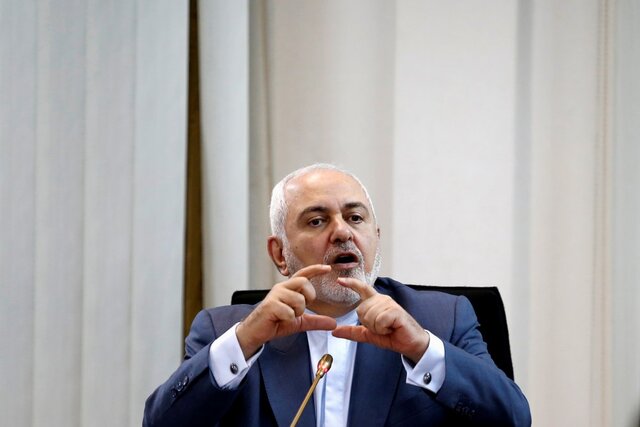
  Iranian Foreign Minister Zarif. (Source: Student News Agency)

  Overseas network September 29 th Iranian Foreign Minister Zarif said that during his visit to new york, he had a telephone conversation with some members of the US Congress, but unfortunately, he did not hold face-to-face talks with them due to the shortened trip.

  According to the semi-official Iranian Student News Agency (ISNA) on the 29th, Zarif told reporters when he was preparing to leave new york for Teheran that during his visit, he had talks with different groups in the United States, including some US congressmen. Zarif said that he was called by members of the US Congress. Due to the shortened itinerary, he could not coordinate these members to come to new york for face-to-face talks. He deeply regretted this. Zarif stressed that these US lawmakers have not made any demands on Iran, and Iran will not interfere in the US election. The Iranian side has held talks at the request of the other side and used these talks to show the true image of Iran.

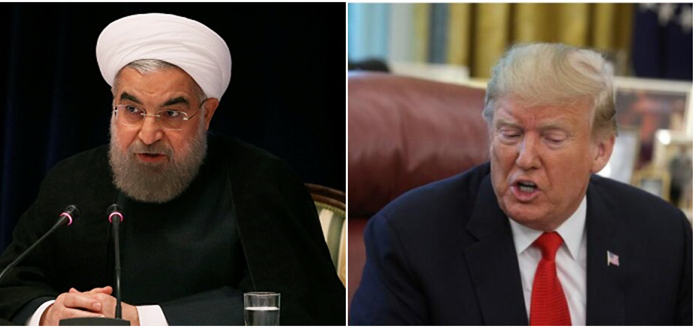
  Iranian President Rouhani and American President Trump. (overseas network puzzle)

  When talking about the reports about the meeting between Rouhani and Trump, Zarif said that Trump was only trying to hold talks with Rouhani during his stay in new york this week, and Trump was unwilling to accept the lifting of sanctions as a prerequisite for the talks, so the bilateral talks could not take place. Zarif pointed out that direct talks between Trump and Rouhani have never been put on the agenda, and Iran is only willing to participate in the talks within the framework of the Iranian nuclear deal. Zarif also said that Trump did not promise to lift the sanctions after the talks, but Trump preferred to hold the talks directly and it was possible to lift the sanctions after the talks.

  The Iranian side’s trip to the United States this time can be described as a thorn all the way. The 74th session of the United Nations General Assembly opened on September 17, 2019. Earlier, Iranian President Rouhani and Foreign Minister Zarif were delayed in obtaining American visas. Rouhani and Zarif "may cancel" their trip "if (the US) doesn’t issue visas within a few hours", Yitong News Agency reported on the 18th. On the same day, Trump said on the Iranian visa issue, "This matter does not depend on me." It was not until 19th that the Iranian delegation to the United Nations announced that the United States issued visas to the Iranian President and Foreign Minister, allowing them to attend the UN General Assembly in new york.

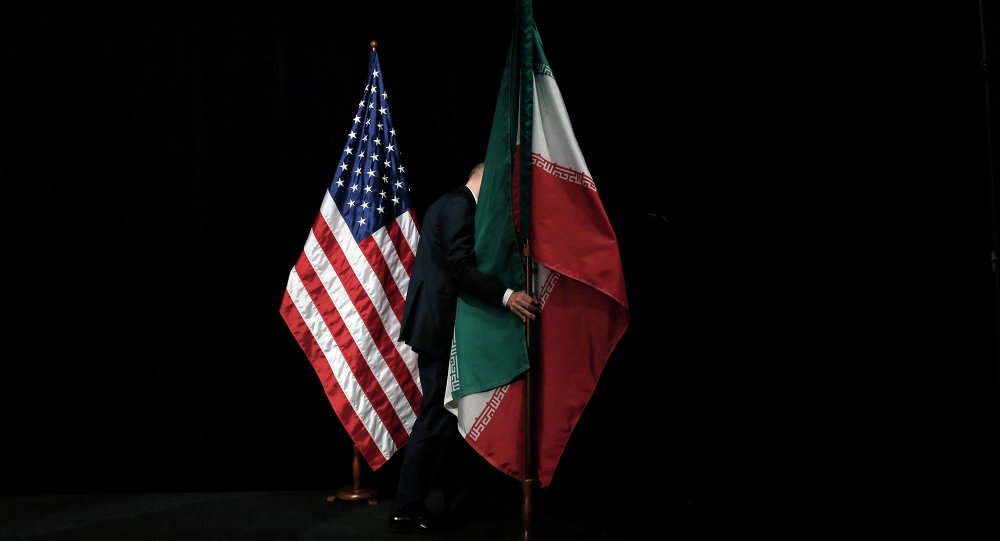
  Iran said earlier that only when the United States returns to the agreement can the two sides contact. (Photo: Associated Press)

  On the other hand, the repeated statements of the United States do not rule out the possibility of Trump meeting Rouhani during the UN General Assembly. On the 4th, after imposing additional sanctions on Iran, when asked about the possibility of meeting with Iranian leaders during the UN General Assembly, Trump said that "everything is possible". When he delivered a speech at the UN General Assembly on 24th, Trump also said that the possibility of direct dialogue with Iran was not ruled out, but the sanctions would not be lifted in advance.

  However, the premise of the Iraqi side is that the United States must lift the sanctions before there can be talks. Iranian Foreign Minister Zarif said on the 22 nd that the premise of holding talks is that Trump promised to ease sanctions against Iran. Iranian President Rouhani also said in his speech at the general debate of the United Nations General Assembly on 25th that Iran has never bowed to foreign forces and refused to negotiate with those who imposed "the harshest sanctions in history". (Compile/Overseas Network Hou Xingchuan)

Insist on "Two Establishments" and "Two Maintains" to gather wisdom and provide a strong political guarantee for building a fulcrum, walking in the forefront and writing a new chapter.

  Hubei Daily News (Reporter Wang Jing, arel) On December 30th, Ying Yong, secretary of the provincial party committee, presided over a forum to listen to the opinions and suggestions of grassroots party member cadres, heads of enterprises and universities and representatives of non-party people. Ying Yong stressed that it is necessary to conscientiously study and implement the spirit of the important speech delivered by the Supreme Leader General Secretary at the the Political Bureau of the Central Committee Special Democratic Life Conference, earnestly increase historical self-confidence, promote unity and unity, and enhance the spirit of struggle. Taking this democratic life conference as an important test of adhering to the "two establishments" and "two maintenances", we should further strengthen party leadership and party building, unite the wisdom and strength of the whole province, and provide for accelerating "building a fulcrum, walking in the forefront, and writing a new chapter"

  At the forum, Huang Keli, secretary of Gucheng County Committee of Xiangyang City; Peng Qiang, secretary of Shengli Town, Luotian County, Huanggang City; Dong Shouzhi, secretary of Xiqiao Community, Tangjiadun Street, Jianghan District, Wuhan City; Wu Jing, secretary and chairman of Hubei Cultural Tourism Group Co., Ltd.; Jiang Liping, chairman of the provincial committee of Taiwan League and president of the provincial Taiwan Federation; Zheng Jun, member of the Central Committee of the Chinese Revolutionary Committee and president of Hubei Second Normal College; and Zhu Mei, full-time vice chairman of the provincial committee of the NLD. Tong Jinnan, member of Chinese People’s Political Consultative Conference and director of the State Key Laboratory of Biogeology and Environmental Geology of China Geo University (Wuhan), put forward opinions and suggestions on accelerating the development of county economy, improving the ability of grassroots cadres, deepening party building to lead grassroots governance, promoting the reform of provincial state-owned enterprises, continuously optimizing the business environment, and strengthening the training and use of non-party cadres. You should listen and take notes, interrupt from time to time, and discuss and communicate with you.

  After listening carefully to the speech, Ying Yong said that everyone put forward good opinions and suggestions from various fields and aspects in combination with the actual work, which will help the provincial party Committee to grasp the facts, improve its work, better implement the decision-making arrangements of the CPC Central Committee, and help the Standing Committee of the provincial party Committee to hold a special democratic life meeting. We will listen carefully and fully absorb it, and take practical and effective measures to do a good job and promote implementation.

  Ying Yong pointed out that under the strong leadership of the CPC Central Committee with the Supreme Leader as the core and under the scientific guidance of the Supreme Leader’s Socialism with Chinese characteristics Thought in the new era, Hubei has made decisive achievements in epidemic prevention and control and post-epidemic revitalization. It is a vivid and concrete educational practice for Hubei to hand over the qualified answer sheet for the Great War Examination, which is to strengthen the "four consciousnesses", strengthen the "four self-confidences" and achieve the "two maintenance". It is necessary to profoundly understand the decisive significance and role of the "Two Establishments", and deeply understand that resolutely safeguarding the core of the CPC Central Committee and the core of the whole party is the key to the party’s consensus and decisive choice at major moments, and it is an important guarantee for the party’s unity and victory. Constantly improve political judgment, political understanding and political execution, and always maintain a high degree of consistency with the CPC Central Committee.

  Ying Yong stressed that it is necessary to thoroughly study and implement the spirit of the Sixth Plenary Session of the 19th CPC Central Committee and the Central Economic Work Conference, hold democratic life meetings with high quality and high standards, further strengthen the party’s political construction, guide the vast number of party member cadres in the province to learn wisdom and strength from the party’s century-long struggle history, vigorously carry forward the great spirit of party building, practice the initial mission, bravely move forward, do good deeds, do their best, effectively deal with the uncertainty of the external environment with the certainty of their own development, and continue to write about the high quality of Hubei’s economy and society.

  Dong Weimin, member of the Standing Committee of the Provincial Party Committee and Secretary General, attended the forum.

Experts’ Interpretation of the Fourth Meeting of the Central Financial and Economic Committee

  (CCTV Finance "Economic Information Network")Yesterday, the Central Financial and Economic Committee held its fourth meeting to study the issues of large-scale equipment renewal and trade-in of consumer goods, effectively reducing the logistics cost of the whole society. How to promote a new round of large-scale equipment renewal and trade-in of consumer goods? How to effectively reduce the logistics cost of the whole society?

  The meeting stressed that the implementation of large-scale equipment renewal and trade-in of consumer goods will effectively promote investment and consumption, which will benefit both the present and the long-term. It is necessary to lay a good combination of policies, promote the continuous increase in the proportion of advanced production capacity, and more high-quality durable consumer goods will enter residents’ lives.

  High-end intelligent green has become the focus of a new round of large-scale equipment update.

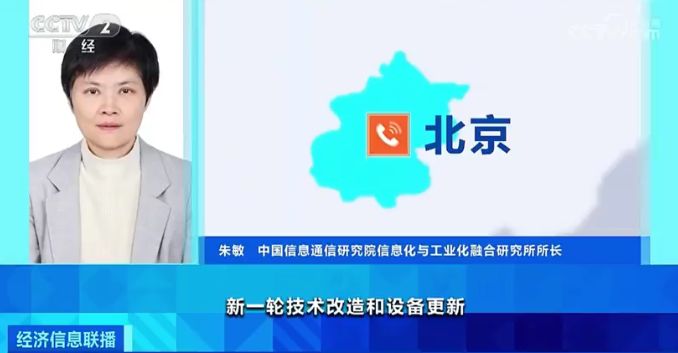
  Zhu Min, Director of the Institute of Informatization and Industrialization Integration of China Information and Communication Research Institute:A new round of technological transformation and equipment renewal will help accelerate the large-scale promotion of intelligent manufacturing. Intelligent equipment and products such as CNC machine tools and industrial robots will also usher in new development opportunities and broad growth space, which will help accelerate the transformation and upgrading of key industries. High-end, intelligence, green and safety are the focus of future technological transformation and equipment renewal.

  Trade-in of consumer goods will stimulate market investment to better meet consumer demand.

  The meeting also pointed out that it is necessary to promote the upgrading and technological transformation of all kinds of production equipment and service equipment, encourage traditional consumer goods such as automobiles and household appliances to be replaced with old ones, and promote the replacement of durable consumer goods with old ones. Promote large-scale recycling and strengthen the development of the "trade-in+recycling" logistics system and new model. 

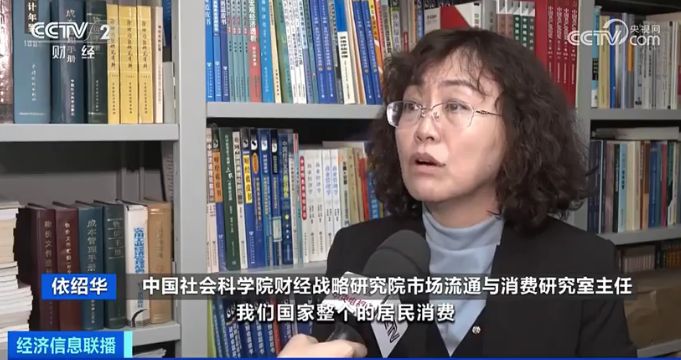
  Yi Shaohua, Director of Market Circulation and Consumption Research Office of national academy of economic strategy:The consumption of residents in our country is in the stage of upgrading the quality in the field of physical consumption, so the trade-in of consumer goods can not only stimulate market investment, but also better meet the potential consumption demand of residents.

  Reducing cost and increasing efficiency of logistics industry will promote the formation of a unified national market

  In addition, the meeting stressed that reducing the logistics cost of the whole society is an important measure to improve the efficiency of economic operation. Logistics is the "tendon" of the real economy, which connects production and consumption, domestic trade and foreign trade. It is necessary to effectively reduce the logistics cost of the whole society, enhance the core competitiveness of the industry and improve the efficiency of economic operation.

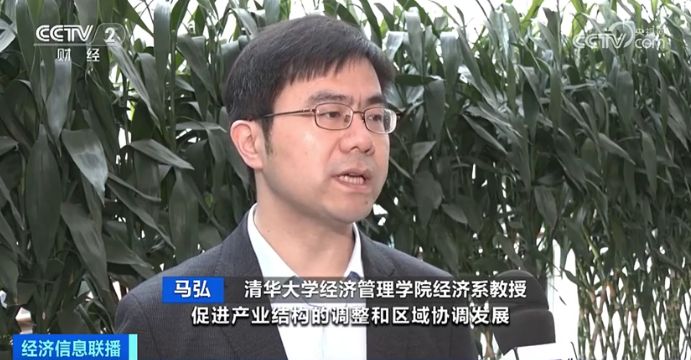
  Professor Ma Hong, Department of Economics, Tsinghua University Institute of Economics and Management:Reducing costs and increasing efficiency of the logistics industry is conducive to promoting the smooth flow of commodity factor resources in a wider range, promoting industrial structure adjustment and regional coordinated development. The upstream and downstream of the industrial chain can better optimize the layout according to regional endowments and institutional conditions, and promote agglomeration and economies of scale, as well as the formation of intelligence and digitalization; Promoting the integration of industries will also promote the formation of a unified national market and improve the overall operational efficiency of the national economy.

During his inspection tour in Hebei, Li Keqiang emphasized that the responsibility of ensuring food and energy security provides solid support for stabilizing the economic market and stabilizing price

Li Keqiang emphasized during his inspection in Hebei.
Carry the responsibility of ensuring food and energy security
Provide solid support for stabilizing the economic market and stabilizing prices

Xinhua News Agency, Shijiazhuang, June 21st-On June 21st, The Politburo Standing Committee (PSC) and Li Keqiang, Premier of the State Council of the People’s Republic of China, accompanied by Ni Yuefeng, secretary of Hebei Provincial Party Committee, and Wang Zhengpu, governor of Hebei Province, visited Gaobeidian and Zhuozhou. He stressed that under the guidance of Socialism with Chinese characteristics Thought of the Supreme Leader in the New Era, we should implement the deployment of the CPC Central Committee and the State Council, comprehensively implement the new development concept, effectively coordinate the prevention and control of epidemic situation and economic and social development, implement various policies to stabilize the economy, pay attention to solving problems with reform methods, seize the agricultural season to do a good job in harvesting summer sowing in summer, ensure the peak of energy supply, and provide solid support for stabilizing prices, protecting people’s livelihood and stabilizing the economic market.

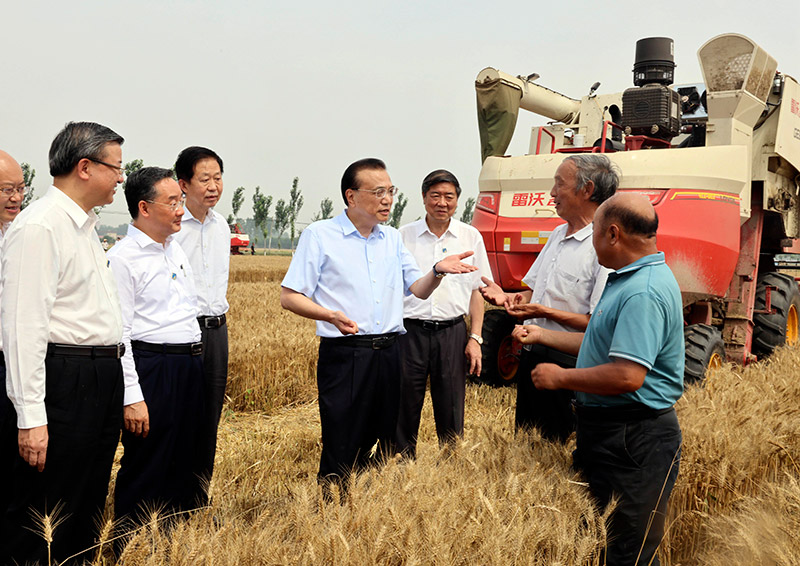
On June 21st, The Politburo Standing Committee (PSC) and Li Keqiang, Premier of the State Council of the People’s Republic of China visited Gaobeidian and Zhuozhou in Hebei. This is Li Keqiang talking with grain farmers in the wheat field of Fangguan Town, Gaobeidian. Xinhua News Agency reporter Liu Weibing photo

In the wheat field of Fangguan Town, Li Keqiang talked with grain farmers, harvesters from other provinces and grain merchants. Everyone reported that this year’s wheat harvest was good and the grain was full, and Li Keqiang was very happy. He said that it is now a "bumper harvest in the field", and it is necessary to pay close attention to harvesting the "bumper harvest in hand" and do a good job in storing and storing the "bumper harvest in storage". Wheat is one of the main rations in Chinese, and the place where we are standing now is basically the last harvest stop in the main wheat producing areas of Huang-Huai-Hai. Overall, the national wheat production this year is higher than last year, and the harvest is a foregone conclusion. This reassured people and laid the foundation for stable grain production throughout the year. China’s grain supply is abundant, which is very important for stabilizing prices. To keep the economy running in a reasonable range, two important indicators are stable employment and stable prices, and food and energy are the basic supports for stabilizing prices. In recent years, we have been implementing a prudent monetary policy, and there is no excess currency. At present, the main indicators of monetary policy are in the normal range. It is very important to prevent inflation and leave room for flexible implementation of monetary policy in response to new challenges. This year’s bumper wheat harvest has guaranteed China’s own demand and the stability of China’s grain market, and to a certain extent, it has also contributed to the stability of the global grain market. Seeing farmers sowing corn by machine, Li Keqiang carefully examined the soil moisture. He said that if summer is late for one day and autumn is late for ten days, it is necessary to implement the summer sowing area, so as to ensure a bumper harvest of autumn grain and add weight to the national food security.

Li Keqiang came to Dapu Village, inspected the dried wheat, sat around and talked with the villagers, and worked out the cost and income of growing grain together. Everyone reported that the price of agricultural materials has increased this year, but the state has increased subsidies many times, and the market food price has also increased. Calculated income is higher than in previous years. Li Keqiang said, food is the most important thing for the people, and food stabilizes the world. Your growing grain has increased your income and guaranteed more people three meals a day. Let’s work together to secure more than 1.4 billion jobs in Chinese.

On June 21st, The Politburo Standing Committee (PSC) and Li Keqiang, Premier of the State Council of the People’s Republic of China visited Gaobeidian and Zhuozhou in Hebei. This is Li Keqiang coming to Dapu Village, Gaobeidian, looking at the drying wheat, and sitting around talking with the villagers. Xinhua News Agency reporter Liu Weibing photo

Li Keqiang listened to the report on energy supply in Hebei Province. In Zhuozhou Jingyuan Thermal Power Company, he learned in detail about the number of generating hours, coal consumption level and the implementation of the bail-out policy, inspected the coal yard, and encouraged enterprises to make full efforts and generate more electricity. Li Keqiang said that development is the basis and key to solve all problems in China. Now is the key period to meet the peak summer. It is necessary to release the advanced coal production capacity and fully exploit it, implement the long-term coal supply, further strengthen the power supply, resolutely prevent power cuts, and ensure economic operation and basic people’s livelihood. It is necessary to increase the efficient and clean coal-fired power production capacity in an orderly manner through expansion and transformation, and accelerate the construction of pumped storage projects, which not only increases the power supply capacity, but also provides support for the development of new energy sources such as wind, light and electricity, and improves the consumption capacity. He emphasized that China is a contributor and beneficiary of world trade, and the stability of the international energy market is beneficial to all countries. Making good use of China’s coal-based energy resource endowment is not only conducive to enhancing its own energy security capacity, but also conducive to world energy prices and the stability of the international industrial chain supply chain.

Li Keqiang fully affirmed the achievements of Hebei’s economic and social development, and hoped that under the strong leadership of the CPC Central Committee with the Supreme Leader as the core, he would work hard and innovate, push economic development to a new level and continuously improve people’s livelihood and well-being.

Xiao Jie and He Lifeng accompanied the inspection.

ZL manuscript title map 2.jpg

China became the first country in China where the number of valid invention patents exceeded 4 million —— Intellectual property data mapped China’s economic vitality.

According to the data released by China National Intellectual Property Administration on January 16th, by the end of 2023, the number of effective invention patents in China (excluding Hong Kong, Macao and Taiwan) was 4.015 million, up by 22.4% year-on-year, and China became the first country in the world with the number of effective invention patents exceeding 4 million. According to relevant sources, through the data of intellectual property rights in 2023, we can see that the innovation activities of enterprises remain active, the innovation in the digital economy is strong, and new consumption growth points such as "trendy products" of domestic products are accelerating, and China’s economic vitality continues to generate.

High-value invention patents account for more than 40%

On January 16th, Hu Wenhui, deputy director of China National Intellectual Property Administration, introduced at the press conference held by the State Council Office that it took 31 years for the effective number of invention patents in China (excluding Hong Kong, Macao and Taiwan) to reach the first 1 million, and it only took one and a half years to break through the fourth 1 million. Among the more than 4 million valid invention patents, high-value invention patents account for more than 40%. China has become a veritable intellectual property power, and continues to make important contributions to global innovation and development.

From the perspective of enterprises, by the end of 2023, there were 427,000 enterprises with effective invention patents in China, an increase of 72,000 over the previous year. Domestic enterprises have 2.909 million valid invention patents, accounting for 71.2%, exceeding 70% for the first time, and the status of innovation subject is further highlighted.

In terms of fields, according to the statistics of 35 technical fields classified by the World Intellectual Property Organization, by the end of 2023, the top three technical fields of effective invention patents in China were information technology management methods, computer technology and basic communication programs, which increased by 59.4%, 39.3% and 30.8% respectively year-on-year, far higher than the domestic average growth level. "This shows that China has maintained a high degree of innovation in the field of digital technology and continued to empower and increase efficiency for the high-quality development of the digital economy. Hu Wenhui said.

From the regional perspective, by the end of 2023, the effective number of invention patents in Yangtze River Delta, Beijing-Tianjin-Hebei and Guangdong-Hong Kong-Macao Greater Bay Area were 1.308 million, 703,000 and 672,000 respectively, accounting for 65.6% of the domestic total, up 21.1%, 21.0% and 23.2% respectively, and the leading role of innovation in key areas was remarkable.

Hu Wenhui said that China National Intellectual Property Administration will continue to improve the quality and efficiency of examination, vigorously promote the transformation and application of patents, accelerate the realization of patent value, better stimulate the innovation vitality of the whole society and help high-quality economic and social development.

The annual output value of geographical indication products exceeds 800 billion yuan.

According to the data of China National Intellectual Property Administration, in 2023, 13 geographical indication products were approved, and 201 geographical indications were registered as collective trademarks and certification trademarks. 5,842 business entities approved to use special geographical indications.

Hu Wenhui introduced that by the end of 2023, China had approved a total of 2,508 geographical indication products, and 7,277 geographical indications were registered as collective trademarks and certification trademarks, with a total of 26,000 business entities specializing in geographical indications and an annual output value of geographical indication products exceeding 800 billion yuan.

With the continuous development in China, China’s geographical indication products have accelerated their entry into the international market and are favored by more overseas consumers. Wen Guo, Director of the Intellectual Property Protection Department of China National Intellectual Property Administration, said that this year is the third year since the signing of the Agreement on the Protection and Cooperation of Geographical Indications between China and Europe. Since the entry into force of the agreement, many products have been selected into the list of mutual recognition and mutual protection of geographical indications between China and Europe, and the mutual recognition and mutual protection products have won the reputation and affirmation of European consumers for their unique quality characteristics. For example, after Liuyang Fireworks was listed as a product of mutual recognition and mutual insurance, the export volume climbed year after year, reaching 7.06 billion yuan in 2023, accounting for 19% of its total output value, setting a new high.

"The international popularity of China’s geographical indication products is getting higher and higher." Wen Guo said that the number of enterprises that approved the use of special geographical indications has quadrupled to 73 since the wine at the eastern foot of Helan Mountain was selected into the mutual recognition and mutual insurance list. The wines of more than 60 wineries in the producing areas have won more than 1,100 awards in various international wine competitions, and their products are exported to more than 40 countries and regions.

Cultivate new consumption growth points such as domestic products "trendy products"

Hu Wenhui said that the development of "fashionable goods" of domestic products is inseparable from the all-round assistance of intellectual property rights, especially the need to make good use of the trademark system to strengthen brand protection and realize brand value. China National Intellectual Property Administration has thoroughly implemented the trademark brand strategy, vigorously promoted the trademark brand construction, and helped to cultivate new consumption growth points such as "fashionable goods" of domestic products.

-Strengthen policy support. Taking the construction of "a thousand enterprises with thousands of standards" and "a hundred cities with hundreds of products" and trademark brand guidance stations as the starting point, we encourage local and enterprises to strengthen trademark brand construction, support the innovation and upgrading of traditional brands, and actively cultivate emerging brands. Recently, the first batch of 1,105 enterprise trademark brands and 285 regional trademark brands were approved to participate in the trademark brand value promotion action of "Thousands of Enterprises and Hundred Cities", and China National Intellectual Property Administration will give guidance and support in enhancing the trademark brand ability and brand value.

-Improve the service level. Promote the construction of more than 3,900 trademark brand guidance stations nationwide, with an average annual service of more than 400,000 enterprises. We will continue to promote trademark pledge financing to benefit enterprises. In 2023, the national trademark pledge financing amount reached 176.91 billion yuan, up 63.5% year-on-year, which helped enterprises effectively alleviate the financial difficulties in the process of brand development.

-Strengthen brand protection. We will continue to push forward the revision process of the Trademark Law, strengthen the protection of legitimate prior rights of trademark brands and well-known trademarks, conscientiously guide foreign-related intellectual property disputes when domestic products go out to sea, resolutely crack down on all kinds of behaviors such as being next to famous brands, hitchhiking and rubbing hot spots, and boost the confidence of brand development and the sense of gaining business entities.

Hu Wenhui said that China National Intellectual Property Administration will continue to promote the brand value promotion of "Thousands of Enterprises and Hundreds of Cities" to help form more influential national brands and internationally renowned brands, create more "fashionable products" of domestic products and expand the scale of brand consumption. (Reporter Qiu Haifeng)

Beijing police: Three people were arrested for insulting or beating staff at the nucleic acid testing point.

  "Safe Beijing" WeChat WeChat official account reported on the 14th that nucleic acid detection is an effective means and key measure for epidemic prevention and control, and it is also a realistic need to ensure everyone’s normal life. Orderly on-site order can ensure the smooth development of testing work. Medical staff and epidemic prevention workers have been working tirelessly to fight the epidemic, and the general public has actively participated in cooperation and concerted efforts to fight the epidemic, making the prevention and control barrier more solid. However, in contrast to Qi Xin’s selfless dedication, there are still very few people who do not abide by the law and touch the red line and are dealt with by the public security organs according to law.

  At about 17 o’clock on May 10, 2022, the offender Wang Moumou (male, 42 years old) was drunk and did not line up in order at a nucleic acid testing point in Gaoliying Town, Shunyi District. When the staff dissuaded him, he insulted and beat the staff, disturbing the order at the scene. At present, this person has been administratively detained by Shunyi Public Security Bureau according to law.

  At about 15 o’clock on May 12, 2022, the offender Zhou Moumou (male, 49 years old) was waiting in line at a nucleic acid testing point in Huang Zhuang, Haidian District. He was dissatisfied with the staff reminding him to keep a safe distance and insulted the staff, causing adverse effects. At present, this person has been administratively detained by Haidian Public Security Bureau according to law.

  At 10 o’clock on May 13, 2022, the illegal actor Huang (male, 54 years old) did not follow the guidance route after receiving nucleic acid testing at a nucleic acid testing point in Huangcun Town, Daxing District, and stayed next to the epidemic prevention materials placement area. When the staff reminded him, the person did not listen to dissuasion and continued to insult the staff, which affected the development of nucleic acid testing. At present, this person has been administratively detained by Daxing Public Security Bureau according to law.

  Nucleic acid testing is not only a test of virus, but also a test of literacy and morality. If you don’t make trouble, you make a contribution. Only by obeying the rules can we win the "epidemic". Abiding by epidemic prevention regulations and fulfilling personal responsibilities is not only contributing to the overall situation of prevention and control, but also caring and respecting others for their dedication. The police will resolutely crack down on all illegal and criminal acts that "make things worse" for epidemic prevention and control, severely punish "black sheep" and never let everyone’s hard work go to waste.

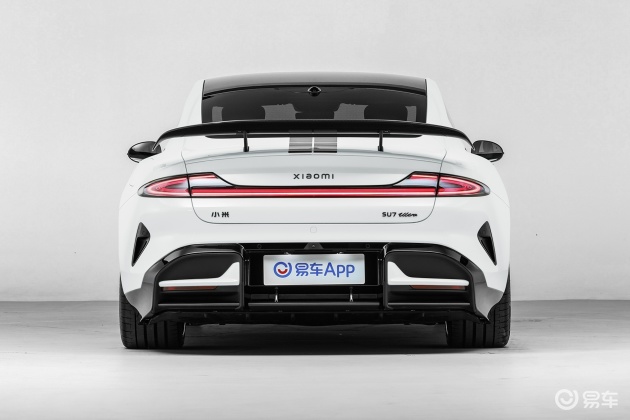
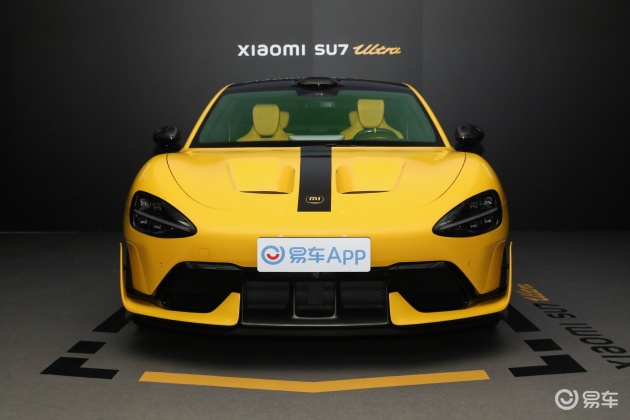
Analysis on the Absolute Value for Money of Xiaomi SU7 Ultra

Now people’s understanding of cars has already surpassed the stage of "four wheels and two rows of sofas", and people will consider many factors when buying a car. What I want to talk about today is a pure tram. Let’s look down with Xiaobian.

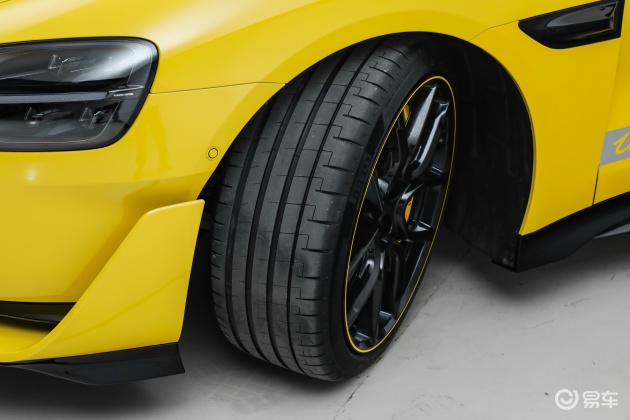
First of all, from the appearance, the front face of Xiaomi SU7 Ultra looks very individual and looks very capable. Coupled with the sturdy headlights, many interesting details can be seen from the inside. Coming to the side of the car body, the car uses simple lines, and the side of the car looks very fashionable and simple. With large-sized thick-walled tires, it looks full of movement. Looking back, the overall shape of the tail of Xiaomi SU7 Ultra echoes the front face. The taillights look very elegant and the overall layout is impressive.

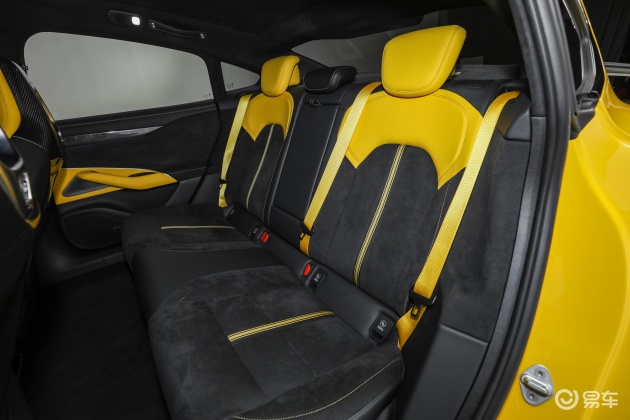
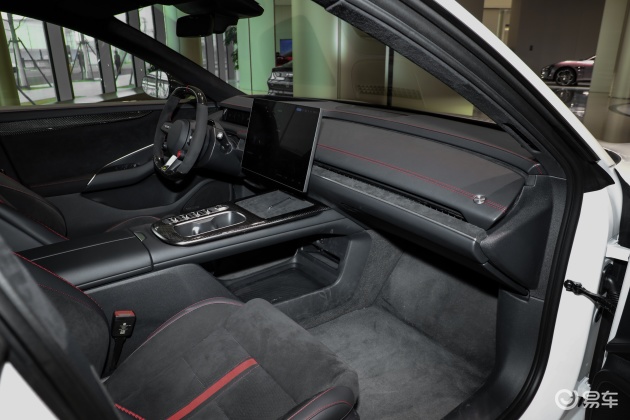
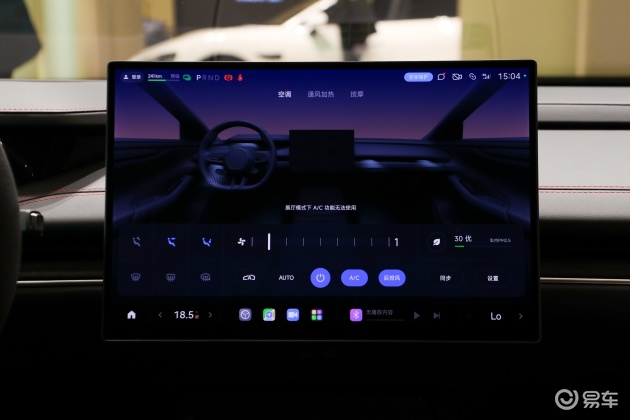
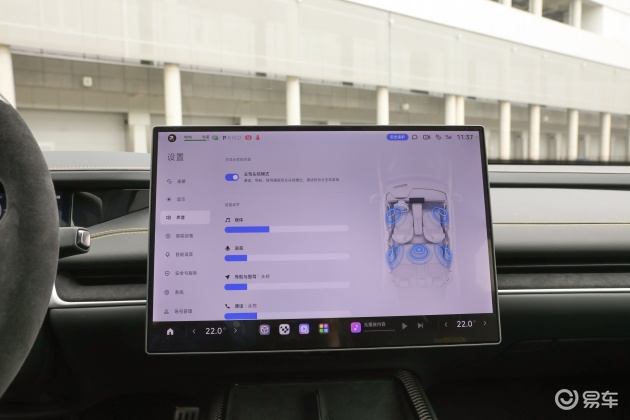
When I came into the car, the interior looked very soft and the overall visual effect was very distinctive. The car looks very good outside the steering wheel and has a sense of design. Take a look at the central control. The design of the center console is reasonable, which makes the interior style impressive and meets the aesthetic standards of most consumers. The interior feels good. Let’s take a look at the dashboard and seats. The car is equipped with an exquisite dashboard and has an elegant design. The seat is wrapped in place and is very comfortable to ride.

After reading this car, I believe you have a general understanding. I have already introduced this car almost. I believe many users who buy a car have taken a fancy to its comfort and practicality.

According to the new standard, what is the quality of drinking water in Jiaxing? Come and find out!

fromOn April 1, 2023, the Hygienic Standard for Drinking Water (GB 5749-2022) was officially implemented. Compared with the 2006 version of the standard, the new standard has adjusted the number of indicators, the classification of indicators, and the limit values of some indicators.

Compare with the new standard,What is the drinking water quality of Jiaxing at present? Come and find out!

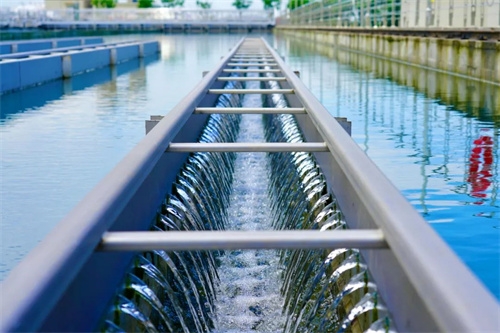
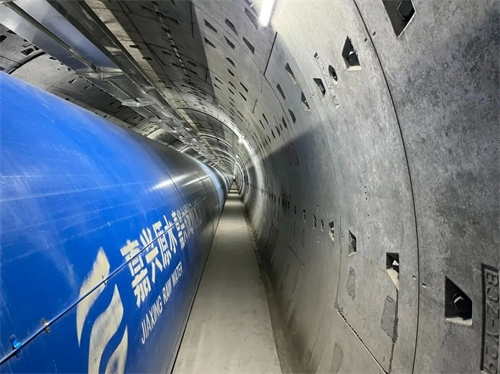
In recent years, Jiayuan Group is committed to building from the source to the leader.The "Best Water Supply City" fully escorts the drinking water safety and quality of Hecheng people through measures such as "Five Waters Governance", water ecological wetland protection, water diversion from outside the city (Qiandao Lake water source), upgrading of water-making technology of water plants and transformation of water supply pipe network.

According to the new standard, all the indexes of tap water quality in Jiaxing city meet the standard. For example, in the test results of water in pipe network, the permanganate index changed from the original1.5mg/L decreased to about 0.5mg/L now, the total hardness decreased from 181mg/L to 81mg/L, and the total soluble solids decreased from 276mg/L to 145mg/L, all of which are far superior to the latest national Hygienic Standard for Drinking Water (GB 5749-2022), and even better than the Standard for Drinking Water Quality, which regulates and guides direct drinking water. At present, the quality of drinking water in Jiaxing has changed from qualified water to high-quality water.

Ecological improvement, wetlands benefit the people.Since the "Five Waters Governance", Jiayuan Group has continuously improved the quality of water ecological environment. The main water sources of its two water plants, Shijiuyang Water Plant and Guanjinggang Water Plant, are Xincheng Pond and Haiyan Pond, which belong to the Beijing-Hangzhou Grand Canal system and are transit surface water, and there are many uncontrollable factors. Facing the current situation of "water shortage" of drinking water source, since the two wetlands were put into operation, the main pollution indexes in raw water have been purified by using wetland circulation system, and the indexes such as ammonia nitrogen and total phosphorus have been improved. Since 2017, the water quality of the water source has reached the Class III water standard, further improving the water supply safety.

Extraterritorial water diversion, the source of water for the people.In June 2021, the "Hundred Years and Hundred Projects" major livelihood project-the water distribution project in urban areas outside the city was officially put into use. After the project was put into operation, it and the local ecological wetland water source formed a "double water source" water supply security guarantee in Jiaxing City. At present, about 40% of the tap water provided to the public is high-quality water sources outside the city, which has improved the water quality at the source. After the operation of the water diversion project outside the territory, the water quality of the factory water and the pipe network water is obviously improved, and the sensory properties and general chemical indexes affecting the taste are obviously reduced, among which the permanganate index, sulfate, total dissolved solids and total organic carbon of the pipe network water are reduced by 35.9%, 35.3%, 33.7% and 25.1% respectively.

Process upgrading, water quality benefiting people.Contract in pipe network60% of the water comes from Shijiuyang and Guanjing Port, two major water sources at the city level. Before the Spring Festival this year, Shijiuyang and Guanjing Port operated the most advanced nanofiltration process in the world. At present, the local water source adopts the combined process of "biological pretreatment+strengthening routine+ozone-activated carbon advanced treatment+nanofiltration membrane treatment", which not only "quenches thirst" for the problem of "water shortage" in Jiaxing area, but also provides high-quality drinking water for the citizens at the city level. With the completion of the first phase of the upgrading project of nanofiltration membrane technology, combined with the high-quality water outside the city, the permanganate index, sulfate, total dissolved solids and total organic carbon in the water of the city-level tap water pipe network decreased by 66.7%, 76.1%, 47.5% and 63.0% respectively, which significantly optimized the sensory properties and organic comprehensive indicators affecting the taste, and improved the taste of drinking water.

In the past two years, the quality improvement project carried out in Jiaxing City has simultaneously transformed the tap water pipe network, replacing the old pipe network with high-quality pipes such as ductile iron pipes and stainless steel pipes. At present, Jiaxing City is about88% of the main pipes are made of high-quality pipes (especially in the central city), and the risk of secondary pollution in the water distribution network is effectively controlled.

2016 Shandong Science and Technology Award Suggested Awarding Candidates and Project Publicity

  Now, the recommended winners and projects approved by the evaluation committee of the 2016 Shandong Science and Technology Highest Award, Natural Science Award, Technological Invention Award, Science and Technology Progress Award and International Science and Technology Cooperation Award will be publicized to the public.
  The candidates and projects for publicity were also publicized on the websites of Shandong Provincial People’s Government (http://www.shandong.gov.cn), Shandong Provincial Department of Science and Technology (http://www.sdstc.gov.cn) and Science and Technology Information on December 6, 2016.
  According to the relevant regulations, if there is any objection to the proposed award candidates and projects publicized, it shall be submitted in writing within 30 days from the date of publicity to the office of Shandong Science and Technology Awards Committee (located in the Science and Technology Achievements Department of the Provincial Science and Technology Department, address: No.607 Shunhua Road, Jinan High-tech Zone, zip code: 250101).

  Shandong Province Science and Technology Highest Award (1 person)

  Hu Dunxin, male, academician of China Academy of Sciences and researcher of Institute of Oceanography of China Academy of Sciences. Three undercurrents, such as the Mindanao undercurrent (MUC) in the tropical western Pacific Ocean, were discovered, revealing the subsurface circulation opposite to the surface circulation. Breaking through the restricted area of submarine observation, successfully deploying/recovering the deepest submarine in the western boundary current area of the world ocean at the depth of 6100 meters in the western Pacific Ocean, and obtaining valuable scientific data for four consecutive years; The discovery of "East China Sea Cold Vortex" initiated the study of mesoscale vortex on the continental shelf in China; The scientific law of "where there is upwelling on the shelf, the seabed deposit must be soft mud" is discovered, and its mechanism is expounded dynamically. It reveals the non-wind-induced mechanism of upwelling along the coast of Zhejiang Province and corrects the traditional wind-induced mechanism. It is the first to study the continental shelf ocean flux (carbon cycle) in the world, and draws an important conclusion that "the East China Sea is a sink of atmospheric carbon dioxide".
  Organized and launched the international cooperation plan of "Northwest Pacific Ocean Circulation and Climate Experiment (NPOCE)", which was launched in 2010 and participated by 19 units from 8 countries; Invited to lead 17 scientists at home and abroad to publish review articles in Nature: Pacific Western Boundary Currents and Their Roles in Climate; Led the establishment of JGOFS and LOICZ committees in China, and initiated the research on ocean flux and land-sea interaction in China.
  He has presided over 1 major project of National Natural Fund, 4 key national funds, 2 major projects of Chinese Academy of Sciences and 4 973 projects. Won 2 national defense science and technology progress awards and 3 Chinese Academy of Sciences awards.
Shandong Natural Science Award
First prize (2 items)
  1. Basic research and sensing mechanism of paper chip microfluidic based on structural control and photoelectric properties.
  Completed by: Yu Jinghua (Jinan University)
  Ge Shenguang (Jinan University)
  Yan Mei (Jinan University)
  Huang Jiadong (Jinan University)
  2. Surface interface regulation of nano-carbon materials and its physical property enhancement mechanism.
  Completed by: Xue Qingzhong (China Shiyou University (East China))
  Xing Wei (China Shiyou University (East China))
  Shu Shuping (Shandong University of Technology)
  Zheng Qingbin (China Shiyou University (East China))
  Yan Zifeng (China Shiyou University (East China))
Second prize (7 items)
  1. Analysis and regulation of polymer multilayer structure
  Completed by: Zhang Jianming (Qingdao University of Science and Technology)
  Duan Yongxin (Qingdao University of Science and Technology)
  Yan Shouke (beijing university of chemical technology)
  Yuan Yuan (Qingdao University of Science and Technology)
  Zhang Tongping (Qingdao University of Science and Technology)
  2. Rapid identification, accurate identification and biological activity study of halogenated compounds in marine red algae.
  Completed by: Wang Bingui (Institute of Oceanography, China Academy of Sciences)
  Ji Naiyun (Yantai Institute of Coastal Zone, Chinese Academy of Sciences)
  Li Ke (Institute of Oceanography, China Academy of Sciences)
  Li Xiaoming (Institute of Oceanography, China Academy of Sciences)
  Duan Xiaojuan (Institute of Oceanography, China Academy of Sciences)
  3. Study on analytical methods of typical pollutants in complex environmental media.
  Completed by: Chen Lingxin (Yantai Institute of Coastal Zone, Chinese Academy of Sciences)
  Li Jinhua (Yantai Institute of Coastal Zone, Chinese Academy of Sciences)
  Wang Yunqing (Yantai Institute of Coastal Zone, Chinese Academy of Sciences)
  Chen Zhaopeng (Yantai Institute of Coastal Zone, Chinese Academy of Sciences)
  4. Study on ultra-sensitive Qualcomm single molecule detection of disease-related biomarkers.
  Completed by: Zhang Chunyang (Shandong Normal University, Shenzhen Institute of Advanced Technology, Chinese Academy of Sciences)
  Wang Lijuan (Shandong Normal University, Shenzhen Institute of Advanced Technology, Chinese Academy of Sciences)
  Hu Juan (Shandong Normal University, Shenzhen Institute of Advanced Technology, Chinese Academy of Sciences)
  Zhangyan (Shandong Normal University, Shenzhen Institute of Advanced Technology, Chinese Academy of Sciences)
  5. Molecular mechanism of brain iron redistribution in Parkinson’s disease and intervention strategy of dopaminergic neuron injury.
  Completed by: Xie Junxia (Qingdao University)
  Jiang Hong (Qingdao University)
  Shi Limin (Qingdao University)
  Wang Jun (Qingdao University)
  Ma Zegang (Qingdao University)
  6. Stabilization control of nonlinear systems
  Completed by: Zhang Xianfu (Shandong University)
  Ma Shuping (Shandong University)
  Zhu Shuqian (Shandong University)
  7. Molecular mechanism of oyster genome analysis and intertidal adaptation.
  Completed by: Zhang Guofan (Institute of Oceanography, China Academy of Sciences)
  Li Li (Institute of Oceanography, China Academy of Sciences)
  Xu Fei (Institute of Oceanography, China Academy of Sciences)
  Zhang Linlin (Institute of Oceanography, China Academy of Sciences)
  Guo Ximing (Institute of Oceanography, China Academy of Sciences)
Third prize (2 items)
  1. Research on the theory and application of several kinds of differential equation problems.
  Completed by: Xinguang Zhang (Yantai University)
  Liu Lishan (Qufu Normal University)
  Zhang Xiaoyan (Shandong University)
  Jiang Jiqiang (Qufu Normal University)
  2. Nano-materials assembly and analysis of pollutant detection and treatment mechanism.
  Completed by: Ai Shiyun (Shandong Agricultural University)
  Yin Huanshun (Shandong Agricultural University)
  Fan Hai (Shandong Agricultural University)
  Zhu Lusheng (Shandong Agricultural University)
  Su Xiurong (Shandong Agricultural University)
Shandong Technological Invention Award
First prize (5 items)
  1. The establishment of molecular breeding technology and the cultivation of new varieties of scallop.
  Completed by: Bao Zhenmin (China Ocean University)
  Julian Waghann (China Ocean University)
  Hu Xiaoli (China Ocean University)
  Li Hengde (Chinese Academy of Fishery Sciences)
  Liu Guangmou (Weihai Changqing Ocean Technology Co., Ltd.)
  Wang Youting (Yantai Haiyi Miaoye Co., Ltd.)
  2. Development and application of ultrasonic logging tool.
  Completed by: Cao Maoyong (Shandong University of Science and Technology)
  Fandi (Shandong University of Science and Technology)
  Liang Huibin (Shandong University of Science and Technology)
  Wang Yi (Shandong University of Science and Technology)
  Jiang Hao (Shandong University of Science and Technology)
  Sun Nongliang (Shandong University of Science and Technology)
  3. R&D and industrial application of key technologies for trehalose production
  Completed by: Wang Ruiming (Qilu University of Technology)
  Wang Tengfei (Qilu University of Technology)
  Liu Zongli (Baolingbao Biology Co., Ltd.)
  Zhaowei (Shandong Fuyang Biology Science and Technology Co., Ltd.)
  Li Piwu (Qilu University of Technology)
  Ma Chunling (Qilu University of Technology)
  4. Complete sets of technologies and equipment for industrialization of seaweed fiber preparation
  Completed by: Xia Yanzhi (Qingdao University)
  Zhu Ping (Qingdao University)
  Zhang Chuanjie (wuhan textile University)
  Quanfengyu (Qingdao University)
  Wang Bingbing (Qingdao University)
  Sui Shuying (Qingdao University)
  5. Creation and application of nano-seed alloy series products and heat-resistant high-strength light metal materials.
  Completed by: Liu Xiangfa (Shandong University)
  Wu Yuying (Shandong University)
  Nie Jinfeng (Shandong University)
  Bianxiufang (Shandong University)
  Sun Qianqian (Shandong Lvmei Melting Body Technology Co., Ltd.)
  Yao Tao (Rizhao Jingang Piston Co., Ltd.)
Second prize (7 items)
  1. Key technologies of data center operating system for cloud computing.
  Completed by: Zhang Dong (Inspur Electronic Information Industry Co., Ltd.)
  Liu Zhengwei (Inspur Electronic Information Industry Co., Ltd.)
  Yan Bingheng (Inspur Electronic Information Industry Co., Ltd.)
  Qi Kaiyuan (Inspur Electronic Information Industry Co., Ltd.)
  Samuel Kwok (Inspur Electronic Information Industry Co., Ltd.)
  Liu Junpeng (Inspur Electronic Information Industry Co., Ltd.)
  2. The supporting theory and key technology of gob-side entry without coal pillar.
  Completed by: Tan Yunliang (Shandong University of Science and Technology)
  Zhao Tongbin (Shandong University of Science and Technology)
  Liu Student (Shandong University of Science and Technology)
  Yu Fenghai (Shandong University of Science and Technology)
  Ning Jianguo (Shandong University of Science and Technology)
  Gu Shitan (Shandong University of Science and Technology)
  3. Energy-saving rubber continuous mixing technology
  Completed by: Wang Chuansheng (Qingdao University of Science and Technology)
  Bian Huiguang (Qingdao University of Science and Technology)
  Li Li (Qingdao University of Science and Technology)
  Fu Ping (Qingdao University of Science and Technology)
  Shen Bo (Qingdao University of Science and Technology)
  Wang Xiaobo (Qingdao University of Science and Technology)
  4. Photovoltaic crystalline silicon material tailings metallurgical regeneration manufacturing technology and industrialization
  Completed by: Tan Yi (Dagong (Qingdao) New Energy Materials Technology Research Institute Co., Ltd.)
  Jiang Dachuan (Dagong (Qingdao) New Energy Material Technology Research Institute Co., Ltd.)
  Li Pengting (Dalian University of Technology)
  Guo Xiaoliang (Dagong (Qingdao) New Energy Material Technology Research Institute Co., Ltd.)
  Shi Shuang (Dalian University of Technology)
  Hu Zhigang (Qingdao Longsheng Jinggui Technology Co., Ltd.)
  5. Key technology, equipment and application of nano-particle aerosol jet micro-lubrication grinding
  Completed by: Li Changhe (Qingdao University of Technology)
  Zhang Naiqing (Shanghai Jinzhao Energy Saving Technology Co., Ltd.)
  Hou Yali (Qingdao University of Technology)
  Zhang Yanbin (Qingdao University of Technology)
  Mao Cong (Changsha University of Science and Technology)
  Wu Qidong (Shanghai Jinzhao Energy Saving Technology Co., Ltd.)
  6. Sewage and surface water heat pump heating and cooling based on dredging heat exchange.
  Completed by: Wu Ronghua (Qingdao Kechuanglan New Energy Co., Ltd.)
  Chi Fang (Qingdao Kechuanglan New Energy Co., Ltd.)
  Wang Gang (Qingdao Kechuanglan New Energy Co., Ltd.)
  Sun Dexing (Qingdao Kechuanglan New Energy Co., Ltd.)
  Yang Qirong (Qingdao University)
  Xu Long (Qingdao Kechuanglan New Energy Co., Ltd.)
  7. Key technologies and applications of early detection of cardiovascular diseases.
  Completed by: Liu Changchun (Shandong University)
  Wang Xinpei (Shandong University)
  Liu Chengyu (Shandong University)
  Li Peng (Shandong University)
  Yang Lei (Ji ‘nan Hui Yi Rong Gong Technology Co., Ltd.)
  Zhang Ming (Ji ‘nan Huiyi Ronggong Technology Co., Ltd.)
Shandong province science and technology progress award
First prize (17 items)
  1. Cultivation, processing and utilization of new sweet potato varieties for Jishu series.
  Completed by: Crop Research Institute of Shandong Academy of Agricultural Sciences
  Sishui lifeng foods co., ltd
  Jiangsu normal university
  Completed by: Zhang Liming, Wang Qingmei, Zheng Yuanlin, Zhang Haiyan, Hou Fuyun, Li Aixian, Kong Xiankui, Xie Beitao, Wang Baoqing, Dong Shunxu, Song Huadong and Duan Wenxue.
  2. Creation and application of double-balanced slow-release fertilizer for million-ton crops.
  Completed by: Jin Zhengda Ecological Engineering Group Co., Ltd.
  Shandong Agricultural University
  shandong agricultural resource and environmental science research institute
  National Agricultural Technology Extension Service Center
  Completed by: Zhang Min, Chen Hongkun, Yang Li, john young, Zhang Qiang, Zhang Yufeng, Wang Huaili, Chen Haining, Wan Lianbu, Chen Deqing, Liu Zhiguang and Wang Min.
  3. Agricultural multi-source information integration and accurate service technology
  Completed by: Institute of Science and Technology Information, Shandong Academy of Agricultural Sciences
  China Agricultural University
  Beijing Agricultural Information Technology Research Center
  Completed by: Li Daoliang, Ruan Huaijun, Wu Huarui, Fu Zetian, Feng Wenjie, Li Jingling, Chloe Wang, Liu Yanzhong, Zhao Jia, Sun Xiang, Wang Fengyun and Chen Yingyi.
  4. Application support platform for modern service industry
  Completed by Shandong Zhongchuang Software Engineering Co., Ltd.
  Peking University
  Beihang University
  national university of defense technology
  institute of software chinese academy of sciences
  Shandong zhongchuang software commercial middleware co., ltd
  Completed by: Jing Xinhai, Shi Dianxi, Cao Donggang, Wang Wei, Zhao Yongwang, Ding Bo, Gao Longlin, feng han, Liu Min, He Zhongsheng, Wang Huan, Bao Dong.
  5. Development and application of broadband electromagnetic signal receiving, analysis and identification technology and equipment
  Completed by: Shandong University
  China electronics technology group company no.41 institute
  Completed by: Xu Jianhua, Wang Hongjun, Xiang Changbo, Han Min, Wang Feng, Du Huiwen, Sun Weifeng, Juck Zhang, Xiong Hailiang, Du Yitao, Zhang Zhi and Zhao Yongzhi.
  6. New NMR logging technology and industrial application of tight clastic reservoir.
  Completed by: China Shiyou University (East China)
  Exploration and Development Research Institute of China Petroleum and Natural Gas Co., Ltd.
  Suzhou Niumai Analytical Instrument Co., Ltd.
  Completed by: Fan Yiren, Zhou Cancan, Ge Xinmin, Hu Falong, Li Chaoliu, Deng Shaogui, Yang Peiqiang, Wu Fei, Li Changxi, Zhang Yingli, Xing Donghui, Fan Zhuoying.
  7. Comprehensive utilization of engineering technology by chemical decomposition of industrial by-product gypsum
  Completed by: Shandong Lubei Enterprise Group Corporation
  Completed by: Lv Tianbao, Zhai Hongxuan, Yuan Jinliang, Wang Shucai, Bao Shutao, Wu Jianmin, Feng Xiangyi, Wang Detang, Gao Qiang, Wang Tongyong.
  8. Development and industrialization demonstration of green synthesis technology of fine chemicals
  Completed by: Shandong Institute of Chemical Technology
  institute of chemistry chinese academy of sciences
  Completed by: Feng Weichun, Yue Tao, Xing Wenguo, Chen Qi, Liu Li, Wang Hao, Zhou Ti, Yang Xu, Zhang Jian and Wei Feng.
  9. Shot peening technology and equipment for metal surface
  Completed by Shandong Kaitai Group Co., Ltd.
  Jinan university
  Shandong University
  Completed by: Wang Shouren, Wang Ruiguo, Liu Ruwei, Li Cong, Yang Xuefeng, Wang Yanjun, Zhai Yongzhen, Zhang Xiao, Wang Yongjie and Zhang Laibin.
  10. Key technologies for prediction, early warning and risk control of major water inrush disasters in deep and long tunnels.
  Completed by: Shandong University
  Hohai University
  Highway Science Research Institute of Ministry of Transport
  institute of mechanics, chinese academy of sciences
  Shandong province traffic planning and design institute
  China Railway 19th Bureau Group Co., Ltd.
  Anhui Wan Tai Geophysical Technology Co., Ltd.
  Completed by: Li Liping, Yang Weimin, Du Xiaotong, Zhang Ganqing, Chen Xuguang, Shi Shaoshuai, Wan Li, Lu Wei, Bao Zuojun, Feng Chun, Liu Guoqiang and Liu Qiang.
  11. Complete sets of new technologies for building safety detection, appraisal and reinforcement.
  Completed by: Shandong Institute of Building Science.
  China construction science research institute
  qingdao technological university
  Weifang changda construction group co., ltd
  Ji ‘nan Sijian (Group) Co., Ltd.
  Shandong huasen concrete co., ltd
  Completed by: Cui Shiqi, Cheng Bo, Shang Huaishuai, Di Xiaotan, Kong Xuwen, Cui Hongtao, Xie Huidong, Jiang Liping, Xing Qingyi, Zhang Lianyue, Mei Zuoyun and Wang Zifu.
  12. Key technologies of automobile advanced power and on-board energy system and their application in new energy vehicles.
  Completed by: Institute of Automation, Shandong Academy of Sciences
  Tsinghua University
  Zhongtong bus holding co., ltd
  Completed by: Wang Qinpu, Li Liang, Wang Zhixue, Li Lei, Liu Yuanyang, Jerry Lee, Yang Chao, Zhang Yun, Wang Bo, He Dongmei, Song Jinxiang and Wang Li.
  13. Key technologies and clinical application to improve the long-term curative effect of osteosarcoma.
  Completed by: jinan military area command General Hospital of Chinese People’s Liberation Army.
  Completed by: Yu Xiuchun, Xu Ming, Arqie, Bing Wang, Yu Chen, Chang Zhengqi, Song Ruoxian and Xu Songfeng.
  14. The key technology and system construction of prevention and treatment of juvenile low vision with integrated traditional Chinese and western medicine.
  Setting: Institute of Ophthalmology, Shandong University of Traditional Chinese Medicine
  The Second Affiliated Hospital of Shandong University of Traditional Chinese Medicine
  Jiangsu Provincial Hospital of Traditional Chinese Medicine
  Affiliated Hospital of Shandong University of Traditional Chinese Medicine
  Completed by: Bi Hongsheng, Wu Jianfeng, Xie Xiaofeng, Jiang Wenjun, Hu Yuanyuan, Bi Ailing, Wang Xingrong, Chen Rong, Wang Yuliang, Wang Jingbo, Guo Junguo and Guo Dadong.
  15. Construction and application of new preparation system of montelukast sodium and its preparation based on key technologies of industrialization.
  Completed by: Lunanbeite Pharmaceutical Co., Ltd.
  Lunan pharmaceutical group co., ltd
  Shandong new age drug co., ltd
  Completed by: Zhang Guimin, Feng Qiguo, Jiang Qingcheng, Zhang Zicheng, Shi Jianghua, Zhu Yaoliang, Xu Chuanjin, Cui Jian, Feng Xiaoliang, Ma Qingwen, Wang Haixin and Wang Zengxue.
  16. Key technologies for separation and preparation of natural products and development of national standard samples.
  Completed by: Shandong Analysis and Testing Center
  Beijing Physical and Chemical Analysis and Testing Center
  China National Institute of Standardization
  Quantum Hi-Tech (China) Biology Co., Ltd.
  Completed by: Wang Xiao, Duan Wenjuan, Liu Feng, Zhang Jinghua, Wang Daijie, Xi Xingjun, Geng Yanling, Yu Jinqian, Liu Jianhua, Ji Wenhua, Shi Xingang, Wei Yuanan.
  17 intelligent dyeing and finishing technology and equipment technology innovation platform
  Completed by: Shandong Kangpingna Group Co., Ltd.
Second prize (58 items)
  1. Breeding, demonstration and popularization of drought-resistant and salt-tolerant wheat varieties Qingmai 6 and Qingmai 7.
  Completed by: Qingdao Agricultural University
  Completed by: Lin Qi, Mu Ping, Zhang Yumei, Lan Jinhao, Shi Changhai, Zhang Hongsheng, Liu Yiguo, Wang Jianlin, Han Wei.
  2. Creation of excellent peanut mutants and cultivation of new varieties.
  Completed by: Biotechnology Research Center of Shandong Academy of Agricultural Sciences.
  Shandong Weifang Academy of Agricultural Sciences
  Shandong shengfeng seed industry technology co., ltd
  Completed by: Wang Xingjun, Fu Chun, Xia Han, Lu Chengkai, Hou Lei, Zhao Chuanzhi, Zhao Shuzhen, Gao Xiaoyong, Jiang Yansheng.
  3. Creation of stress-resistant pepper rootstock male sterile line, breeding and application of new varieties.
  Completed by: Shandong Agricultural University
  Chinese Academy of Agricultural Sciences Institute of Vegetables and Flowers
  Shandong Agricultural Engineering College
  Beijing agricultural college
  Completed by: Ai Zhenzhen, Wei Youying, Zheng Huamei, Wang Shaohui, He Chaoxing, Duan Xi, Wang Hongtao, Jiang Fei, Li Qingming.
  4. Breeding and efficient cultivation techniques of high-quality watermelon and melon series new varieties in protected facilities
  Completed by: Vegetable and Flower Research Institute of Shandong Academy of Agricultural Sciences.
  Shandong Shouguang Sanmu Seedling Co., Ltd.
  Shandong shangdao biology science and technology co., ltd
  Weifang chuangke seedling co., ltd
  Shenxian county jiefeng vegetables technology service co., ltd
  Completed by: Jiao Zigao, Liu Shusen, Wang Chongqi, Dong Yumei, Sun Lihua, Xiao Shouhua, Li Wendong, Wei Jiapeng and Sun Jianlei.
  5. Integration and demonstration of key technologies for industrialization of new humic acid slow-release fertilizer
  Completed by: Shandong Agricultural University Fertilizer Technology Co., Ltd.
  Completed by: Ma Xuewen, Ding Fangjun, Wu Qinquan, Chen Shigeng, Ge Yuming, Meng Qingyu, Chen Weimin, Gu Duanyin and Chen Dayin.
  6. Key technologies and applications of recycling waste from breeding industry in Huanghuaihai region.
  Completed by: Institute of Agricultural Resources and Environment, Shandong Academy of Agricultural Sciences
  Shandong Agricultural University
  Shandong province agriculture sustainable development institute
  Hebei academy of agriculture and forestry Institute of Genetic Physiology
  Hebei academy of agriculture and forestry Institute of Agricultural Resources and Environment
  Shijiazhuang goldsun biology organic fertilizer co., ltd
  Shandong gufengyuan biotechnology group co., ltd
  Completed by: Guo Honghai, Ning Tangyuan, Han Jiandong, Wang Zhanwu, Li Xinhua, Wang Liying, Sui Xueyan, Dong Xiaoxia, Tian Shensi.
  7. Key technologies and industrialization of preparation of antioxidant and anti-inflammatory active substances in fruits and vegetables.
  Completed by: Institute of Agricultural Products, Shandong Academy of Agricultural Sciences
  Qufu normal university
  Dongying Guangyuan Biotechnology Co., Ltd.
  Shandong yuhuang grain and edible oil foods co., ltd
  Completed by: Cheng Anwei, Wang Wenliang, Sun Jinyue, Li Guoliang, Liu Lina, Liu Chao, Gong Zhiqing, Dai Hualei, Fan Wenjing.
  8. Nutritional needs of meat geese and efficient utilization technology of feed
  Completed by: Qingdao Agricultural University
  Shandong province animal epidemic disease prevention Yu control center
  Qingdao puxing biology science and technology co., ltd
  Shandong zhongke Jiayi biology engineering co., ltd
  Shandong jiurui agriculture group co., ltd
  Shandong tianpu sunshine group co., ltd
  Completed by: Wang Baowei, Li Wenli, Ge Wenhua, Zhang Mingai, Yue Bin, Lian Ailing, Lu Guangzhou, Pan Yulin, Sun Zuowei.
  9. Key technologies of high-quality forage and efficient production and application of precision livestock raising.
  Completed by: Shandong Provincial Animal Husbandry Station
  Shandong Academy of Agricultural Sciences Institute of Agricultural Quality Standards and Detection Technology
  shandong agricultural resource and environmental science research institute
  Shandong Agricultural University
  Shandong Shuang Jia Nong Zhuang technology co., ltd
  Laoling Guoyu agriculture machinery equipment co., ltd
  Completed by: Zhai Guiyu, Jiang Huixin, Wang Yanqin, Zhang Guiguo, liu junhua, Shen Yixin, Liu Dong, Zhang Junqiang and Wang Mingtang.
  10. Physiological and ecological response mechanism and supporting cultivation techniques of cold resistance of tea trees.
  Completed by: Qingdao Agricultural University
  Shandong province guocha technology popularizing station
  Completed by: Ding Zhaotang, Wang Yu, Yusheng Li, Zhang Yunwei, Sun Haiwei, Ding Deen, Ma Dexin, Wang Yi, Bi Caihong.
  11. Obstacle mechanism of poplar plantation continuous cropping and key technologies for long-term productivity maintenance
  Completed by: Shandong Agricultural University
  Shandong province forestry science study institute
  Taian Taishan forestry science study institute
  Ningyang County, Shandong Province State-owned Gao Qiao Forest Farm
  Shandong changnong agriculture technology co., ltd
  Completed by: Wang Huatian, Wang Yanping, Dong Yufeng, Jiang Yuezhong, Kong Linggang, Liu Fude, Zhang Guangcan, Wang Zongqin and Huang Qilun.
  12. Development and industrialization of high quality, efficient and environment-friendly flounder compound feed.
  Completed by: Qingdao Qihao Biotechnology Co., Ltd.
  Chinese Marine University
  Qingdao agricultural university
  Completed by: Chen Jinghua, Zhang Wenbing, Xu Wei, Xiao Lindong and Lu Wei.
  13 aquatic collagen and collagen peptide research, technology development and industrialization
  Completed by: China Ocean University
  Shandong dongfang ocean technology co., ltd
  Completed by: Li Bafang, Hou Hu, Zhao Xue, Liu Yuntao, Lin Lin, Zhuang Yongliang, Yan Mingyan, Liu Zunying and Xue Yong.
  14. Key technologies of water resources regulation of groundwater system and water search in poor water areas
  Completed by: Shandong Institute of Geology and Mineral Engineering.
  Jinan university
  China University of Geosciences,Wuhan
  Shandong province lunan geology engineering survey institute
  Shandong University of Science and Technology
  Completed by: Kang Fengxin, Zhang Zhongxiang, Xu Junxiang, Xing Liting, Bu Hua, Cheng Xiuming, Peng Hao, Feng Jianguo and Li Changsuo.
  15. The upper level integrated measurement and control system
  Completed by: Shandong Institute of Aerospace Electronic Technology
  Beijing Institute of Technology
  Completed by: Yang Zhiqun, Wang Yongqing, Ji Chunguo, Zhang Xinkui, Guo Shiyou, Gong Changhui, Yang Na, Zhang Ju and Wang Qiang.
  16. Key technologies and applications of ultra-high definition liquid crystal display controlled by deep dynamic backlight.
  Completed by Qingdao hisense electric Co., Ltd.
  Completed by: Cao Jianwei, Liu Weidong, Zhang Yuxin, Gao Shang, Xu Aichen, Li Minhua, Song Zhicheng, Zhong Qiang and Li Fulin.
  17. Research and application technology of spatial structure evolution mechanism of overlying strata in coal mine stope
  Completed by: Shandong University of Science and Technology
  Shandong Dongshan Wang Lou Coal Mine Co., Ltd.
  Tengzhou Jixiang (Group) Jisuo Coal Mine
  Tengzhou dongda mining industry co., ltd
  Completed by: Han Zuozhen, Wen Zhijie, Shi Yongkui, Xiao Qinghua, Lu Guozhi, Tang Jianquan, Zhu Huaizhi, Huiyong Yin and Wang Chunguang.
  18. Safe and efficient mining technology for high-magnification filling of underwater broken deposits
  Completed by: Sanshandao Gold Mine of Shandong Gold Mining (Laizhou) Co., Ltd.
  Central South University
  Chongqing University
  Henan Polytechnic University
  Completed by: Zhang Hongxun, Peng Kang, Wang Jianbo, Liu Zhixiang, Cavin Wang, Liu Kewei, Zhang Xiaogang, Yin Tubing and Sun Hongzhou.
  19. Metallogenic regularity of precious and nonferrous metal deposits in Jiaodong and major breakthroughs in prospecting.
  Completed by: Shandong Third Institute of Geology and Mineral Exploration.
  Jilin University
  the institute of geology,chinese academy of geological sciences
  Completed by: Ding Zhengjiang, Sun Fengyue, Liu Jianhui, Liu Fulai, Zhang Junjin, Li Guohua, Zhang Yingchuan, Ji Pan and Zhang Pijian.
  20. Complete sets of high-efficiency oil and gas recovery technologies and their applications
  Completed by: Qingdao Safety Engineering Research Institute of China Petrochemical Company Limited.
  Completed by: Zhang Weihua, Zhang Jianzhong, Tao Bin, Shan Xiaowen, Zhang Hongxing, Zou Bing, Wang Zhenzhong, Guang Xu and Wu Fengbang.
  21. Endogenous microbial flooding technology to improve oil recovery of medium and high temperature reservoirs
  Completed by: Petroleum Engineering Technology Research Institute of Shengli Oilfield Branch of China Petrochemical Co., Ltd.
  Completed by: Li Ximing, Wang Weidong, Song Yongting, Zhang Shaodong, Sun Gangzheng, Cao Yanying, Hu Jing, Li Caifeng, Tamia Liu.
  22. The key technology and application of special modified starch for food.
  Completed by: Qilu University of Technology
  Zhucheng xingmao corn development co., ltd
  Jiangnan University/ Southern Yangtze University
  Completed by: Cui Bo, Qiu Lizhong, Tian Yaoqi, Yu Bin, Bian Xiliang, Sun Chunrui, Tan Yiping, Qiu Hongwei, Hou Zhaohua.
  23. Key technologies and industrialization of green and efficient biological manufacturing of sodium gluconate
  Completed by: Shandong Kaixiang Biochemical Co., Ltd.
  Shandong province food fermentation industry research and design institute
  Completed by: Tian Yanjun, Cui Guangshui, Zhang Jiaxiang, Li Guiling, Han Yanlei, Ji Hongyan, Zhang Lihe, Shiping Li and Hu Zongzhi.
  24. Research and development and industrialization of refining technology for high-value biomass products
  Completed by: Shandong Sun Paper Co., Ltd.
  Qilu university of technology
  Completed by: Ying Guangdong, Yang Guihua, Liu Zehua, Ji Xingxiang, Liu Yanbo, Qiao Jun, Zhang Wei, Lu Qinghui, Zhai Bingyan.
  25. Development and application of new technology for preparation of high charge density resin neutral sizing emulsion.
  Completed by: Qingdao University of Science and Technology
  Qingdao haiwang paper industry co., ltd
  Completed by: Song Xiaoming, Chen Fushan, Leng Yuxi, Liu Danfeng, Wang Songlin, Gao Shanshan, Zhou Jiazhong.
  26. Innovation and application of key technologies for green preparation of special modified starch and special syrup for food.
  Completed by: Qingdao Agricultural University
  Shandong Luzhou Food Group Co., Ltd.
  Shandong University
  Institute of Biology, Shandong Academy of Sciences
  Luzhou Biotechnology (Shandong) Co., Ltd.
  Completed by: Sun Qingjie, Zhao Yubin, Liu Yuchun, Xiong Liu, Liang Quanfeng, Yang Junhui, Chen Haihua, Liang Caifeng and Yang Jie.
  27. Popularization and industrialization of key technologies for low formaldehyde and high quality non-ironing finishing of cotton fiber products
  Completed by Lutai Textile Co., Ltd.
  Wuhan textile university
  Completed by: Xu Weilin, Lu Wenquan, Wang Yunli, Geng Caihua, Shen Xiaolin, Zhang Shougang, Huang Yanhua, Cui Weigang, Tian Lili.
  28. Development and industrialization of key technologies of HT-L large-scale dry pulverized coal pressurized gasification.
  Completed by: Shandong Runyin Biochemical Co., Ltd.
  Aerospace Changzheng Chemical Engineering Co., Ltd.
  Completed by: Zhang Chengsheng, Han Shugang, Zhang Daofu, Li Sihua, Wang Zhiyong, Wang Aiyun, Chen Zhenwei, Jiang Congbin, Xin Wei.
  29. Combined process of hydrogen supply and viscosity reduction-deep pyrolysis for inferior heavy oil
  Completed by: China Shiyou University (East China)
  Jiangshan union chemical industry group co., ltd
  Completed by: Dong Liu, Nathan Wang, Guo Aijun, Yin Changlong, Chen Kun, Wei Yongsheng, Zhang Hongyu, Lv Renqing, Lou Bin.
  30. Coking furnace technology with high severity and low coking rate
  Completed by: China Shiyou University (East China)
  China Petrochemical Company Limited Jinling Branch
  Completed by: Xiao Jiazhi, Yang Junwei, Shen Guoping, Zhang Longli, Wang Lanjuan, Qian Zhongjian and Shan Honghong.
  31. Synthesis technology and industrialization of triazine ring, the key intermediate of ceftriaxone.
  Completed by: Shandong Huihai Pharmaceutical Chemical Co., Ltd.
  Jinan university
  Completed by: Zheng Gengxiu, Mou Yingke, Jiang Fuyuan, Zhang Zhongzheng, Zhang Shifeng, Guo Gang, Hou Xuhui.
  32. A new functional ceramic material for manufacturing TFT-LCD liquid crystal glass substrate of 8.5 generation.
  Completed by Zibo Gongtao Refractory Co., Ltd.
  Completed by: Zhang Ying, Li Zhijun, Zhang Qishan, Li Yuqiang, Jiang Xugui, Wu Guanghui and Sun Wenli.
  33. Development and application of new technologies for green and high-performance light-load commercial vehicle tires.
  Completed by: Shandong Linglong Tire Co., Ltd.
  Completed by: Wang Feng, Li Ming, Sui Haitao and Chen Xuemei.
  34. Synthesis of series modified acrylic emulsion and its application in waterborne environmental protection coatings.
  Completed by: Qingdao University of Science and Technology
  Ocean chemical industry research institute co., ltd
  Shandong Lehua Paint Industry Co., Ltd.
  Qingdao Xuanwei coating material co., ltd
  Completed by: Li Shaoxiang, Wang Huajin, Hou Peimin, Chen Xilei, Wang Zhaoan, Li Guangjun, Zhao Wei, Wang Xiao, Zhang Feng.
  35. Preparation and industrialization of nano-montmorillonite composite polyurethane cathodic electrophoretic resin
  Completed by: Qingdao University of Science and Technology
  Wuhan kelier new material co., ltd
  Completed by: Li Zaifeng, Li Zailiang, Li Jinyan and Li Cuiping.
  36. Preparation technology of high performance magnesium alloy materials and components for locomotive lightweight.
  Completed by Weihai Wan Feng Magnesium Technology Development Co., Ltd.
  Shandong Academy of Sciences Institute of New Materials
  Completed by: Zhu Xunming, Tang Shouqiu, Zhou Jixue, Duan Junpeng, Zhao Dongqing, Xu Guosong, Liu Yunteng, Liu Dan and Li Weihong.
  37. Manufacturing technology and equipment of new aluminum alloy piston with high temperature and pressure resistance.
  Completed by: Shandong Binzhou Bohai Piston Co., Ltd.
  Completed by: Zhang Guohua, Feng Zengjian, Mou Jundong, Zhu Junkui, Gai Shaolei, Yunqing Xun, Gao Xiaobo, Gao Zhanyu and Wang Shili.
  

  38. Key equipment and intelligent high-speed automation system of robot stamping automatic line
  Completed by: Jinan Otto Automation Co., Ltd.
  Qilu university of technology
  Jinan university
  Completed by: Shan Dongri, He Ruilin, Hou Meng, water, Chen Naijian, Wang Zhenyu, Lin Fei, Ma Wenshuai and Zhang Jian.
  39. Research and engineering application of key technologies of high-lift and high-power mine emergency multistage pump
  Completed by: Shandong Xingyuan Mining Equipment Group Co., Ltd.
  Jiangsu university
  Completed by: Pan Bo, Li Wei, Zhou Ling, Shi Weidong, Pan Shuhuai, Huang Jun, Qiao Shoubin, Wang Chuan and Qu Bing.
  40. Development and application of ECO Shuang Yuan dual-mode variable flow control technology in inverter air conditioner.
  Completed by Hisense (Shandong) Air Conditioning Co., Ltd.
  Completed by: Chen Xinghu, Kang Yue, Niu Jianyong, Yin Development, Liu Jintao, Zheng Xueli, Wu Lintao, Zhao Yukai and Dr. Jianbing Chen.
  41. Key technologies and industrialization of high-performance medium-sized and high-speed diesel engines
  Completed by Weichai Power Co., Ltd.
  Completed by: Zhang Jiyuan, Guo Shenggang, Wang Jinbo, Wang Zhijian, Li Jianwen, Sun Jianwei, Wang Yibao, Han Feng and Li Wenguang.
  42. Interconnection technology of charging infrastructure for the popularization of electric vehicles
  Completed by: State Grid Shandong Electric Power Company
  Guodian nanrui technology co., ltd
  Xuji power supply co., ltd
  State Grid Shandong Electric Power Company Electric Power Science Research Institute
  Shandong luneng intelligent technology co., ltd
  Completed by: Jiang Bin, Liu Jidong, Zhang Huadong, Dong Xinsheng, Li Yunting, Li Hongmei, Zhang Jian, Fu Mengchao and Chen Liangliang.
  43. Research and application of key technologies for energy saving and stable operation of large-scale double-suction centrifugal pump
  Completed by Shandong Shuanglun Co., Ltd.
  Jiangsu university
  Completed by: Wang Jiabin, Pei Ji, Yuan Shouqi, Zhang Xuesen, Si Qiaorui, Li Xiupeng, Yu Wenchao, Wang Wenjie and Yao Chunguang.
  44. Thermochemical conversion technology of biomass based on pyrolysis and gasification.
  Completed by: Institute of Energy, Shandong Academy of Sciences
  Ji ‘nan Boiler Group Co., Ltd.
  Completed by: Sun Rongfeng, Liu Zuo, Yan Guihuan, Zhang Weijie, Fan Xiaoxu, Guan Haibin, Jiang Jianguo, Wang Haifeng and Li Xiaoxia.
  45. Road structural performance and material response law, life cycle integrated design and engineering application
  Completed by: Highway Bureau of Shandong Provincial Department of Transportation
  Tongji University
  Shandong province traffic science study institute
  Shandong Province Highway Construction (Group) Co., Ltd.
  Shandong huarui road material technology co., ltd
  Qilu communications development group co., ltd
  Shandong Taihe highway engineering co., ltd
  Completed by: Guo Zhongyin, Li Yingyong, Ma Shijie, Wei Jincheng, Xue Zhichao, Li Shaohui, Xin Xing, Yu Sixin, Chen Baoqiang.
  46. Core technology, equipment development and demonstration project of kitchen waste recycling based on anaerobic digestion
  Completed by: Shandong Shifang Environmental Protection Energy Co., Ltd.
  Tsinghua University
  Completed by: Wang Kaijun, Gan Hainan, Zuo Jiane, Duan Mingxiu, Liu Xiaoji, Zhang Guanglan, Gong Hui, Tang Yutong and Xu Heng.
  47. Key technologies and applications of integrated centralized control platform for urban water supply quality security and optimal dispatching.
  Completed by: Shandong Public Holding Co., Ltd.
  Shandong province analysis test center
  Shandong Province Computing Center (National Supercomputing Ji ‘nan Center)
  Research Center for Eco-Environmental Sciences, Chinese Academy of Sciences
  Jinan university
  Completed by: Chen Qingfeng, Ma Geng, Li Lu, Shan Baoqing, Wang Tieyu, Fu Ying, Zhang Rangyong, Liu Wei and Deng Gang.
  48. Epidemiological investigation and prevention demonstration of rare diseases
  Completed by: Shandong Medical Biotechnology Research Center
  Completed by: Han Jinxiang, Cui Asia, Lu Yanqin, Zhou Xiaoyan, Luan Jing, Zhang Yanjun, Ma Lu Yu, Xu Shuangqing, Liu Xiao.
  49. Clinical application of cardiovascular CT precision technology
  Completed by: Shandong Institute of Medical Imaging
  Completed by: Wang Ximing, Cheng Zhaoping and Duan Yanhua.
  50. Molecular pathological techniques and clinical application in diagnosis and treatment of neuromuscular diseases
  Completed by: Qilu Hospital of Shandong University
  Completed by: Yan Chuanzhu, Lin Pengfei, Li Wei, Wen Bing, Lou Jianwei, Shan Jingli, Ji Kungan.
  51. Individualized targeted therapy for malignant tumors based on molecular biological information.
  Completed by: Shandong Institute of Cancer Prevention and Treatment.
  Completed by: Hu Man, Zhang Yan, Liu Ningbo, Han Anqin, Yang Yanqin, Liu Xijun, Chen Dawei and Fan Bingjie.
  52. Pathogenesis, diagnosis and treatment technology and application of hepatitis B cirrhosis
  Completed by: Shandong Provincial Hospital
  Shenyang military area command General Hospital of Chinese People’s Liberation Army
  Completed by: Zhu Qiang, Qin Chengyong, Li Jie, Qi Xingshun, Zhao Xinya, Ren Wanhua, Shi Yongjun and Liang Tiejun.
  53. Application of DNA methylation biomarkers in molecular diagnosis of hepatitis B related diseases.
  Completed by: Qilu Hospital of Shandong University
  Completed by: Wang Kai, Fan Yuchen, Han Liyan, Fan Xiaopeng, Wang Bing, Zhao Jing, Li Feng, Qi Zhaoxia and Sun Fengkai.
  54. Guided vector of bone marrow mesenchymal stem cells based on the mechanism of proliferation, invasion and migration of lung cancer cells
  Completed by: Qilu Hospital of Shandong University
  Completed by: Tian Hui, Li Lin, Li Shuhai, Lu Ming and Qi Lei.
  55. Reconstruction of cardiac autonomic nerve and clinical application of Guizhi decoction in its intervention and adjustment.
  Setting: Affiliated Hospital of Shandong University of Traditional Chinese Medicine.
  Completed by: Li Xiao, Jiang Ping, Jiang Yuehua, Lin Haiqing, Wei Qin, Ma Dufang, Yang Jinlong, Yan Wang and Wang Yongcheng.
  56. Construction and scale industrialization of preparation system of glipizide based on key technology of industrialization.
  Completed by Disha Pharmaceutical Group Co., Ltd.
  Weihai disen pharmaceutical co., ltd
  Shanghai pharmaceutical industry research institute
  Completed by: Duo Yueying, Zhang Fuli, Liu Bingpeng, Chang Xiujuan, Long Lianqing, Cong Rigang, Wang Guan, Fu Yumai and Feng Meijun.
  57. Construction and scale industrialization of a new preparation system for a new generation of fluoroquinolones broad-spectrum antibacterial drugs.
  Completed by: Shandong Luoxin Pharmaceutical Group Co., Ltd.
  Shandong yuxin drug co., ltd
  Shandong luoxin pharmaceutical group hengxin drug co., ltd
  Completed by: Li Minghua, Sun Song, Liu Wenqi, Zuo Cuiyong, Lu Lili, Cui Campus, Zhang Xianzhen, Li Junguang and Li Xiuzhen.
  58. Standardization of quality standards for Chinese herbal medicines and decoction pieces in Shandong Province
  Completed by: Shandong Institute of Food and Drug Inspection
  Shandong province traditional Chinese medicine research institute
  Linyi food medicines inspection testing center
  Zibo Food & Drug Inspection Testing Center
  Ji’ nan food medicines inspection testing center
  Binzhou food medicines inspection testing center
  Jining food medicines inspection testing center
  Completed by: Xu Lihua, Lin Yongqiang, Hu Defu, Wang Bing, Lin Lin, Li Qiyan, Wang Yutuan, Yin Ningning, Kun Wang.
  
  Third prize (35 items)
  1. Breeding of new maize variety Tiantai 33 and research and application of its supporting cultivation techniques.
  Completed by Shandong Tiantai Seed Industry Co., Ltd.
  Shandong zhongnong Tiantai seed industry co., ltd
  Completed by: Liu Ning, Feng Shangzong, Peng Meixiang, Li Chunxiang, Shi Xuhai and Kong Jinhua.
  2. Creation and application of new apple varieties with high pollination efficiency.
  Completed by: Shandong Agricultural University
  Completed by: Shen Xiang, Yin Chengmiao, Hu Yanli, Wu Shujing, Wang Rong and Chen Xuesen.
  3. Development and application of fruit tree nutrition package technology in Jin Duo.
  Completed by: Shandong Jin Duo Agricultural Science and Technology Co., Ltd.
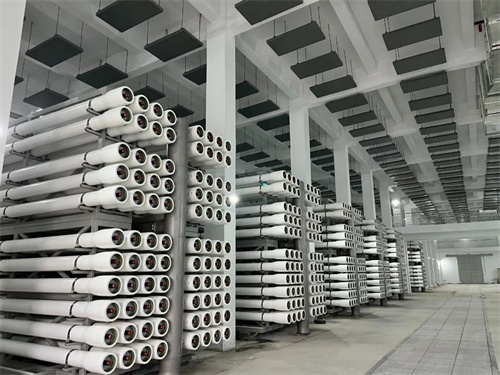
  Completed by: Yang Jinduo, Wei Chunzhi, Han Jiliang, Li Guangsheng, Guo Yuanxin and Yang Yadong.
  4. Creation of several genetic engineering vaccines for livestock and poultry virus diseases and optimization of production technology.
  Completed by: Qingdao Xinde Pharmaceutical Co., Ltd.
  Harbin Veterinary Institute, Chinese Academy of Agricultural Sciences
  Shandong xinde animal vaccine co., ltd
  Qingdao agricultural university
  Shandong xinde technology co., ltd
  Completed by: Li Mingyi, Tian Guobin, Liu Yang, Li Guimei, Wang Dana, Ge Dong.
  5. Key technologies for prevention and control of foot-and-mouth disease, classical swine fever and highly pathogenic porcine blue ear disease.
  Completed by Shandong Animal Disease Prevention and Control Center.
  China Animal Health and Epidemiology Center
  Lanzhou Veterinary Institute of China Academy of Agricultural Sciences
  Weifang nuoda drug co., ltd
  Qingdao dongbao national engineering technology research center co., ltd
  Completed by: Li Yungang, Li Xiaocheng, Zhang Qiang, Wu Faxing and Zhang Faren, in Qinghai.
  6. Genetic development of main characters of walnut and breeding of anthracnose resistant varieties
  Completed by: Shandong Agricultural University
  Completed by: Yang Keqiang, Liu Huixiang, Liu Xia, Wang Cancan.
  7. Real-time monitoring system for ultra-long-distance intrusion security based on laser Rayleigh interference technology.
  Completed by: Weihai Beiyang Photoelectric Information Technology Co., Ltd.
  Weihai Beiyang electric group co., ltd
  Completed by: Sun Zhongzhou, Ji Shenghua, Wang Jianqiang, Shi Zhenguo, Liang Mingming and Zhang Yongchen.
  8. Highly trusted mobile computing platform system based on domestic key software and hardware.
  Completed by: Shandong Chaoyue CNC Electronics Co., Ltd.
  Completed by: Zhao Ruidong, Feng Lei, Li Changzhi, Zhao Bin, Chai Pingping and Niu Yufeng.
  9. Key technologies and industrialization of high-quality semiconductor silicon carbide substrate
  Completed by: Shandong Tianyue Advanced Materials Technology Co., Ltd.
  Completed by: Gao Yuqiang, Zong Yanmin, Wang Xijie, Liang Qingrui, Yu Guojian, Gao Chao.
  10. Mechanism and prediction technology of gas content in coal and gas outburst.
  Completed by: Shandong University of Science and Technology
  China Mining University
  Completed by: Wang Gang, Yang Yongliang, Li Weimin, Liu Zhen, Li Jianhua and Ni Guanhua.
  11. Dynamic mineralization and multi-information prospecting prediction of typical gold deposits in northwest Jiaodong.
  Completed by: Hedong Gold Mine of Zhaojin Mining Co., Ltd.
  Central South University
  Changsha Wu Wei di ke survey technology co., ltd
  Completed by: Wang Peishou, Yang Bin, Xi Zhenzhu, Shine Wong, Wang Yanlei, Wang Changtao.
  12. Development and application of key technologies for collaborative heat transfer enhancement of high-power frequency conversion controller.
  Completed by Hisense (Shandong) Air Conditioning Co., Ltd.
  Completed by: Zhao Keke, Zhao Xifeng, Wang Zhigang, Li Benwei, Wang Zongliang and Yin Xianxin.
  13. Key technologies and industrialization of ultra-low CO safe, environmentally friendly and comfortable gas water heaters
  Completed by: Qingdao Economic and Technological Development Zone Haier Water Heater Co., Ltd.
  tianjin chengjian university
  Completed by: Li Jian, Sun Jingyan, Liu Fengguo, Zheng Tao, Cao Guanzhong and Feng Qing.
  14. Key technologies and applications of large-scale preparation of biological preservatives.
  Completed by: Shandong Academy of Pharmacy
  Shandong furuida biology science and technology co., ltd
  Shandong furuida medicine group company
  Shandong University
  Shandong Academy of Biomedical Sciences
  Completed by: Ling Peixue, Zhu Xiqiang, Liu Fei, Su Yishan, Li Haijun and Zhang Xiaoyuan.
  15. Development and industrial application of super cotton-like polyester/cotton fiber blended non-ironing fabric
  Completed by Lufeng Weaving and Dyeing Co., Ltd.
  China textile science research institute
  China Petrochemical Yizheng Chemical Fiber Co., Ltd.
  Shandong university of technology
  Completed by: Zhang Zhanqi, Lian Zhijun, Xu Qiusheng, Wang Fangshui, Qi Yuanzhang and Fu Zhongjun.
  16. Creation and industrialization of key technologies of green, low-consumption and high-simulation microfiber artificial leather
  Completed by Shandong Tongda Island New Materials Co., Ltd.
  Shaanxi university of science and technology
  Completed by: Wang Lezhi, Qiang Taotao, Zheng Yonggui, Ma Jinmei, Zhang Fengjie and Wang Xiaolei.
  17. Development of disperse dyes with high alkali resistance
  Completed by: Penglai Jiaxin Dyestuff Chemical Co., Ltd.
  Completed by: Wang Zhe, Zhang Shansheng, Wang Shuxiang, Jing Lili, Kang Hongwei and Geng Ningning.
  18. Development and application of efficient synthesis technology for recycling 2-naphthalene series products
  Completed by: Zaozhuang Tairui Fine Chemical Co., Ltd.
  Completed by: Yang Yudong, Zhou Zhihui, Liu Shuyin, Meng Qingwei and Zhao Mingxia.
  19. High purity industrial zinc sulfide
  Completed by Weifang Dayao New Material Co., Ltd.
  Completed by: Wang Qiang, Li Bo and Li Jun.
  20. Preparation technology and application of high-performance high-frequency microwave and conductive shielding film materials
  Completed by Shandong Jinding Electronic Material Co., Ltd.
  Completed by: Geng Guoling, Zou Wei, Wu Tianxiang, Ouyang Yanhui, Zhuo Feng
  21. Research, development and industrialization of high-precision copper thin soft strip
  Completed by: Zhongse Obote Copper and Aluminum Co., Ltd.
  Completed by: Wang Shijie, Zhang Jianhua, Guo Lili, Xu Bingjun, Liu Chenliang and Jing Yan.
  22. The key technology and application of ultra-heavy CNC moving gantry boring and milling turning center (lathe)
  Completed by: Weihai east china numerical control Co., Ltd.
  Completed by: Qiu Yuliang, Liu Bingwen, Qin Zhixu, Che Zhongwei, Zheng Shuguang and yan wang.
  23. CTL-2.5× 1850 automatic numerical control pendulum cutting line
  Completed by: Jinan No.2 Machine Tool Group Co., Ltd.
  Completed by: Zhao Jinrong, Wen Zhiquan, Wang Yanling, Zhang Faxin, Qu Shihui and Li Shuanqiang.
  24. Mechanism, defense technology and application of disaster magnetic storm affecting the safe operation of power grid
  Completed by: Electric Power Research Institute of State Grid Shandong Electric Power Company
  Nanjing nanrui group company
  North China Electric Power University
  Completed by: Xue Yusheng, Liu Lianguang, Sun Shumin, wei li, Xue Feng and Cui Xiaodan.
  25. Key technologies and applications of super-long and long-span subsea tunnel construction.
  Completed by: Qingdao Guoxin Jiaozhou Bay Transportation Co., Ltd.
  Shandong University
  Central South University
  China Railway Second Bureau 2 nd Engineering Co., Ltd.
  Completed by Qu Liqing, Zhou Shuming, Xue Yiguo, Wang Xinghua, Guo Yongjian, Zhang Jianyang.
  26. R&D and application of key technologies and equipment for 10,000-ton super-large caisson construction
  Completed by: No.2 Engineering Co., Ltd. of China Communications No.1 Navigation Bureau.
  Completed by: Zhang Baochang, Fu Dawei, Zhao Jianming, Feng Haibao, Ma Zongtian and Lu Lianzhou.
  27. Innovation and application of stress myocardial perfusion and coronary vein imaging technology
  Completed by: Yantai Yuhuangding Hospital
  Completed by: Yang Jun, Ma Heng, Jing Liu and Sun Chunjuan.
  28. Four-dimensional images and functional images guide precise radiotherapy for chest tumors.
  Completed by: Shandong Institute of Cancer Prevention and Treatment.
  Completed by: Li Jianbin, Zhang Yingjie, Wang Jinzhi, Shao Qian, Min Xu and Ma Zhifang.
  29. The application of molecular imaging and pathology in the era of precise tumor treatment.
  Completed by: Shandong Institute of Cancer Prevention and Treatment.
  Completed by: Meng Xue, Xu Yaping, Wang Shijiang, Han Shumei, Teng Feifei and Jiang Liyang.
  30. Key technologies for diagnosis, immunization and targeted therapy of endometrial cancer.
  Completed by: Qilu Hospital of Shandong University
  Completed by: Jiang Jie, Kong Beihua, Zhang Guiyu, Cui Baoxia and Qiu Chunping.
  31. The establishment, transformation and application of the characteristic theory and key technology of TCM in treating diabetes.
  Setting: Affiliated Hospital of Shandong University of Traditional Chinese Medicine.
  The Second Affiliated Hospital of Shandong University of Traditional Chinese Medicine
  Completed by: Xu Yunsheng, Peng Wei, Huang Yanqin, Ding Qianqian, Wang Sumei and Zhang Xiujuan.
  32. Basic research and clinical application of "strengthening tendons and binding bones" in the treatment of lumbar instability diseases
  Completed by: Wendeng osteopathy hospital of Shandong province.
  Longhua Hospital Affiliated to Shanghai University of Traditional Chinese Medicine
  Shandong province Wendeng osteopathy technology development co., ltd
  Completed by: Yang Yongjun, Zhou Jiping, Wang Yongjun, Tan Yuanchao, Tang Dezhi and Liang Qianqian.
  33. Development and industrialization of cefminox sodium bulk drug
  Completed by: Qilu Antie (Linyi) Pharmaceutical Co., Ltd.
  Completed by: Fu Ling, Zhao Weiliang, Tang Fei, Xu Hongfei, Zhang Baona.
  34. Efficient biological transformation and industrialization of L-aspartic acid and L-alanine
  Completed by: Yantai Hengyuan Biological Co., Ltd.
  Shandong province food fermentation industry research and design institute
  Completed by: Ma Yuyue, Zhao Xiangying, Jiang Zengyan, Qiao Jun, Jiang Guozheng and Yang li Ping.
  35. Development and application of new ion chromatograph and establishment of quality control system
  Completed by: Shandong Institute of Metrology
  Qingdao shenghan chromatography technology co., ltd
  Completed by: Lin Zhenqiang, Xu Aihua, Guo Bo, Zhang Xizhi, Cui Chenglai and Sui Feng.
  
  Shandong International Science and Technology Cooperation Award (3 persons)
  1. Heinz Rolf Stoke
  Country: Germany
  Cooperation unit: Yantai Hilde New Materials Co., Ltd.
  2. William Mathias Vindis
  Country: Germany
  Partner: Shandong Haizhibao Ocean Technology Co., Ltd.
  3. Shaq alzas Land
  Country: United Kingdom
  Partner: Qingdao Russell Biotechnology Co., Ltd.